Azulejos in Portugal: A Traveller's Guide to the Painted Tiles
Azulejos are Portugal's glazed ceramic tiles, usually square and 13-15 cm. Learn what they mean, the main styles, and how to read a panel on a short break.
On this page
Azulejos in Portugal are glazed ceramic tiles, usually square and roughly 13 to 15 cm across, used as both wall covering and decoration. This guide explains what they are, why blue and white dominates so many façades, and how to read a panel of them in the hour or two a one-to-four-day town break can spare.
Most travellers meet azulejos before they know the word: on a station wall, inside a church, or on the front of an ordinary house. The point of learning a little about them is that a tiled surface you would otherwise walk past becomes the most legible record of a town's taste across four centuries.
What azulejos are and how to say the word
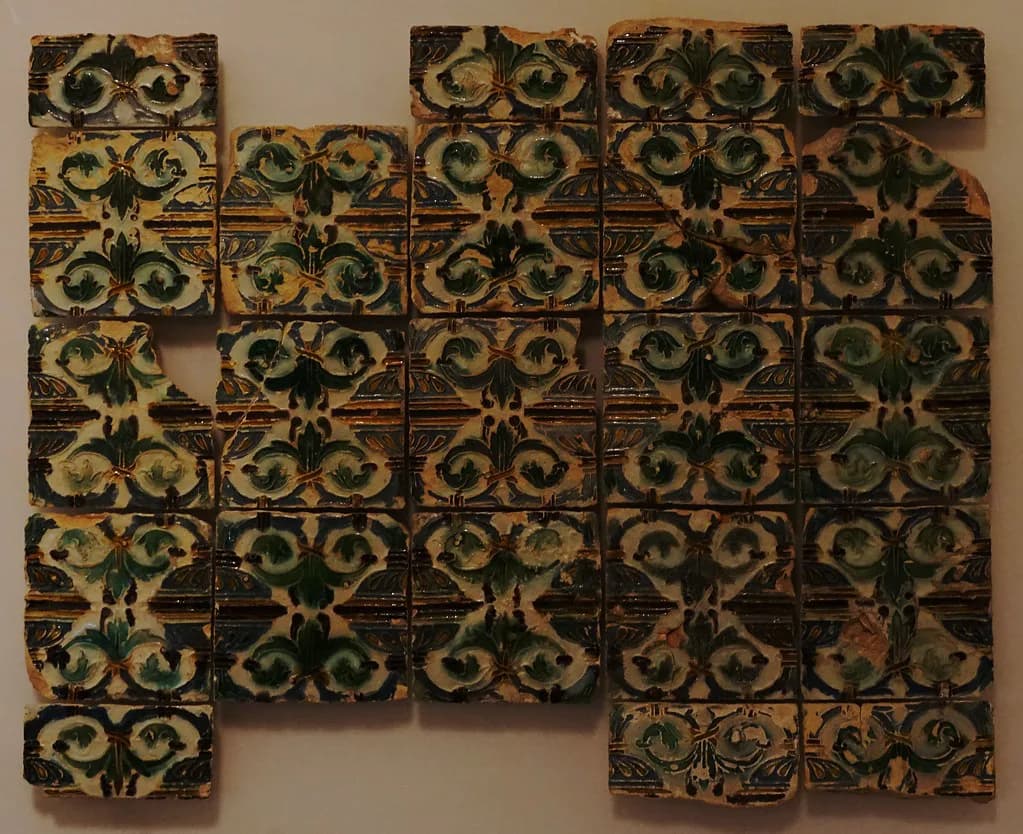
Azulejos are described as thin ceramic tiles, normally square and typically between 13 and 15 cm on a side, with a glazed, decorated face. In Portuguese the singular is azulejo and the plural azulejos, and the word is used for the glazed decorated tile itself, not only for antique ones.
That modest size is the first practical test of a genuine azulejo when you are looking at a wall. A large printed panel sold as a single sheet is a reproduction or a photographic tile; real azulejos are laid as a grid of many small squares, and you can often trace the joints between them even from pavement level.
Portuguese tiles also come in patterned ranges with coordinating border tiles and single-colour field tiles, the format most often used to cover a whole wall. If you want the wider context of Portuguese ceramics, from utilitarian ware to the decorated table, see this guide to Portuguese pottery alongside the tile story.
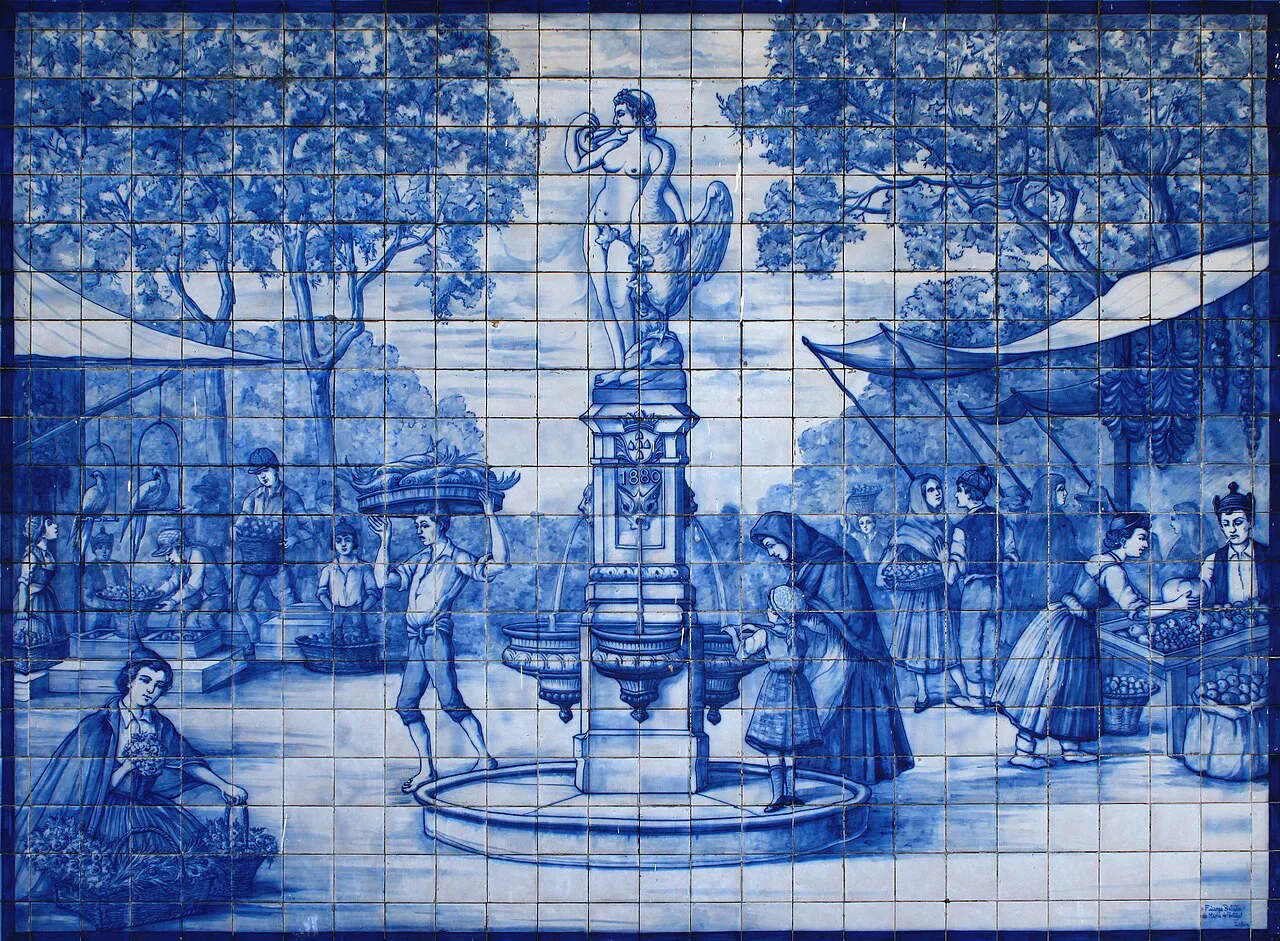
Why blue and white dominates so many façades
The blue-and-white scheme is the image most photographs of Portuguese tiles return, with floral and geometric patterns repeated across whole elevations. Treat it as the best-known colour scheme in the tilework you will see, not as the only one: the same craft runs to full colour as well.
How do you say tiles in Portuguese? The word is azulejo for one tile and azulejos for tiles. It is the ordinary Portuguese word for the glazed decorated tile itself, so a shop selling azulejos is selling tiles, not only antique ones.
What are some traditional Portuguese tiles? The main distinction to recognise is between repeating patterned tiles, usually with a coordinating border, and pictorial panels that compose a scene across many tiles, frequently in blue and white. Blue-and-white is the best-known colour scheme, but the same craft runs to full colour as well.
Are azulejos always square and 13 to 15 cm? That is the usual description of the classic thin ceramic tile, and it is a fair guide for the format you will see on older walls. Not every tile ever made fits it, so use the size as a clue to genuine tiled surfaces rather than as a rule when buying.
For a short-break traveller, the useful move is to look at one façade and ask what the pattern is doing. A repeating blue motif carries the eye up a large surface cheaply; a painted scene in blue and white is a different thing altogether, closer to a picture than a wallpaper.
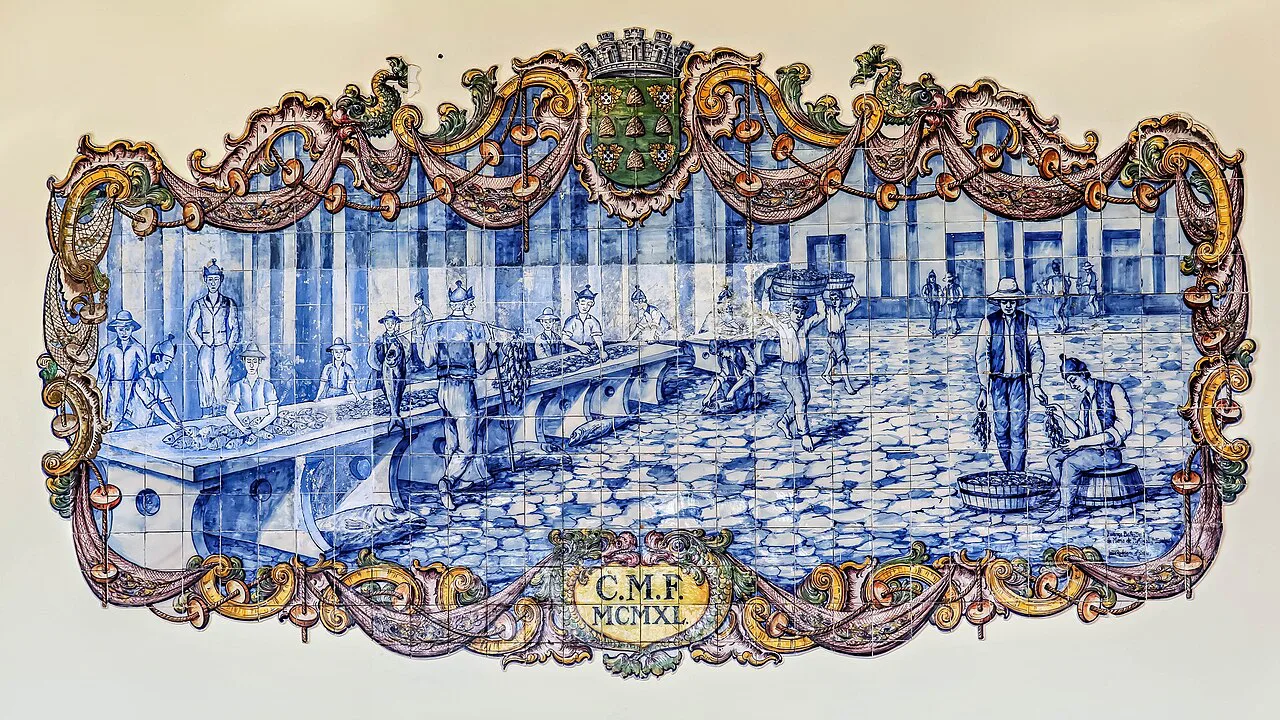
Tile types you will see on a short break
Two broad kinds cover most of what you will see. Patterned tiles form repeating geometric or floral fields, often with a coordinating border tile running along the edge; pictorial panels compose a scene, frequently in blue and white, across many tiles so that a picture only emerges when you take in the whole wall.
Border tiles are the most underrated element. They frame a field of pattern, finish the top of a wall or wrap a window, and once you start noticing them you can date the taste of a building's façade much more confidently than by the central motif alone.
Full-colour pictorial work is where azulejos stop being background and become the reason to stop walking. The albarradas tradition of flower and bird panels sits at the decorative end of the craft, and it rewards a slower look than a repeating pattern needs.
Where the tiles sit in the Portuguese townscape
Azulejos turn up in places you are already visiting: church interiors, station walls, manor houses and public buildings. That makes them unusually cheap to see on a short break, because the tiled surface is often part of a building you had already put on your route rather than a separate ticketed attraction.
Station walls are the traveller's friend here. A tiled panel often lines a concourse or platform, so you can study it while waiting for a train rather than building an outing around it; the same is true of entrance halls and staircases in public buildings, where the tiles are simply part of the architecture.
The serious collection to plan a morning around in Portugal is the national tile museum in Lisbon, and our guide to Portuguese Tiles sets it alongside the wider story of the craft, with the historic Fábrica de Sant'Anna and the panels worth seeking out in smaller towns. If your break is in a smaller town, the church and the station will usually carry the best panels you can reach on foot.
How to read a panel: repeats, borders and murals
Stand back first and look at the whole surface, then move closer to find the unit of repetition. A tiled wall made of one repeating tile has a rhythm you can follow across the grid; a mural is composed across many tiles so that the picture only resolves when you take in the whole panel.
Next, find the edge. Borders tell you where the designer intended the pattern to stop, and mismatched or missing border tiles are usually the clearest sign of later repair. On a tiled façade, check whether the tiles run up to the window surrounds or stop short, because that detail distinguishes an original scheme from a later addition.
Finally, compare the glaze across the panel. Hand-made and older tiles vary slightly in tone and thickness from one square to the next, while a modern printed reproduction is uniform; that variation is not damage but the fingerprint of the process.
Practical viewing on a one-to-four-day break
Give azulejos an hour, not a day. Build the tiled surfaces into a walk you were doing anyway, and save the close study for one interior where the light is good and you can stand back far enough to see a whole wall; a single well-seen panel beats five glimpsed in a hurry.
Opening days are the main practical variable here, and in Portugal museums and monuments set their own calendars. Check the venue's own website for the day you plan to visit, and keep a station or church exterior as a fallback if a museum is shut on the day.
If your short break is in a smaller city, look for a local tile guide before you go. This one on Aveiro azulejos covers the tiles of that canal town and is a useful model of what to look for when the collection is spread across the streets rather than gathered in one museum.
Weather rarely stops tile-viewing, since so much of it is indoors or on sheltered façades, but exteriors read best in flat rather than glaring light. Early morning and late afternoon give you the surface without the reflection that flattens a blue-and-white panel at midday.
Buying azulejos: reproductions, borders and samples
Buying is where most travellers get it wrong, because the souvenir tile is often a printed coaster rather than a glazed tile. If you want something you could actually hang or set into a wall, ask for reproduction azulejos in the traditional formats, and order a single sample before committing to a quantity for a whole splashback or fireplace surround; our guide to Where to Buy Azulejos in Portugal covers the formats on sale.
Specialist tile retailers sell patterned tiles, coordinating border tiles and murals as separate lines, with cheaper B-grade stock and mixed packages for smaller budgets. Where a retailer states that its decorative tiles are for indoor walls and frost-free regions only, take that at face value: a tile chosen for an exposed garden wall in Britain may not survive the winter.
Weight and hand luggage are the other constraint. A stack of 15 cm tiles is heavier than it looks, so buy fewer, better pieces, or ask about shipping; a single border tile makes a better keepsake than a bag of seconds you cannot carry.
Should you plan a break around the tiles?
No, but you should plan your break so the tiles come to you. Azulejos are already on the church, the station and the house front of almost any Portuguese town you choose, so the reward for a little preparation is a richer walk rather than an extra excursion.
Learn to tell repeating patterned fields from pictorial panels that only resolve across a whole wall, find the borders, and stand back far enough to read the surface. Buy one good reproduction tile rather than ten, and check the venue's own site for the day you intend to go inside.
Explore more Portugal guides
Frequently Asked Questions
How do you say tiles in Portuguese?
The word is azulejo for one tile and azulejos for tiles. It is the ordinary Portuguese word for the glazed decorated tile itself, so a shop selling azulejos is selling tiles, not only antique ones.
What are some traditional Portuguese tiles?
The main distinction to recognise is between repeating patterned tiles, usually with a coordinating border, and pictorial panels that compose a scene across many tiles, frequently in blue and white. Blue-and-white is the best-known colour scheme, but the same craft runs to full colour as well.
Are azulejos always square and 13 to 15 cm?
That is the usual description of the classic thin ceramic tile, and it is a fair guide for the format you will see on older walls. Not every tile ever made fits it, so use the size as a clue to genuine tiled surfaces rather than as a rule when buying.
Can I use Portuguese tiles outdoors in the UK?
Where a retailer states that its decorative tiles are for indoor walls and frost-free regions only, do not assume they will suit an exposed British garden wall. Ask specifically about frost resistance before buying for an outdoor project.
Sources
Notes for your next Portuguese break
Optional updates to our town guides.
You might also like
Continue reading
More guides you'll find useful