Aveiro Itinerary: How to Plan 1 to 3 Days in the Canal City
Plan an Aveiro itinerary for one to three days, covering the canals and moliceiro boats, the old station's azulejos, the fish market and a Costa Nova half-day.
On this page
Two days is the right amount for Aveiro: one full day for the canals, the old station and the Mosteiro de Jesus, and a second half-day for Costa Nova and the Ria de Aveiro lagoon. One day works if you stay inside the centre and skip the coast, while three days lets you slow down and add the salt pans. This plan arranges each half-day as one walking loop so you are not crossing the canals repeatedly. If you are weighing up a second canal city on the same trip, the Braga itinerary follows the same day-by-day, area-by-area structure.
The city is compact and best seen on foot, with the moliceiro boats, the ribbon bridges and the fish market all within a short stroll of each other. The main decisions are how much time to give the water, whether to pay for the Mosteiro de Jesus museum, and whether a Costa Nova half-day fits your plan rather than being squeezed in as an add-on. If you are still deciding whether the city suits you at all, there is a separate answer on whether Aveiro is worth visiting.
How many days does Aveiro need?
One day covers the compact centre on foot: the old station's azulejos, the canal front, a moliceiro boat trip, the Mercado do Peixe and the Mosteiro de Jesus. Two days adds a half-day at Costa Nova and time along the lagoon without rushing the centre. Three days suits anyone who wants the museums at an unhurried pace plus the salt pans and a slower afternoon.
Aveiro sits roughly halfway between Porto and Lisbon on the Atlantic coast, and it is an easy train day trip from Porto, so plenty of visitors see it in a few hours. The trade-off is real: a day trip from Porto gets you the canals and a boat ride but leaves no space for Costa Nova or a proper museum stop. If you want both the city and the striped houses of Costa Nova, plan to sleep in Aveiro rather than commute.
Aveiro in one day: the compact centre on foot
Keep day one entirely in the centre and walk it as a loop: start at the old station, drop down to the canal front, take a boat, break at the fish market, then work back through the Mosteiro de Jesus to the ribbon bridges. The distances are short, so the loop is less about saving steps and more about seeing the canals from the water early before the day fills up.
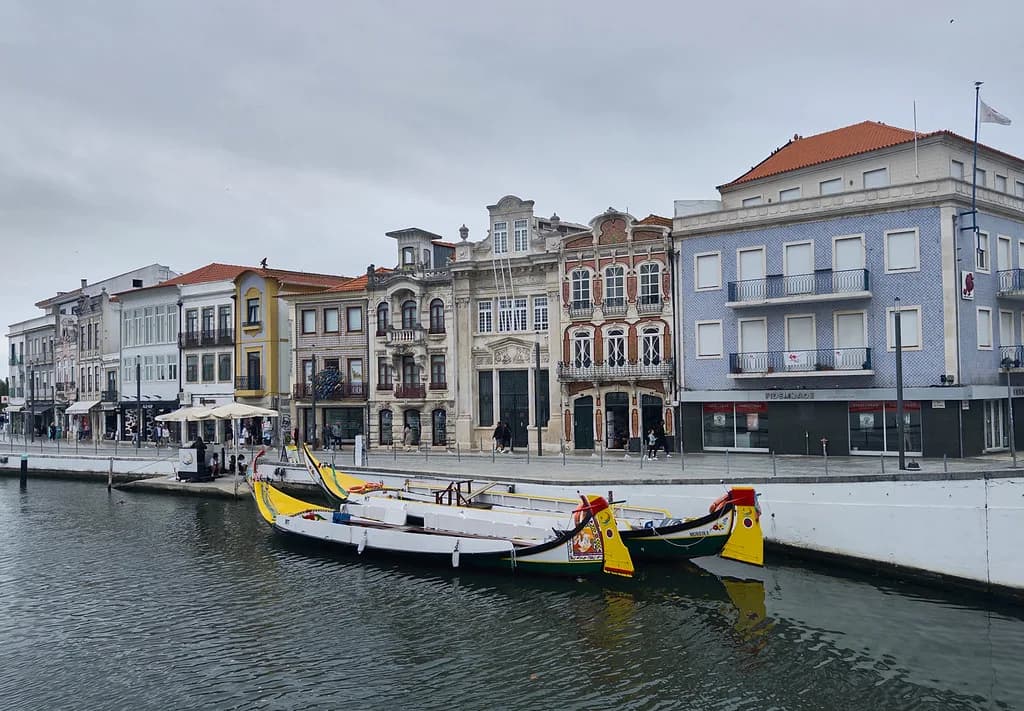
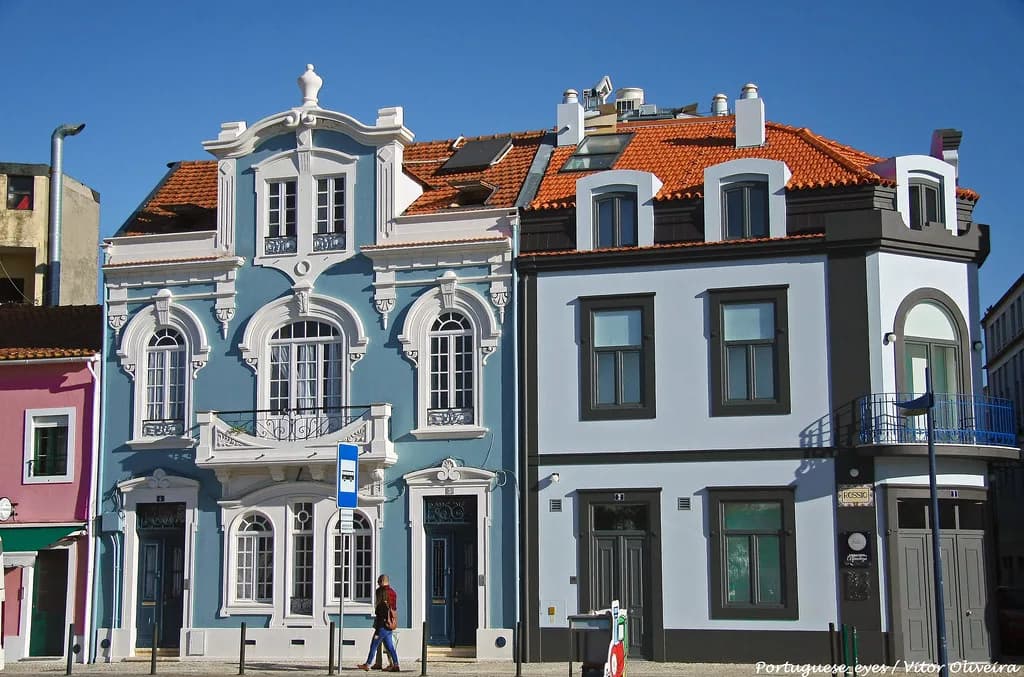
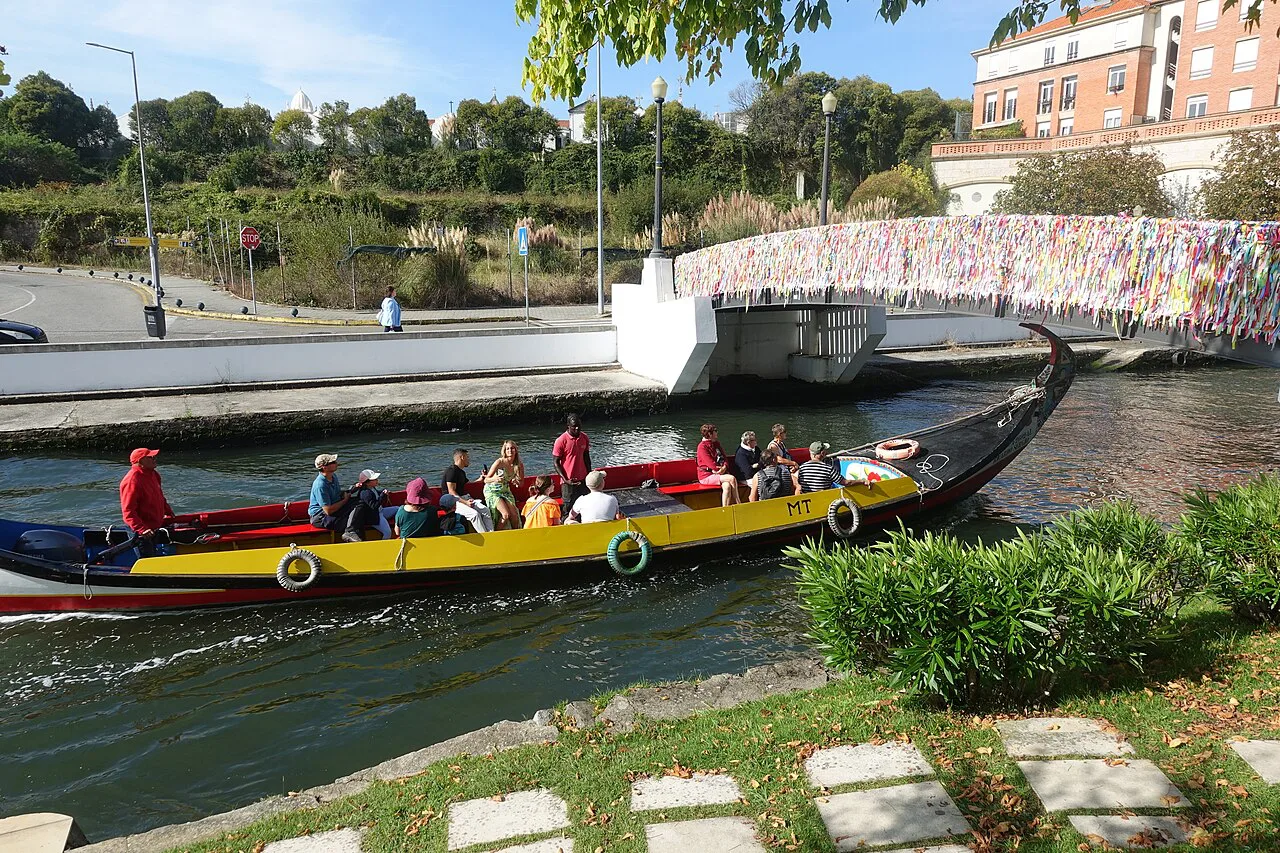
Aveiro is known as the Venice of Portugal for its canals and gondola-like boats, but the comparison undersells what is here: the old station's blue azulejos, a working fish market, a monastery museum and modern architecture along the water. The Moliceiro boat rides run along the city's canals. If you want the full list of named sights before you fix a route, the Aveiro attractions hub gathers them in one place.
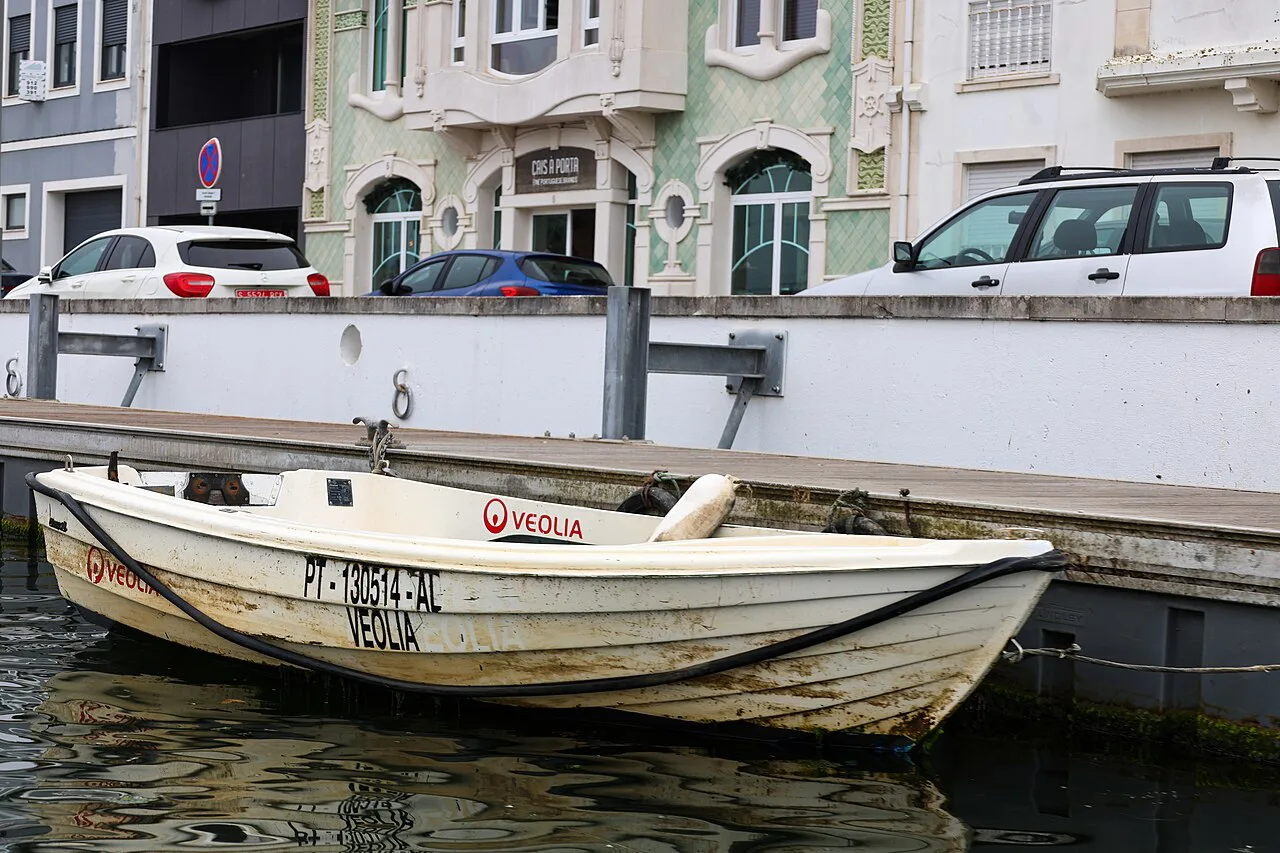
Morning: the old station azulejos, the canal front and a moliceiro boat trip
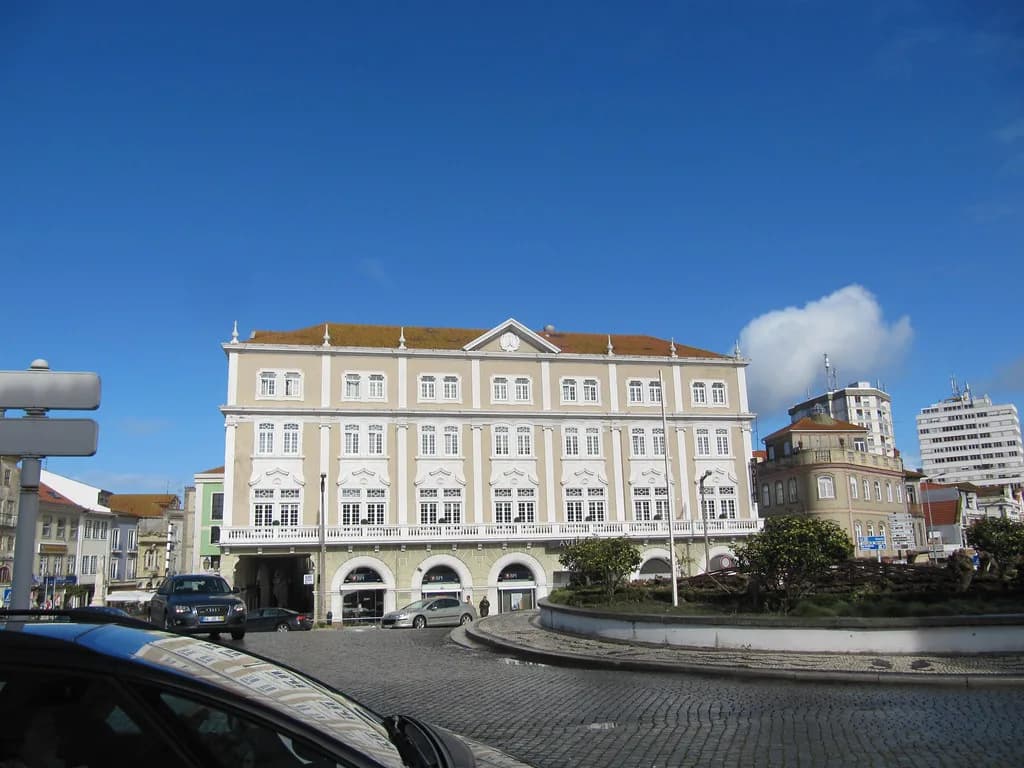
Start at the old train station building from the early 20th century, whose façade is covered in blue azulejos showing traditional scenes from the region. It is opposite the working station and needs only fifteen or twenty minutes, which makes it an ideal first stop before the canals get busy. From there, walk down to the canal front where the moliceiro boats are moored.
A moliceiro boat trip takes around 45 minutes and covers the canals through and around the city centre. You pass the waterfront Assembleia Municipal de Aveiro, the Fonte Nova canal basin in front of the old brick factory, the circular Ponte dos Botirões and some of the city's salt pans. The boats once carried moliço, the lagoon algae used as fertiliser until chemical alternatives took over in the 1960s, and their bows are painted with bright scenes. On a short break, take the boat early in the day, before the canals fill up.
The water trip is the one paid experience most visitors should not skip, because it shows you the canals, the bridges and the salt pans in a single sweep and sets up everything you walk past later. If you would rather keep the morning free, the canal front and the bridges are free to walk, and you can watch the boats go by instead.
Lunch and the Mercado do Peixe
The Mercado do Peixe fish market has been part of the cityscape for over a century, and the restaurants around it serve fresh Atlantic fish. Make this your lunch stop rather than pushing on, because the centre's sights are close enough that a proper break costs you nothing in walking time. The market area is also a good place to reset your loop if you have drifted.
Eating fish and seafood is the sensible default in Aveiro given the lagoon and the Atlantic catch, and the city is treated as a food destination in its own right. If you want a named address, published listings in Aveiro include restaurants around the Largo da Praça do Peixe, such as Porta 36 and O Bairro, though you should confirm current opening days with the venue itself.
Afternoon: Mosteiro de Jesus and its museum, then the ribbon bridges
The Mosteiro de Jesus was founded in the 15th century, and the monastery building now houses a museum of religious art. Its collection includes Portuguese paintings from the 17th and 18th centuries along with tile work, jewellery, furniture and vestments, so give it an hour rather than a quick look. This is the paid stop that most justifies its ticket on day one.
Finish the afternoon at the ribbon bridges near the Forum shopping centre, where the Ponte dos Laços de Amizade and the neighbouring crossings are covered in brightly coloured ribbons carrying names, the city's answer to love locks. The bridges are a quick stop and a good spot to watch the moliceiro boats from the bank. Then loop back along the canals to wherever you started.
Ovos moles: Confeitaria Peixinho and the Oficina do Doce
Ovos moles are Aveiro's signature sweet: a mixture of sugar, egg yolks and water wrapped in thin rice paper and often shaped like barrels or seashells. They are sold all over the city, so there is no need to hunt for them. Two stops give the tasting some context.
Confeitaria Peixinho is the pastel-coloured shop that claims the most authentic ovos moles in Aveiro, and it is the prettiest place to try one. For a more hands-on stop, Oficina do Doce, the Sweet Workshop, explains the history, shows how they are made and lets you have a go yourself. Slot either into the late afternoon rather than the middle of the day.
Two days: adding Costa Nova and the Ria de Aveiro
Give day two to Costa Nova, the fishing village near Aveiro known for its striped beach houses between the Atlantic and the lagoon. Treat it as a separate half-day with its own transport rather than an add-on squeezed around the centre, and plan your route and timings before you go. The Ria de Aveiro lagoon itself is worth time on the shore, where you can walk and watch water birds.
If you have only a weekend, the sensible split is day one for the centre and day two for the coast and lagoon, with the boat trip on whichever morning looks calmer. A weekend in Aveiro works best when you resist adding a third destination and let the lagoon be the slow part of the trip.
Where the districts sit and how they link up
The old station sits at the top of the centre, the canal front and the boat moorings below it, and the Mosteiro de Jesus and the ribbon bridges a short walk away. The Mercado do Peixe slots between the canal front and the monastery, which is why the loop in day one works: you never backtrack far. Costa Nova is a separate trip out of the city, not a neighbourhood you can stroll to.
This layout is why one day in Aveiro feels unhurried despite the number of stops, and why a day trip from Porto can cover the essence in a few hours. It is also why adding Costa Nova changes the shape of the trip: it needs travel time, so it belongs in its own slot rather than between two central sights.
Three days: museums, salt pans and a slower pace
With a third day, spread the paid sights: the Mosteiro de Jesus museum on one morning, the salt pans and lagoon shore on another, and Costa Nova on the third. The salt pans appear on the moliceiro route, so seeing them on land after the boat trip makes sense. This is the version of the trip for travellers who would rather see fewer things properly.
A three-day plan also gives you room for the city's museums and modern architecture without crowding the monastery. Keep one afternoon deliberately unplanned so a wet or tired day does not derail the schedule.
Which sights justify a ticket and which are free to see from outside
The old station azulejos are free: the façade is visible from the street and takes minutes. The ribbon bridges and the canal front are free too. The moliceiro boat trip and the Mosteiro de Jesus museum are the two paid stops that add most to a short visit.
If you must choose one paid experience, take the boat on a clear morning; if the weather is poor, put the money into the monastery museum instead. The Oficina do Doce is an optional third ticket best saved for anyone travelling with children or with a sweet tooth.
How to fill a rainy or low-energy afternoon
When the weather turns, move indoors: the Mosteiro de Jesus museum and the Oficina do Doce both fill an afternoon without depending on the sky. If you have already done both, a slow lunch around the Mercado do Peixe is a reasonable way to write off a wet hour or two.
For a low-energy day, cut the walking loop to the station, the canal front and the bridges, then settle in a café with an ovos mole. The city is small enough that a reduced plan still feels like a day out.
Eating in Aveiro: fish, seafood and where to break the day
Aveiro's food identity rests on fresh Atlantic fish and seafood, and the Mercado do Peixe is the natural anchor for lunch. Break the day there rather than eating late, because the afternoon sights are close and a proper sit-down meal costs little walking time.
Published listings give named options around the Largo da Praça do Peixe and beyond, including Porta 36, O Bairro and Salpoente, with cuisines and addresses shown for each. Confirm current opening days with the venue rather than relying on a listing.
Practical timing: how the days fit around museum and church opening
The reliable rule for a short break in Portugal is to front-load paid interiors into the first full morning and keep the outdoor stops flexible, and the same discipline pays off if you are planning around azulejos, as our guide to azulejos in Portugal explains. Check each venue's opening days and hours on its own website before you travel, since these can change by season. Two sentences of caution cover the whole trip.
If your dates are short, book the boat for the morning and leave the museum for the afternoon in case the water is rough. That ordering also means a delayed boat trip does not swallow the monastery visit.
Aveiro as a short break versus a Porto day trip
Aveiro works as a day trip from Porto by train, but a short break gives you the lagoon, Costa Nova and a slower centre, which a few hours cannot.
The honest trade-off: as a day trip, Aveiro delivers the canals, the boat and a meal; as a short break, it delivers the coast and the lagoon as well. Choose based on whether you want the striped houses of Costa Nova in the same trip.
Is Aveiro worth two days rather than one?
Yes, if Costa Nova and the lagoon are part of why you came: they need their own half-day and cannot be folded into a centre loop. One day in Aveiro covers the station, the canals, a moliceiro boat and the Mosteiro de Jesus comfortably, so two days is about breadth rather than depth.
Book the boat for the morning, keep lunch at the Mercado do Peixe, and put a paid museum or the Oficina do Doce in the afternoon. Confirm opening days and any ticket prices with each venue before you set out.
Explore more Aveiro guides
Frequently Asked Questions
What city in Portugal is known as the Little Venice of Portugal?
Aveiro. Its canals and moliceiro boats have earned it the Venice of Portugal nickname, though the city has its own character: azulejo-clad buildings, a working fish market and the lagoon on its doorstep.
Is Aveiro closer to Lisbon or Porto?
Aveiro is roughly halfway between the two on Portugal's Atlantic coast. Direct trains run from both cities, and the journey from Porto is the shorter of the two, which is why so many visitors see Aveiro as a Porto day trip.
Sources
Notes for your next Portuguese break
Optional updates to our town guides.
You might also like
Continue reading
More guides you'll find useful