How Many Days in Aveiro? One, Two or Three Days
Aveiro needs one full day for the canals, station azulejos and ovos moles, and two days to add Costa Nova and the Ria de Aveiro. Here is how to choose.
On this page
Aveiro needs one full day if you want to see the centre properly, and two days if you want Costa Nova and the lagoon as well. Three days suits anyone who would rather cycle the Ria de Aveiro than tick off a list. This guide sets out what each length of stay actually covers, how compact the centre is, and where the honest limits of a short break lie; our One Day in Aveiro plan and weekend in Aveiro ideas show how the pieces fit.
The town is small enough to walk end to end, but the sights that make Aveiro distinctive are not all in the centre: the salt pans, the coastal strip and the lagoon islands sit beyond it. Deciding how many days you have is mostly a question of how much of that wider water you want to see.
The answer: one, two or three days
One day is enough for a moliceiro boat trip, the azulejo-clad station, the Museu de Aveiro and a coffee with ovos moles. That is the classic day, and it is a satisfying one because everything sits within a short walk; our One Day in Aveiro plan orders it for you.
Two days let you leave the centre: the salinas where Aveiro's salt is still worked, the Museu Marítimo and the striped beach houses at Costa Nova. Three days add the Ria de Aveiro by bike or boat and the dunes at São Jacinto. Our full Aveiro itinerary sets these out day by day if you want a ready-made order.
What one day in Aveiro covers
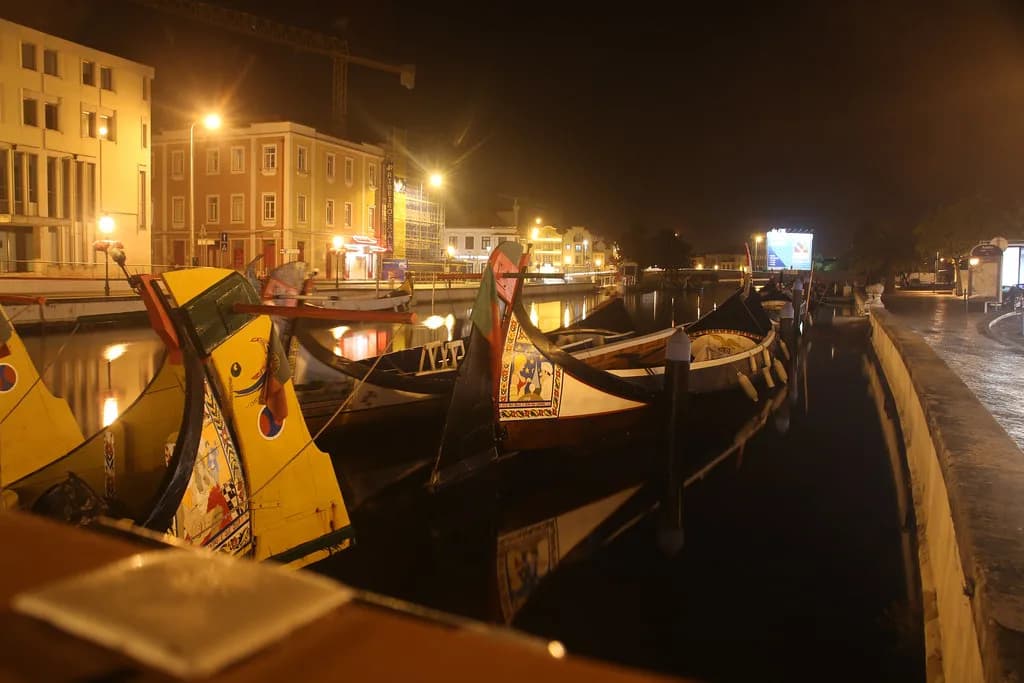
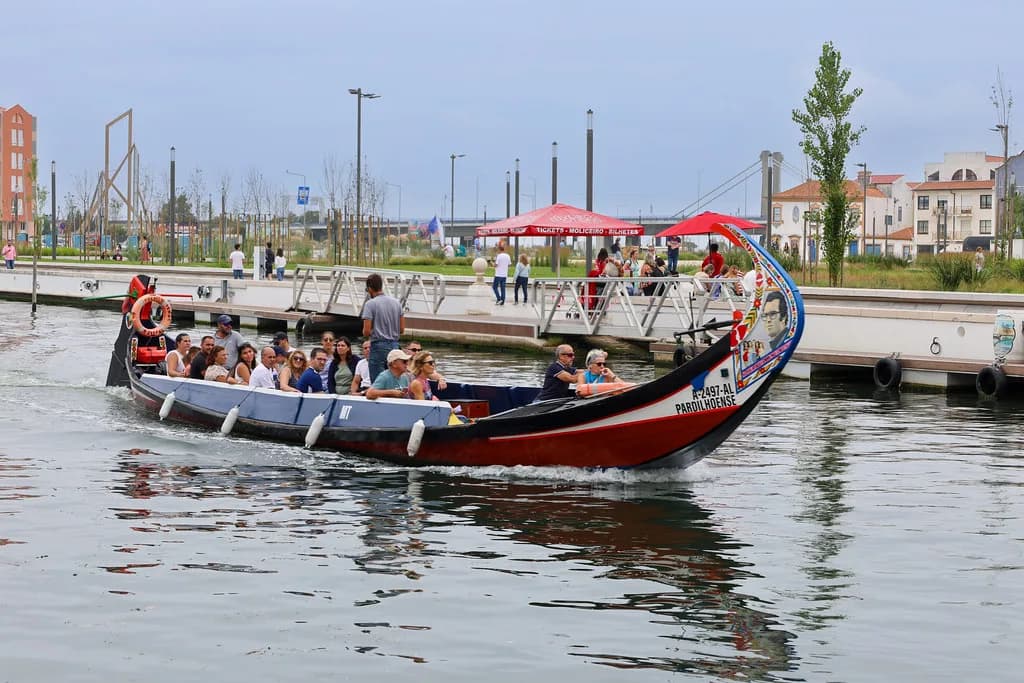
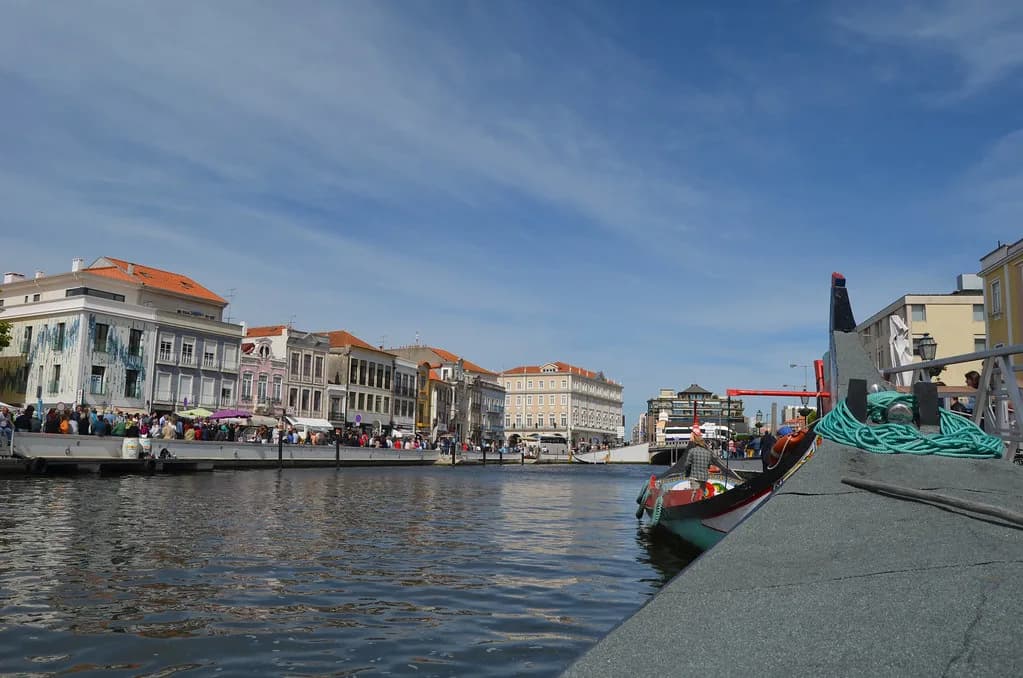
Start on the canal. The traditional wooden moliceiro boats, once used to harvest seagrass from the lagoon, now run short trips on the town's waterways, and you catch them from the stretch of water nearest the tourist office on R. João Mendonça. The tour takes about 45 minutes, which is long enough to see the salt flats from the water without eating your morning, and then you can walk the canals on foot.
The old train station is worth a stop for its blue and white azulejos, an easy introduction to the tile tradition that runs through the town. From there, the Museu de Aveiro, housed in a former convent, holds one of the richest interiors in the city, with gilded carving and further azulejo work.
Finish with something sweet. Ovós moles, the town's signature egg and sugar confection, are sold in shell-shaped wafer cases across the centre, and eating one on a café terrace is as close to a required ritual as Aveiro has.
How the centre is laid out on foot
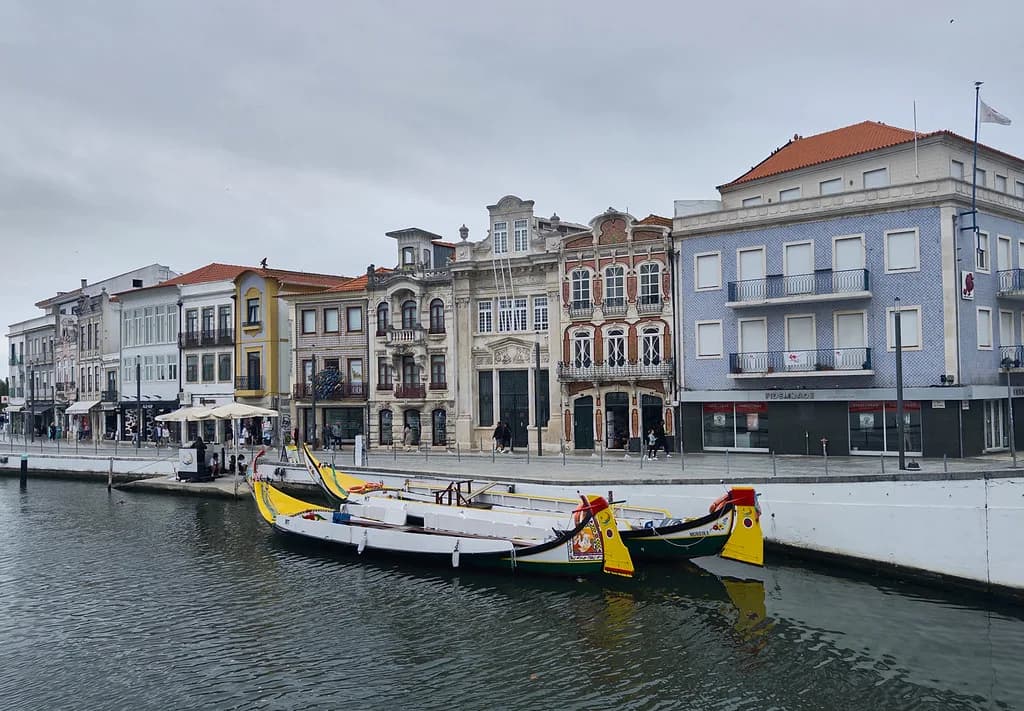
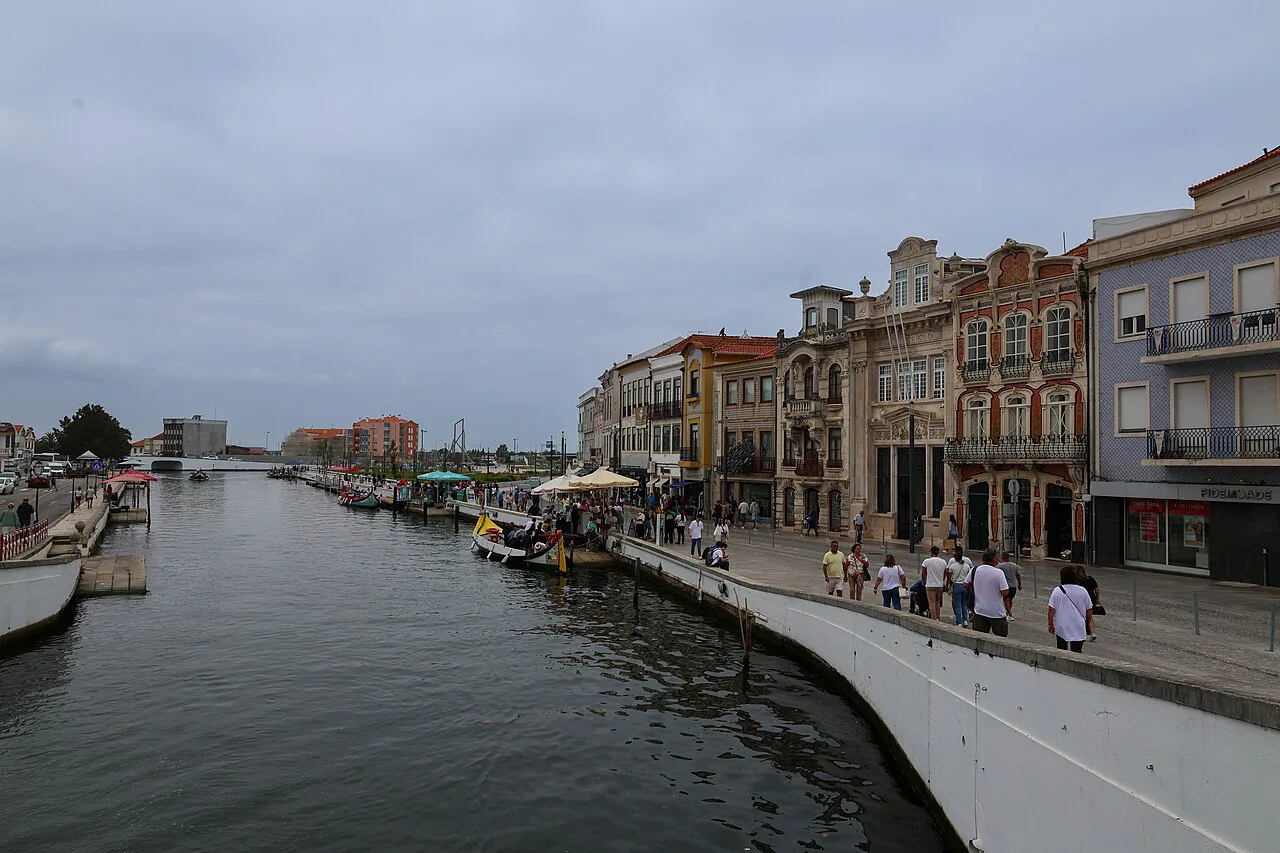
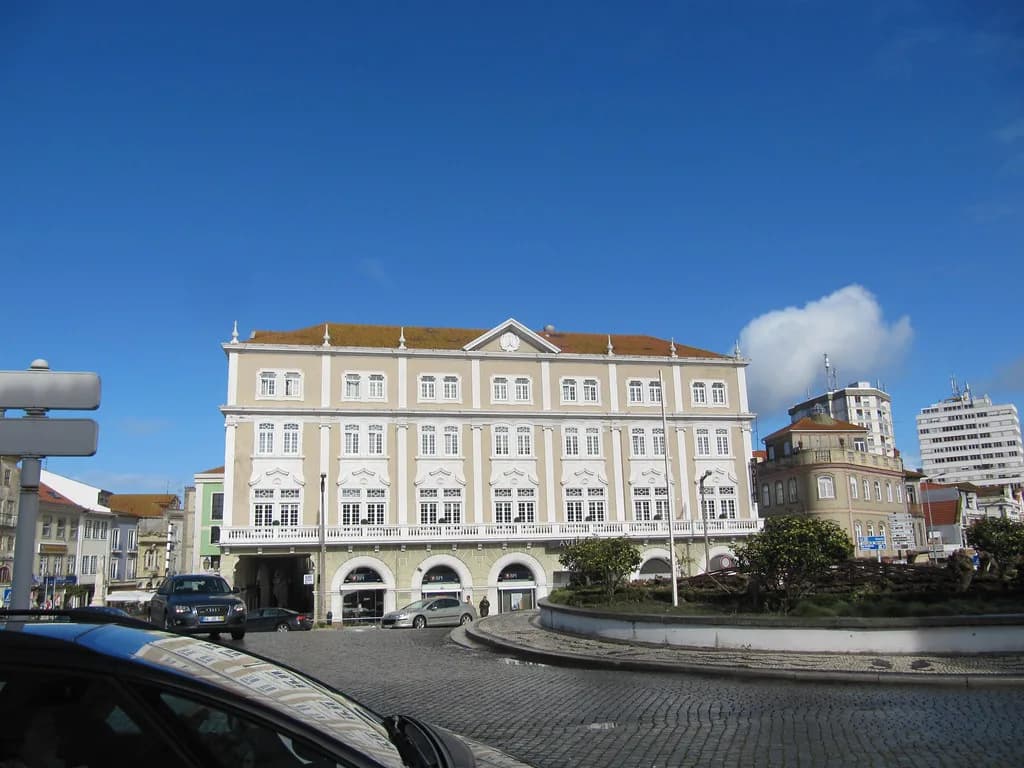
Aveiro's historic core is a compact ring of canals, bridges and shopping streets, and you can walk the main circuit in an afternoon without needing transport. The central canal running down to the waterfront is the spine of the town; most of the sights you have come for sit within a few minutes of it.
That compactness is why one day works. Save the walking energy for the waterfront and the shopping streets rather than for getting between sights, and you will have time for a sit-down lunch. Aveiro is a small city with a big reputation.
Why Aveiro is not Venice
Aveiro is often described as the Venice of Portugal, and that label sets expectations it cannot meet. There is one main canal running through the town rather than a network of waterways, and you will not spend the day crossing bridges between islands.
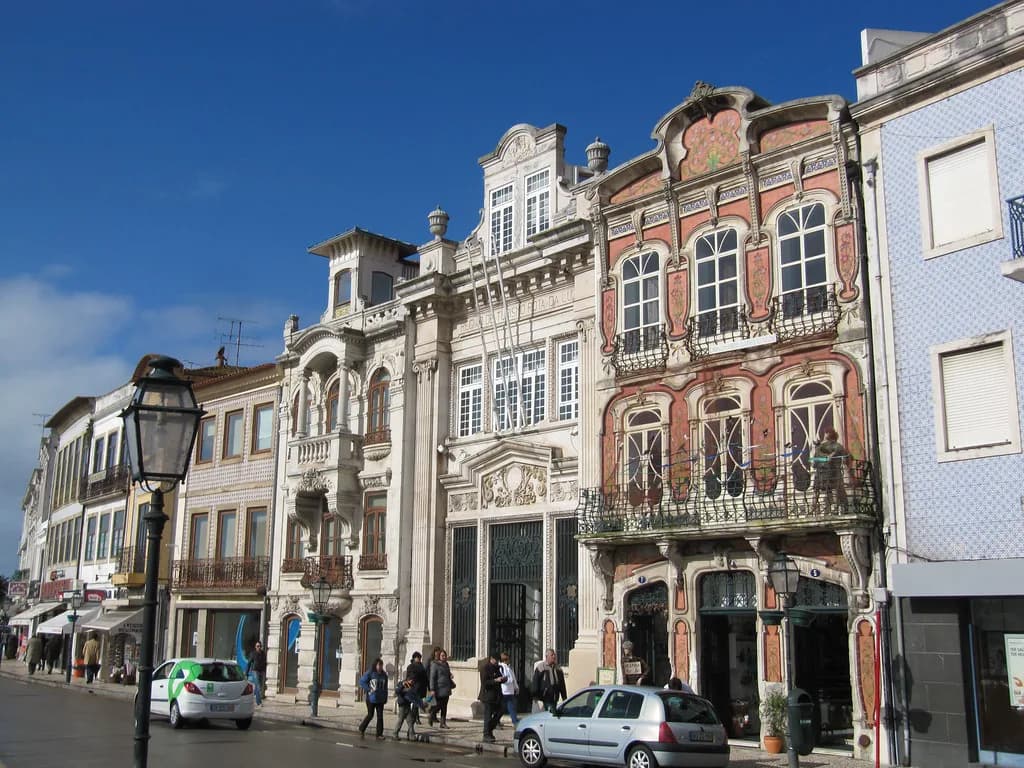
Treating it as a canal city with the proportions of a small Portuguese town is the better mental model. The moliceiro trip is a 45-minute introduction to the lagoon, not a full day on the water, and the pleasure of Aveiro is in its tiled streets, its art nouveau buildings and its seafood rather than in any Venetian comparison.
Two days in Aveiro: the lagoon and Costa Nova
The second day belongs to the water outside the centre. The salinas are Aveiro's working salt pans, and a visit gives you a sense of the industry that made the town wealthy long before tourism arrived. Pair that with the Museu Marítimo, which tells the local seafaring story, and you have a coherent maritime morning.
In the afternoon, head out to Costa Nova for the striped beach houses that give the coast its distinctive look. It sits outside the city and is not a stroll from the centre, so plan it as an excursion with your own transport or a bus; it works better as the second half of a day than as a quick detour.
Three days in Aveiro: the wider Ria and São Jacinto
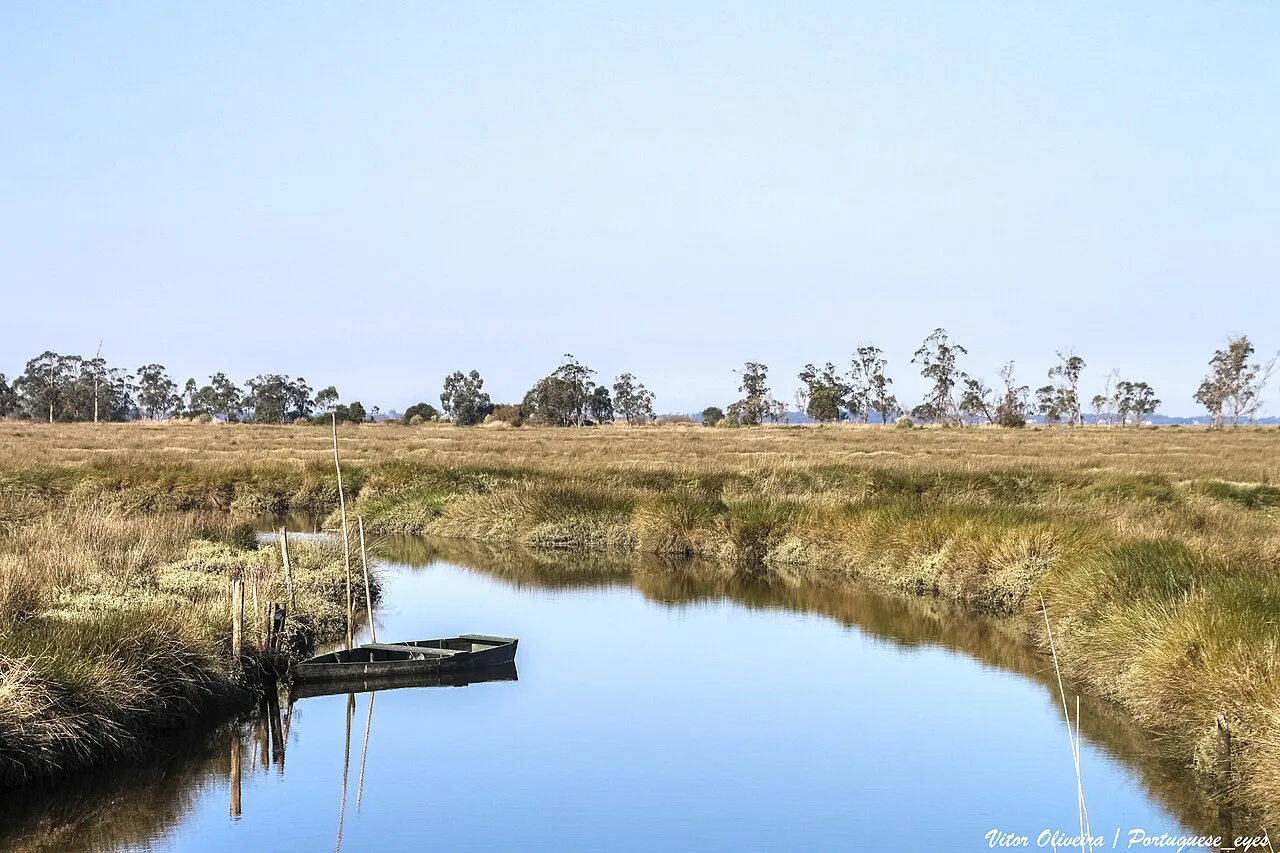
With a third day, the Ria de Aveiro opens up. A boat trip or a cycle along the lagoon gives you the waterways, birdlife and wide horizons that the town centre only hints at, and it is the part of Aveiro most travellers miss when they rush through.
São Jacinto's dunes on the far side of the lagoon give you a wilder, quieter coastline than Costa Nova, and Vista Alegre is where Portugal's porcelain tradition is displayed. Both are a day's business when combined with travel, which is exactly why three days suits slower travellers.
When to stop at one day
If Aveiro is a stop between Porto and Coimbra, one day is the right answer. The compact centre, the moliceiro trip and a good lunch fit comfortably before an evening train, and you will not feel you missed the essential.
Coming from Lisbon, the calculation is the same: a long day covers the city, but two days justify the journey.
Where to eat and what to try
Aveiro eats from the lagoon, so seafood is the order of the day: find a tasca serving the local catch and you will do better than at the canal-front places aimed at passing traffic. Ovos moles should be bought from a pastelaria rather than from a souvenir shop.
Beyond the egg sweets, look for Portuguese classics such as bacalhau and cataplana, and finish with a pastel de nata to compare with what you have had elsewhere. Meals here still feel like local eating rather than tourist set menus, especially away from the main canal.
Aveiro in one, two and three days at a glance
One day: moliceiro canal trip from R. João Mendonça, the station azulejos, the Museu de Aveiro and ovos moles. Two days: add the salinas, the Museu Marítimo and Costa Nova. Three days: add the Ria de Aveiro by boat or bike, São Jacinto's dunes and Vista Alegre porcelain.
The pattern is clear. The first day stays in the centre, the second heads to the water's edge, and the third gives you the lagoon itself.
Should you give Aveiro one day or two?
One day is the honest minimum, and it is enough to like Aveiro. Two days turn it from a stopover into a place you have actually seen, because the salt pans and Costa Nova are what distinguish it from every other Portuguese city with a pretty centre.
Choose three only if the lagoon and birdlife are the point of your trip. Otherwise stop at two, eat well, and spend the third day of your trip somewhere else on the line. If the Venice comparison is the thing that decides it for you, read our honest answer first.
Explore more Aveiro guides
Sources
Notes for your next Portuguese break
Optional updates to our town guides.
You might also like
Continue reading
More guides you'll find useful