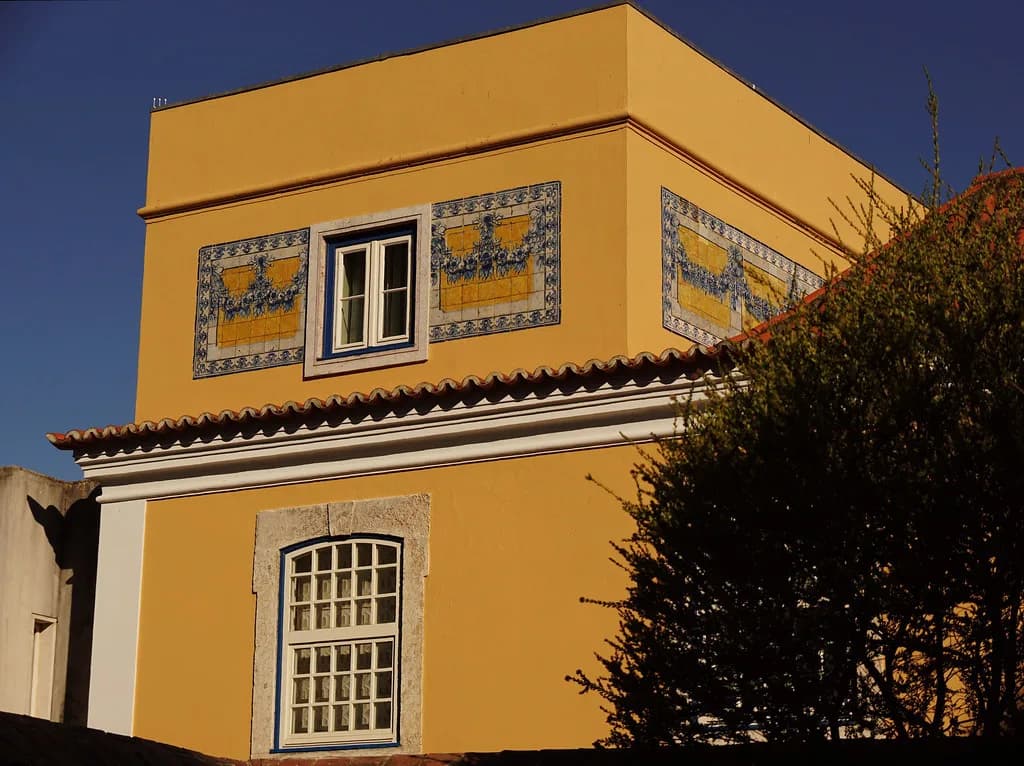
Where to Buy Azulejos in Portugal: Shops, Workshops and Antique Tiles
How to buy azulejos in Portugal: picking hand-painted over printed tiles, judging salvaged pieces before you pay, and packing them for the flight home.
On this page
Buy azulejos in Portugal as a hand-painted single tile if you want a light souvenir, and as a box from one production run if you are tiling a wall or floor. The difference matters: a decorative tile travels in hand luggage, while a project order adds kilos and a dye-lot risk. This guide covers what the word azulejo actually describes, how to separate painted from printed work, where tiles turn up in Portuguese towns, what pushes the price up and how to pack them for the flight home.
What 'azulejo' actually means when you shop
An azulejo is a glazed terracotta tile, a clay body covered with an opaque glassy glaze, and the term covers far more than the blue-and-white panels most travellers picture. The word derives from the Arabic al zulaycha, meaning little polished stone, not from azul for blue, and the earliest glazed tiles in Spain in the 13th century were mainly green, brown and yellow. Knowing this stops you paying a premium for blue alone and lets you judge a tile on glaze, pattern and finish instead.
The technique reached the peninsula through the Arab-Muslim world, where tin was used to opacify the glaze from the 9th century onwards. If you want the wider story of how the tiles became a Portuguese building material, the background on azulejos in Portugal is the place to start. In a shop, that history is your best defence against a seller who presents any decorated ceramic as a traditional tile.
Hand-painted or printed: how to tell them apart
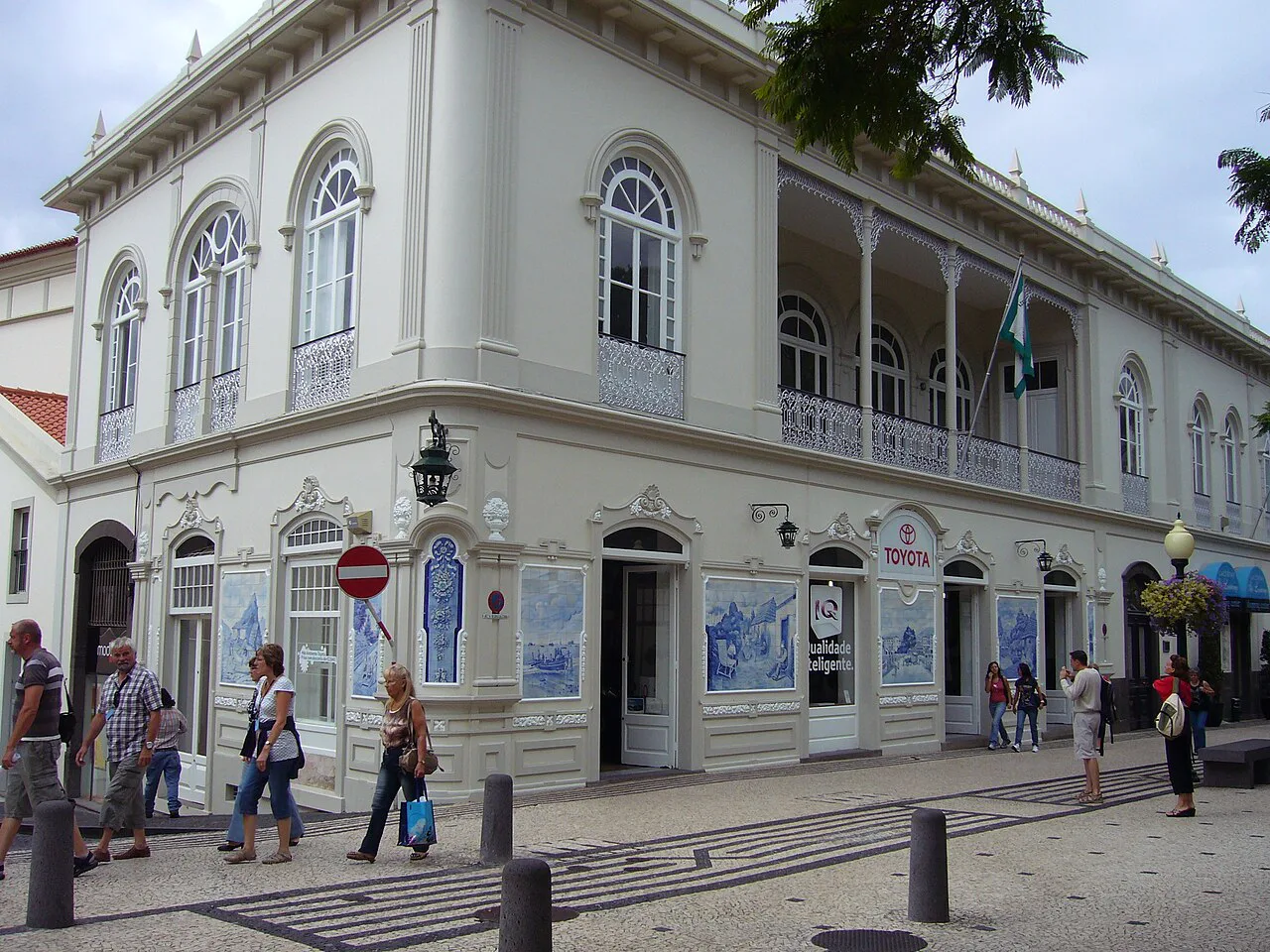
Painting a tile by hand means glaze applied colour by colour, with slight variation in density, edges and depth across the surface; a printed tile carries a photographic or digitally applied image with a flat, uniform finish. Turn the tile over and look at the face at an angle in daylight: hand-work usually shows small differences between neighbouring tiles in a set, while printed stock looks identical. Ask directly whether the decoration is painted by hand, and ask what the pattern is called, because a genuine maker will answer both without hesitation.
Are azulejos expensive? They span a huge range, from cheap printed squares to hand-painted pieces that cost many times more because of the labour and kiln losses involved. Decorative singles sold online show what the upper end of the decorative market can look like, but prices are set by individual shops according to pattern, size and quantity, so ask for a unit price and a price per square metre before committing.
Can you buy original antique azulejos? Yes, through salvage dealers and specialist sellers who trade in tiles recovered from demolished or renovated buildings. Before paying, ask for the provenance and check with the Portuguese cultural authorities whether an export permit is needed, since rules on architectural heritage vary.
What size are Portuguese azulejos? Sizes vary by maker and type: ask the shop what formats it stocks. Project tiles are typically priced by the box or square metre with the coverage printed on the carton.
The historical reference point is the arrival of Italian majolica in Seville in 1498, when a Pisan painter, Niculoso Pisano, began painting tiles like panels rather than assembling cut monochrome pieces. That shift from repetition to painterly decoration is exactly what you are looking for in a modern hand-painted tile: brushwork that follows the design rather than a mechanical repeat. Faded printing that sits on top of the glaze, or a pattern that continues perfectly across a break in the glaze, is a warning sign.
Where azulejos are sold in Portuguese towns
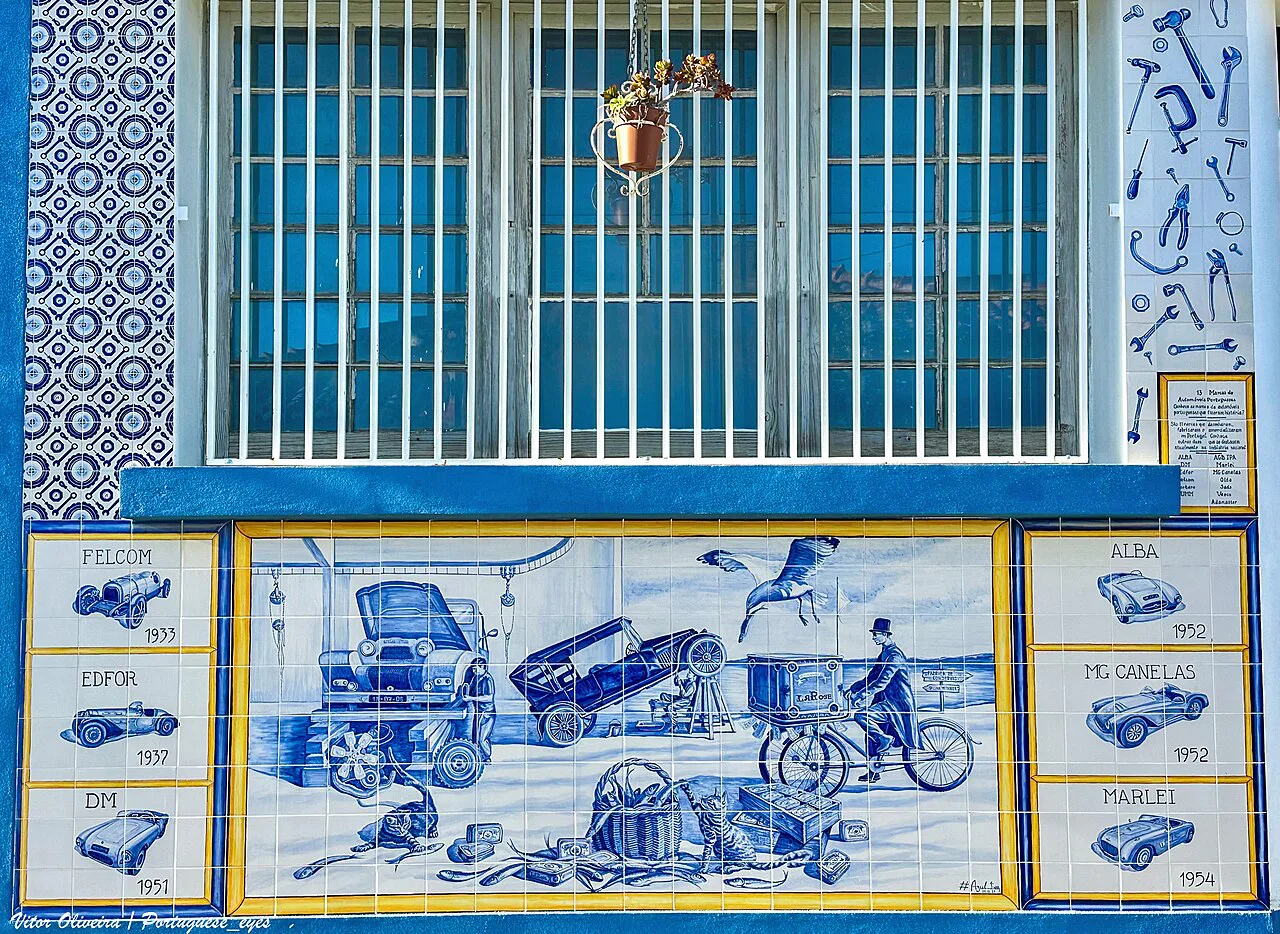
Tiles are sold through four main channels: dedicated tile shops, craft markets, museum shops and specialist salvage dealers. Tile shops carry both contemporary ranges and reproduction patterns, and they are the right place to order quantities for a project because they can supply matching batches. Craft markets suit a single decorative tile bought on impulse, but stock changes with the stallholder, so treat each piece as a one-off.
Understand the medium before you spend. If you are unsure what you like, spend time looking at historic work in churches, stations and museums before buying anything, because it costs nothing and prevents a wrong box of tiles. The Portuguese Tiles guide explains the production traditions behind what you will see on the shelves.
For interiors rather than tiles alone, Portuguese pottery covers the wider ceramics tradition, including the figures of Caldas da Rainha and the striped ware of Costa Nova, both of which sit alongside azulejos in many shops. If your trip is mostly about small, packable purchases, the edit of Portuguese souvenirs worth buying puts tiles in context with food and textile buys. Keep the two categories separate in your head: a bowl is not a tile.
Antique and salvaged tiles: check before you pay
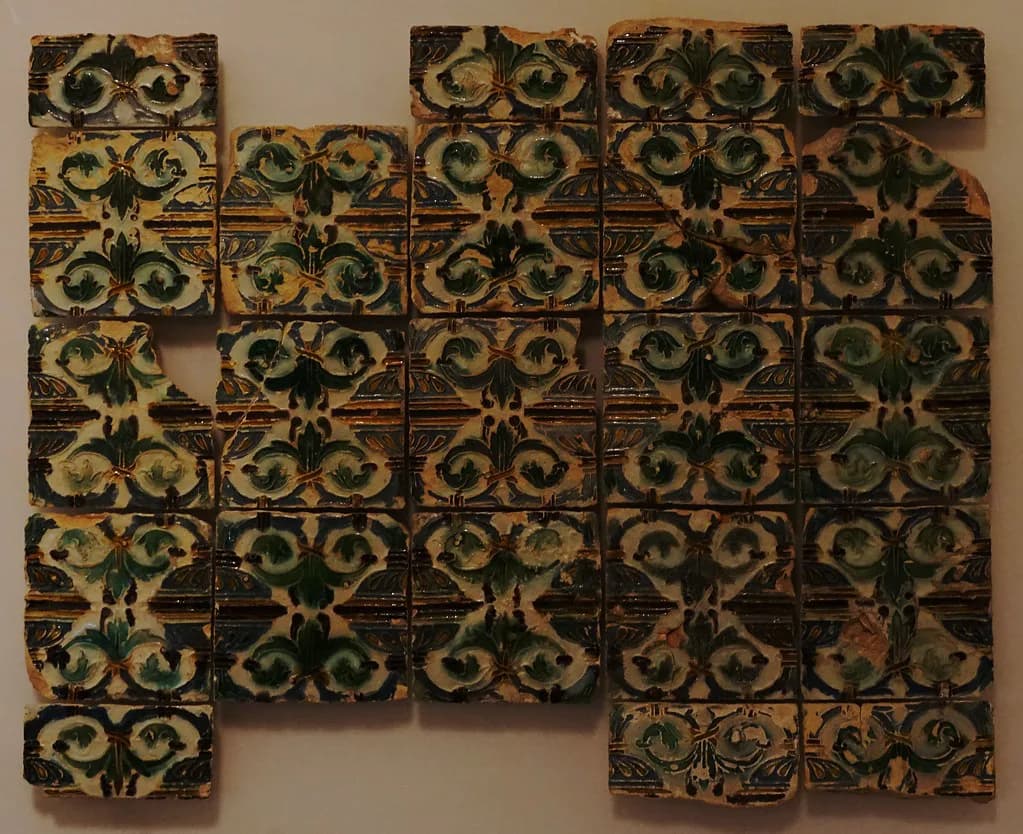
Old tiles come from demolished buildings, unused stashes and dealers who buy by the square metre, and they are sold singly, in matched sets or as whole panels. Before buying antique tiles, ask the seller for the provenance in writing and check with the Portuguese cultural authorities whether your purchase needs an export permit; rules on architectural heritage vary and a reputable dealer will know the process. Never assume a tile is free to leave the country because it is small.
Inspect old tiles for the damage that matters: crazing across the glaze, chipped corners that change the pattern when laid, and cement residue on the back that will not come off without breaking the biscuit. Compare every tile in a set against the others for colour shift, because a set assembled from different walls will never read as one surface. If the dealer cannot tell you where the tiles came from, price the risk into your decision.
What drives the price of a tile
Price tracks labour and loss more than size. Hand-painting, multiple firings, high kiln losses on large formats and the cost of matching a historic pattern all push a tile up, while a printed square is a cheap commodity. As an illustration of the decorative single-tile retail market, online listings at the time of writing showed a hand-painted 14 by 14 cm tile at £28.65 including tax, and a pack of 25 handmade glazed tiles at 11 by 11 cm at £139.42.
Those figures are internet retail prices in pounds for decorative pieces, not what a Portuguese tile shop will charge, and shop prices depend on the pattern, the size and the quantity you order. Ask for the unit price and the price per square metre separately, because a box price hides the real rate for a wall project. Get the quote in writing before you commit to a quantity you cannot carry.
Sizes and formats: one tile or a project box
Ask the shop what sizes it sells rather than assuming: decorative singles and project tiles come in different formats, and project tiles are usually priced by the box or the square metre with the coverage printed on the carton. Calculate your area before you go shopping rather than after, and add a margin for cuts and breakages, because a wall always eats more tile than the drawing suggests.
If you are buying for a specific wall, photograph the space with a tape measure in shot and bring the measurements to the shop. Ask whether the pattern can be reordered later, because a range that is discontinued mid-project leaves you with a half-finished surface. Ask about matching trims, borders and corner pieces at the same time, since these are often the items that go out of stock first.
Checking a tile is genuinely Portuguese-made
Ask, rather than assume, where the tile was made: check whether the country of manufacture is marked on the tile, the box or the shop's own labelling, and look for a maker's stamp or backstamp on the reverse, which is stronger evidence than a label on the shelf. Ask which region or workshop produced the tile, and ask whether the decoration was applied there or imported as a blank and printed locally. A seller who can name the producer and the town is giving you something you can verify.
Be sceptical of 'azulejo-style' wording, which often signals a printed ceramic, and of tiles sold as antique without any history. The distinction between cuerda seca, arista and cuenca tiles, the historic methods of keeping colours apart on a single tile, is a useful conversation test with a dealer: someone who handles traditional stock will recognise the terms.
Packing azulejos to survive the flight home
Assume every tile will be thrown, not carried. Wrap each tile individually in bubble wrap or newspaper, face to face and back to back with a layer between, then tape the bundle so it cannot shift, and put the bundle in a rigid box with padding on all six sides. Cabin bags are the safer place for one or two decorative tiles, because hold luggage is where breakage happens, but a box of project tiles will normally exceed cabin allowances and has to be checked.
Weigh the box before the airport and check your airline's cabin and hold limits, since glazed terracotta is heavy for its size and the difference between a single tile and a box is measured in kilos. Keep the receipt and photograph the tiles before packing, so a damage claim or a reorder is straightforward. Carry the most valuable piece with you rather than trusting it to the hold.
Common mistakes when buying tiles abroad
The classic error is buying a set assembled from different dye lots, where tiles from separate firings sit a shade apart and look mismatched once installed. Buy all the tiles for one surface in a single transaction, check them together in the shop, and ask the seller to confirm they come from the same batch. The second error is buying too many heavy tiles for hand luggage and paying excess baggage at the gate.
The third is buying an antique panel without asking about export paperwork, and the fourth is assuming every blue-and-white tile is old or hand-painted. Slow down, ask the same three questions in every shop, and buy fewer, better pieces if your trip is short. If you want to see outstanding historic work before you spend, look at the São Bento station panels in Porto, where the azulejo tradition is displayed at full scale.
Which tile should you actually buy?
Buy a single hand-painted tile from a tile shop or craft market if you want a souvenir that survives the flight, and buy a box from one batch only when you have measured a specific wall and accepted the weight. Ask about hand-painting, provenance and batch matching in every shop, and get export advice before spending on anything old.
Explore more Portugal guides
Frequently Asked Questions
Are azulejos expensive?
They span a huge range, from cheap printed squares to hand-painted pieces that cost many times more because of the labour and kiln losses involved. Decorative singles sold online show what the upper end of the decorative market can look like, but prices are set by individual shops according to pattern, size and quantity, so ask for a unit price and a price per square metre before committing.
Can you buy original antique azulejos?
Yes, through salvage dealers and specialist sellers who trade in tiles recovered from demolished or renovated buildings. Before paying, ask for the provenance and check with the Portuguese cultural authorities whether an export permit is needed, since rules on architectural heritage vary. Inspect old tiles for crazing, chipped corners and colour shift across a set.
What size are Portuguese azulejos?
Sizes vary by maker and type: ask the shop what formats it stocks. Project tiles are typically priced by the box or square metre with the coverage printed on the carton. Measure your wall, add a margin for cuts and breakages, and ask for matching border and corner pieces at the same time.
Are azulejos handmade?
Some are, and many are not. A hand-painted tile shows small differences in glaze density and brushwork, while a printed tile carries a flat, identical image, so look at a set together in daylight and ask the seller to confirm how the decoration was applied.
Sources
Notes for your next Portuguese break
Optional updates to our town guides.
You might also like


Continue reading
More guides you'll find useful