Best Towns in Portugal for a Short Break (Beyond Lisbon and Porto)
The best towns in Portugal for a one to four day break, from Évora and Óbidos to Tavira, Guimarães and Coimbra, with what each is best at and how long it needs.
On this page
Pick Évora for Roman ruins and a walled centre, Óbidos for walls you can walk, Coimbra for the Universidade de Coimbra, and Tavira for the Ria Formosa. Two days suits Évora and Coimbra; Óbidos and Nazaré fit into a single day each; Guimarães, Aveiro, Setúbal and Tavira sit comfortably in one to two days. This guide gives each town its own strength, a realistic day count for a break of one to four days, and the trade-offs that decide between them.
Most short breaks from the UK land in Lisbon or Porto and work outward by train, so the practical question is which towns you can reach and still have a full day on the ground. Lisbon and Porto are the two largest cities in the country, and both work as rail hubs for the towns in this guide. Tavira is the outlier: it rewards the journey only if you are already in the Algarve, since it sits at the eastern end of the region, far from the western beaches and cliff walks. The rest of the towns in this guide are compact enough to explore on foot once you arrive.
What each town is best at: a quick answer table
Évora is the strongest all-round pick: a Roman temple, a walled old town and the Capela dos Ossos (Chapel of Bones) within a short walk of each other, and it justifies two days. Óbidos is the most striking small town, with walls you can walk and the cobbled Rua Direita running through the gate, but it is small enough to see in a day. Coimbra brings the Universidade de Coimbra and the Biblioteca Joanina, plus a steep old quarter; Guimarães brings the Castelo de Guimarães and the Paço dos Duques de Bragança in a centre often described as the birthplace of the nation.
Tavira gives you churches, an old bridge and the Ria Formosa on the Algarve's quieter side. Aveiro offers canals, moliceiro boats and the striped houses at Costa Nova; Setúbal has a hilltop centre, a market and a ferry across to the peninsula; Nazaré has a clifftop viewpoint above fishing streets. If you want a beauty shortlist rather than a practical one, the most beautiful towns in Portugal are worth reading alongside this page.
Évora: Roman temple, walled centre and the Capela dos Ossos
Évora is the town to choose if you want one base that covers Roman, medieval and Manueline sights without a car. The Templo Romano de Évora (Roman temple) stands on the highest point of the walled centre, with the Sé (cathedral) and the Praça do Giraldo within a few minutes' walk. The Capela dos Ossos sits beside the Igreja de São Francisco on the edge of the old town and is the sight most travellers plan their day around.
Two days is the right allowance: one for the temple, cathedral and chapel, and a second for the walls, the aqueduct and the slower streets. Évora is small enough that you will pass the same squares repeatedly, which is part of its appeal rather than a problem. If your interests lean towards cities rather than walled towns, the best cities in Portugal covers the larger alternatives.
Óbidos: walking the walls and the Rua Direita
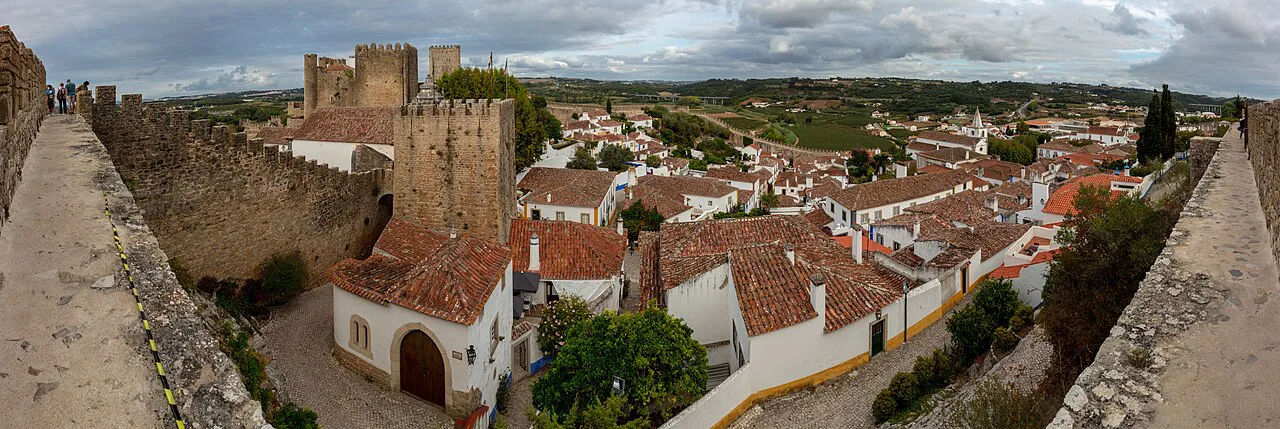
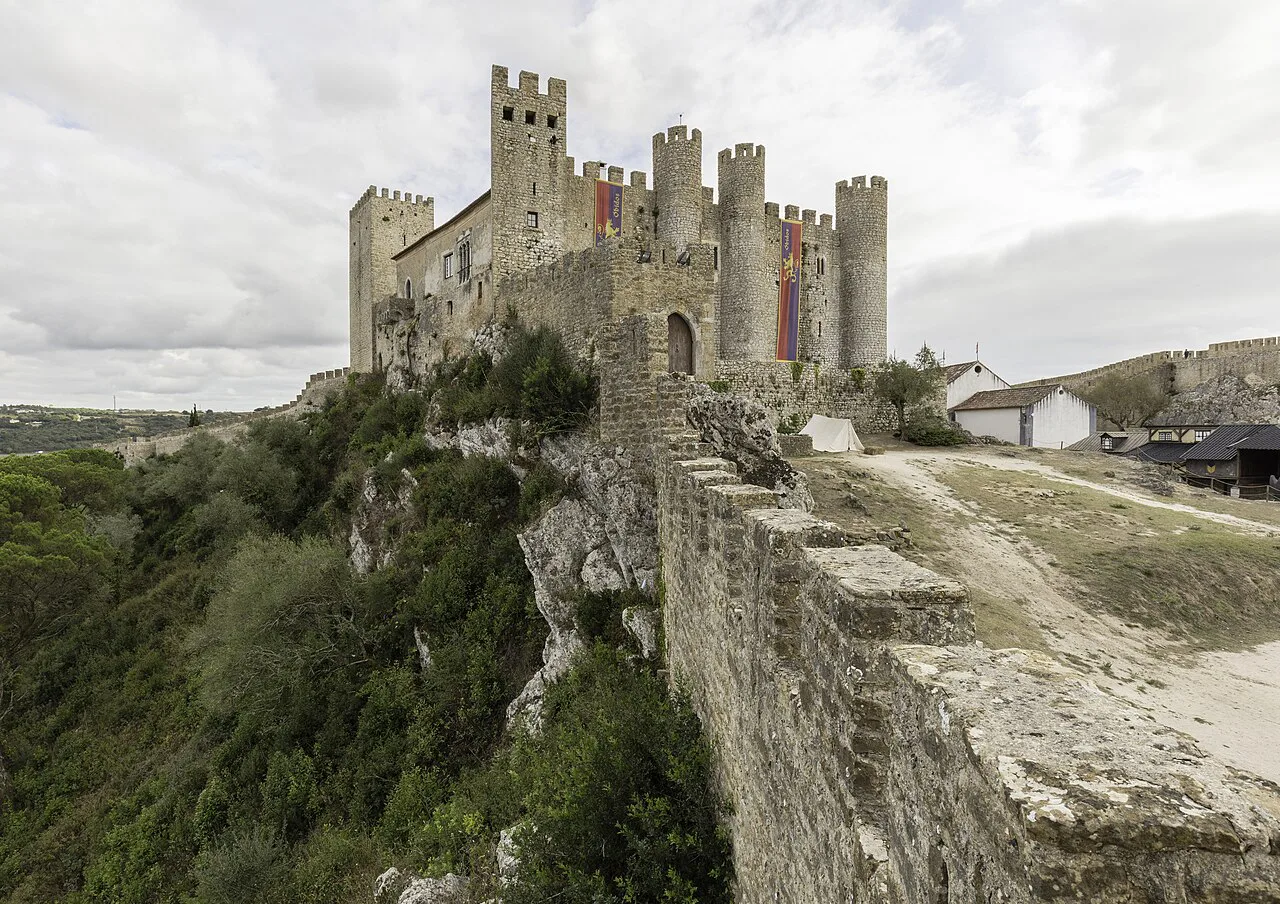
Óbidos is a town you enter through a gate and walk end to end in an afternoon. The Rua Direita runs from the Porta da Vila up to the castle, lined with whitewashed houses, small shops and pastelarias. The real reason to come is the walk along the top of the mediaeval walls, which are unfenced in places and need care with children or in wind.
A day is enough, and half a day covers the core if you are passing through. The trade-off is scale: Óbidos is tiny, busy in the middle of the day and short on reasons to stay the night unless you want the walls to yourself in the evening. Travellers comparing several walled towns should look at the wider list of medieval towns in Portugal before committing.
Coimbra: the Universidade de Coimbra and the old quarter
Coimbra is built on a hill, and the climb from the riverside to the Universidade de Coimbra is the defining feature of a visit. The Biblioteca Joanina (Joanina Library), the university's baroque library, is the headline sight and the one to plan around. The old quarter below it, with its stairways and narrow lanes, rewards slow walking rather than a checklist.
Two days lets you see the university, the Sé Velha (old cathedral) and the lower town without rushing the hill. The honest trade-off is effort: this is the most physically demanding town in this guide, and the cobbles and steps are hard on anyone with limited mobility. Travellers who prefer flat, coastal towns should look at Aveiro or Setúbal instead.
Guimarães: castle, palace and the old centre
Guimarães packs the Castelo de Guimarães (castle) and the Paço dos Duques de Bragança (Braganza Palace) into a short walk from a compact old centre. The castle's keep is climbable, and the palace opposite gives you a furnished interior to compare with the bare stone. The centre itself, with the Largo da Oliveira and its arcaded square, is the reason many travellers rate the town above its sights.
One full day covers the castle, palace and centre; a second day opens up the surrounding area. The trade-off is that Guimarães is in the north, so it pairs naturally with Porto as a transport hub rather than with the Alentejo or Algarve towns in this guide. If you are building a northern itinerary, the best towns in northern Portugal picks up where this section leaves off.
Tavira: churches, the Roman bridge and the Ria Formosa
Tavira is the Algarve for travellers who want churches and an old bridge rather than a beach strip. The town's churches, including the Igreja de Santa Maria do Castelo, sit among whitewashed streets above the Rio Gilão, and the so-called Roman bridge crosses the river in the middle of town. The Ria Formosa natural park, a lagoon system of islands and channels, lies just beyond the edge of the centre.
A day covers the centre; two days lets you add the lagoon and slow down. The trade-off is distance: Tavira sits at the far eastern end of the Algarve, far from the western cliffs and beaches, so it makes sense as an Algarve base rather than a detour from Lisbon. Tavira's wider context, with churches and the Ria Formosa, is typical of the Algarve's quieter towns.
Aveiro: canals, moliceiro boats and Costa Nova
Aveiro is the easy, flat option: canals through the centre, moliceiro boats carrying visitors along them, and the striped houses at Costa Nova on the coast nearby. The boats are the town's signature experience, and the canals give the centre a different feel from the hill towns elsewhere in this guide. Costa Nova's painted façades are the photo most travellers come for.
One day covers the centre and the boats; a second day allows the run out to Costa Nova and the surrounding lagoon. Aveiro is the least strenuous town here, which makes it a sensible choice for mixed-age groups or anyone who wants to avoid Coimbra's hills. Azulejos in Portugal turns up repeatedly in Aveiro and the surrounding region, so keep an eye on the façades as you walk.
Setúbal: hilltop centre, market and the ferry
Setúbal combines a working market town with a hilltop centre and a short ferry across to the Tróia peninsula. The Mercado do Livramento, the town's main market, is the reason to arrive in the morning, when the fish counters are at their best. From the ferry, the peninsula gives you a beach and a view back at the town.
One day is enough for the market and the centre; two if you want the ferry and a slow lunch. Setúbal is the gateway to the Arrábida hills and the Sado estuary, so it works well as a base for the surrounding coast rather than a destination on its own. The trade-off is that the town's sights are modest compared with Évora or Coimbra; for the full picture, see this Setúbal guide.
Nazaré: the clifftop viewpoint and the fishing streets
Nazaré splits into two parts: the fishing town on the beach and the clifftop site of Sítio above it, reached by funicular or a steep road. The miradouro (viewpoint) at Sítio looks straight down the beach and is the reason most travellers come. Below, the narrow streets are the everyday side of the town.
Half a day covers the viewpoint and the seafront; a full day lets you walk between the two levels. Nazaré is a one-streetlight town for sightseeing, so it is best paired with Óbidos rather than used as a base for several days. In winter, the waves are the attraction; in summer, it is the beach.
How many days each town needs
Two days: Évora and Coimbra, which have enough monuments and atmosphere to fill a second day without repetition. One to two days: Guimarães, Aveiro, Setúbal and Tavira, each of which can be seen in a day but rewards a slower second. One day or less: Óbidos and Nazaré, both small enough that a half-day visit is a real option.
Across a one to four day break, this means you should pick two towns rather than four. Évora plus Óbidos is the classic pairing; Coimbra plus Aveiro works well by rail; Guimarães pairs naturally with Porto. Pairing Tavira with anything outside the Algarve costs you most of a day in travel.
Which towns pair well, and how the trains connect them
The rail network links Lisbon to Évora, Coimbra, Aveiro and Setúbal, and Porto to Coimbra, Aveiro and Guimarães, so all of these can be combined without a car. Óbidos and Nazaré sit on the Lisbon–Leiria axis and are easiest as a single day out from Lisbon rather than a two-town stop. Tavira connects to Faro on the Algarve line, which is useful only once you are already in the region.
The trade-offs are real: Coimbra's hill costs you energy, Óbidos's size limits how long you can stay, Tavira's distance rules out a combined Lisbon-and-Algarve break, and Aveiro's flatness means less drama than Évora's walls. Choose by what you want to do on your feet, not by which town photographs best.
Opening days to plan around
Portuguese museums and national monuments frequently close on Mondays, and some close on public holidays, so build your itinerary around which venues are open rather than which town is closest. Churches often shut at lunchtime, and restaurants commonly take one day a week off. None of this can be assumed for a specific venue: the town's own museum or monument page is the place to confirm.
The practical rule is to put the town with the most sites you care about on a Tuesday, Wednesday or Thursday, and use Mondays for walking, walls and streets, which do not close. In Coimbra, that means the Biblioteca Joanina on a weekday morning. In Évora, the Capela dos Ossos and the temple.
Which town to book first
For a first short break beyond Lisbon and Porto, book Évora for two nights: it has the strongest combination of Roman, medieval and walled-town sights, and it works entirely on foot. If you want a smaller, gentler base, take Aveiro for flat walking and canals, or Guimarães for the castle and palace in a compact centre.
Save Óbidos and Nazaré for a day out rather than a stay, and treat Tavira as part of an Algarve trip rather than a detour from Lisbon. Before booking, check the opening days for the specific museum or monument you most want to see, and use the town's own site rather than a general list.
Explore more Portugal guides
- Best Cities in Portugal for a Short Break (Not Lisbon or Porto)
- Best Places to Visit in Portugal Beyond Lisbon and Porto
- Tomar: the Convent of Christ, the Old Town and How Long You Need
- Óbidos: A Practical Guide to the Walled Town
- Medieval Towns in Portugal
- Most Beautiful Towns in Portugal
- Schist Villages in Portugal
Frequently Asked Questions
Which part of Portugal is the most beautiful?
There is no single answer, because the country changes character sharply by region. The Alentejo around Évora gives you walled towns and plains, the Algarve around Tavira gives you lagoons and whitewashed streets, and the north around Guimarães gives you castles and granite. Choose by the landscape you want to wake up in rather than by a national ranking.
Which towns in this guide are the largest?
Lisbon and Porto are Portugal's two largest cities, which is why most short breaks start at one of their airports. The towns in this guide are much smaller, which is precisely why they suit a short break: you can walk the centre in a morning and still have the afternoon free. If size matters to you, check the latest census figures for a specific town before booking.
Sources
Notes for your next Portuguese break
Optional updates to our town guides.
You might also like



Continue reading
More guides you'll find useful