Óbidos Guide: What to See, How Long to Stay and Getting There
Plan a short break in Óbidos with this practical guide: walking the medieval walls, the castle, Rua Direita, ginjinha in a chocolate cup and how long the town needs.
On this page
Óbidos is a walled town small enough to walk across in half a day, and that is exactly how most visitors see it: a few hours inside the walls before moving on. The reward for staying longer is quieter streets once the day-trippers leave and time to walk the castle walls without a crowd pressing both ways. This guide covers what to see, how the town is laid out, how long it needs and how to get there from Lisbon.
Óbidos in a nutshell: a walled town you can cross on foot in half a day
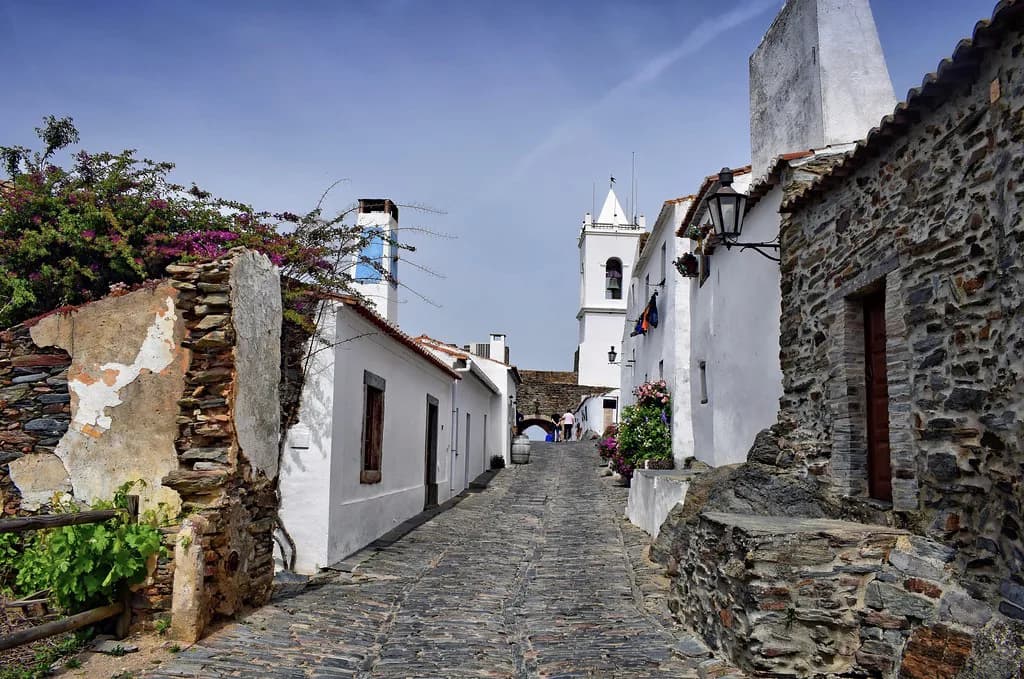
The historic centre sits inside a continuous ring of medieval stone wall, entered through the tiled Porta da Villa gateway. Inside, the lanes are cobbled and mostly traffic-free, and the main axis, Rua Direita, runs from the gateway up towards the castle. You can walk from one side of town to the other in well under fifteen minutes, which is why Óbidos works as a half-day stop as much as a base.
The town is one of the best towns in Portugal for a short break precisely because it does not demand a full itinerary. Its pleasures are small and close together: the wall walk, the castle, a church, a couple of bookshops and a glass of ginjinha. If you are comparing walled destinations, it sits naturally alongside the medieval towns in Portugal that reward slow wandering over ticking off sights.
Where Óbidos is and how to reach it from Lisbon
Óbidos lies about 85 kilometres north of Lisbon, close enough for a straightforward day trip. The most convenient approach is the Rápida Verde bus run by Rodoviária do Oeste from Campo Grande bus station in Lisbon; it takes a little over an hour and drops you right outside the town walls, with no uphill trek. Tickets have been reported at around €9 paid in cash to the driver, with less frequent service at weekends, so confirm the current fare and timetable with the operator before you travel.
By car the drive from Lisbon takes about an hour on the tolled A8 motorway, and there is free parking just outside the historic centre. The train is the weakest option: the station sits roughly a 20-minute walk from the walls along a country road without a pavement, and departures are limited. If you are coming by rail, treat the walk as part of the trip rather than a quick connection.
How many days Óbidos needs: a few hours, one night or two
Three to four hours covers the essentials: the gateway, Rua Direita, the church, a look at the castle and, if you are comfortable with heights, the wall circuit. That is enough for the town to make an impression, but it is also enough to leave before the place settles into its evening quiet.
One night is the sweet spot for most travellers. Staying overnight lets you see the streets after the buses leave, walk the walls at golden hour and eat a proper dinner rather than a rushed snack. Two nights only makes sense if you plan to use Óbidos as a base for the surrounding area, or if you simply want to read in a café for an afternoon.
The best places to visit in Portugal reward a slower pace, and Óbidos is a good example: the town does not have a long list of sights, so the value of extra time comes from atmosphere rather than attractions. If you are building a wider trip, Óbidos fits neatly alongside other small historic centres covered in the best places to visit in Portugal.
The town walls: what the walk involves, the drop on the inner side and who should skip it
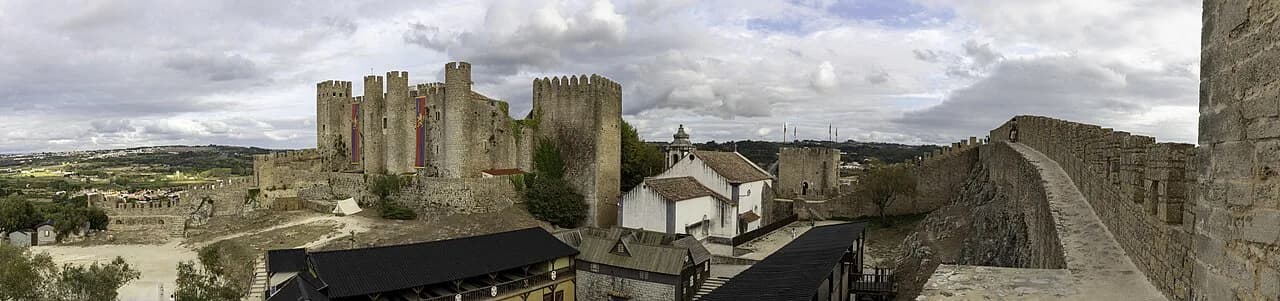
Walking the walls is the defining Óbidos experience, and it is not a gentle stroll. The parapet has no railing on the inner side, with a steep drop down to the streets below, and when the wall is busy you will meet people walking in both directions on a narrow path. The surface is uneven stone, so wear shoes with grip and keep both hands free.
The views from the top are the point: red rooftops, narrow lanes and the countryside beyond, with several natural viewpoints along the circuit. If you are afraid of heights, skip the wall walk rather than forcing it, and enjoy the same rooftops from the town streets instead. Go early or late to avoid the busiest stretch, when two-way foot traffic makes the narrow path harder.
Óbidos Castle: the medieval core, the pousada inside it and the views from the walls
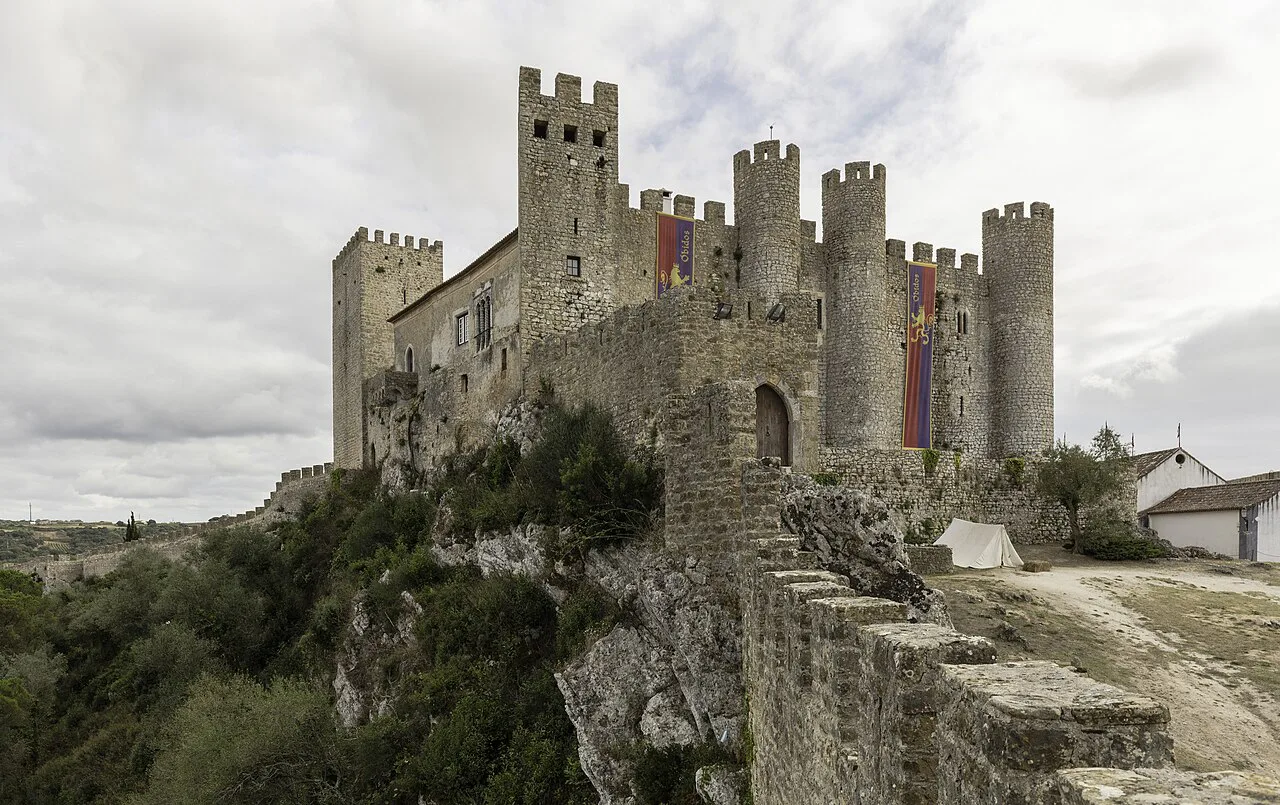
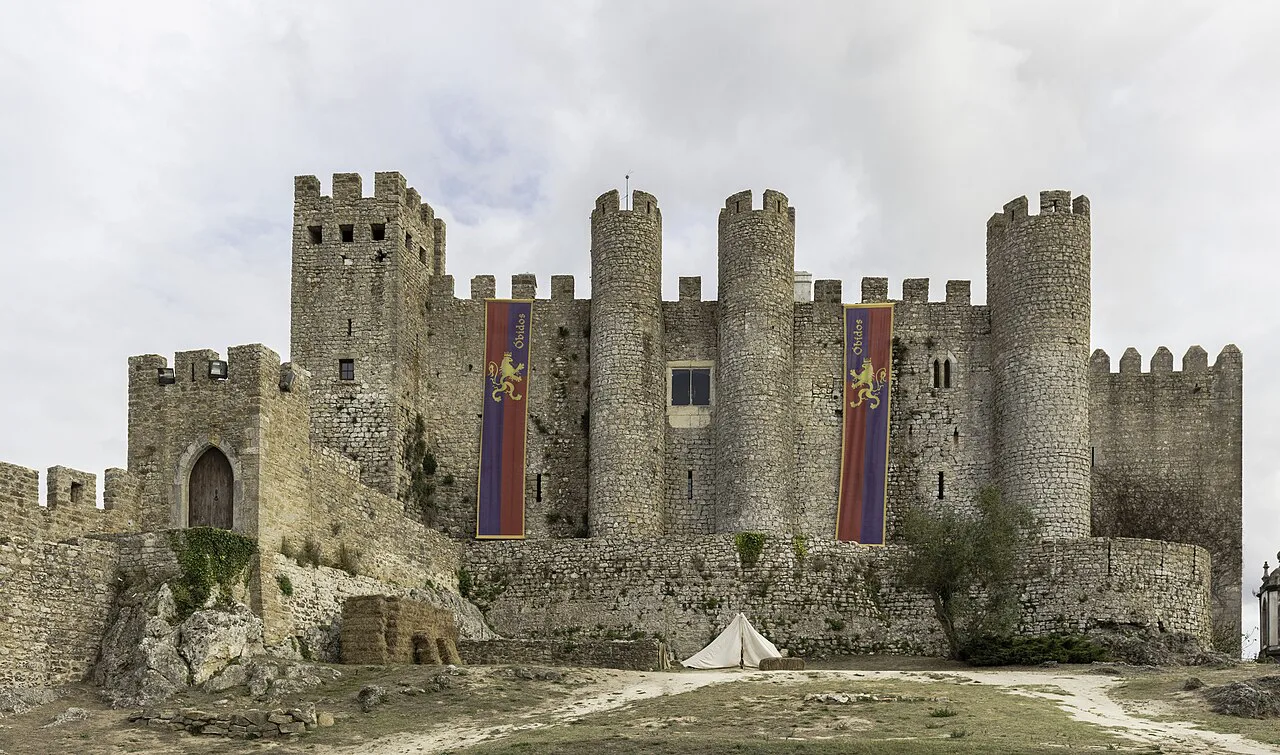
The castle sits at the northern end of town, and its earliest parts date back to the 12th century. It now houses a luxury hotel, the Pousada Castelo de Óbidos, so the interior is not a conventional museum visit; the castle is something you look at, walk around and photograph rather than tour room by room. The structure itself is the attraction, looming over the lanes and visible from much of the town.
The castle's position explains why the wall walk is worthwhile: from the battlements you get the classic view back over the rooftops and out across the countryside. The castle hotel is a working hotel rather than a ticketed monument, so plan your visit around the exterior and the wall circuit, and confirm current public access to the walls locally before setting out.
For a wider sense of Portugal's medieval heritage, Óbidos castle is a compact introduction. If you want a deeper castle or convent visit on the same trip, Tomar, with the Convent of Christ, makes a natural counterpart and is covered in the guide to Tomar: the Convent of Christ, the Old Town and How Long You Need.
Porta da Villa and the tiled gateway into the historic centre
You enter the old town through the Porta da Villa, a grand gateway decorated with blue and white tiles that are centuries old. It is the natural first stop and sets the tone for the town: ornate, compact and slightly theatrical. Pause here to orient yourself, because the lanes beyond fan out quickly and the gateway is the easiest landmark to navigate back to.
Rua Direita: the main street for shops, snacks and local crafts
Rua Direita is the town's busiest street, running from the gateway up towards the castle, and it is where you will find souvenirs, local handicrafts, cafés and restaurants. It is also where the town's most famous small ritual happens: a shot of ginja, the regional cherry liqueur, often served in a small chocolate cup that you eat after drinking. Treat it as a pause, not a destination.
The street is short enough to walk in ten minutes, but it rewards a slower pass: look for the tiled façades, the flowering vines and the small shops that sell local snacks. If you want a specific bakery, the Capinha de Óbidos on the main street is known for its sweets and bread, with buns and cakes made in front of you.
Igreja de Santa Maria and the Praça de Santa Maria
The Igreja de Santa Maria is a whitewashed church just off Rua Direita, and it has a royal connection: King Afonso V of Portugal was married there in the mid-15th century. The square outside, the Praça de Santa Maria, is a natural place to sit and rest, with cafés and a quieter atmosphere than the main street. The church is a working parish church, so visit respectfully and check opening times locally before you go.
Ginjinha in a chocolate cup: what it is and where the ritual fits into a wander
Ginjinha, or ginja, is a cherry liqueur that is a speciality of the region, and in Óbidos it is traditionally served in a small edible chocolate cup. The ritual is simple: drink the liqueur in one or two sips, then eat the cup. You will see it sold along Rua Direita and in the small shops around the centre, and it makes a good mid-walk pause rather than a sit-down affair.
The Óbidos Aqueduct and the short walk out to it
The 16th-century Óbidos Aqueduct stands about a 10-minute walk from the historic centre, and it is an easy add-on if you have time to spare. The walk takes you out of the walls and into the surrounding streets, giving a different view of the town, and the aqueduct is viewed from outside rather than as a ticketed sight.
Bookshops and literary stops inside the walls
Óbidos has a literary streak, with several bookshops and reading-friendly cafés inside the walls. They are small, independent places rather than major attractions, and they suit a slow afternoon better than a checklist. If you are travelling with a reader, build in time to browse rather than rushing from sight to sight.
Eating in Óbidos: a sit-down dinner versus casual lunch outside the walls
Inside the walls, the eating is mostly casual: snacks, pastries, sandwiches and the occasional sit-down restaurant along Rua Direita. For a splurge dinner, Book and Cook Restaurant is recommended as a special-occasion option inside the town. If you want a cheaper, more everyday lunch, walk outside the walls where the local restaurants serve more straightforward Portuguese food.
For a quick bite, the Capinha de Óbidos bakery on the main street is a good stop for brownies, bread, cakes and sweets, with buns and pastries made in front of you. JamonJamon is another casual option named by visitors.
Óbidos with limited mobility or a fear of heights: what still works
The wall walk is the main obstacle: no railings, uneven stone and a real drop mean it is not suitable for anyone with a fear of heights, poor balance or limited mobility. The good news is that the rest of the town works well without it. The streets are cobbled but mostly level, the gateway, church, shops and cafés are all accessible on foot, and the views from the town itself are still rewarding.
If you are travelling with someone who cannot manage the wall, split up: one person can walk the circuit while the other waits in the Praça de Santa Maria with a coffee. The town is small enough that you will regroup quickly, and nobody has to miss the whole afternoon.
A simple one-day plan for Óbidos, hour by hour
Start at the Porta da Villa mid-morning, when the town is still relatively quiet, and walk up Rua Direita towards the castle. Pause for a coffee and a pastry at Capinha de Óbidos, then visit the Igreja de Santa Maria and the Praça de Santa Maria. By late morning you will have seen the core of the town without rushing.
After lunch, walk the castle walls if you are comfortable with heights, then take the 10-minute walk out to the Óbidos Aqueduct for a change of scene. Finish with a ginjinha in a chocolate cup on Rua Direita before the day-trippers leave. If you are staying overnight, save the wall walk for golden hour, when the light is best and the crowds thinner.
Is Óbidos worth it if you only have one day in central Portugal?
Yes, if you accept it as a half-day town rather than a full-day destination. Óbidos is compact, atmospheric and easy to reach from Lisbon, and the wall walk alone justifies the trip for many visitors. If you are choosing between several small towns, Óbidos is one of the most beautiful towns in Portugal and a strong candidate for a short stop, though it is not the place for a museum-heavy day.
If you have more time in central Portugal, consider pairing Óbidos with Nazaré or Caldas da Rainha, both within easy reach by car. For a broader comparison of urban bases, the best cities in Portugal for a short break beyond Lisbon and Porto are covered separately. But as a single, self-contained stop, Óbidos delivers exactly what it promises: a walled town you can cross on foot, with a castle at one end and a chocolate cup at the other.
Should you stay the night in Óbidos?
If your trip is a quick stop between Lisbon and points north, a few hours in Óbidos is enough to see the walls, the castle and the main street. But the town's real charm emerges after the day-trippers leave, when the lanes quieten and the wall walk becomes a peaceful evening stroll rather than a crowd negotiation. One night is the difference between ticking off a sight and actually settling into the place.
Where you stay is a personal choice, but staying inside the walls puts you in the middle of that evening atmosphere, while staying outside gives you easier parking and often better value. Either way, the town is small enough that you are never more than a ten-minute walk from the gateway.
Explore more Portugal guides
Frequently Asked Questions
How close is Óbidos to Lisbon?
Óbidos is about 85 kilometres north of Lisbon, roughly an hour by car on the A8 motorway or a little over an hour by bus from Campo Grande. The bus drops you outside the walls, while the train station is a 20-minute walk from the centre.
Can you walk the walls of Óbidos?
Yes, the medieval walls form a continuous circuit you can walk, but there are no railings on the inner side and the drop is steep. It is not suitable for anyone with a fear of heights or limited mobility, and it gets busy with two-way foot traffic.
What is Óbidos known for?
Óbidos is known for its well-preserved medieval walls, the castle that now houses a pousada, the tiled Porta da Villa gateway and the cherry liqueur ginjinha served in a chocolate cup. It is also a literary town, with several bookshops inside the walls.
Sources
Notes for your next Portuguese break
Optional updates to our town guides.
You might also like
Continue reading
More guides you'll find useful