
Best Cities in Portugal Beyond Lisbon and Porto
The best cities in Portugal for a short break, from Coimbra and Évora to Aveiro and Funchal, with what each one gives you and how many days it needs.
On this page
Coimbra and Évora are the strongest picks for a first short break beyond Lisbon and Porto: Coimbra puts a UNESCO-listed university hill and its baroque library at the centre of a compact old town, while Évora packs a Roman temple, a cathedral and the Capela dos Ossos inside medieval walls you can walk in a morning. Aveiro suits anyone who wants canals and flat walking rather than hill climbing. This guide compares eight Portuguese cities by what they deliver in one to four days, covering walking times, hills, days needed and euro prices, and it links out to the wider Best Towns in Portugal list for the smaller places.
What makes a Portuguese city work for a short break
Judgement one is size. The cities here have historic cores you can cross on foot in twenty to forty minutes, so the difference between a rushed break and a relaxed one is how many sights sit on the same slope. Judgement two is hilliness: Coimbra's university quarter climbs steeply above the Baixa, Braga's Bom Jesus do Monte sits up a hillside outside town, while Aveiro and Faro's old town are broadly level. Judgement three is how far the city reaches beyond itself, because Aveiro, Faro and Funchal all give you a wider region within a short run by bus or boat.
Judgement four is what you pay at the door. Cathedral and church entry is often free, while the headline monuments charge a modest ticket. Where you build a day around one paid sight, such as Coimbra's Biblioteca Joanina or the Capela dos Ossos in Évora, plan the ticket into your day rather than assuming you can wander in. The Most Beautiful Towns in Portugal guide covers the smaller walled places that rival these cities for atmosphere.
Coimbra: the old university hill and the Biblioteca Joanina
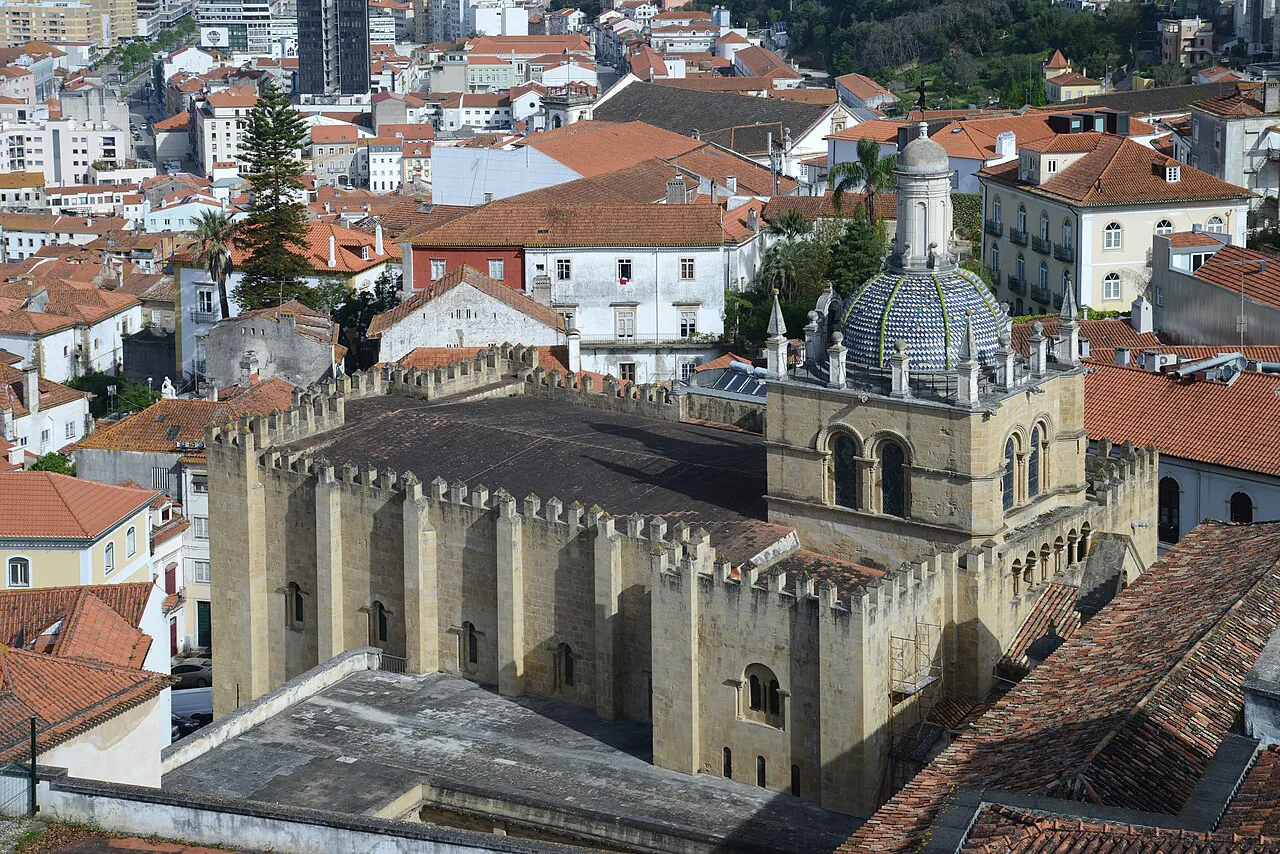
Coimbra splits into two levels. The Baixa runs along the Mondego with the main shopping streets, cafés and the train stations, and the Universidade de Coimbra sits on the hill above it; the climb on foot takes around fifteen to twenty minutes, and the reward is the courtyard, the tower and the views back over the river. Budget half a day on the hill rather than a quick hour, because the historic university buildings are spread out.
The Biblioteca Joanina is the set piece: a baroque library with gilded shelves and painted ceilings inside the university complex, and the reason many people come at all. Opening days and ticket prices vary between the university's own sites and seasons, so confirm both against the university's official pages before you build your day around it. The old cathedral, the Sé Velha, sits on the same slope, making a natural pairing before you drop back to the Baixa for lunch.
Two nights is the right allowance for Coimbra if the university is your priority: one afternoon for the hill and library, one morning for the Sé Velha and riverside, plus an evening in the Baixa. One night forces an either-or choice. Coimbra also works as a rail stop between Lisbon and Porto, which makes it the easiest of these cities to slot into a longer trip.
Évora: Roman temple, Sé and the Capela dos Ossos inside the walls
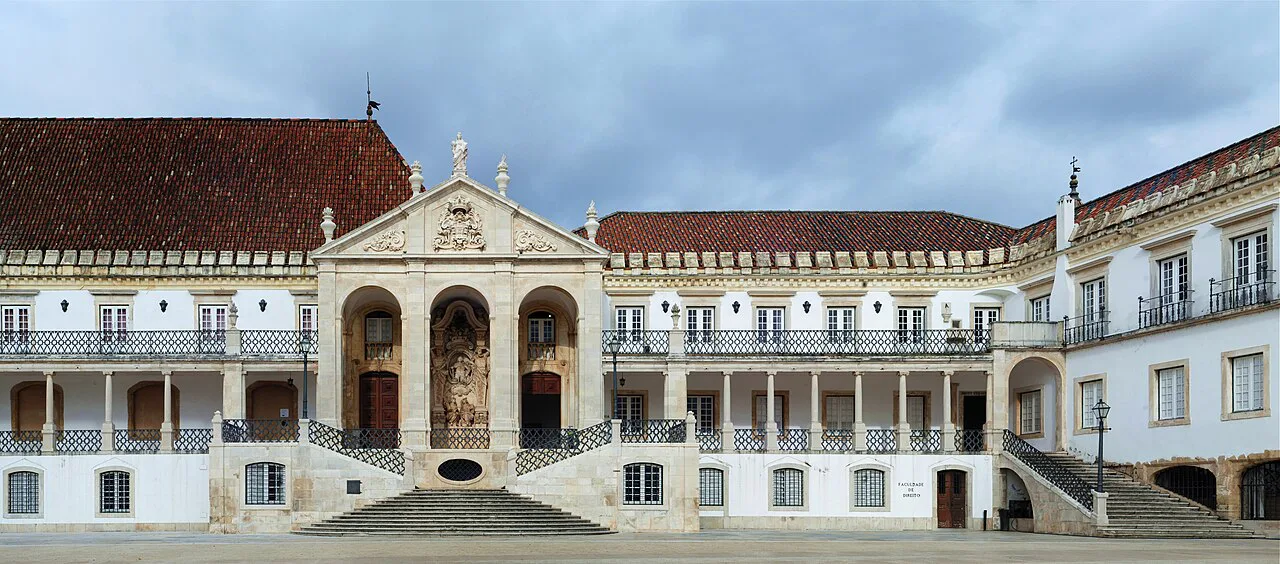
Évora is the most complete walled city on this list for a short break. The Templo Romano stands on the high ground near the cathedral, its columns visible from much of the old town; the Sé de Évora, with its twin towers, faces it across a short walk, and the Capela dos Ossos, the chapel lined with human bones, sits a few minutes away in the Igreja de São Francisco. All three sit within a loop you can walk in half a day without rushing.
The Capela dos Ossos carries an entry charge set by the church, so check the ticket price at the door or on the church's own information before you set out, and allow time for a queue in high season. Beyond the monuments, the pleasure of Évora is the streets: whitewashed houses, the aqueduct running through town and the Praça do Giraldo as the main square for a coffee. Two nights lets you see the sights on day one and spend the second morning on the streets and the Roman temple at ease.
Aveiro: canals, moliceiro boats and the Costa Nova striped houses
Aveiro is the flattest and easiest of these cities to walk. The canals run through the centre, the moliceiro boats, painted with bright designs, take visitors along them, and the old quarter around the cathedral is compact enough to cover in a morning. Boat trips run from the central canal; check the price and trip length with the operator before you board.
The Costa Nova, the nearby beachfront strip known for its striped houses, is the reason to give Aveiro more than a day; it sits a short trip from the city, which makes it an easy half-day out from Aveiro. Back in town, the fish market and the cathedral square fill a second morning. One full day plus a night is enough for the canals and the Costa Nova; anyone wanting a slower pace should take two nights, especially if you are using Aveiro as a base for the wider region.
Guimarães: the castle and the cradle-of-the-nation old centre
Guimarães is the most compact of the cities here. The Castle of Guimarães sits at one end of the old centre and the Paço dos Duques de Bragança next to it, with the Rua de Santa Maria and the Largo da Oliveira leading through the historic heart between them. The walk from the castle to the main square takes ten to fifteen minutes on gentle ground, so a single day covers the monuments and the streets.
The old centre rewards a slower walk than the sights alone: the arcaded square and the granite lanes around it are the point. One night is enough if you concentrate on the centre. Two nights makes sense if you want to use Guimarães as a base for the region around Braga and the north. For the smaller historic centres nearby, the Medieval Towns in Portugal guide is a useful companion.
Braga: the Sé and Bom Jesus do Monte up the hill
Braga's centre is dense with churches, and the Sé de Braga is the one to see first: one of the oldest cathedrals in Portugal, with a Romanesque interior and a cloister to walk. Around it, the pedestrian streets and squares of the centre give you a comfortable half day. The climb to Bom Jesus do Monte is the other half: the sanctuary sits on a wooded hill outside the centre, reached by bus or by the famous stairway, and it takes the better part of an afternoon.
Allow two nights in Braga. Day one covers the centre and the cathedral; day two takes you up to Bom Jesus do Monte and back with time to spare for the evening. The trade-off is that Braga is less atmospheric than Évora or Guimarães at street level, so it suits travellers who want sights and a lively city over a fairy-tale old town. For the best places to visit in Portugal beyond Lisbon and Porto, Braga earns its place on the cathedral alone.
Faro: the old town behind the marina as an Algarve base
Faro's old town is small and walled, sitting behind the marina, and you can walk its main lanes in an hour. The Sé de Faro and the surrounding squares give the city its calm; the marina side has the restaurants. One night is enough for the old town itself. Two or three nights makes sense only if you plan to use the city as a base for the Algarve, because the city centre alone will not fill three days.
Faro is the transport hub of the Algarve, with the airport and coastal links by rail and road. The trade-off is that the city will not give you the storybook old town of Évora or Guimarães, and anyone wanting the Algarve's prettiest streets should head east to the Castelo de Tavira. Keep Faro for the days you want a comfortable base rather than a sight-heavy city.
Funchal: Madeira's capital, Mercado dos Lavradores and the gardens
Funchal is a full city with an old town, a working market and a garden culture. The Mercado dos Lavradores, the main market, is the place to start a morning: two levels of produce, fish and flowers, with the fish hall at its liveliest early. The old town around the Sé and the painted doors sits below it, and the gardens, including the botanical and tropical gardens, each take an hour or more and are best reached by bus or cable car.
Three nights is the right allowance for Funchal. One day for the market and old town, one for a garden or the cable car up the hill, and one spare for the wider island. Funchal is the only city here that is not on the mainland, so it works as a short break in its own right rather than a stop on a rail route. The hilliness is real: the old town and market are steep in places, so plan your walks downhill where you can.
How the cities compare: hilliness, size and walking time
For flat walking, choose Aveiro or Faro; for a compact walled centre, choose Évora or Guimarães, both of which let you cross the historic core in under twenty minutes. Coimbra and Braga are the hilliest, with Coimbra's university quarter the steepest single climb of the group. Funchal sits between: level around the marina, steep in the old town. The table is simple: two to three hours covers the centre of any of these cities, and the rest of the day goes on one monument or one out-of-town sight.
Days needed: one, two or three nights in each
One night is enough for Aveiro's canals, Guimarães' centre and Faro's old town. Two nights suits Coimbra, Évora and Braga, where the main monument deserves a morning of its own. Three nights is for Funchal and for anyone using Faro or Aveiro as a regional base. If you have a full week, pair Évora with the Alentejo or Coimbra with the north, rather than trying to tick off four cities.
Which city suits which trip: first-timers, repeat visitors, families, winter sun
First-timers who have already seen Lisbon should start with Coimbra and Évora, the two cities with the strongest single sights. Repeat visitors who know the big names should go for Guimarães and Braga, which reward slower wandering. Families do well in Aveiro for the flat ground and the boats, and in Funchal for the market and gardens. For winter sun, Faro and Funchal offer the mildest conditions, but check typical climate averages before you book rather than expecting guaranteed heat. For the smaller places that sit around these cities, the Most Beautiful Towns in Portugal guide covers Óbidos and Mértola alongside the northern towns.
Which city should you book first?
Choose Coimbra for the library and Évora for the bones and the Roman temple if this is your first Portuguese city break outside Lisbon and Porto. Both take two nights and both give you a proper old town with one unmissable sight. Leave Aveiro and Faro for a slower trip with fewer monuments, and save Funchal for a week when you want island air rather than a rail route.
Explore more Portugal guides
Frequently Asked Questions
Is two days enough for Coimbra and Évora together?
Two days split across both cities is tight rather than comfortable. Each city's main sights sit on a hill or inside a walled centre that takes a morning to see properly, so the guide's working minimum is two nights in each city, or two nights split between them.
Which of these Portuguese cities is flattest to walk?
Aveiro and Faro are the flattest, with level centres and no long climbs between the sights. Coimbra and Braga are the hilliest, because the university quarter and Bom Jesus do Monte both sit above the town.
Do I need a car to visit these cities?
For the mainland cities in this guide, no. Coimbra, Évora, Aveiro, Guimarães, Braga and Faro each have compact centres whose sights sit within walking distance, and Coimbra sits on the Lisbon–Porto rail line. Funchal is reached by air, and the gardens by bus or cable car. If you want to reach outlying sights such as Bom Jesus do Monte or the Costa Nova, check the local bus options for each.
Sources
Notes for your next Portuguese break
Optional updates to our town guides.
You might also like



Continue reading
More guides you'll find useful




