
Manueline Architecture: What It Is and Where to See It
Manueline architecture is Portugal's late-Gothic style of ropes, armillary spheres and sea motifs. See where it peaks at Tomar, Batalha and Belém.
On this page
Manueline architecture is the Portuguese late-Gothic style that flourished under King Manuel I between 1495 and 1521, and its signature is stone carved to look like the sea: ropes, anchors, shells and armillary spheres wrapped around windows and portals. If you have one free day in central Portugal, Tomar's Convent of Christ gives you the densest single dose. This guide explains the motifs, the reign that produced them, and where to see them at Tomar, Batalha and Belém.
What Manueline architecture is, in plain terms
Manueline, sometimes called Portuguese Late Gothic, is a decorative style rather than a clean break with what came before. It takes the Gothic ornamental vocabulary and mixes in Renaissance and Moorish touches, producing something eclectic and unmistakably Portuguese. The result reads less like a single architectural system than a layer of exuberant carving applied to churches, monasteries and fortresses.
The style reflects the maritime and exploratory spirit of the Age of Discoveries, which is why nautical imagery dominates. Where French or English Gothic gives you tracery and saints, Manueline gives you knotted cable, coral and sea creatures alongside religious emblems. Knowing that, you can walk into a building and start reading the façade as a map of Portugal's overseas ambitions.
The motifs to look for: ropes, anchors, shells and armillary spheres
Start with the rope. Cable mouldings twist around columns and window frames as though the stone had been bound, and they are the quickest way to tell a Manueline building from an earlier Gothic one. Anchors, boats, shells and sea creatures join them, often tucked into corners where you would expect foliage.
Then look for the armillary sphere and the Cross of the Order of Christ, the two emblems most closely tied to Manuel I and to Portuguese navigation. The cross appears repeatedly on Manueline façades, and the sphere, a navigational instrument, became a royal badge of sorts. Once you can spot these two, the rest of the ornament falls into place.
Nature motifs are just as common: leaves, flowers and vines weave through the sea imagery, so the overall effect is dense rather than orderly. Look at the joins between plain stone and carved stone, because Manueline decoration tends to cluster around entrances, windows and capitals. That clustering is a practical guide to where to stand and look.
When it flourished: the reign of King Manuel I, 1495 to 1521
The style takes its name from Manuel I, who ruled from 1495 to 1521, a period that coincided with Portugal's expansion of maritime trade routes. That window is the frame for everything else: buildings commissioned or decorated in these decades carry the fullest Manueline ornament. Anything earlier is usually Gothic with Manueline additions; anything much later belongs to different fashions.
Dating matters when you visit, because several of the great sites are palimpsests rather than single-period monuments. A castle begun by the Knights Templar in the twelfth century can end up with a Manueline chapter house added under Manuel I. Reading the building in layers is more rewarding than trying to see it as one style.
Tomar: the Convent of Christ and its famous Chapter House window
Tomar's Convent of Christ, the Convento de Cristo, began as a twelfth-century Templar castle and was later handed to the Order of Christ, the Templars' Portuguese successor. Under Manuel I the complex gained some of its most ornate carving, concentrated on the main entrance portal and the celebrated window of the Chapter House. That window is the reason many travellers put Tomar top of their list.
What makes Tomar distinctive is the layering: you are not looking at a purpose-built Manueline monument but at a medieval fortress that acquired a Manueline skin. Ropes, the Cross of the Order of Christ and the armillary sphere appear across the decoration, so you can test your motif-spotting against a building with several centuries of additions. Give it time rather than treating it as a photo stop.
Tomar sits in central Portugal, inland from the coast, and is usually reached by road or rail from Lisbon or Coimbra. Timetables and ticket arrangements change, so confirm the current details with the site or operator before committing to a day. If you are building a short break around tiles as well as stone, the broader context of azulejos in Portugal is worth reading before you go.
Batalha: the monastery and its Gothic-to-Manueline layers
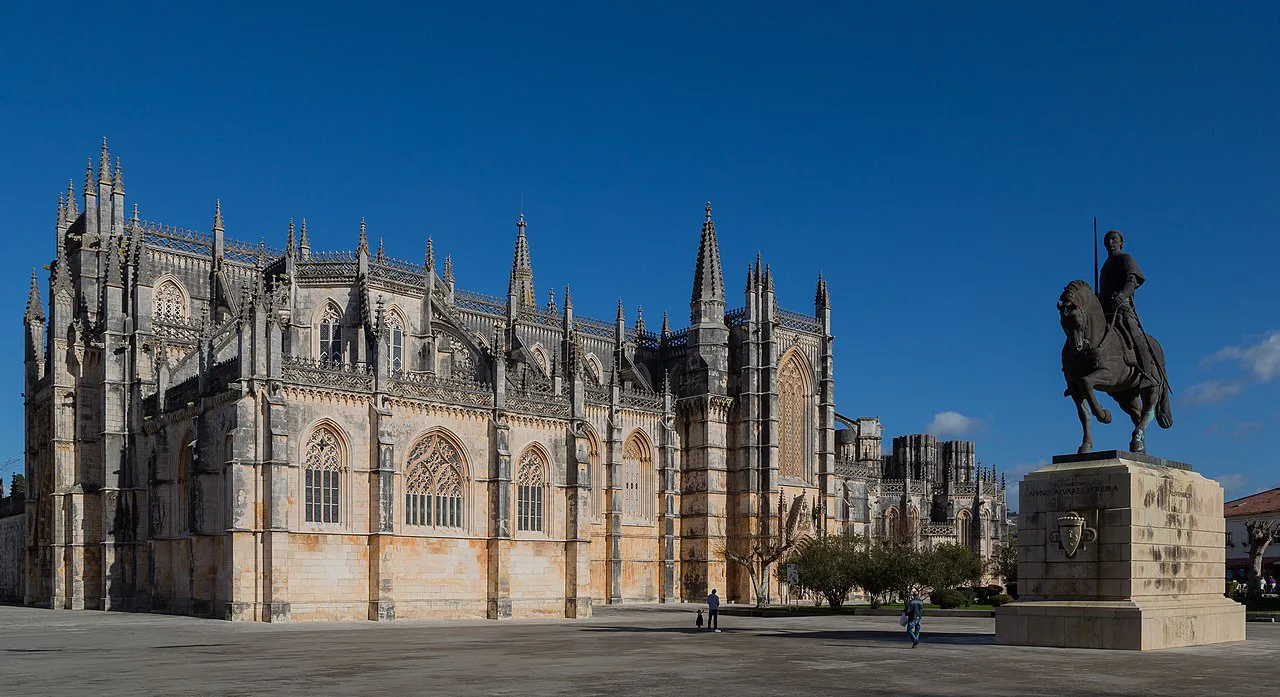
Batalha Monastery, the Mosteiro da Batalha, is often described as a Gothic masterpiece, and that is the right starting point. Its interest for a Manueline-minded visitor is the way later work, including Manueline additions, sits alongside the earlier Gothic fabric. You can read the transition in the stone rather than in a textbook.
Because Batalha is primarily Gothic, it rewards a different approach from Tomar: look for where the carving becomes more restlessly naturalistic and where nautical emblems start to appear. The monastery is in central Portugal within reach of Tomar and Coimbra, which makes a two-site day feasible if you start early. Check the current opening arrangements before you plan the sequence.
Belém: the Jerónimos Monastery and the Tower of Belém
The Jerónimos Monastery in Belém is the most famous Manueline building and the one most travellers see first. Commissioned by Manuel I in the early sixteenth century to honour Vasco da Gama's return from India, it carries maritime carving across its façade and houses the tombs of Vasco da Gama, the poet Luís de Camões and Manuel I himself. The entrance is watched over by a statue of Prince Henry the Navigator.
The Tower of Belém stands a short walk away and was built in the early sixteenth century as a fortress guarding the Tagus approach to Lisbon, dedicated to St Vincent. Its façade carries coats of arms and even a carved rhinoceros linked to Manuel I, and a spiral staircase climbs to a watchtower with river views. Note that the interior chapel carries blue and white azulejo tiles, a neat link between Manueline stonework and the tile tradition covered in Azulejos in Portugal.
Belém is a half-day within a wider Lisbon stay rather than a destination in itself, and both monuments draw heavy queues. Treat it as a concentrated introduction to the style and save Tomar or Batalha for the deeper look. If you want to compare carved stone with painted tile, the story of Portuguese tiles makes a good companion read.
What to notice at each site, and which single site to pick if you have one day
With one free day, choose Tomar. The Convent of Christ combines Templar origins, a later convent and dense Manueline carving around the Chapter House window, so a single visit covers history and ornament together. Batalha is the better choice if you care more about Gothic architecture and want to see the style emerge within an older building.
At any of the three, work from the entrance outward: portals, window surrounds and capitals first, then the wider façade. Carry a mental checklist of rope, shell, armillary sphere and Cross of the Order of Christ, and count how many you find. This turns a passive walk-through into something closer to a treasure hunt, especially with children.
How to reach Tomar and Batalha on a short break
Both Tomar and Batalha sit in central Portugal and work best as a road trip or a rail-plus-taxi combination based in Coimbra or Lisbon. Batalha has no station of its own on the main lines, so many visitors pair it with a car or a local bus from nearby towns. Confirm current timetables with the operator on the day you travel rather than relying on an old plan.
If you are travelling by train, Coimbra makes a sensible base for both sites and has its own architectural draws. From there, Tomar and Batalha can each fill a day without rushing. Book nothing tight on the return leg, because regional connections are infrequent.
Manueline versus later Portuguese styles: what changed after 1521
After Manuel I's reign the decorative tide turned. Mannerist and Neoclassical architecture favoured restraint and clearer structure, and the exuberant surface carving of the Manueline years fell out of fashion. The style is often described as the last gasp of the Gothic in Portugal before those newer movements took over.
Later Portuguese building often returned to ornament in different forms, including the Baroque churches and palaces that followed. Seeing Manueline work first makes those later styles easier to read, because you notice what has been stripped away as much as what has been added. If your short break takes in Lisbon or Porto, the tiled interiors of the period offer a useful contrast with carved stone.
Tomar, Batalha or Belém: which to book first
Book Tomar first if you want the fullest single dose of Manueline carving, Batalha if Gothic layers interest you more, and Belém if you are already in Lisbon and want a half-day introduction. Whichever you choose, go with the motif checklist in mind and give the carving time. Confirm opening days and ticket arrangements directly with each monument before you travel.
Explore more Portugal guides
Frequently Asked Questions
Why is Jerónimos Monastery famous?
It is the best-known Manueline building in Portugal, commissioned by King Manuel I in the early sixteenth century to honour Vasco da Gama's return from India. Its façade carries maritime carving, and inside are the tombs of Vasco da Gama, Luís de Camões and Manuel I himself.
What is the most famous building in Portugal?
There is no single answer, but the Jerónimos Monastery in Belém is the building most often named as the country's architectural emblem. The Tower of Belém nearby shares the same Manueline vocabulary and is usually visited on the same outing.
Why is Manueline called Portuguese Late Gothic?
Because it grows out of the Gothic ornamental vocabulary rather than replacing it, adding Renaissance and Moorish touches on top. It is tied to the reign of Manuel I (1495–1521) and to the maritime imagery of the Age of Discoveries, which is what makes it read as distinctively Portuguese.
Sources
Notes for your next Portuguese break
Optional updates to our town guides.
You might also like



Continue reading
More guides you'll find useful




