
Convent of Christ, Tomar: What to See and How Long It Takes
A visitor's guide to the Convent of Christ in Tomar, covering the Templar round church, the Manueline window, admission and how long to allow.
On this page
Plan on two to three hours inside the Convent of Christ in Tomar, and prioritise the Charola round church and the Window of the Chapterhouse. That covers the two things most short-break travellers come for: the Templar rotunda at the heart of the complex and Diogo de Arruda's Manueline carving on the chapterhouse exterior. This guide sets out the site's layout, the specific features worth seeking out, ticket and timing practicalities, and how to judge whether Tomar deserves a full day of a one-to-four-day trip.
What the Convent of Christ is and why it matters
The Castle and Convent of Christ was listed as a UNESCO World Heritage Site in 1983, and the citation sums up why it stands apart: a fortified monastic complex built, extended and reworked over roughly five centuries. The site began with the Knights Templar, who founded it in 1160 under Gualdim Pais, the order's fourth grand master, and it later passed to the Order of Christ after the Templars were disbanded in the early 14th century. That handover is the key to reading the buildings: you are looking at a Templar fortress that kept being rebuilt by its successor order rather than a single-period monument.
For a short-break traveller, that layered history is the honest reason to come. The complex is not one beautiful façade but a sequence of rooms and courtyards in different styles, so the visit rewards attention to detail rather than a quick photo stop. If you are working through a shortlist of monumental Portuguese sites, this one sits comfortably alongside the great monastic complexes of central Portugal; our guide to UNESCO sites in Portugal helps you see where it fits in a one-to-four-day plan.
The site layout: castle walls, round church, nave and cloisters
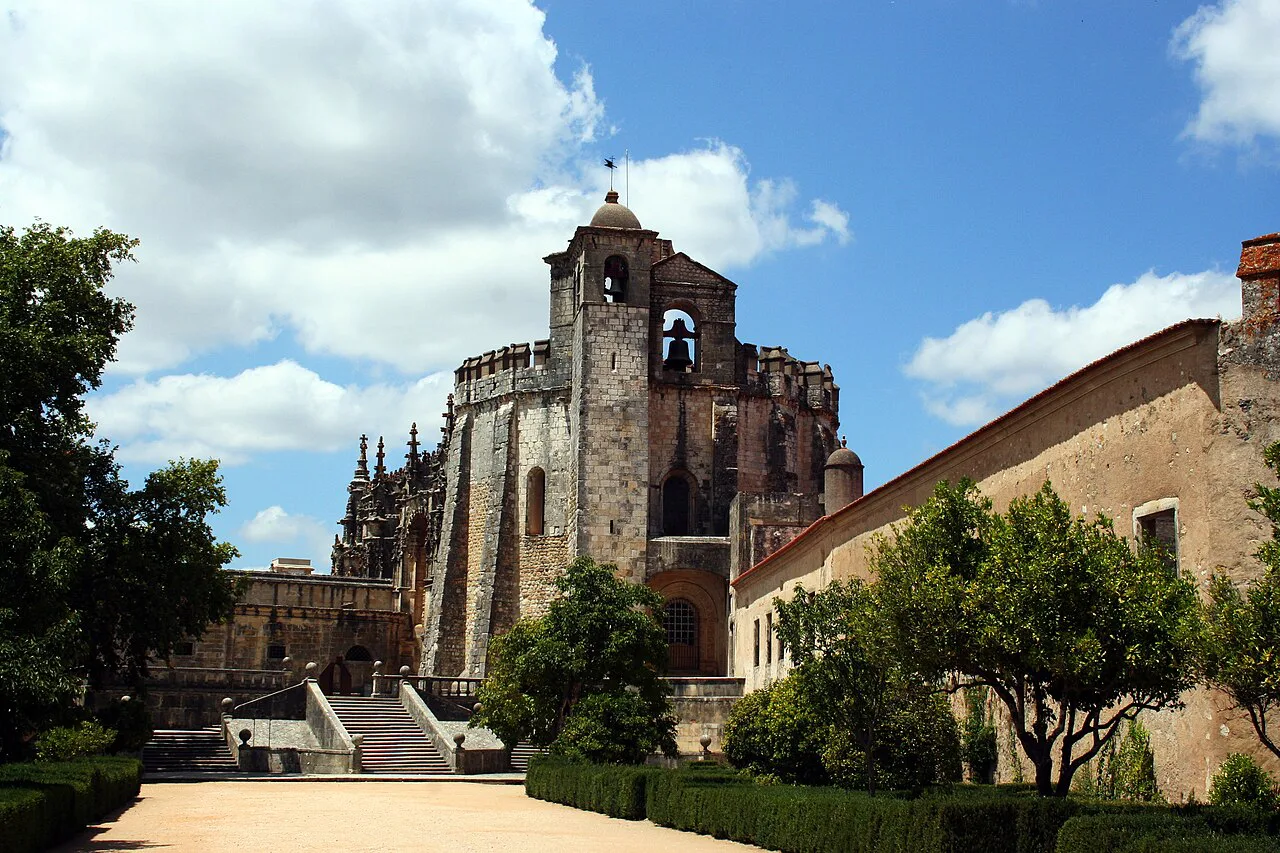
The convent sits inside the walls of the Castle of Tomar, on a hill above the town, and the whole precinct originally enclosed a settlement within the fortifications. Inside, the plan unfolds in layers: the castle enclosure, the Charola, a nave added in the 1400s in front of it, and a series of cloisters built over the two centuries after that. Knowing this order helps you pace the visit, because the buildings are connected rather than spread across a field, and you walk through them in sequence.
Allow extra time if you want to walk the castle walls and look down over Tomar, which is a separate pleasure from the convent interiors and depends on access on the day. The interiors alone reward a focused visit; the walls add a sense of the site's original scale, with the old town spread below and the Nabão valley beyond. Build the wall walk into your estimate rather than treating it as a bonus at the end.
What to see first: the Charola and its central octagonal structure
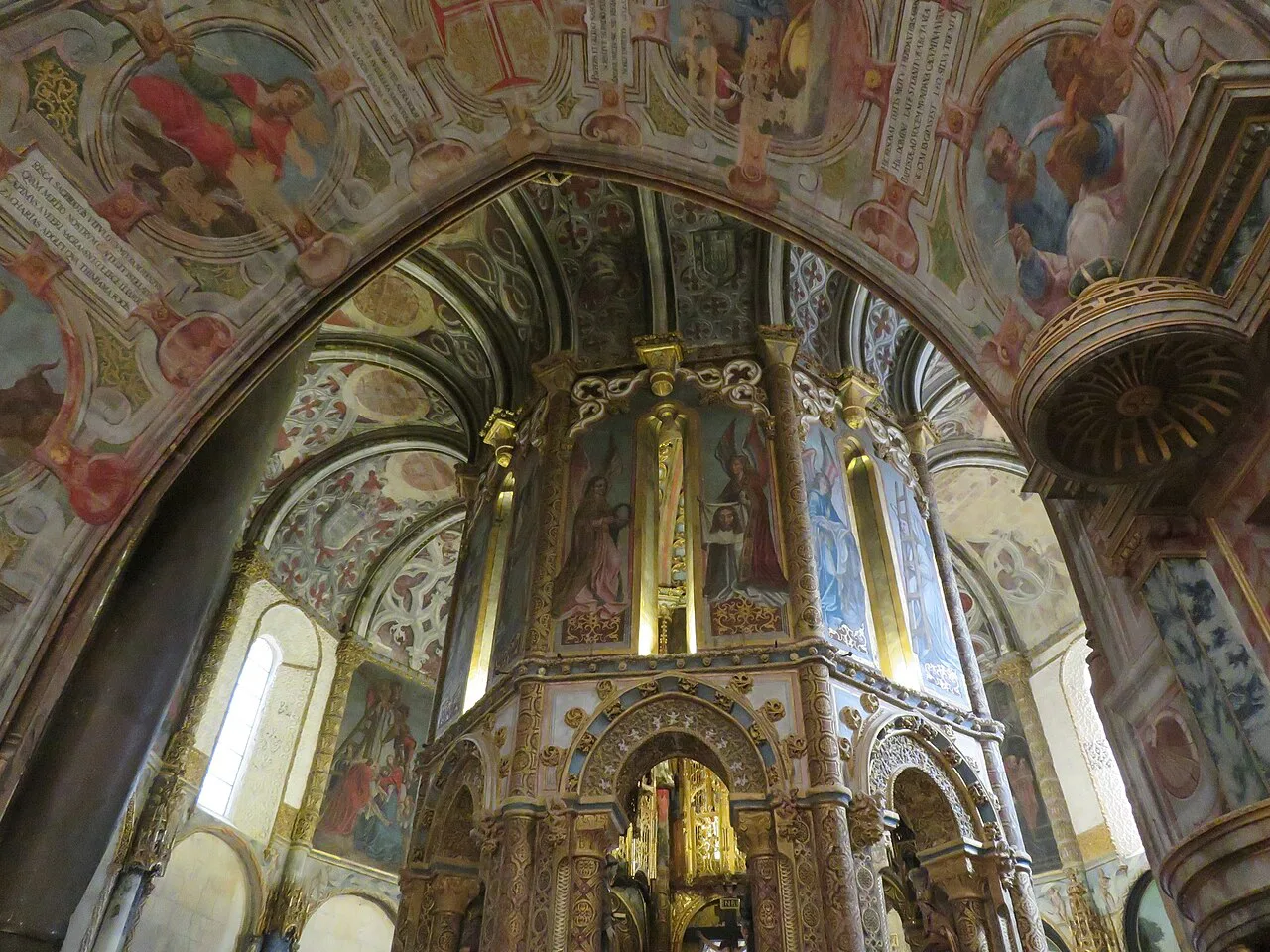
Head for the Charola, the round church, before anything else. It is the oldest surviving part of the complex and the clearest expression of the Templar plan: a circular space wrapped around a central octagonal structure, so that you walk in a ring around the core rather than down a conventional nave. The effect is unusual and worth slowing down for, because the carving on the capitals and the painted decoration reward close looking.
The nave was added in the 1400s, in front of the rotunda, and it changes how you experience the Charola: you approach the round church through a later, taller space rather than arriving directly. That sequence is the most useful thing to understand before you go in, because it explains why the building feels like two churches stitched together. Give the Charola at least twenty minutes; it is the room most visitors remember.
The Manueline highlights, including the Window of the Chapterhouse
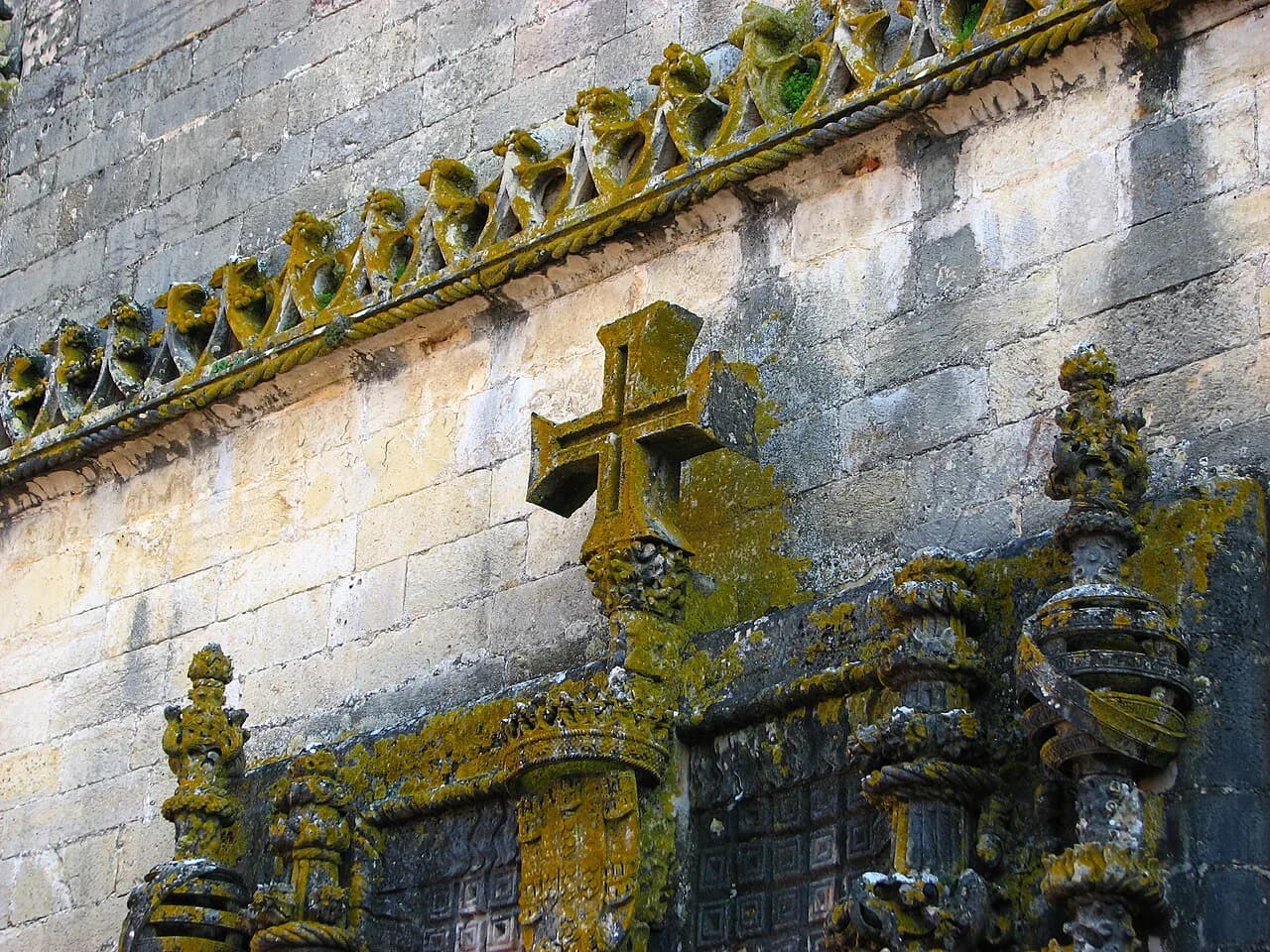
The Manueline decoration is the second reason to come, and the Window of the Chapterhouse is the piece to seek out. Carved by Diogo de Arruda in 1510, it is a dense composition of nautical rope, armillary spheres and vegetal forms that has become the emblem of the style; find it on the exterior of the chapterhouse and give yourself time to read the detail.
Beyond that window, work through the cloisters rather than rushing to the exit. Several were built across the 15th and 16th centuries, and each has a different proportion and carving, so the walk between them is part of the visit. If you have seen the great Cistercian abbeys of the region, the contrast is instructive: the Batalha monastery, with its Claustro de D. João I, shows the same Gothic-to-Manueline trajectory in a different key, and seeing both makes the Tomar decoration easier to place.
How much time to allow inside the convent
Two hours is a realistic minimum for a visitor who wants to see the Charola, the nave, the principal cloisters and the Manueline window without hurrying. That figure reflects the walking and looking involved in moving through the connected buildings, not queueing or parking. If you like architecture and read panels, three hours is a better budget; if you are pressed, an hour and a half gets you the highlights and no more.
Add roughly half an hour if you want to walk the walls and gardens around the convent, and build in buffer for the climb up from town and for parking below the walls. The trade-off is real for a short break: Tomar plus the convent justifies a day, but pairing it with a second monastery in the same day means cutting one of them short. Most travellers get more from Tomar by staying overnight or by giving it a full morning and eating lunch in town.
Tickets, free-entry windows and opening hours
Admission has been reported at six euros, with free entry on Sundays and bank holidays before 2pm, but treat those as reported figures rather than a current tariff: prices and free-entry rules change, and the official Convento de Cristo site is where you confirm before you travel. Opening has been reported as 9am to 6pm in the summer months and until 5pm the rest of the year, again worth verifying on the official page, especially around seasonal changeovers. Buying or checking tickets in advance is sensible if your Tomar day is fixed, because the convent is the main reason most people come.
Budget the ticket as the one essential cost of a Tomar day, and check whether any concession applies to you before you queue. If you are building a wider circuit of central Portugal's monuments, note that ticketing and free-entry arrangements differ from site to site, so a single pass or a single assumption rarely covers everything. Our guide to the UNESCO sites in Portugal is useful for sequencing those stops without doubling back.
Days the convent closes
The convent has been reported as closing on New Year's Day, Easter Sunday, 1 May and Christmas Day, which matters if your short break falls on a public holiday. Tomar is often visited as a day trip from Lisbon or Coimbra, so a wasted journey on a closure day is a common and avoidable mistake. Confirm the calendar on the official Convento de Cristo page before fixing your date, and keep an alternative monument in reserve if your only free day is a holiday.
Weekday mornings are the safest bet for a calm visit, since Portuguese school groups and coach parties tend to arrive later in the day. If you are travelling on a Monday, check the convent's status in advance: Monday closures are common among Portuguese museums and monuments, and one phone-free confirmation on the official site saves a wasted climb. Leave the rest of the day flexible so a closure or a long queue does not sink the whole plan.
Getting there and parking below the walls
The convent sits above the town, and the practical approach is to drive or walk up to the precinct rather than expect to arrive at the door from the centre. Parking is available just outside the castle walls and is paid, but modest for a couple of hours, which is enough for the convent; there is also a small café by the walls with toilets. If you are on foot, the climb from Tomar's centre is short but steep, so allow ten to fifteen minutes and wear shoes that cope with cobbles.
Tomar is well placed for a wider circuit: Batalha and Alcobaça lie to the west and north-west, and Fátima is roughly on the road south towards Lisbon, which makes a loop of monastic sites feasible if you have a car. If you are relying on trains or buses, check connections the day before and plan the convent as the anchor of the day rather than one stop among four. The Côa Valley rock art, far to the east, is a different kind of prehistoric site and a poor fit with Tomar in a single day.
When the cloisters and courtyards are quietest
Go early. The convent opens in the morning, and the first hour tends to be the calmest in the Charola and the cloisters, before groups build up in the middle of the day. The courtyards and covered walks are the places where a crowd is most noticeable, because the spaces are narrow and the visit is linear, so a quiet start changes the whole experience.
Mid-afternoon can also work in your favour once coach parties have moved on, though you risk less time before closing, particularly outside the summer months. Avoid the middle of the day if you want photographs of the Manueline window without other visitors in the frame. In winter, the shorter afternoon window means an early start is not just preferable but necessary.
Is Tomar worth a day of your short break?
Yes, if you care about architecture and want one substantial monument rather than a checklist of small ones. The Convent of Christ gives you a Templar rotunda, a royal nave, several cloisters and first-rate Manueline carving in a single walled precinct, and two to three hours covers it properly. Pair it with a night in Tomar or a slow lunch in town, and it earns its day.
No, if your short break is already full of monasteries. Tomar duplicates some of what Batalha and Alcobaça offer, and adding it to an over-packed itinerary means seeing all three badly. Choose Tomar when the Templar story and the Manueline detail are what you came for; choose the Cistercian abbeys when you want scale and austerity.
Explore more Portugal guides
Sources
Notes for your next Portuguese break
Optional updates to our town guides.
You might also like



Continue reading
More guides you'll find useful





