Elvas, Portugal: A Guide to the Fortress Town
Plan a short break in Elvas, Portugal's walled border town: the castle, the star-shaped forts and the walk up from the old town to the Praça da República.
On this page
Elvas is a hilltop fortified town in Portugal's Alentejo, set on the Spanish border about eight kilometres from Badajoz, and it rewards a half-day for the walled centre or a full day if you add the two star-shaped forts on the hills outside. Its walls, castle and historic centre form a UNESCO-listed defensive landscape, and the town is compact enough to cross on foot once you are inside the gates. This guide covers the layout from the Portas de Olivença up to the Praça da República, what the fortifications actually are, how long to allow, and how Elvas fits with Évora and Lisbon.
Where Elvas is and why the border shaped it
Elvas sits in the east of the Alentejo, on a small hill right against Spain, and that position explains almost everything worth seeing. The Portugal–Spain border has its own word in both languages, raia in Portuguese and la raya in Spanish, and it is one of the oldest borders in the world; Elvas grew as a fortified answer to that proximity. From the top of the castle you can pick out the Spanish town of Badajoz across the plain.
The town is small: you can walk from the main gate to the main square in a few minutes, and the steepest ground is around the castle and the walls. Treat Elvas as a place of three separate pieces rather than one continuous sight. There is the walled old town where people live and eat, the castle above it, and the two detached forts on hills beyond the built-up area.
That separation matters when you plan the day. The old town is a wander-by experience; the forts are a deliberate excursion that takes you out of the centre and up onto open hillsides, so they need time set aside rather than a spare hour between cafés. Elvas is one of the more complete fortress towns in the country, and the fortifications are the reason to come rather than a backdrop to it.
How the town is laid out: gates, moat and the climb to the square
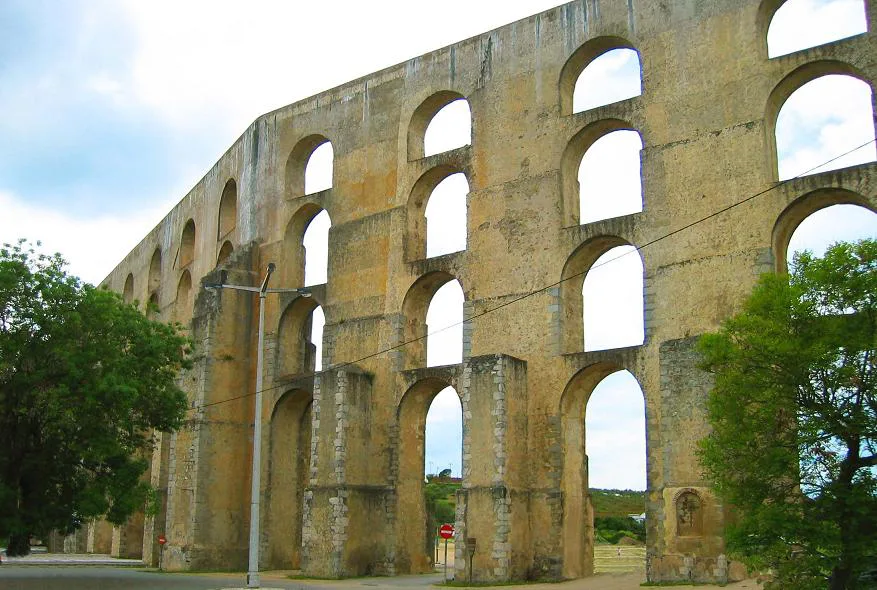
You enter the historic centre over a bridge that crosses the moat and through the Portas de Olivença, a monumental gate that acts as the front door to the town. Beyond it, a narrow winding street climbs into the centre and opens onto the Praça da República. The sequence is short but it sets the tone: walls first, then lanes, then the square.
The Praça da República is the natural place to pause, with cafés set out on the square and a tiled facade that draws the eye across it. Order a pastel de nata and a coffee and use the square as your orientation point before pushing on to the castle. From here the lanes run uphill towards the highest part of town, so save the climbing for after the coffee rather than before it.
Around the perimeter, enormous defensive walls enclose the town, and walking a stretch of them gives you views over both the historic centre and the surrounding countryside. The circuit is not a flat promenade: expect uneven ground, steps and exposed sections where the wind does the talking. Sturdy shoes are more useful here than anywhere else in town.
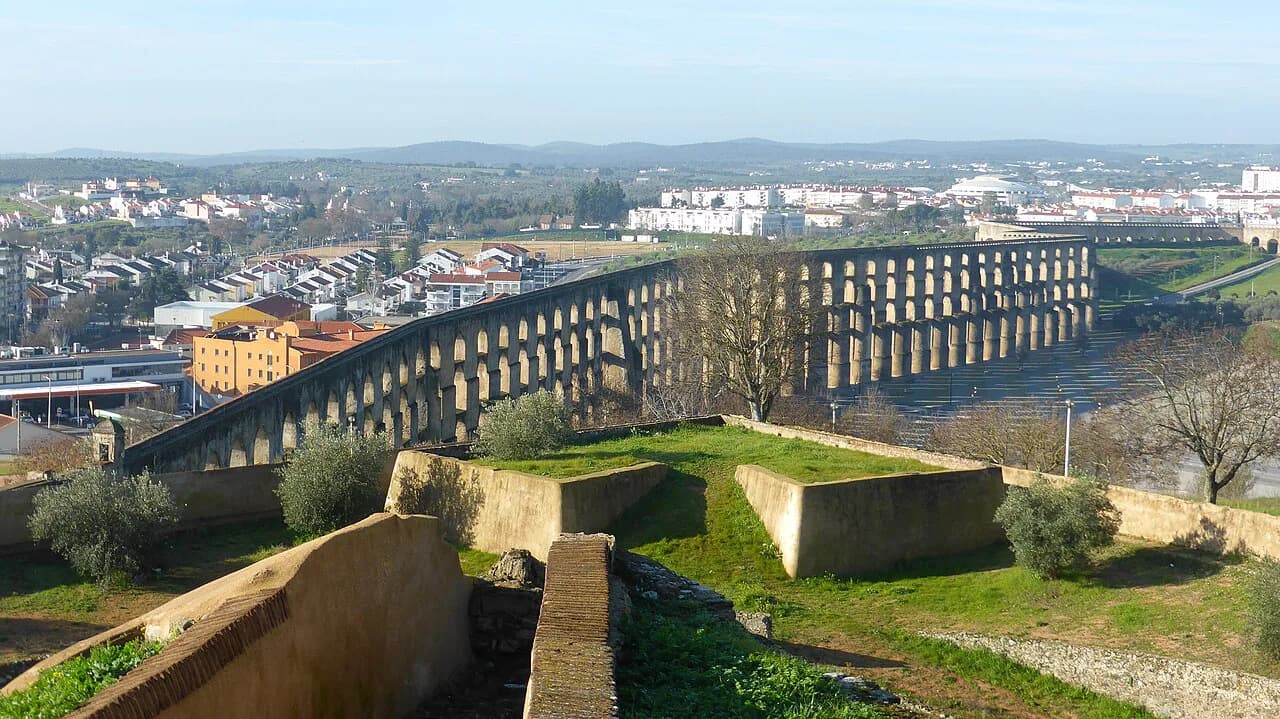
The wider picture is worth keeping in mind as you walk: the defences of Elvas extend well beyond the old town itself, with the two detached forts on the surrounding hills completing a defensive zone far larger than the walled centre.
The fortifications: walls, castle and two detached star forts
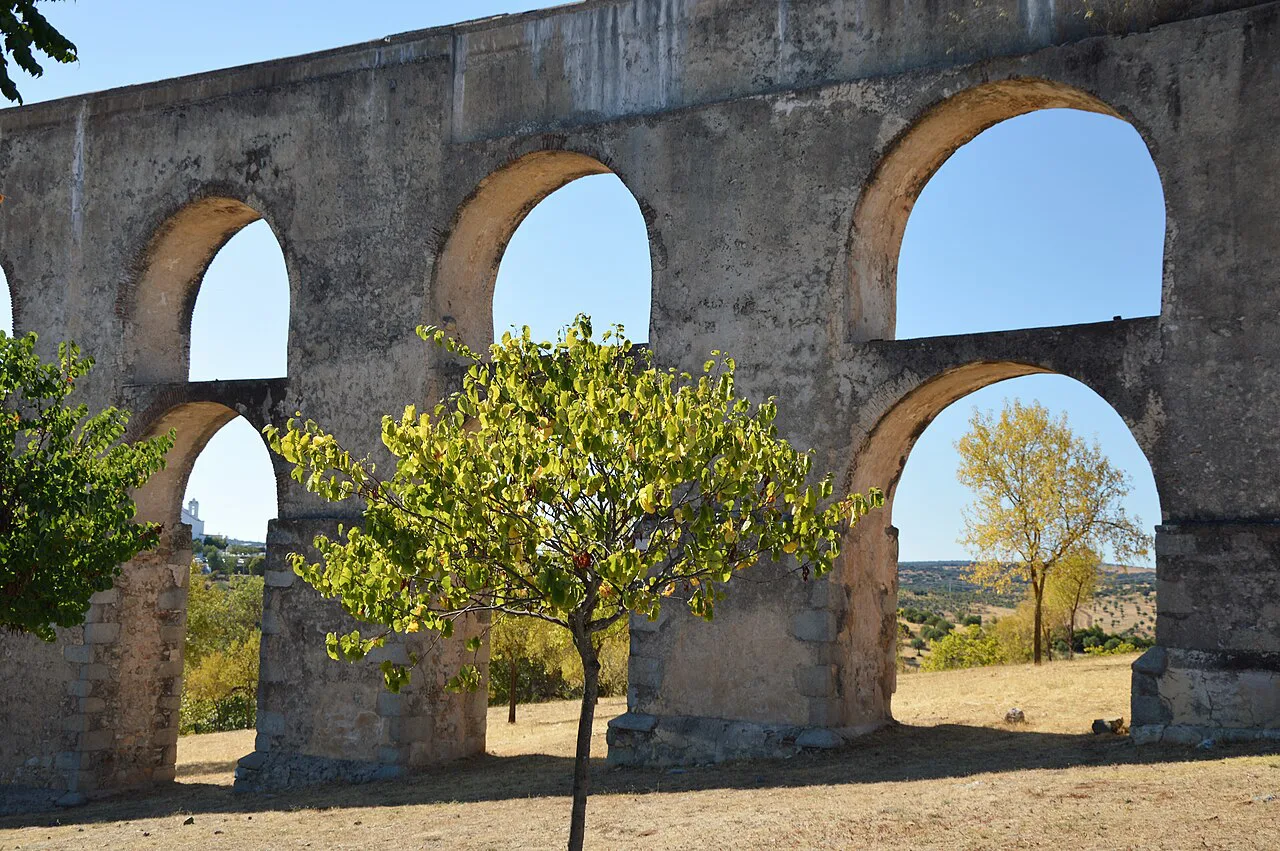
People often talk about Elvas's defences as one thing, but there are three. The perimeter walls wrap the town; the castle stands above it; and two star-shaped forts sit on hills outside the centre, the Forte de Nossa Senhora da Graça to the north and the Forte de Santa Luzia to the south. All three are part of the same defensive scheme, and each gives a different kind of visit.
The forts are the most photogenic element, with their angled bastions laid out in plan like stars, built on high ground so they dominate the landscape and face towards Spain. Neither is a wander-by sight: both lie outside the main town, so reaching them means leaving the historic centre and walking or driving up to the hills. If you only have a half-day, the old town and the walls are the realistic choice.
Because the fortifications are spread across the town and its outskirts, they are best seen as a sequence rather than a single ticket. Start with the walls and gate for context, climb to the castle for the overview, then decide whether the forts justify the extra trip. Seen in that order, the detached forts make sense rather than looking like isolated monuments.
Elvas belongs to a wider set of Portuguese places inscribed for their architecture and history, and it is worth comparing it with the country's other fortified and monastic monuments if you are planning a route through central Portugal.
The castle and the views over Badajoz
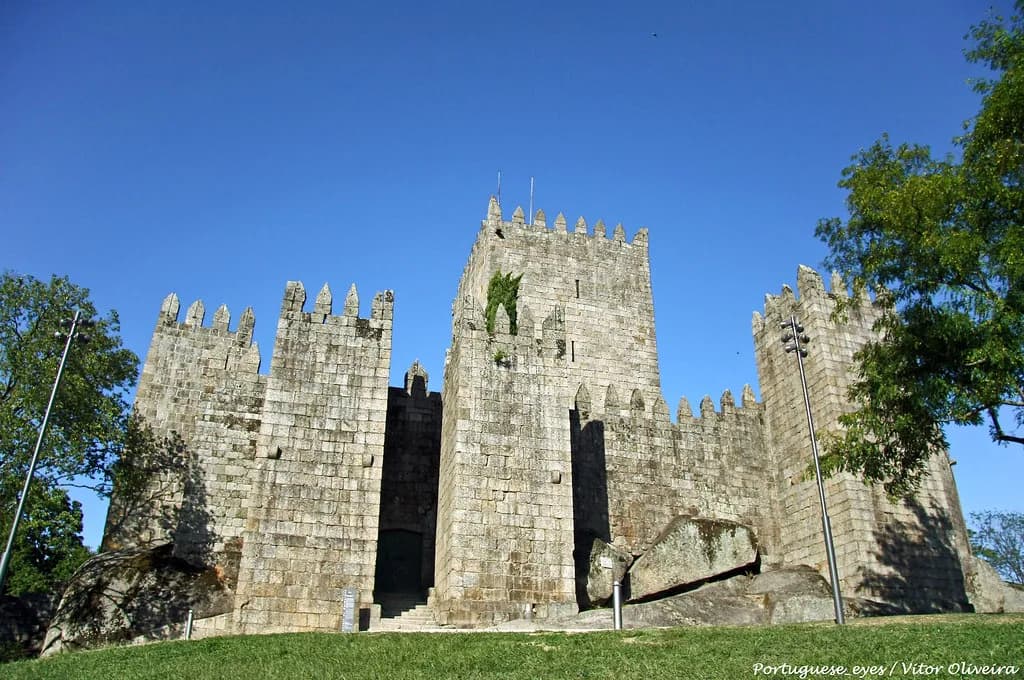
The castle is the highest point of the visit and the place where the border stops being an abstraction. From the top you can see Badajoz in Spain, which makes the strategic logic of the town immediately obvious. The walk up is short and steep, and the reward is a panorama that takes in the town, the walls and the plains beyond.
Below the castle, the old town's white walls and orange roofs spread out, and the surrounding countryside opens up towards the frontier. Give yourself time at the top rather than treating it as a quick photo stop, because the view is the point of the climb. Late afternoon light is the most rewarding for photographs of the walls and the plain.
The castle and the walls together are the part of Elvas most people remember, and they suit a slow couple of hours rather than a rushed circuit. If you are building a longer trip around fortified and religious architecture in Portugal, the great monasteries of the centre of the country make a natural companion, and the elaborate Gothic work at the Claustro de D. João I shows what Portuguese builders were doing on a grander scale.
Praça da República: the tiled square and a nata stop
The Praça da República is the social centre of the old town, a square of cafés and tiled facades where the walk through the lanes naturally ends. Sit outside if the weather allows and watch the square fill and empty through the day. This is the right place to slow down after the climb from the gate.
A pastel de nata and a coffee is the standard order, and the square is set up for exactly that kind of pause. Prices and opening hours for individual cafés are not something to rely on from memory: check the board outside before you sit down, especially on quieter weekdays. The square is also a useful landmark for finding your way back to the Portas de Olivença.
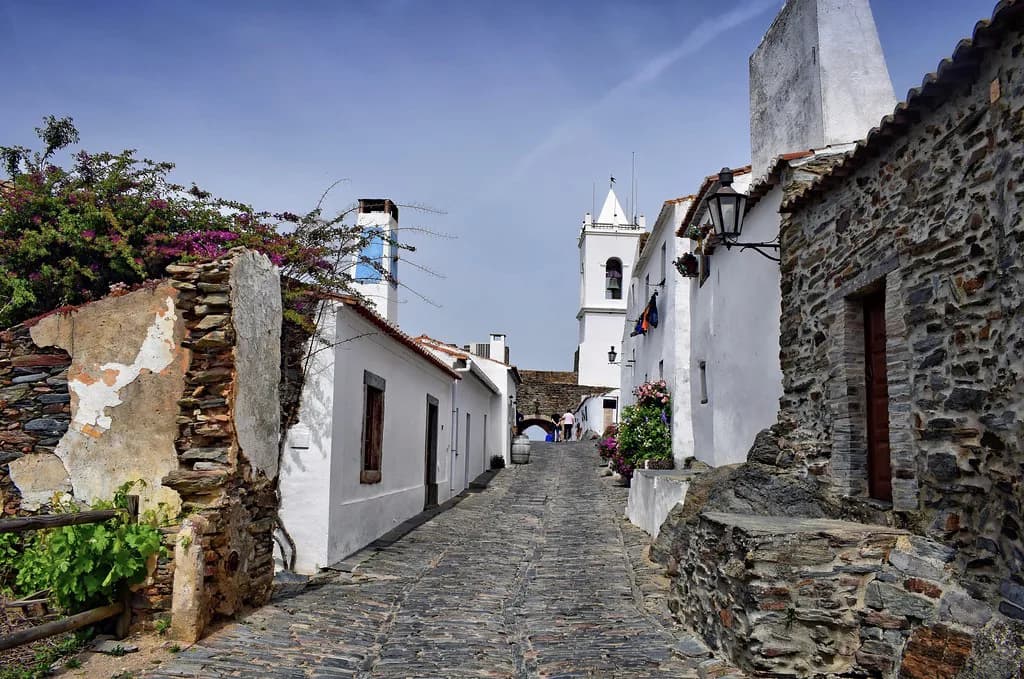
The tiled facade on the square is part of what makes Elvas feel like an Alentejo town rather than a museum piece, and the same white-and-orange palette continues through the streets around it. Wander a few lanes off the square before you leave, since the old town is small and hard to get lost in.
The Cemitério dos Ingleses: the English Cemetery
On the hilltop at the edge of town sits the Cemitério dos Ingleses, the English Cemetery, where British soldiers who fought in the Peninsular War of the early nineteenth century were buried. It is one of the oldest British military cemeteries anywhere, and it is a quiet, affecting counterpoint to the fortifications.
It is not on the main circuit, which is exactly why it feels different from the castle and the walls. Pair it with a walk along the edge of town rather than making a special trip, and expect a peaceful site rather than a staffed visitor attraction. For British travellers with an interest in the Peninsular War, it is the most personal stop in Elvas.
How long Elvas needs
Allow half a day for the walled old town: the gate, the climb to the Praça da República, a stretch of the walls and the castle. That covers the part of Elvas you can do entirely on foot, with a nata stop built in. If you want to see both star forts as well, plan a full day, because each sits on a hill outside the centre and the trips add up.
The trade-off is straightforward. The forts are the more dramatic architecture, but they cost you the time you would otherwise spend in the lanes and on the walls. On a rushed visit, the old town and castle give the better return. With a full day, the forts complete the picture and explain why Elvas was fortified so heavily.
A sensible order is to start at the Portas de Olivença, walk up through the lanes to the square, climb the castle, then walk a section of the walls before lunch. Leave the forts for the afternoon or a second day, and treat them as separate excursions rather than an extension of the old town walk.
Getting there and fitting Elvas into an Alentejo trip
Elvas is reachable by coach from Lisbon's Sete Rios station, a journey of around two and a half hours. Treat that figure as a guide rather than timetable information and check current departures with the operator before you book. The town's position on the Spanish border also makes it a natural stop if you are moving between Portugal and Extremadura.
Elvas pairs well with Évora, the Alentejo's capital, which has its own Roman temple, cathedral and white-and-orange streets. The two are different kinds of visit: Évora is a city of churches and museums, Elvas a town of walls and forts. Coming from Lisbon, you can use Elvas as the eastern end of an Alentejo loop rather than a there-and-back trip.
If your interests run to Portugal's inscribed monuments rather than its fortifications, the monasteries of Alcobaça and Batalha and the Convent of Christ in Tomar sit in the centre of the country and reward the same kind of slow, on-foot attention. Elvas sits alongside them in the country's wider stock of UNESCO-listed architecture, so compare it on our guide to UNESCO Sites in Portugal if you are planning a route.
What to skip on this trip
Badajoz is close enough to see from the castle, but crossing the border needs its own planning and time; treat it as a separate trip rather than a stroll from Elvas. Monsaraz and Évora are also destinations in their own right, each worth a day rather than an afternoon tacked onto Elvas. Trying to combine all three in one day leaves you rushing the walls, which is the one thing worth doing slowly here.
If you are following Portugal's UNESCO architecture, the Convent of Christ in Tomar and the Roman ruins at Conímbriga make far better use of a day than squeezing extra stops around Elvas.
Should you add the forts or stay inside the walls?
Stay inside the walls if you have half a day: the gate, the square, the castle and a stretch of wall give you the essence of Elvas without the climbs to the hills. Add the Forte de Nossa Senhora da Graça and the Forte de Santa Luzia only if you have a full day and are prepared for the extra walking. That is the honest dividing line in Elvas.
Whichever you choose, start early, wear shoes that cope with uneven stone, and keep the square as your base for coffee and a nata. Check coach times with the operator before you commit to a route, since Elvas is easier to combine with Évora than to visit as a rushed day trip from Lisbon.
Explore more Portugal guides
Frequently Asked Questions
Which country is Elvas in?
Elvas is in Portugal, in the Alentejo region, on the border with Spain. The Spanish town of Badajoz is about eight kilometres away, and you can see it from the top of Elvas's castle.
Is Elvas worth visiting for a day?
Yes, if you like fortifications and quiet old towns. Half a day covers the walled centre, the castle and a walk on the walls; a full day lets you add the two star-shaped forts on the hills outside town, which are the most dramatic part of the defences but need time set aside.
Do you need a car to see the forts at Elvas?
The old town, castle and walls are all walkable from the Portas de Olivença. The Forte de Nossa Senhora da Graça and the Forte de Santa Luzia sit on hills outside the centre, so the question is how much walking you want rather than whether you can reach them on foot.
Can you walk from Elvas into Spain?
Badajoz is visible from the castle and close by, but crossing the border is a separate trip with its own transport and timing to arrange. Do not count on it as a short stroll from the old town.
Sources
Notes for your next Portuguese break
Optional updates to our town guides.
You might also like
Continue reading
More guides you'll find useful