
Pastel de Nata: What It Is and How to Order One
Pastel de nata is Portugal's custard tart: flaky puff pastry, set egg custard and a blistered top. Here is what it is, how it is served and how to order it.
On this page
A pastel de nata is Portugal's custard tart: a case of very thin, layered puff pastry filled with a set egg custard and baked hot enough for the surface to blister and darken. You will find it in almost any pastelaria, and it works equally well as breakfast, a mid-morning stop or an afternoon coffee. This guide covers what the pastry is, how to ask for one, how it is served and how to judge a good one on a short break.
It is a small, inexpensive thing to eat, but the vocabulary around it trips people up: one is a pastel de nata, two or more are pastéis de nata. Get that right and you will order one tart rather than accidentally asking for a tray.
What a pastel de nata actually is
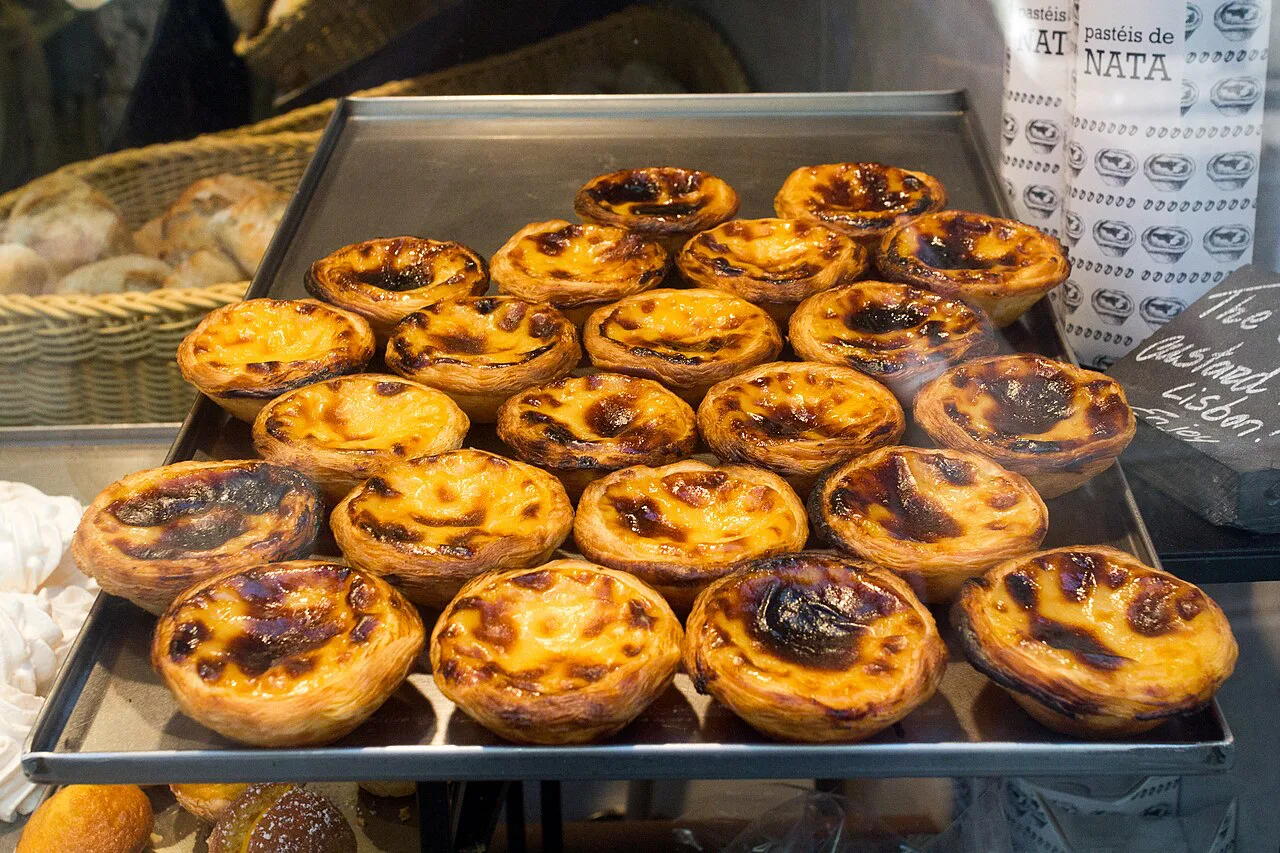
The structure is simple and unforgiving. The pastry is rolled and folded with butter into many thin layers, so it puffs into a crisp, shattering case rather than a crumbly shortcrust shell. The filling is a cooked egg custard, poured into the lined case and baked at a very high temperature so the custard sets and the top catches dark brown and black patches. Home bakers working from a domestic oven report having to bake smaller tarts at their maximum heat, with a final burst under the grill, to get anywhere near the blistering of the real thing.
That heat is the whole point. A pale, evenly golden tart has usually been baked too gently, and the custard tends to be firmer and sweeter than it should be. Look for contrast: deep amber patches against pale custard, with pastry edges that look almost too dark.
Pastel de nata or pastéis de nata: singular and plural
Use the singular when you want one: um pastel de nata. Use the plural for two or more: dois pastéis de nata. The accent on pastéis marks the stressed second syllable, and dropping it in writing is the commonest mistake visitors make.
Are pastéis de nata eaten warm or cold? They are best eaten lightly warm and soon after baking, when the pastry is still crisp. Once they cool completely the pastry softens, so a bakery turning over stock quickly usually gives you a better tart than one with a full tray sitting since morning.
Do the Portuguese eat pastéis de nata at breakfast? Yes, a tart with an espresso or a galão is a common morning stop in a pastelaria, and it works well as a quick breakfast before sights open. The same counter serves savoury snacks and sandwiches if you want something less sweet.
Is a pastel de nata the same as a Portuguese custard tart? Yes, that is the standard English description: a small puff-pastry case filled with set egg custard and baked at high heat so the top blisters. The name pastel de nata is the Portuguese one to use when ordering.
In a café you can simply point and say the number, which avoids the grammar entirely. Natas on its own means cream, so a menu listing natas is not necessarily describing custard tarts; the full name is the safe one to use.
What it tastes like and how it is served
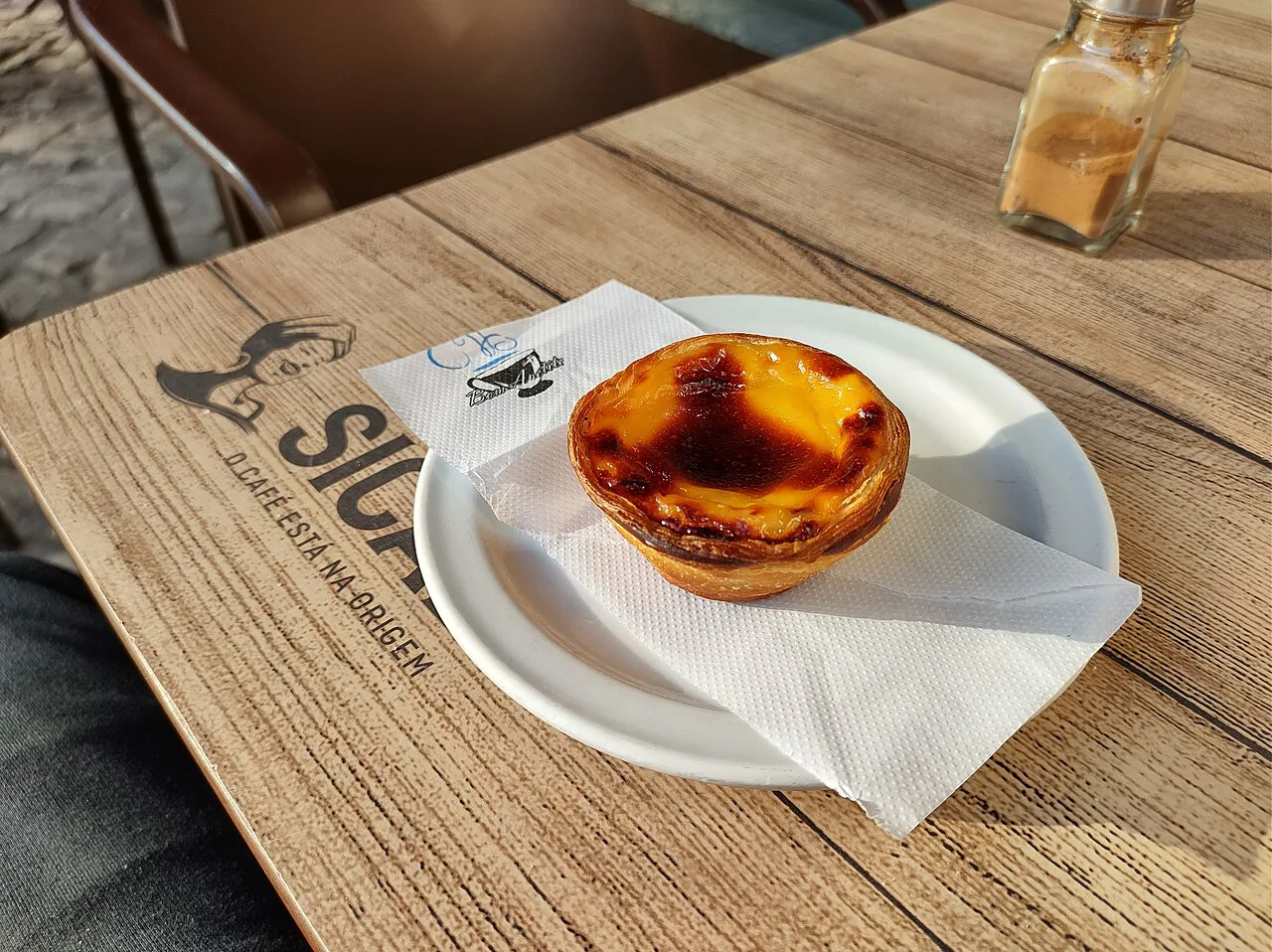
Expect crisp, buttery pastry, a soft custard that holds its shape but collapses on the first bite, and a faintly caramelised, slightly bitter edge where the top has caught. It is sweet but not cloying, and the lemon and cinnamon notes some bakers build into the custard are subtle rather than dominant.
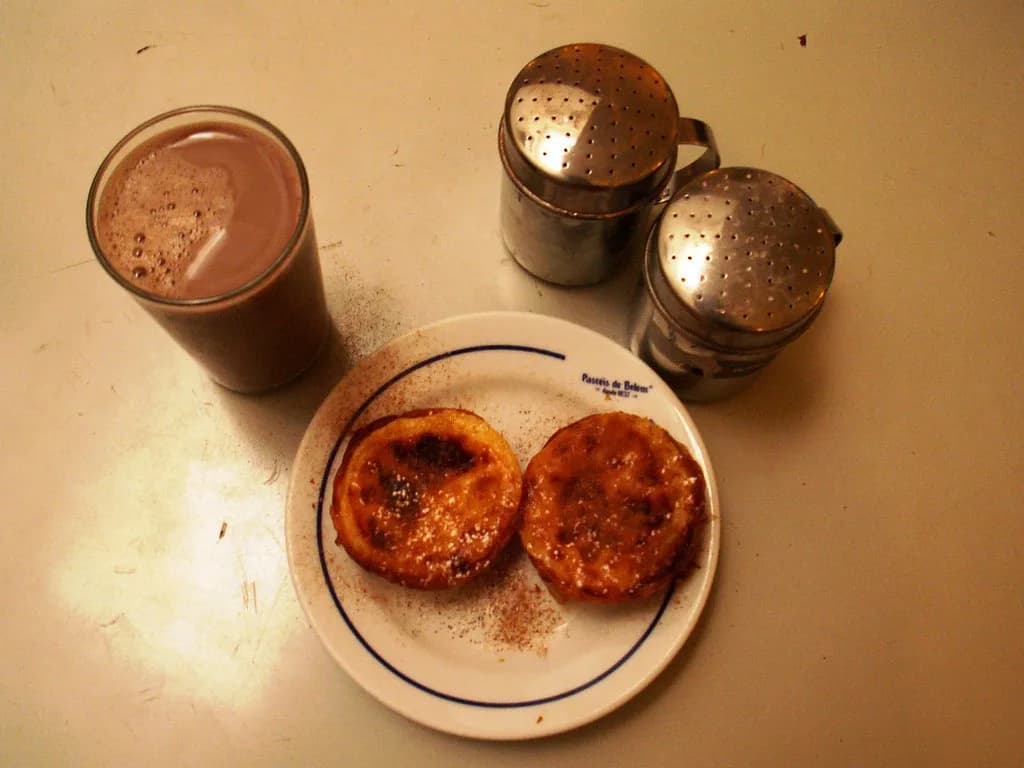
In a pastelaria the tart usually arrives at room temperature or lightly warm, with cinnamon and icing sugar in shakers on the table. Dusting is optional and entirely a matter of taste; the cinnamon adds warmth, the sugar adds sweetness the custard rarely needs. Eat it the same day, ideally within a few hours of baking, because the pastry softens quickly once the custard has cooled completely.
The Belém connection: the Jerónimos Monastery story
The most often repeated origin story credits monks at the Jerónimos Monastery in Belém, the riverside district of Lisbon, with creating the recipe, and the Fábrica de Pastéis de Belém with making tarts to that same recipe on the same spot since 1837. It is a good story and widely told, but treat it as tradition rather than documented history. The Belém bakery is a Lisbon institution rather than a stop on a short town break elsewhere.
The useful takeaway for travellers is the distinction in naming. In Belém the tarts are sold as pastéis de Belém, a protected-sounding label tied to that one shop, rather than as generic pastéis de nata. Elsewhere in Portugal you will see the generic name on the counter and, occasionally, a bakery claiming its own version of the Belém style.
What makes a good one: a four-point check
Judge the pastry first. It should be thin and layered, with visible separate sheets at the rim and a base that holds together when you pick the tart up rather than disintegrating. Thick, bready sides mean the dough was not rolled thinly enough or the layers were compressed.
Then the custard: set enough to stand in the case, soft enough to be spoonable just under the surface, and not rubbery or grainy. Finally the top, which should show real blistering and dark patches rather than an even tan. A tart that passes all four is worth a second one; a tart that fails on pastry is not improved by cinnamon.
Eating one in a Portuguese town: the pastelaria routine
The everyday version of the pastel de nata is a counter ritual, not a restaurant course. You walk into a pastelaria or café, order at the counter, and either eat standing with an espresso or take the tart away in a small box. Sitting down usually costs more and slows the stop down, which matters if you are fitting the tart between two sights.
In smaller towns the pastelaria is often the best-value breakfast in the centre, and it doubles as a place to plan the morning over a coffee and a look at the map. If you are working through a list of traditional Portuguese dishes on your trip, this is the natural first stop before the heavier lunches of arroz de pato or grilled fish later in the day, both covered in our guide to Portuguese food.
How the tart fits into a one- to four-day break
Treat the pastel de nata as three separate moments rather than one. It is a fast breakfast before a museum opens, a mid-morning pause when a church or castle has tired you out, and an afternoon coffee stop before the evening walk. Spreading them out also means you can compare bakers across town instead of judging a town on one tart.
Pair the sweet stop with a savoury one so the day does not become a procession of pastry. A bifana, the small pork sandwich found in cafés and tascas across the country, is the obvious counterweight and takes about as long to eat. Our guide to the bifana explains what to expect and how to order one without a menu.
If you are building a food itinerary around a town, place the pastelaria stops next to the market and the main square rather than detouring for them; the tarts are everywhere, and the detour is better spent on a miradouro or a church interior. Our rundown of traditional Portuguese dishes is the place to plan the sit-down meals around the snacks.
Buying and eating them outside Portugal
Outside Portugal, Portuguese and Madeiran bakeries and cafés are the reliable source, and some wholesalers supply them to shops and restaurants. Madeira London is one such wholesale supplier, which is a reminder that many tarts sold abroad arrive frozen or part-baked rather than fresh from a Portuguese oven.
The practical test abroad is the same as at home: pastry layers, custard set, blistered top. A bakery that reheats tarts well will usually have a dark, uneven top; one that sells pale, uniform tarts is selling the idea of a pastel de nata rather than the thing itself.
Where the tart sits among Portuguese sweets
The pastel de nata is the most famous member of a large family of Portuguese pastries built on eggs, sugar and almonds, from convent-made doces to simple almond tarts. Knowing the family helps you order beyond the obvious: the same pastelarias often sell several sweets worth trying alongside it.
If you are using pastry stops to structure a town break, our guide to Portuguese desserts covers the wider repertoire, including the egg-based sweets that share the nata's custard heritage. One tart is a snack; three across a day is a small tour of the country's confectionery.
Which pastelaria to try first
Start with the busiest pastelaria near your first sight of the day and order one tart and an espresso at the counter. Compare it with a second one later in the trip, ideally from a different bakery, and judge both on pastry layers, custard texture and the blistered top rather than on price or queue length.
Explore more Portugal guides
Frequently Asked Questions
Are pastéis de nata eaten warm or cold?
They are best eaten lightly warm and soon after baking, when the pastry is still crisp. Once they cool completely the pastry softens, so a bakery turning over stock quickly usually gives you a better tart than one with a full tray sitting since morning.
Do the Portuguese eat pastéis de nata at breakfast?
Yes, a tart with an espresso or a galão is a common morning stop in a pastelaria, and it works well as a quick breakfast before sights open. The same counter serves savoury snacks and sandwiches if you want something less sweet.
Is a pastel de nata the same as a Portuguese custard tart?
Yes, that is the standard English description: a small puff-pastry case filled with set egg custard and baked at high heat so the top blisters. The name pastel de nata is the Portuguese one to use when ordering.
Can I buy pastéis de nata outside Portugal?
Portuguese and Madeiran bakeries and cafés abroad are the most reliable source, and some wholesalers supply them to shops and restaurants. Quality varies, so check whether the tart looks freshly baked with a blistered top rather than uniformly pale.
Sources
Notes for your next Portuguese break
Optional updates to our town guides.
You might also like



Continue reading
More guides you'll find useful




