
Ginjinha: Portugal's Cherry Liqueur, How to Drink It and Where
Ginjinha is a Portuguese sour-cherry liqueur served as a shot with a cherry, and in Óbidos often in a chocolate cup. Here's what it tastes like and how to order.
On this page
Ginjinha is a Portuguese cherry liqueur: sour ginja cherries steeped in aguardente with sugar, poured as a small shot and often served with a cherry in the glass. It is a two-minute, standing-at-the-counter experience rather than a bar session, which makes it easy to slot into a short break in Lisbon or a wander around Óbidos. This guide covers what it tastes like, how strong it is, how to order it, what it costs and where to find it.
What ginjinha is: cherries, aguardente and sugar
The drink is built on the ginja, a small sour cherry that Belgians would recognise as the fruit behind kriek. The cherries are combined with aguardente, a broad Portuguese term for strong spirit, plus sugar, and left to steep until the liquid turns dark red and syrupy. The result is sweet at the front, sourish underneath and much stronger than the sweetness suggests, which is exactly why it is served in such small measures.
A frequently repeated origin story credits a Galician friar, Francisco Espinheira, with infusing sour cherries near the church of Santo António in Lisbon, with a dedicated ginjinha bar said to have opened in 1840. Treat that as folklore rather than documented history, and note that the bar's own published history points only to a mid-19th-century Lisbon tavern rather than confirming a precise founding year. What is not in doubt is that the drink became a Lisbon habit first and spread outwards from there.
How strong is ginjinha?
A standard shot comes in at roughly 19% alcohol, about 103 calories, and it goes down faster than that figure warns. Because it is sweet and served in a tiny glass, the usual mistake is to treat it like a soft drink and knock back two or three before lunch. Order one, drink it slowly at the counter, and you get the taste without the wobble.
If you are pacing a day of sightseeing, treat ginjinha as a single stop rather than a round. It works best mid-morning or as a pre-dinner sharpener, not alongside a full meal, because the sugar flattens the appetite. Anyone watching their drinking should note that the chocolate-cup version in Óbidos adds sugar on top of an already sweet drink.
How it is served: com or sem, and the Óbidos chocolate cup
At the counter you will be asked whether you want it com or sem — with or without the cherry in the glass. With the cherry is the classic serve and gives you a boozy fruit to eat at the end; without leaves you a clean shot that is easier to drink fast. In Lisbon the ritual is quick: order inside, drink outside, glass back on the bar.
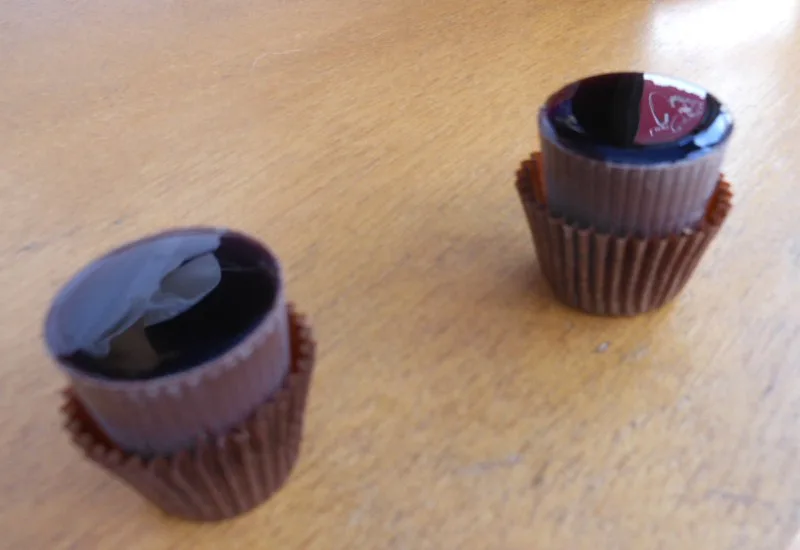
Óbidos has turned the same drink into something more playful, serving it in small edible chocolate cups that soften as you sip. It is sweeter, messier and more of a souvenir than a serious tasting, so if you want to judge the liqueur itself, order a plain glass first and try the chocolate version afterwards. The cups are also the reason Óbidos ginjinha is the version most visitors remember.
What a shot and a bottle cost
Expect to pay roughly €1 to €1.50 for a shot, and about €7 to €15 for a bottle to take home. Those are typical figures rather than fixed prices. A bottle is the better value if you already know you like it; buy the shot first.
For a British traveller, a single shot costs about the same as a supermarket coffee back home, which makes it one of the cheapest tasting experiences on a Portuguese trip. Keep small cash handy for the counter and stands. If you plan to carry a bottle home, check your airline's rules on alcohol in hold luggage before you buy.
Where to drink ginjinha in Lisbon
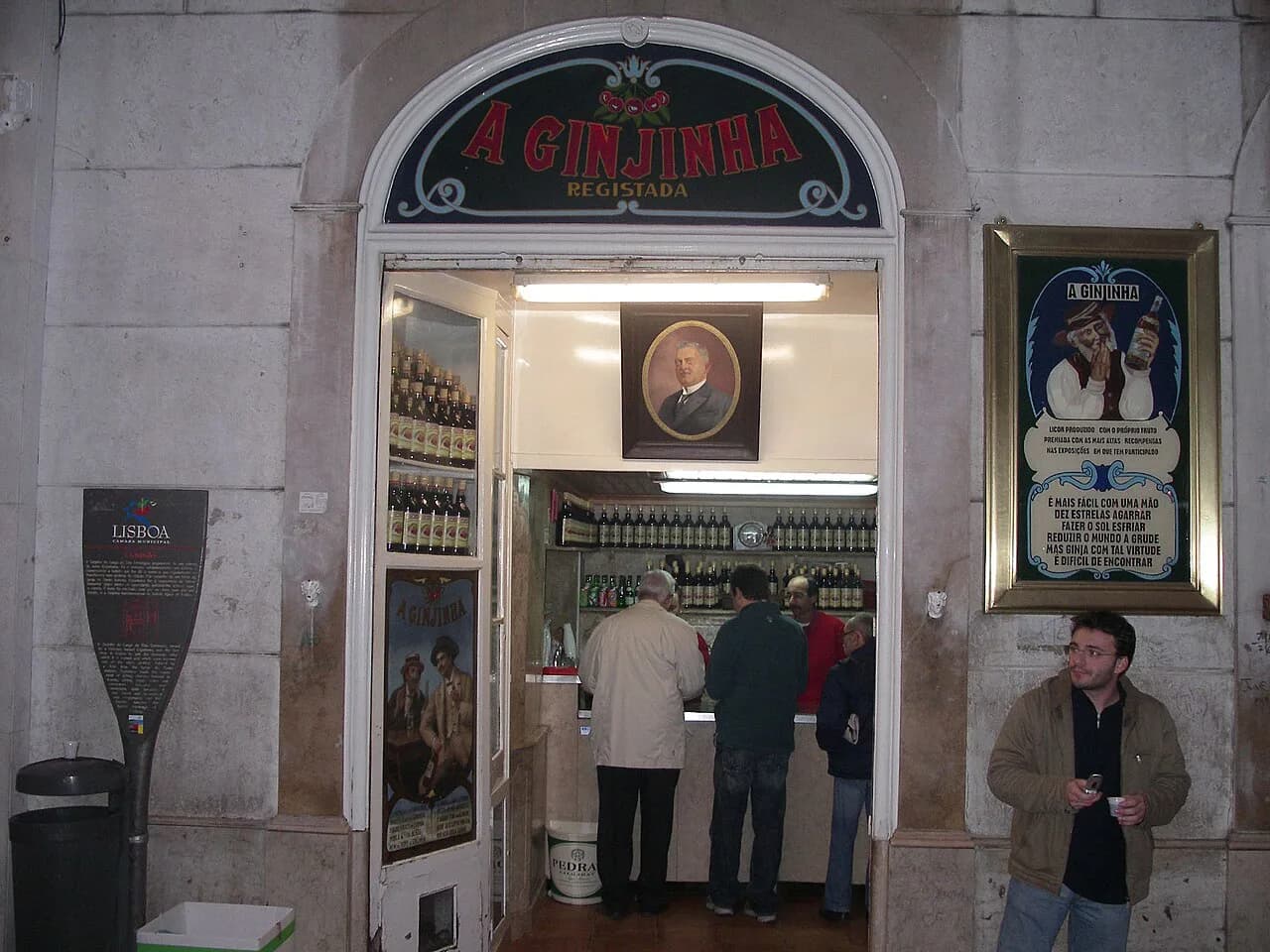
Lisbon is where the habit started, and the classic stop is A Ginjinha on Largo de São Domingos, a hole-in-the-wall with a fold-out bar where you order inside and drink outside among Lisboetas doing the same. It is a two-square-metre operation, so do not expect seats or a menu. Go early in the day if you want space at the counter.
Several traditional Lisbon bars keep the same bare-bones format: a standing-room counter, a quick shot, and no expectation that you linger. A ginjinha stop sits naturally into a walk between the Baixa squares, and it pairs well with a coffee and a pastel de nata rather than a full meal.
Ginja de Óbidos and the walled-town stands
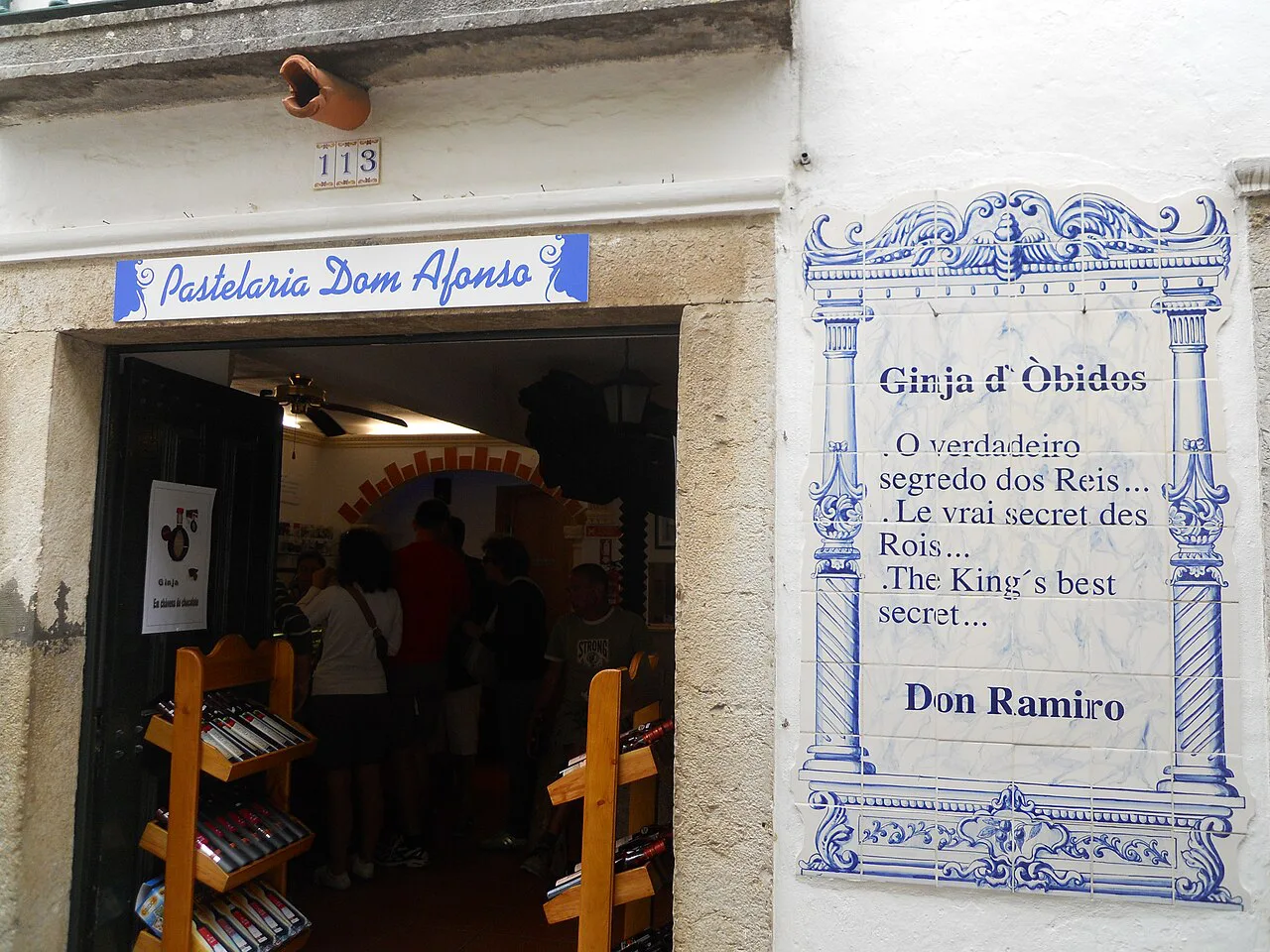
Óbidos is the town most associated with ginjinha outside Lisbon, with stands tucked inside the medieval walls and a local version called Ginja de Óbidos. The chocolate cup is the town's signature twist, sold at these stands rather than in a formal bar setting. It fits neatly into a walk along the walled streets, which take an hour or two at most.
The town leans into the drink during its chocolate festival and medieval markets, when the chocolate-cup serve is at its most theatrical. Outside those periods the stands still operate, so a short break in Óbidos can include ginjinha at almost any time of year. Because Óbidos is small, the drink becomes part of the visit rather than a separate outing.
If you are building a food-focused day, Óbidos pairs well with a lunch of traditional Portuguese dishes such as arroz de pato or arroz de tamboril, with the ginjinha as the sweet full stop. The town's compact layout means you can eat, walk the walls and take a shot without any transport in between.
Buying a bottle to take home
Bottles are widely sold at the same counters and stands where you drink, and they make a light, packable souvenir compared with wine. Look for the cherry content and the alcohol figure on the label, since styles vary in sweetness. Ask the vendor which bottle they would drink themselves rather than reaching for the most decorated one.
Once home, keep it in a cool, dark cupboard and serve it well chilled in small glasses, with or without a cherry dropped in. It also keeps for months once opened, so there is no rush to finish the bottle. Serve it after a Portuguese-style meal rather than before, when the sweetness lands better.
Ginjinha with food, and what to eat instead
Ginjinha is a digestif by habit, so the natural pairing is a heavy, savoury Portuguese meal ending. Think bacalhau or a cataplana de marisco first, then the shot, rather than the other way round. If you want a full picture of what to eat alongside, start with the Portuguese food overview before planning the day.
For dessert, the classic Portuguese finish remains a pastel de nata, and ginjinha works alongside one rather than instead of it. If you have already had your shot for the day, a coffee and a pastry keeps the ritual going without the alcohol. Portuguese desserts and Portuguese pastries cover the alternatives if you want something other than a custard tart.
Should ginjinha be on your short-break list?
Yes, as a ten-minute stop rather than a destination in itself. One shot, with the cherry, at a Lisbon counter or an Óbidos stand gives you the taste of the place for the price of a coffee, and a bottle for home costs about as much as a mid-range lunch. Build it into a walk rather than a plan.
If you have an afternoon in Óbidos, do the chocolate-cup version for the novelty and a plain glass for the flavour. In Lisbon, use A Ginjinha as a marker on a Baixa walk and keep moving. Either way, order small, drink slowly and leave the bottle for later.
Explore more Portugal guides
Sources
Notes for your next Portuguese break
Optional updates to our town guides.
You might also like



Continue reading
More guides you'll find useful





