
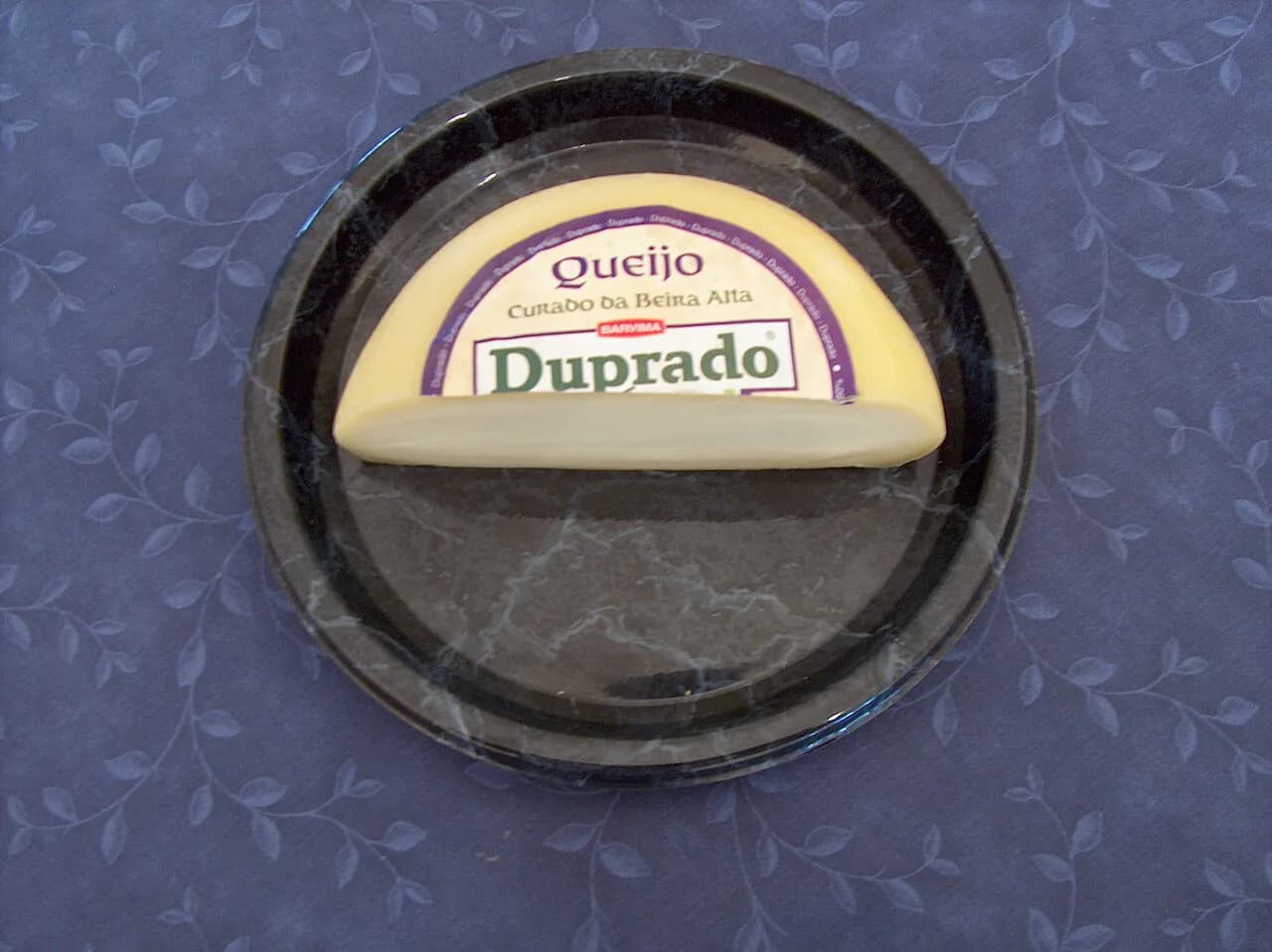
Portuguese Cheese: A Traveller's Guide to the Names Worth Ordering
A practical guide to Portuguese cheese, from Queijo Serra da Estrela and Queijo de Azeitão to Flamengo and Castelo Branco, and what each one tastes like.
On this page
Portuguese cheese is, at heart, a sheep's-milk tradition: the country's most celebrated names are soft to semi-soft sheep's cheeses from named inland regions, with a few cow's-milk and goat's-milk cheeses covering everyday eating. This guide groups the cheeses you will actually meet by milk and texture, explains what each tastes like, and sits within our wider coverage of Portuguese food.
Expect to see cheese on a Portuguese table in three ways: as a starter before a meal, sliced with bread and sometimes presunto, or melted into a sandwich. It rarely appears as a cheese course in the British or French sense, so the practical question is which names to ask for, not how to build a board.
What Portuguese cheese is known for
Sheep's milk is the backbone. The sheep's-milk names that travellers meet most often include Queijo Serra da Estrela, Queijo de Azeitão, Queijo Serpa, Queijo de Évora and Queijo da Beira Baixa, alongside requeijão, a whey cheese made from the leftovers of cheesemaking. Learning five names is enough to order with confidence in most towns.
The cow's-milk and goat's-milk side of the counter matters too, because these are the everyday cheeses sold in most shops. Flamengo, a semisoft cow's-milk cheese, is a Portuguese copy of Dutch Edam and the standard sandwich filler, while Castelo Branco is a semi-hard goat's cheese named for the town in west-central Portugal where it originated. Both are widely sold and often passed over by visitors looking only for the famous sheep's names.
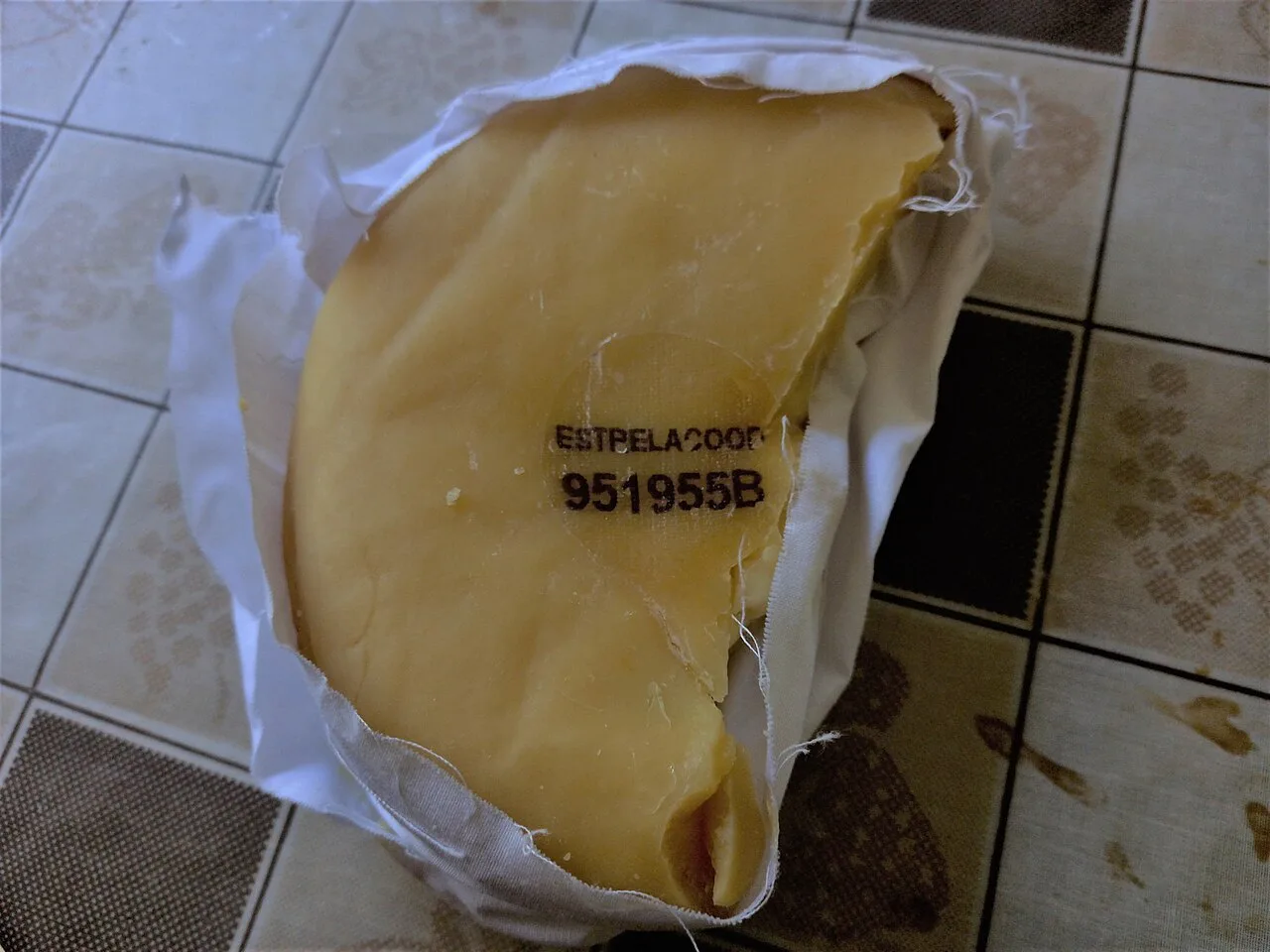
The named sheep's cheeses to look for
Queijo Serra da Estrela is the benchmark: a soft sheep's cheese from the Serra da Estrela mountains, eaten young and runny or aged until it firms up. Queijo de Azeitão comes from the Setúbal peninsula south of Lisbon, and Queijo Serpa from the Alentejo; both are soft sheep's cheeses in the same family. If you order one cheese with bread at a tasca, these are the names to ask for.
What is cottage cheese called in Portuguese? The closest everyday term is queijo fresco, a soft fresh cheese eaten plain or with bread. Requeijão is a whey cheese and is a different product, so it is not the same as queijo fresco.
Two more complete the shortlist. Queijo de Évora is the Alentejo's own sheep's cheese, and Queijo da Beira Baixa covers the named cheeses of the Beiras, the central region inland from Coimbra. In practice a shop or menu will often name the town or region rather than the style, so reading the label as a place name rather than a brand is the useful habit to develop.
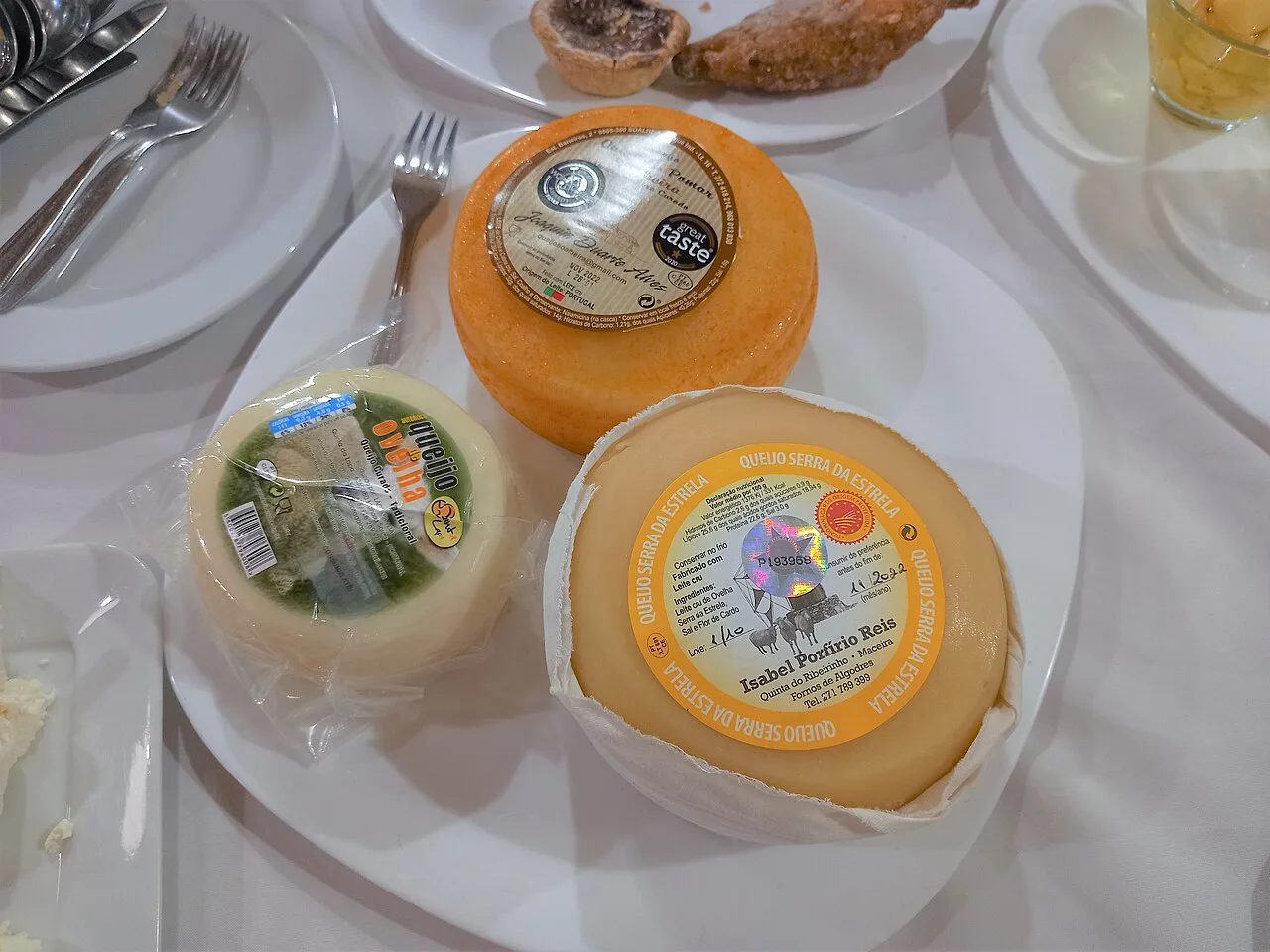
Soft, oozy sheep's cheeses versus firm, crumbly ones
Texture is the fastest way to choose. Young Serra da Estrela and Azeitão are soft enough to spread, with a creamy, slightly tangy flavour; aged versions firm up and taste sharper and saltier. The soft ones are best eaten soon after opening, so buy them near the end of a trip rather than the start.
Firmer, crumbly cheeses are the ones to buy for the journey home. They slice and travel far better than an oozy sheep's cheese, and a shop assistant can point you to the firm ones on the counter if you ask.
Castelo Branco: strong, crumbly and best in small amounts
Castelo Branco is a semi-hard goat's-milk cheese named after the town in west-central Portugal where it originated. It has a crumbly texture and a strong, pungent flavour, and it is far too powerful to eat on its own in quantity. Buy a small piece and use it as an accompaniment rather than a centrepiece.
The usual way to handle it is to pair it with something milder and softer. A simple salad or a pasta dish carries the pungency without being overwhelmed, and a little crumbled over a plate does more work than a thick slice. If you like strong goat's cheese, this is the Portuguese one to seek out; if you do not, one small piece is enough to judge it.
Flamengo: the mild cow's-milk cheese behind the sandwich
Flamengo is a semisoft cow's-milk cheese and a staple of Portuguese sandwiches. It is mild, nutty and melts well, usually sold in a red wax or foil package, and it is the cheese you will most often find inside a toasted sandwich in a café. It is not a cheese to plan a tasting around, but it is the one that makes everyday eating work; our guide to the bifana covers the pork roll it sometimes shares a menu with.
The name means Flemish, and the cheese is a Portuguese version of Dutch Edam.
Requeijão Serra da Estrela and other whey cheeses
Requeijão is a whey cheese, made from the liquid left after the curds are removed in cheesemaking, and Requeijão Serra da Estrela is the version associated with the same mountain region as the famous sheep's cheese. It is mild and soft, and it works with bread or as part of a dish rather than on a savoury board alongside the aged cheeses.
Treat it as a different thing from the aged cheeses, not a cheaper version of them. It is best eaten fresh and soon, and it works well with bread or as part of a dish rather than on a savoury board.
How cheese appears on a Portuguese table
As a starter, cheese usually arrives sliced or in a small wedge with bread, sometimes alongside presunto or chouriço, before the main course. It is not a course in its own right, so do not expect a trolley or a dedicated cheese menu. Ordering a portion to share at the start of a meal is the normal move.
Beyond the starter, cheese shows up inside other things: melted into a sandwich, crumbled over a dish, or baked into a pastry. The counter names matter more than restaurant presentations, because cheese is usually an ingredient or an accompaniment rather than a plated course; the dishes gathered among traditional Portuguese dishes give you the wider picture.
Buying cheese at a counter
At a grocery counter or a specialist shop, the name on the label is your best tool. Ask for the cheese by its regional name and say whether you want it soft, firm or crumbly; a cheesemonger can then cut a piece to suit. Small quantities are normal, so you do not have to commit to a whole wheel to try something. Online Portuguese grocers, for instance, list cheeses under regional and brand names rather than plain varieties.
Look at the milk type and the region on the packaging rather than the brand. A cheese labelled with a town or mountain name is telling you what it is, while a supermarket own-brand version may be a similar style made elsewhere. If you want the real thing for a specific name, ask to see the label before it is wrapped.
Which cheeses travel well
Firm and semi-hard cheeses are the safest to carry home. Castelo Branco and other crumbly goat's or sheep's cheeses hold up better than soft ones, and Flamengo, sold in its sealed red packaging, is the easiest of all. If you are flying, buy on the last day and keep the cheese in your checked bag rather than a warm carry-on.
Soft sheep's cheeses such as a young Serra da Estrela or Azeitão are best eaten on the day or within a few days. They do not survive a journey well, so treat them as something to buy and eat in Portugal rather than a souvenir. That is the honest trade-off: the cheeses worth travelling for are usually the ones that travel worst.
Which Portuguese cheese should you buy first?
Start with one soft sheep's cheese and one firm one. A young Serra da Estrela or an Azeitão gives you the flavour the country is known for, while a piece of Castelo Branco or a pack of Flamengo shows you what people actually eat day to day. Two purchases cover both ends of the counter.
If you are short on time, buy the soft cheese to eat that evening with bread and the firm one to take home. Shops and markets vary, so check what is on the counter when you get there rather than planning around a specific shop, and let the names above guide the conversation.
Explore more Portugal guides
Frequently Asked Questions
What is cottage cheese called in Portuguese?
The closest everyday term is queijo fresco, a soft fresh cheese eaten plain or with bread. Requeijão is a whey cheese and is a different product, so it is not the same as queijo fresco.
Sources
Notes for your next Portuguese break
Optional updates to our town guides.
You might also like



Continue reading
More guides you'll find useful





