
Portuguese Desserts: What to Try and Where They Come From
A practical guide to Portuguese desserts, from pastel de nata and ovos moles to queijadas and pão de ló, with what each one tastes like and where it comes from.
On this page
Start with a pastel de nata: a small tart of flaky pastry holding a soft set custard, served warm and dusted with cinnamon or icing sugar. It is the one Portuguese dessert you will find in every town, from airport concourse to village pastelaria. Beyond that, most of the sweets worth seeking out belong to a single town or region, which is why a short break in Aveiro, Sintra, Évora or Ovar can be planned partly around what you eat.
This guide covers the desserts you are most likely to meet as a visitor, grouped by what they are made of: egg-yolk convent sweets, small cheese-and-almond tarts, cakes and spoon puddings, and the everyday fried and baked items on the counter. It also covers how to order in a pastelaria and which sweets are worth carrying home. Prices and opening hours vary by shop and are not fixed here; confirm them at the counter or on the bakery's own signage.
What Portuguese desserts have in common: egg yolks, sugar and the convent kitchens
The defining feature of the Portuguese sweet repertoire is a heavy hand with egg yolks and sugar, the two ingredients behind the most famous pastries and puddings. Many of these recipes are doces conventuais, sweets developed in monasteries and convents, and the story usually told is that nuns used egg whites to starch their habits and needed a use for the leftover yolks. Whatever the precise history, the result is a family of desserts that are rich, golden and very sweet.
That matters when you order, because it sets expectations. If you dislike dense, egg-forward sweets, a queijinho do céu or a toucinho do céu will feel heavy after two bites, while a travesseiro or a bolo de figo is a far gentler introduction. It is also why these desserts go well with coffee rather than more sugar: an espresso cuts through the sweetness. If you are planning meals around the sweets, it helps to know your surroundings before committing your appetite, so read up on Portuguese food generally before you build a day around a specific cake.
Pastel de nata and pastel de Belém: the same tart?
The pastel de nata is a custard tart in puff pastry, and it is sold almost everywhere in Portugal. The version most often cited as the original is the pastel de Belém, sold at the bakery beside the Mosteiro dos Jerónimos in the Belém district of Lisbon; the recipe is said to have originated with the monks there before passing to the bakery. What you get elsewhere is broadly the same idea: crisp layered shell, barely set custard, a scorched top.
What is Portugal's most famous dessert? The pastel de nata, a small custard tart in puff pastry. It is sold in every town, and the version most often cited as the original is the pastel de Belém sold beside the Mosteiro dos Jerónimos in Lisbon.
What is the difference between pastel de nata and pastel de Belém? They are the same kind of custard tart. Pastel de Belém refers to the version sold at the bakery next to the Mosteiro dos Jerónimos, which is said to have originated with the monks there; pastel de nata is the general name used across Portugal.
What are some traditional Portuguese sweets? Look for ovos moles de Aveiro, pão de ló de Ovar, queijadas de Sintra and de Évora, travesseiros de Sintra, arroz doce, toucinho do céu and bolo de figo from the Algarve. Most are built on egg yolks and sugar; the fig sweets are not.
Treat the distinction as a matter of recipe and reputation rather than a different dessert. A nata is best eaten warm and on the spot; cooled and boxed, the pastry softens and loses the contrast that makes it worth ordering. If you are lingering over lunch first, look at traditional Portuguese dishes before deciding how much room you want to leave for pastry, because a long lunch and a nata run do not always sit comfortably together.
Egg-yolk sweets to seek out in the towns you visit
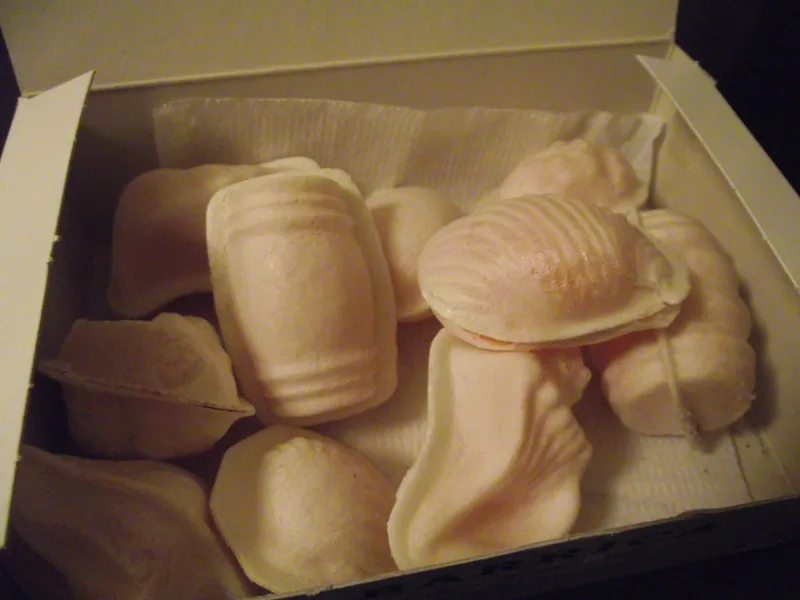
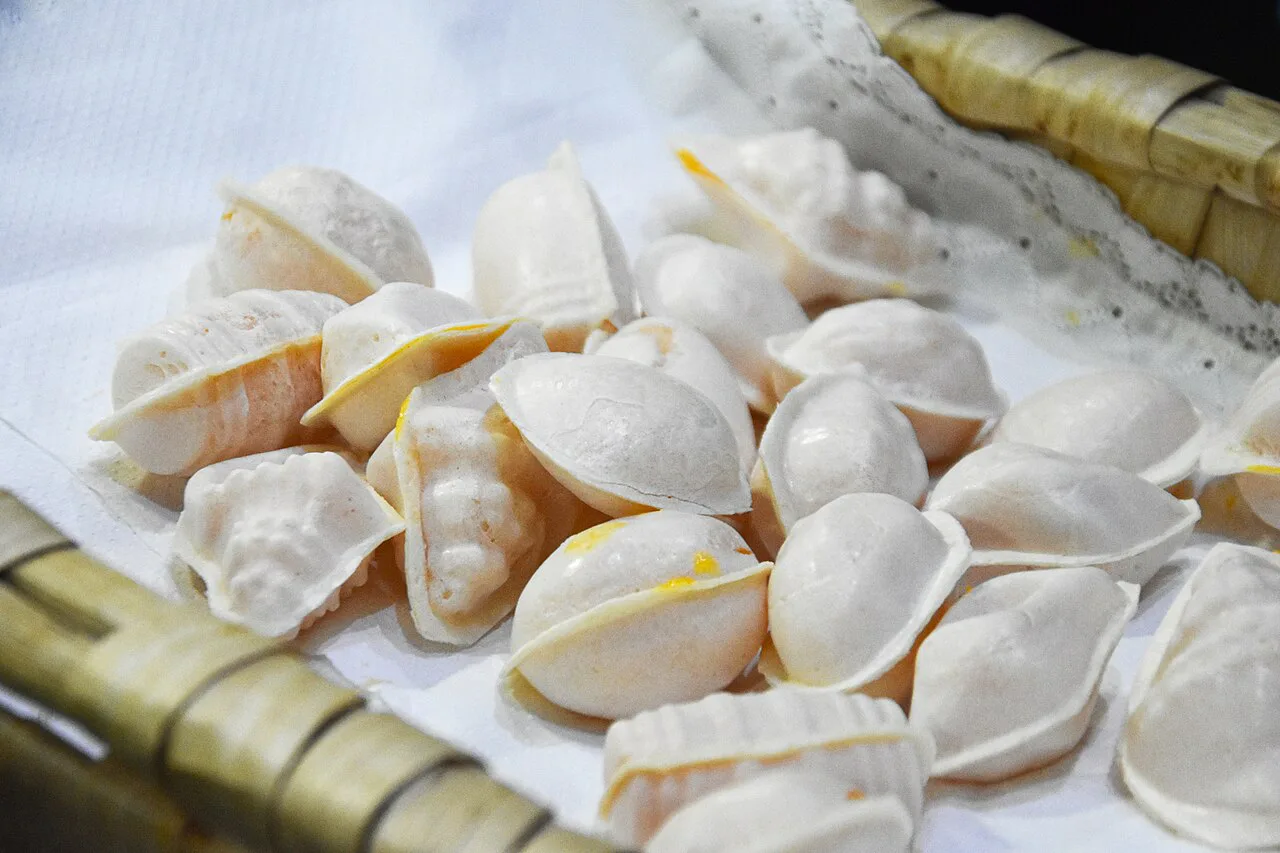
Ovos moles de Aveiro are the emblem of Aveiro: a soft paste of egg yolk and sugar, often set inside small shells of rice paper or shaped into barrels and fish, since the city's identity is tied to its canals. They are intensely sweet and best eaten in small quantities, ideally with a coffee. Buy them from a pastelaria in the city centre rather than a souvenir stand if you want to eat them fresh.
Toucinho do céu translates as 'bacon from heaven', though it contains no bacon: it is an almond and egg-yolk cake, dense and moist. Barriga de freira, 'nun's belly', is a similar convent-style sweet built on egg yolks and sugar, sometimes with almonds. Both are heavy, sugary sweets best shared between two.
These are three of the desserts most likely to divide a table. Order one between two before committing to a box, and remember that many Portuguese sweets keep badly in warm weather, so a large purchase at the start of a day out is rarely sensible.
Queijadas and small tarts: how they differ from a nata
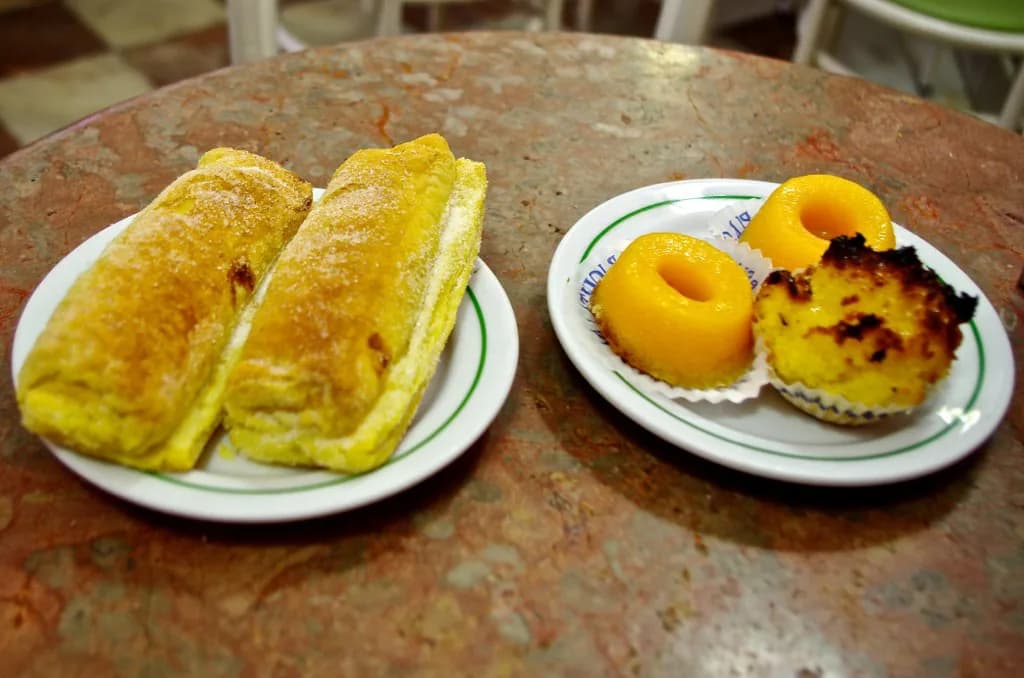
A queijada is a small tart, and the name does not mean it contains cheese in the way you might expect. Queijadas de Sintra are small, pale and almond-based, with a texture closer to a firm custard than to a flaky nata. Around Sintra they are sold alongside travesseiros, the pillow-shaped puff pastries filled with almond cream that the town is known for.
Queijada de Évora is a different thing again, a small tart associated with the Alentejo city and often built on almond and egg. Queijada de feijão, made with beans, is the outlier: a firm, sweet bean tart that surprises most first-time visitors. None of these has the flaky shell of a nata, so order a queijada if you want something denser, more almondy and less messy to eat while walking.
Cakes and spoon desserts: pão de ló, arroz doce and pudim Abade de Priscos
Pão de ló de Ovar is a sponge cake from the town of Ovar, near Aveiro, made with a remarkable number of eggs and left deliberately underbaked in the middle so the centre stays liquid. It is a certified conventual sweet with Protected Geographical Indication status, traditionally eaten at Easter and Christmas but sold year-round in the region. If your break takes in Aveiro, Ovar is the obvious extension for anyone interested in the egg-yolk tradition.
Arroz doce is rice pudding, served cold and dusted with cinnamon, sometimes with a strip of lemon peel. It is a café and supermarket staple rather than a speciality, and it makes a lighter finish than the egg-heavy cakes. Leite creme is a set milk custard with a burnt sugar top, closer to a crème brûlée than to a pudding, and pudim Abade de Priscos is a dark, dense caramel pudding.
Almond and fig sweets: travesseiros, torta and fig cake
Travesseiros de Sintra are the almond-cream pastries most associated with Sintra, and they are said to have been created at a single pastry house in the town, which still sells them. They are lighter than the egg-yolk sweets and travel a little better, though the pastry still softens within a day. Torta de amêndoa is an almond roll, denser and easier to box, which makes it a reasonable gift.
Bolo de figo is the Algarve fig cake, one of the few Portuguese pastries with no egg in it, built on dried figs and almonds and usually sold in dense bars. Queijo de figo, 'fig cheese', is a moulded paste of figs and almonds eaten in slices rather than a dairy product. Both are good candidates for the journey home because they are firm and keep well; the Algarve is also where you will find them at their best.
Fried and everyday bakery items: farturas, bolas de Berlim and pão de Deus
Farturas are strips of fried dough rolled in sugar and cinnamon, sold hot from street stalls at fairs and near beaches, and closer in texture to a light doughnut than to a churro. Bolas de Berlim are the everyday fried, sugar-coated buns with a cream filling that appear in almost every pastelaria; they are Portuguese by adoption rather than origin. Neither is a convent sweet, and neither needs planning.
Bolo de arroz is a small, firm rice-flour cake, and pão de Deus is a sweet bun topped with coconut. These are the things to buy by the piece with a mid-morning coffee rather than a destination in themselves. If you want to compare what you are eating with the wider bakery tradition, the Portuguese pastries guide covers the counter more broadly.
How to order in a pastelaria
Most pastelarias work on a counter-service basis: you order and pay at the counter, then either stand, sit at a table or take the pastry away. Prices differ between eating in and taking away, and buying by the piece is normal, so you can try three small sweets instead of committing to one large cake. Point at what you want if the name escapes you; the trays are in front of you.
Bakeries differ in when they open and close, and some are open only in the morning or shut for a stretch in the middle of the day. Rather than assume a shop is open, check the hours posted on its door or its own page, since they differ from one town and one owner to the next.
Matching sweets to Aveiro, Sintra, Évora and Ovar
If you have one to four days, the sweets are best used as a reason to choose between towns rather than as a separate itinerary. Aveiro gives you ovos moles and, with a short hop, the pão de ló of Ovar. Sintra gives you queijadas de Sintra and travesseiros in the same afternoon as the palaces. Évora gives you the distinct queijada de Évora and the almond sweets, with the added advantage that a smaller city is easy to walk in a day.
It pays to eat the main meal first and the sweets afterwards, because the pastry shops are the point rather than a stopgap. A lunch of grilled fish or a seafood stew leaves room for one nata and one regional speciality; a long, heavy lunch does not. For the main meal itself, grilled fish and seafood stews are the dishes to look for in the same towns.
Which Portuguese sweets travel home well
The egg-heavy convent sweets are the ones to leave behind. Ovos moles and anything custard-based will not survive a flight, and a pastel de nata is best eaten standing up within minutes of buying it. Queijadas are firmer and travel a little better, but they are still best eaten the same day. For the wider bakery counter, the Portuguese pastries guide covers it in more detail.
The reliable gifts are the dry, dense things: bolo de figo, queijo de figo, torta de amêndoa and plain almond biscuits. They are firm, keep for weeks and survive a suitcase. Buy them from a pastelaria or market in the town where they are made rather than an airport shop, and check the packaging date before you commit.
Desserts worth skipping if you are short on appetite
If you dislike very sweet food, the heaviest of the egg-yolk sweets are the ones to leave. Toucinho do céu, barriga de freira and queijinho do céu are all dense, sugary and best shared. Farturas are worth trying once hot from the stall, but they are a snack rather than a regional speciality.
The everyday international pastries sold in Portuguese cafés, éclairs and croissants among them, are the ones to skip when you have limited appetite and limited days. Spend the appetite on something you cannot buy at home. A pastel de nata and one regional speciality per day is a reasonable rule for a short break.
Which sweet to build your day around
Choose one town and one sweet to anchor the day: Aveiro for ovos moles and a run to Ovar for pão de ló, Sintra for queijadas and travesseiros, or Évora for the Alentejo queijada and the almond sweets. Eat the main meal first, order small at the counter and take the dense fig and almond sweets home rather than the custard ones.
Explore more Portugal guides
Frequently Asked Questions
What is Portugal's most famous dessert?
The pastel de nata, a small custard tart in puff pastry. It is sold in every town, and the version most often cited as the original is the pastel de Belém sold beside the Mosteiro dos Jerónimos in Lisbon.
What is the difference between pastel de nata and pastel de Belém?
They are the same kind of custard tart. Pastel de Belém refers to the version sold at the bakery next to the Mosteiro dos Jerónimos, which is said to have originated with the monks there; pastel de nata is the general name used across Portugal.
What are some traditional Portuguese sweets?
Look for ovos moles de Aveiro, pão de ló de Ovar, queijadas de Sintra and de Évora, travesseiros de Sintra, arroz doce, toucinho do céu and bolo de figo from the Algarve. Most are built on egg yolks and sugar; the fig sweets are not.
Do Portuguese desserts contain a lot of egg?
The convent-style sweets do, and many use yolks alone. If you dislike egg-heavy desserts, choose the almond and fig sweets, travesseiros, torta de amêndoa or bolo de figo instead of the toucinho do céu or queijinho do céu.
Sources
Notes for your next Portuguese break
Optional updates to our town guides.
You might also like



Continue reading
More guides you'll find useful




