
Piri Piri Chicken: The Marinade, the Heat and How to Cook It
What piri piri chicken is, how the chilli marinade is made, how hot it really gets, and how the bird is cooked and served, with two tested home-cook versions.
On this page
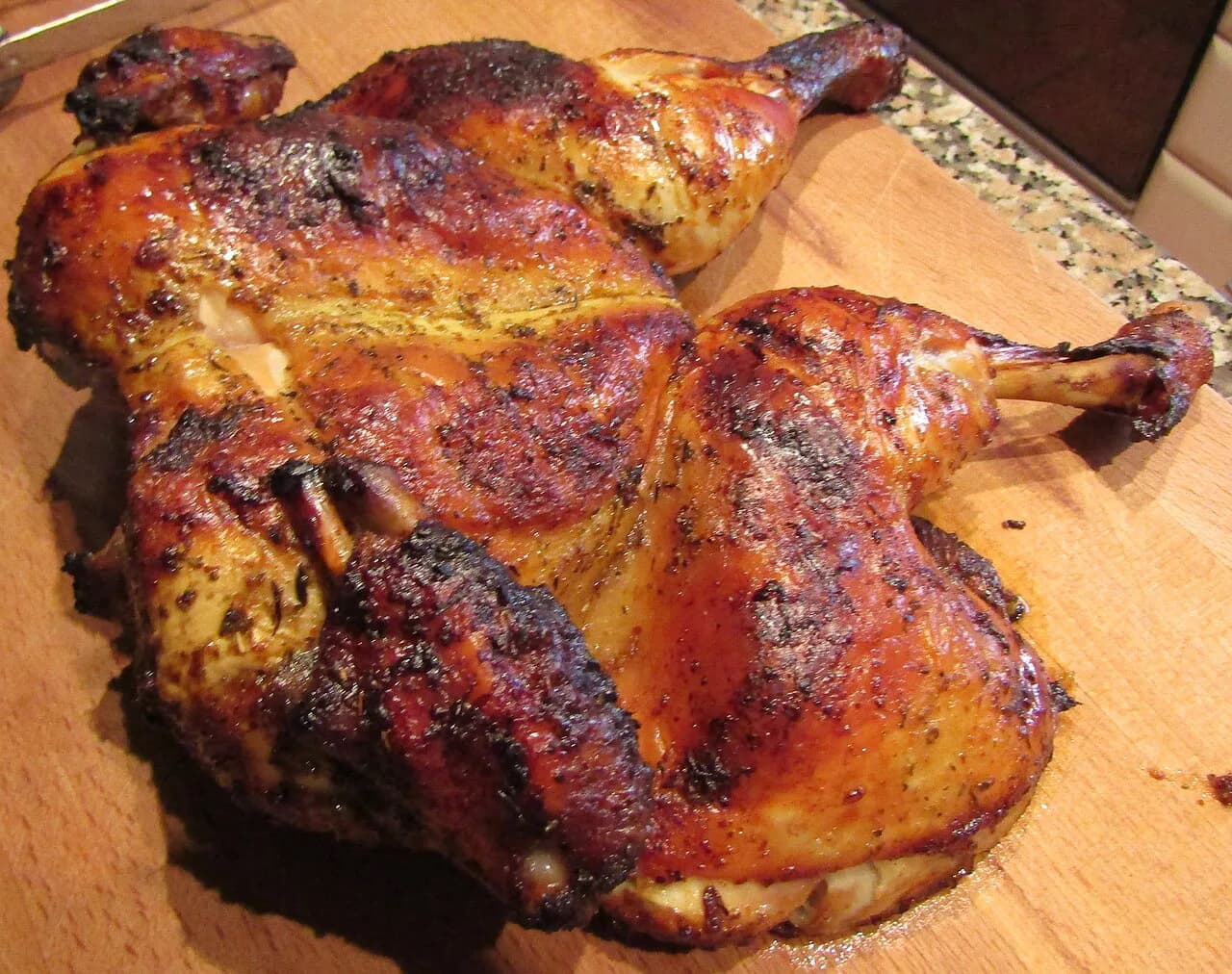
Piri piri chicken is a whole chicken flattened out, coated in a chilli, garlic, lemon and paprika marinade, and then roasted or grilled. The dish takes its name from the piri piri chilli used in that marinade, which is massaged into the bird and left to sit for hours before it goes anywhere near heat.
This guide covers what goes into the marinade, how hot the result actually is, why the bird is spatchcocked, how long it needs in the fridge and in the oven, and how a thigh-and-breast version works when a whole bird is too much. It also covers how the finished bird is served, and where it sits within the wider picture of Portuguese food.
What piri piri chicken is
The dish is a whole chicken with its backbone removed and the carcass pressed flat, a technique called spatchcocking. Flattening the bird evens out the thickness so the breast and the legs cook at a similar rate instead of the breast drying out while the thighs catch up.
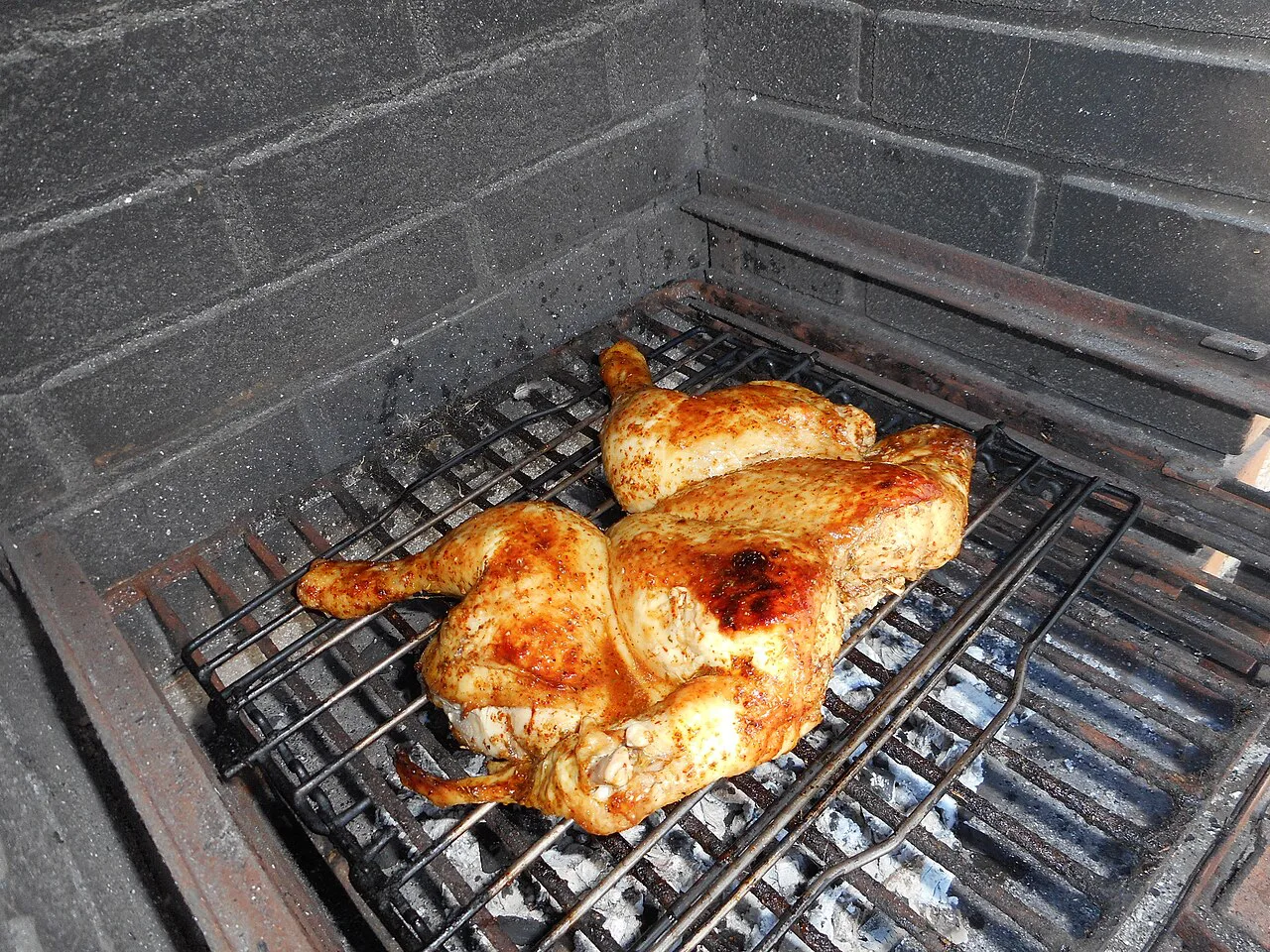
Once flat, the chicken goes into a shallow non-metallic dish and the marinade is worked into both sides, then the dish is covered and chilled. The bird is roasted breast-side up on a rack inside a baking tray, which lets the heat circulate underneath and keeps the base from stewing in its own juices.
What goes into the piri piri marinade
The marinade is a blitzed paste rather than a sauce. A representative version combines four red chillies and two red bird's-eye chillies with four garlic cloves, a 20g bunch of flatleaf parsley, the juice of two lemons, white wine vinegar, smoked paprika, oregano, caster sugar and flaked sea salt.
The marinade is a blitzed paste rather than a sauce.
Heat is a dial, not a fixed setting.
If you are ordering chicken out or sharing a table with mixed tolerance, ask whether the chilli oil or sauce can come on the side, since that lets you control the heat at the table rather than having it fixed in the marinade.
The lemon juice and vinegar do the acid work, the smoked paprika and oregano carry the warm, earthy note, and the small amount of sugar is there to balance the chilli heat. The ingredients are everyday kitchen staples, which is part of why the dish adapts so easily between one recipe and another.
How hot piri piri chicken really is
Heat is a dial, not a fixed setting. The bird's-eye chillies are the main lever: add more for a fiercer marinade, use fewer for something milder, and note that the recipe's four red chillies are deseeded while the bird's-eye ones go in with their stalks removed but seeds intact.
A second approach builds the paste from smoked paprika, dried chilli flakes and an optional fresh red chilli, along with light brown soft sugar, lime zest and juice, garlic and olive oil, which gives a gentler, rounder heat. Because the fresh chilli is optional and the flakes can be reduced, the heat is easier to dial back for a table with mixed tolerance.
Spatchcocking, slashing and the resting time
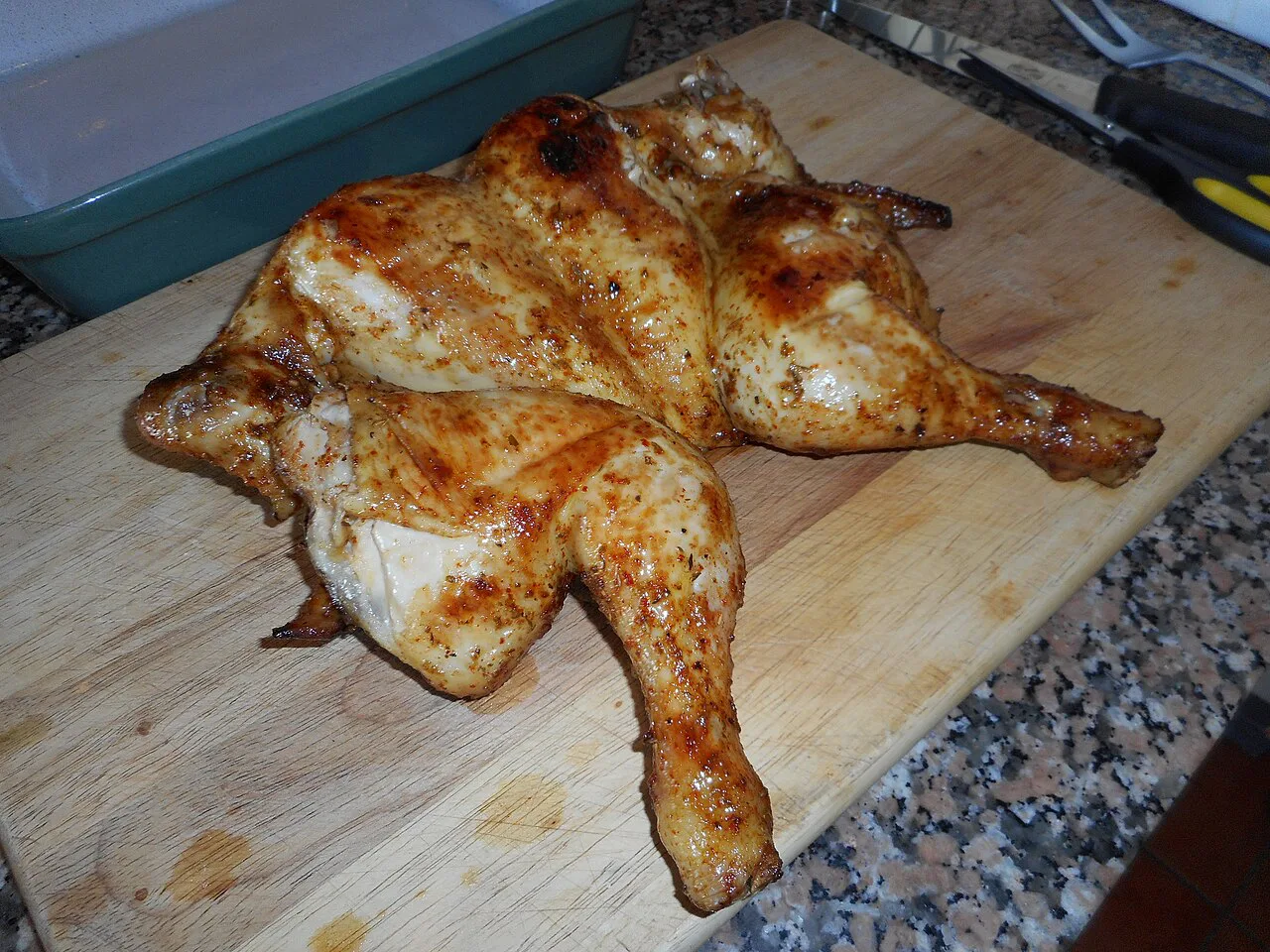
Removing the backbone takes scissors or poultry shears and a little patience: cut down either side of the bone, discard it, trim the foot joints and wing tips, and press down hard on the breastbone with your palms to flatten the bird. Slashing the thickest parts of the legs and breasts lets the marinade reach the meat rather than sitting on the surface.
The marinating time is the part that catches people out. The chicken needs at least four hours in the fridge, and overnight is better, so a piri piri chicken dinner is a two-day decision rather than a last-minute one. The skin can be stripped off before marinating, leaving only the wing ends, which are easier to remove after cooking.
Cooking times and the doneness check
For a bird of about 2kg, the oven goes to 210°C, fan 190°C, Gas 6½, and the chicken roasts for 50 to 60 minutes until lightly browned. The reliable test is to pierce the thickest part of the thigh with a skewer and check that the juices run clear, rather than relying on the colour of the skin alone.
Rest the bird loosely under foil for 10 minutes before carving, which gives the juices time to settle back into the meat. Serve it with watercress and lemon wedges for squeezing, and keep the sides plain so the marinade stays the point of the plate.
Piri piri chicken with thighs or breasts
A whole bird is more than two people on a short break will eat, and skinless thighs and breasts work as a straight swap. Baked this way they need 20 to 30 minutes rather than the hour a whole chicken takes, so the marinade can go on in the morning and dinner is on the table quickly.
A one-tin version takes the same idea further: bone-in thighs and drumsticks are marinated for at least an hour, then roasted with sliced baby potatoes and peppers at 220°C, fan 200°C, Gas 7 for 35 to 40 minutes. Cherry tomatoes go in for the last 20 to 25 minutes, and the whole thing is served from the tin with buttered corn.
Making the marinade ahead
The marinade blitzes in minutes and keeps in the fridge, so the practical split is to make the paste one evening and marinate the chicken the next morning. A one-tin version allows up to 24 hours in the marinade, which is forgiving if plans shift and gives you a wider window than the four-hour minimum for a whole bird.
Keep the marinating dish non-metallic and shallow, cover it, and put it on the bottom shelf of the fridge. Discard any marinade that has touched raw chicken rather than spooning it over the cooked bird, and if you want extra sauce, set some aside before the chicken goes in.
Serving piri piri chicken
If you are ordering chicken out or sharing a table with mixed tolerance, ask whether the chilli oil or sauce can come on the side, since that lets you control the heat at the table rather than having it fixed in the marinade.
Order it alongside plain rice, a salad or chips rather than another heavy dish, because the marinade is already rich. If you want to build a wider Portuguese table, look at traditional Portuguese dishes for grilled fish and seafood rice to balance the meal, and keep the chicken as the centrepiece rather than one of several grilled meats.
Which version should you cook?
For a weekend with time in it, spatchcock a whole bird, marinate it overnight and roast it at 210°C, fan 190°C for 50 to 60 minutes. For a faster dinner for two, use skinless thighs and breasts and give them 20 to 30 minutes in the oven instead.
Whichever route you take, the two things that decide the result are the marinating window and the doneness check at the thigh. Get those right and the chilli level becomes a preference rather than a risk.
Explore more Portugal guides
Sources
Notes for your next Portuguese break
Optional updates to our town guides.
You might also like



Continue reading
More guides you'll find useful





