
Portuguese Pastries: A Traveller's Guide to What to Order
A practical guide to Portuguese pastries beyond the pastel de nata, naming the bakes worth ordering in a pastelaria and how to ask for a custard tart.
On this page
The famous Portuguese pastry is the pastel de nata, a small custard tart in crisp puff pastry, and it is the one bake you should order first in any pastelaria. Beyond it, Portugal has a long list of named convent sweets and regional cakes that most short-break visitors never try. This guide covers how to order a nata, how the two best-known Lisbon tart stops differ, and which bakes in Sintra and beyond are worth seeking out on a one to four day trip.
Treat this as a counter-side briefing rather than a definitive ranking. The names below are the ones you will see written on paper doilies and chalkboards across the country, and each comes with what it actually is so you are not guessing at a tray.
What is the famous pastry in Portugal? The pastel de nata answered first
The pastel de nata is the answer: a round tart of set egg custard in layered puff pastry, baked hot and eaten warm with cinnamon or icing sugar dusted on top. Singular is pastel de nata, plural is pastéis de nata, so ask for dois pastéis de nata if you want two. The nata sits within a much wider family of egg-and-sugar bakes, and the Portuguese dessert tradition has enough named varieties to fill a counter on its own.
Order by the half dozen rather than one at a time. Natas are cheap, small and best eaten within minutes of leaving the oven, which is why locals buy them in threes and sixes and stand at the counter to eat them. A single tart on a plate is fine, but a paper bag of six shared between two travellers makes a better mid-morning stop than a full sit-down cake order.
If you want the broader picture of savoury Portuguese food to balance the sugar, the site has a full guide to Portuguese food covering the dishes that anchor lunch and dinner. Pastries are best treated as the punctuation between meals, not the main event, especially on a short break where every stop competes for stomach space.
How to order a pastel de nata and what to pair it with
Order at the counter with a simple phrase: um pastel de nata, por favor. The tart is most commonly eaten with a dark espresso (a bica or café), though it also works with a small glass of ginjinha if you are making an afternoon of it. At busy counters you pay first or pay at the end depending on the shop, so watch what the person ahead of you does rather than asking.
Order at the counter with a simple phrase: um pastel de nata, por favor.
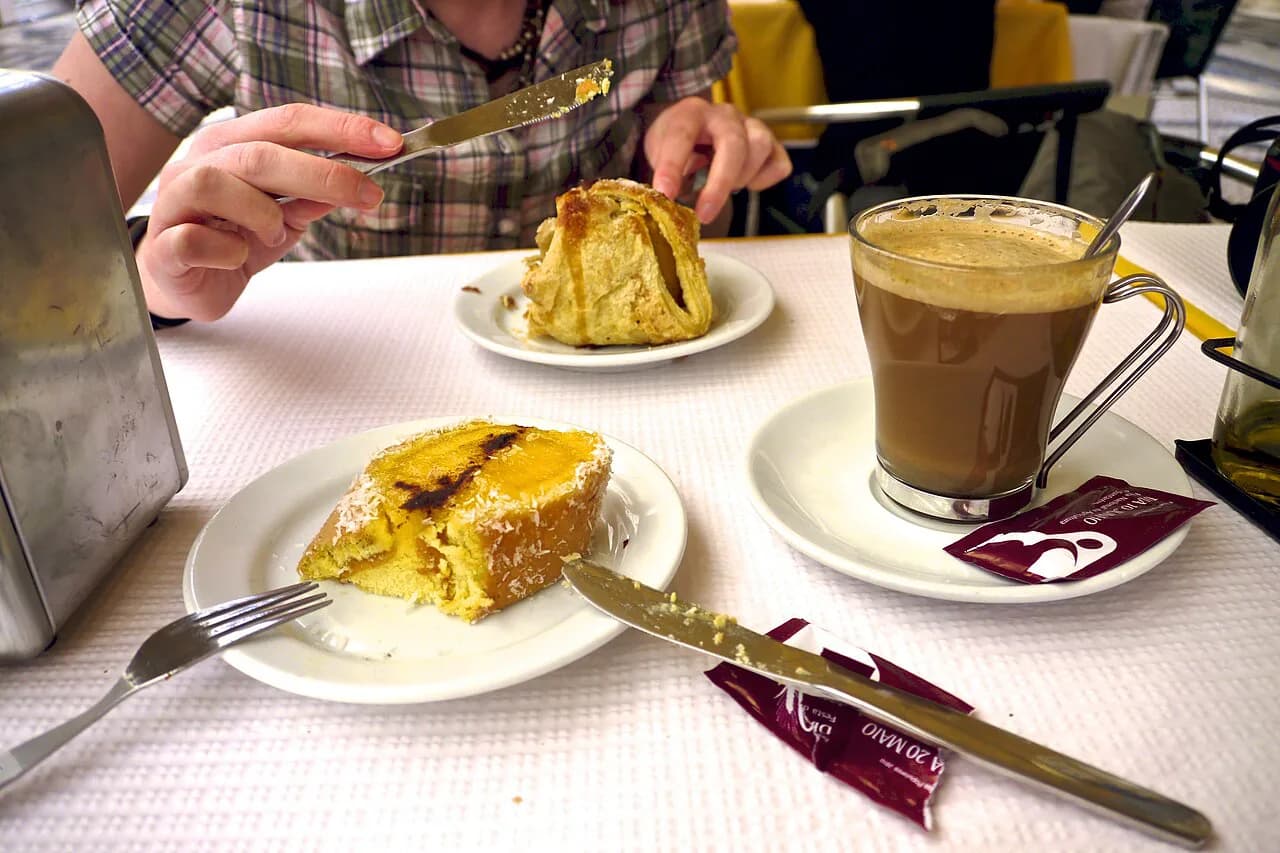
A pastelaria is a bakery-café: a counter of pastries and savouries, a coffee machine, and often a few tables where you can sit with a tray.
Takeaway tarts do not travel well; the pastry softens and the custard loses its set within hours. If you want to eat a nata at its best, sit at a table or stand at the counter rather than carrying a box around town all afternoon. This is the main argument for choosing a bakery close to where you are already walking, rather than hauling tarts across the city.
Pastéis de Belém: what it is and whether the detour is worth it
Pastéis de Belém, also called the Antiga Confeitaria de Belém, has been baking in the Lisbon neighbourhood of Belém since 1837 and produces around 20,000 tarts a day. Its tarts are sold at the takeaway counter or served in a warren of tiled dining rooms, and the recipe is a closely guarded secret known to very few bakers. The tarts cost €1.50 each, which makes the stop an easy budget decision even with a queue.
Is it worth crossing Lisbon for? Yes, if you are already heading to Belém for the Mosteiro dos Jerónimos and the riverfront, which is the sensible way to pair it. Belém is a half-day in itself, and the tarts here are heavier on egg and more savoury in the custard than the average nata, with a pastry that flakes in big shards. Make it a savoury-then-sweet stop: a duck empada and a beer first, a nata and an espresso to finish.
Buy only what you will eat on the spot. These tarts are not made for a suitcase, and a box carried around Lisbon will not survive the day in good condition. If you want a custard tart to take home in spirit, learn the method instead, which the dedicated pastel de nata guide sets out step by step.
Manteigaria: the glass-kitchen alternative to Belém
Manteigaria is the other name that comes up constantly, with a narrow original shop on Rua do Loreto in Chiado and several more branches in Lisbon and Porto. It serves a short menu of pastéis de nata, coffee and a little alcohol, and the draw is watching bakers fold butter into pastry behind glass while your tart is still warm. The Chiado original is the one worth choosing if you want the theatre of the glass kitchen rather than a dining room.
How do the two compare? Belém gives you the historic bakery, the tiled rooms and a proper sit-down stop next to major monuments; Manteigaria gives you a fast counter, a central location and the making of the tart in front of you. On a two or three day Lisbon trip you probably do not need both unless you are a committed tart hunter. Pick Belém if you are already in that neighbourhood, and Manteigaria if your day is built around Chiado and Baixa.
A short custard tart crawl through Chiado
Chiado and Baixa pack several tart counters into a walkable stretch, which makes a short crawl easy to build into an afternoon of sightseeing. Pastelaria Alcôa has a Chiado shop and a counter inside El Corte Inglés, Castro sits between Chiado and Baixa, and the Pastelaria de Bairro Alto Hotel offers a more polished sit-down version. Pastelaria de Santo António adds an Alfama option if your walk takes you east towards the castle.
Do not try to hit all five in one go. Two or three tarts across an afternoon is plenty, and the point of a crawl is comparison: notice which custard is more set, which pastry shatters, and which is served hot rather than warm. Keep the stops close together so you are walking between them rather than crossing the city, and build the crawl around a museum or church you already planned to see.
Pastries beyond the nata: travesseiros, queijadas and pastéis de Cruz Alta in Sintra
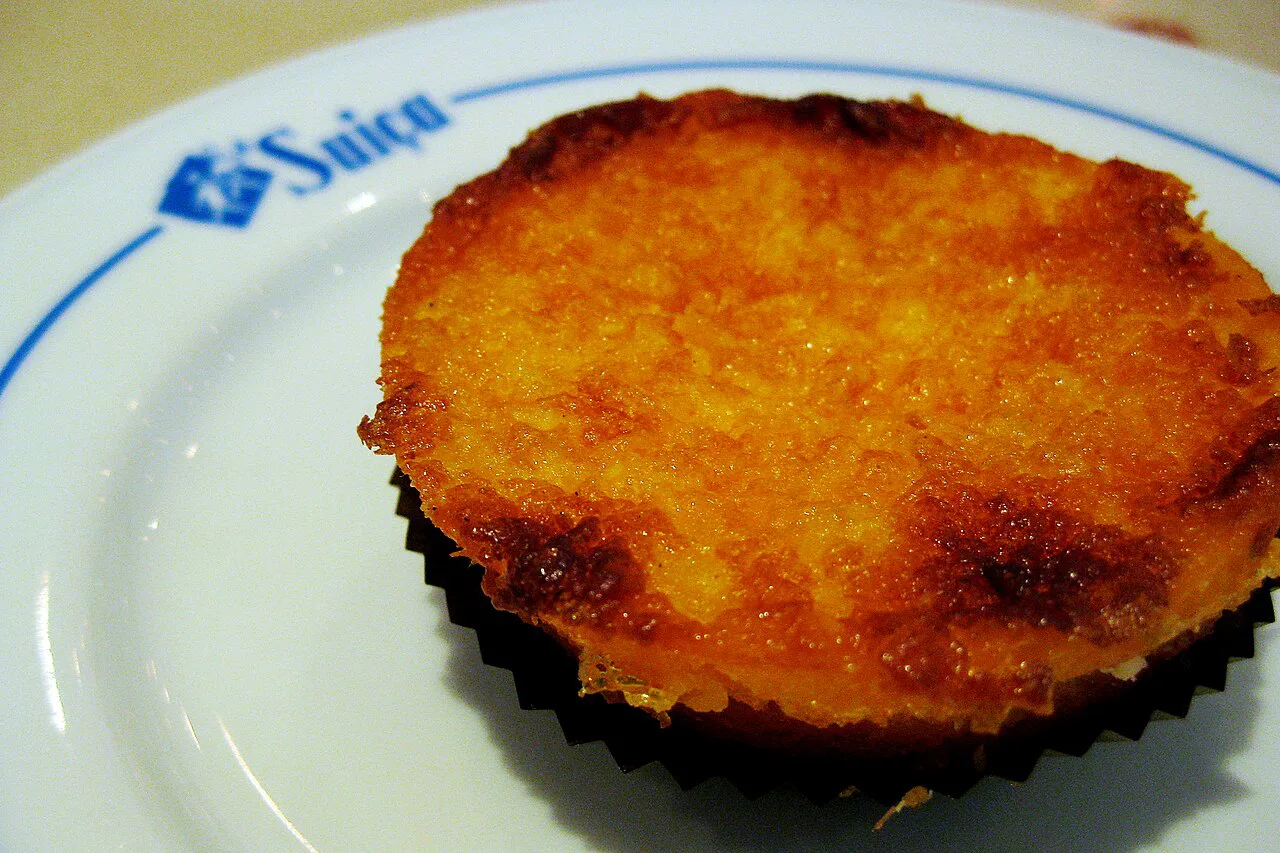
Sintra has its own pastry identity, and the travesseiro is the one to order first: a pillow-shaped puff pastry filled with a sweet egg and almond cream. Casa Piriquita on Rua das Padarias is the name most associated with them, and it also sells pastéis da Cruz Alta, small pastries wrapped in paper and filled with a rich egg yolk and sugar cream. Both are sweet in a way that rewards sharing one between two rather than ordering a bag each.
Queijadas are the other Sintra bake worth knowing: small cakes of fresh cheese, eggs, sugar and a lot of cinnamon, sold at the Fábrica das Verdadeiras Queijadas da Sapa on Volta do Duche. The cinnamon is not a background note here; it dominates, so skip them if you dislike it. Either way, a Sintra day trip is long enough that a mid-morning pastry stop fits naturally between the palaces.
Sintra is also a natural pause before a savoury lunch, and the site's guide to traditional Portuguese dishes covers what to order afterwards, from grilled fish to cataplana. It helps to know the rhythm: pastry in the morning, a proper sit-down lunch, then an espresso before the afternoon sight.
Pastéis de Tentúgal, pão de rala and other bakes worth naming
Portugal's convent-sweet tradition produced a long catalogue of named bakes, and a few are worth recognising on a pastelaria tray. Pastel de Tentúgal is a rolled, paper-thin pastry filled with egg and sugar cream, pão de rala is an Alentejo sweet of eggs, sugar and almond or pumpkin, and pastel de feijão is a small tart filled with a sweet bean paste. None of them is a substitute for a nata, but each shows a different side of the same egg-and-sugar instinct.
For a wider sweep of the sweet side of the country, the guide to Portuguese desserts covers the bakes that sit alongside the nata on a typical counter. Use it to plan one or two deliberate pastry stops rather than ordering at random every time you pass a window.
What a pastelaria is and how to order without fuss
A pastelaria is a bakery-café: a counter of pastries and savouries, a coffee machine, and often a few tables where you can sit with a tray. You order at the counter, pay at the till or at the end depending on the shop, and eat standing or at a table. The same shop may also sell savoury snacks, sandwiches and small meals, which makes it a practical lunch stop rather than a purely sweet one.
Etiquette is simple: point at what you want, say the number, and take your coffee at the same time. Ordering by the half dozen is normal for natas, and no one will blink if you ask for six. If a tray item is unfamiliar, ask what it is rather than guessing; staff are used to explaining the difference between a queijada and a travesseiro.
Dietary limits: where to look for gluten-free and vegan tarts
Standard pastel de nata is made with wheat flour pastry and egg custard, so it is neither gluten-free nor vegan by default. Some Lisbon pastelarias do sell gluten-free or vegan versions, but availability varies by shop and is not something to assume at any given counter. Ask directly before ordering, and treat a dedicated gluten-free bakery as the safer bet if you have a serious intolerance.
If you are dairy-free or vegan, the safer pastry choices are often the ones built on almonds, pumpkin or fruit rather than custard cream, such as pão de rala. Even then, confirm ingredients at the counter rather than relying on the name. For a fuller picture of Portuguese desserts and which ones suit restricted diets, check the dessert guide before you build a pastry crawl around them.
Which pastry stop deserves your first morning?
If you are in Lisbon, make Belém your first proper pastry stop: the tarts cost €1.50 each, the bakery has been at it since 1837, and the neighbourhood gives you a half-day of monuments around it. If you are staying central, start at Manteigaria in Chiado instead, where the glass kitchen and central location make a warm nata an easy part of a morning walk.
Away from Lisbon, order the local bake first: travesseiros and queijadas in Sintra, pastel de Tentúgal or pão de rala elsewhere. The nata is the entry point, not the finish line, and the pleasure of a Portuguese pastelaria is in the range on the tray behind the glass.
Explore more Portugal guides
Sources
Notes for your next Portuguese break
Optional updates to our town guides.
You might also like



Continue reading
More guides you'll find useful





