
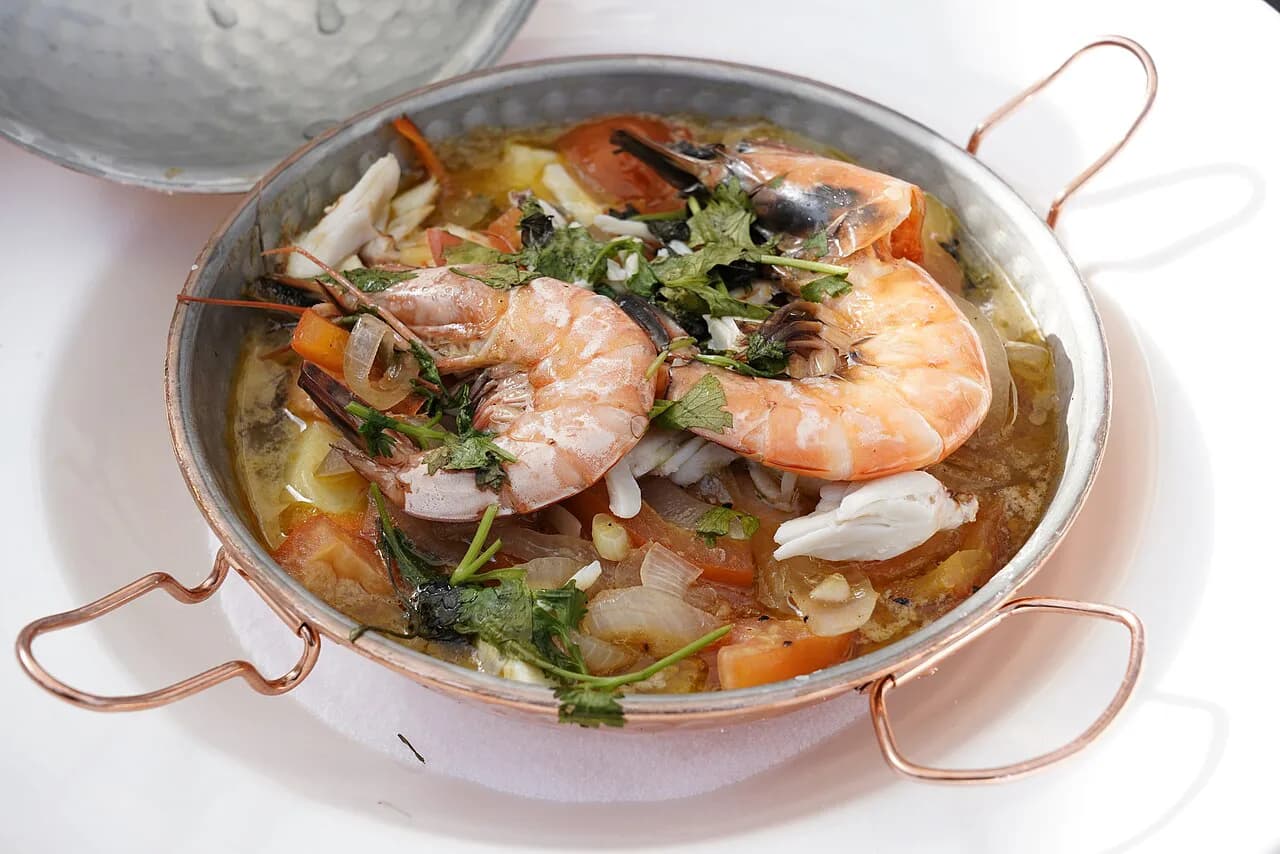
Cataplana: What It Is, What's In It and How to Order One
Cataplana is both the shell-shaped copper pan and the stew cooked in it. Here is what goes in, which version to order and how it differs from paella.
On this page
Cataplana is two things at once: a hinged, shell-shaped copper pan and the seafood stew cooked inside it, so a menu entry and a kitchen shop display use the same word. This guide separates the two, explains how the sealed pan cooks the food, sets out the marisco, peixe and carne versions, and shows how to order one for a table without overfacing a small group.
The dish belongs to the Algarve, Portugal's southern coast, where it is one of the region's signature plates. It is a share dish rather than a solo portion, built around clams with a tomato and onion base, so knowing what arrives and roughly how much to order matters more than memorising a recipe.
The pan and the dish share one name
The word cataplana refers not only to the shell-shaped copper kitchen utensil but also to the dishes made in it. The pan is two shallow copper halves joined by a hinge, so it closes like a clam and locks in steam. That shape is the point: food goes in with a little liquid, the lid clamps shut, and everything cooks together in its own moisture.
Because it is served in the closed pan, the presentation is part of the meal: the lid comes up at the table and the steam carries the smell of shellfish, garlic and herbs across the room. It also means the pan is heavy and hot, so keep hands and napkins clear when it lands.
You will see cataplana pans in kitchen shops and markets across the Algarve, often in two sizes. They are handsome but heavy, and a large one will eat most of a cabin bag's weight allowance, so a small version is the sensible souvenir.
What goes into a cataplana and how it cooks
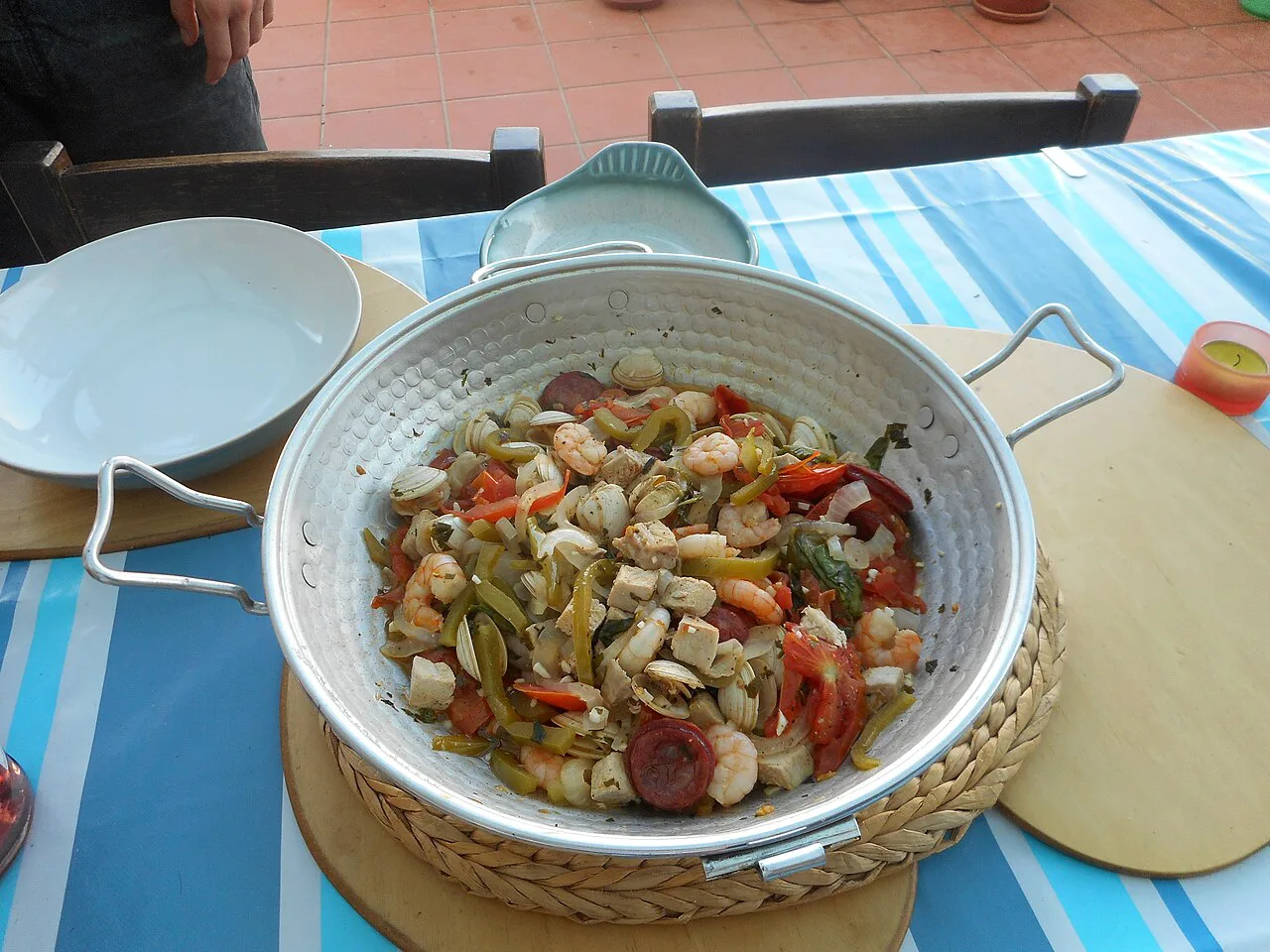
A classic cataplana de marisco is a shellfish stew: clams are the anchor, usually with prawns or shrimp, sometimes mussels, in a base of tomato, onion, garlic, olive oil and white wine, finished with coriander or parsley. The copper pan is the defining piece of equipment rather than a decorative serving dish.
What is traditional cataplana? Cataplana is a Portuguese stew cooked and served in a hinged, shell-shaped copper pan of the same name. The classic Algarve version is cataplana de marisco, built on clams and other shellfish with tomato, onion, garlic and wine.
What is the most famous fish in Portugal? Bacalhau, salt cod, is the fish most associated with Portuguese cooking, and it appears in dozens of dishes from bacalhau à Brás to baked and creamed versions. It is not an Algarve speciality in the way cataplana is, but it turns up in cataplana too.
Cooking happens by trapping steam under the clamped lid, so the shellfish open in their own liquid and the base reduces without drying out. That is why the pan is described as sealing in the flavours rather than frying them off. Nothing browns hard the way it would in a wide open pan, so the result is brothier and gentler than a sauté.
Pork is the other traditional partner. Cataplana de carne uses pork, often with clams as well, which sounds odd until you taste it: the pork gives body and the clams give salt and sweetness to the same broth. This is the version to order if half your table is lukewarm about shellfish.
You will also see bacalhau in cataplana on some menus, particularly outside the coast. It is a good bridge if you want to try the pan without committing to a full shellfish feast, and it connects neatly to the wider world of salt cod cooking.
Cataplana de marisco, de peixe and de carne: which to order
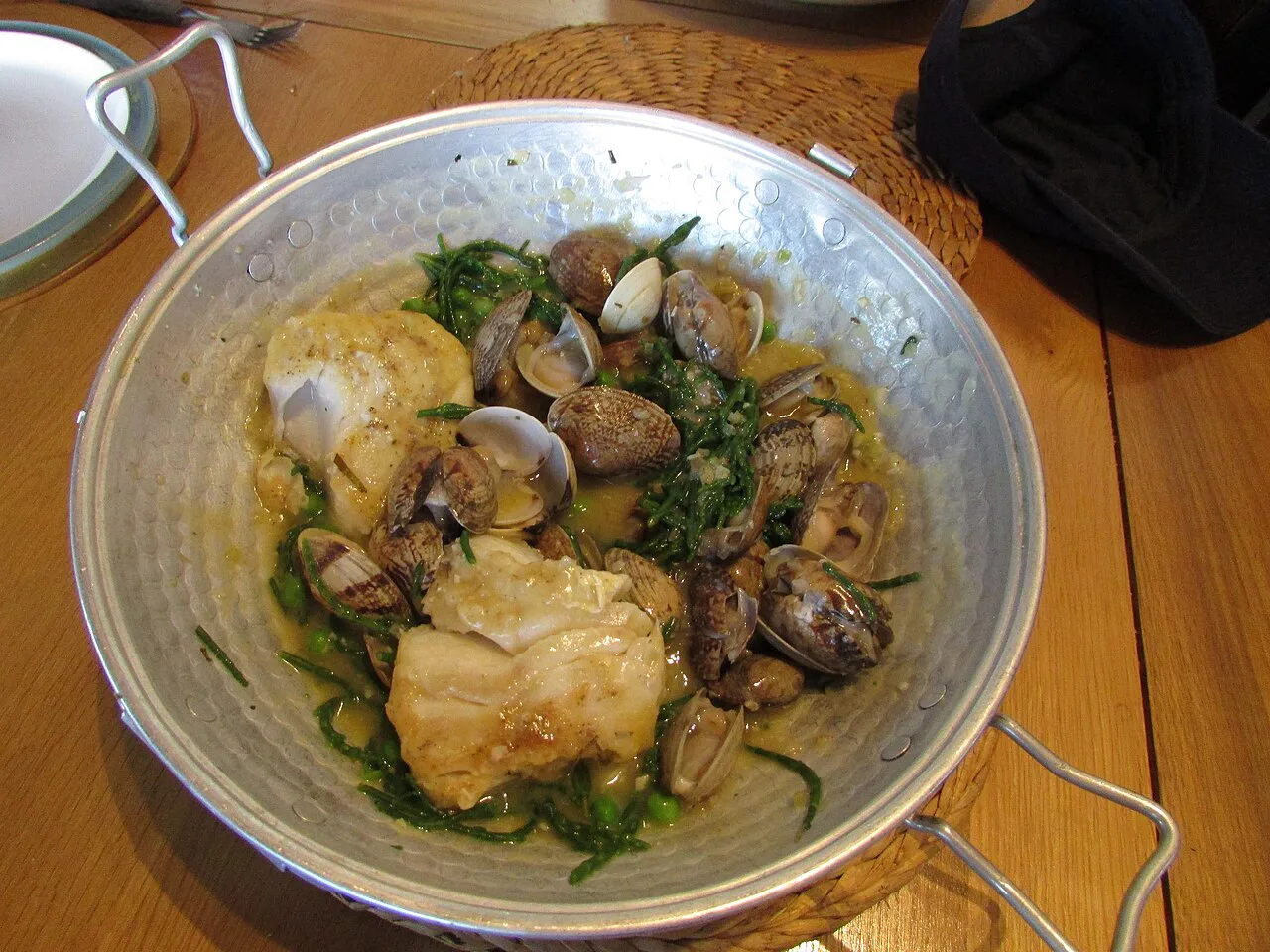
Choose by the group, not by personal preference alone. Cataplana de marisco is the saltiest and most convivial option and the one most visitors mean by the name. Cataplana de peixe uses firm fish rather than a shellfish mountain, which suits anyone who does not want to pick clams out of shells all evening. Cataplana de carne brings pork into the pan and is the richest of the three.
If you are eating as a pair, one pan plus a starter and bread usually reads as a full meal; a table of four may want two pans, or one pan plus grilled fish to share. Ask how many the kitchen's pan serves before you order two, because sizes vary between restaurants. That one question prevents ordering far more stew than the table can finish.
A clam and prawn pan sits happily alongside other Portuguese classics, so a group that cannot agree can add a plate of grilled fish and a rice dish. Arroz de tamboril, a monkfish rice, is a good partner because it is saucy without duplicating the shellfish broth.
How to eat it: bread, timing and what comes with it
Bread is not a side dish here, it is equipment. The broth is the best part of a cataplana and the only civilised way to finish it is with bread torn and dipped, and a small bowl of it will usually appear without asking. Keep a plate for empty shells, because they accumulate quickly.
Timing matters more than with a plate of grilled fish. The pan arrives hot and the shellfish keep cooking slightly in the residual heat, so start with the clams nearest the top and work down. If you leave the pan closed while chatting, the prawns will be firmer than you might like.
Expect a slow meal, not a quick lunch before a museum slot. A cataplana is best booked for the evening or a long unhurried lunch, and it sits awkwardly with a tight schedule. Pair it with a light dessert rather than a heavy one, and a pastel de nata afterwards is ample.
The dish is rich but not spicy, so it works for cautious eaters and children who like prawns. If you want heat, reach for piri piri on the side rather than expecting it in the pan, and most kitchens will bring it if you ask.
Cataplana versus paella: pan, base and method
The obvious difference is the pan. Paella is cooked in a wide, flat, uncovered pan so the rice spreads thin and forms a crust on the base. Cataplana is cooked in a deep, hinged copper vessel that closes, so the food steams and the liquid stays in the pot. One is about evaporation and rice; the other is about trapped steam and broth.
The base differs too. Cataplana relies on tomato, onion, garlic, olive oil and wine with shellfish liquor, and is usually eaten with bread rather than rice. Paella is a rice dish first, with saffron and stock doing the structural work, and Portuguese rice traditions are not interchangeable with Spanish ones.
On a menu, the test is simple: if it says cataplana, expect a deep pan and a lot of juice; if it says arroz, expect rice cooked in the pan and less liquid. Both are worth ordering on a short Algarve trip, just not on the same evening unless the table is large.
Where to eat cataplana on an Algarve short break
Cataplana is firmly an Algarve dish, so the most straightforward place to eat it is in the region itself, in Faro and the towns along the coast. It is a regional speciality that appears on menus across the Algarve rather than at one single address, and the pan is the giveaway on the menu.
Use town choice as your filter. Faro works well because it has a full-sized old centre and a working local restaurant scene alongside the tourist places near the marina, while smaller coastal towns are more seasonal, with some kitchens thinning their menus outside the summer. A break of one to four days gives you room for one proper cataplana meal and one lighter fish dinner.
Away from the Algarve, cataplana is not a universal Portuguese menu item, so if it is the reason for your trip, base the meal in the Algarve rather than assuming it will be on the list in a northern town.
Ordering tips: sharing, timing and what to ask for
Ask two questions before ordering: how many people the pan serves, and whether it comes with rice, potatoes or just bread. Answers vary between kitchens, and the difference decides whether you need a second dish. If the reply is vague, order conservatively and add a plate of grilled fish or a salad afterwards.
Order a starter lightly. Cataplana portions are generous and the bread keeps coming, so a heavy cheese board beforehand is usually a mistake. If you do want a Portuguese cheese to start, keep it small, and remember that Queijo de Azeitão is a soft, spoonable cheese that goes further than it looks.
Drinks are straightforward: a fresh white or a light red both work, and many places serve house wine by the glass or jug. Finish with a coffee rather than a dessert if the pan has been large, and a small ginjinha afterwards is a very Portuguese way to close the meal.
Should cataplana be your one big Algarve meal?
Yes, if you are travelling with at least one other person and can give it an unhurried evening. The pan brings theatre, the broth rewards bread, and it is one of the few Portuguese dishes that is as much about the vessel as the ingredients. Order the marisco version first and branch into pork or fish on a second visit.
Skip it if you are eating alone, in a hurry, or with someone who dislikes shellfish and pork, where a grilled fish fillet or a rice dish will serve you better. What restaurants charge is on the menu where you eat it, so compare pans before committing.
Explore more Portugal guides
Frequently Asked Questions
What is traditional cataplana?
Cataplana is a Portuguese stew cooked and served in a hinged, shell-shaped copper pan of the same name. The classic Algarve version is cataplana de marisco, built on clams and other shellfish with tomato, onion, garlic and wine. The sealed lid traps steam, so the ingredients cook together in their own liquid rather than frying.
What is the most famous fish in Portugal?
Bacalhau, salt cod, is the fish most associated with Portuguese cooking, and it appears in dozens of dishes from bacalhau à Brás to baked and creamed versions. It is not an Algarve speciality in the way cataplana is, but it turns up in cataplana too. Grilled fish such as sardines is the other great staple.
Sources
Notes for your next Portuguese break
Optional updates to our town guides.
You might also like



Continue reading
More guides you'll find useful





