Alcobaça Monastery: What to See and How Long to Allow
Plan a visit to the Alcobaça Monastery, from the tombs of Pedro and Inês to the cloister and kitchen, with honest advice on how long to allow.
On this page
Allow around two hours for the Alcobaça Monastery: an hour for the church and the tombs of Dom Pedro and Dona Inês, and another for the cloister and monastic rooms behind it. The abbey, formally the Mosteiro de Santa Maria de Alcobaça, is a Cistercian foundation and a UNESCO World Heritage Site, and it holds Portugal's largest Gothic church. This guide covers what to see inside, how the visit works, how long to allow and how to fit it into a short break in central Portugal.
What the Alcobaça Monastery is
The Mosteiro de Santa Maria de Alcobaça is a Cistercian abbey in the town of Alcobaça in the Leiria district, roughly 100 km north of Lisbon. It is one of Portugal's UNESCO World Heritage Sites and the reason most travellers stop in a town that otherwise takes twenty minutes to cross. If you are plotting a wider loop of inscribed monuments, our guide to the UNESCO sites Portugal protects is a useful way to see what clusters together.
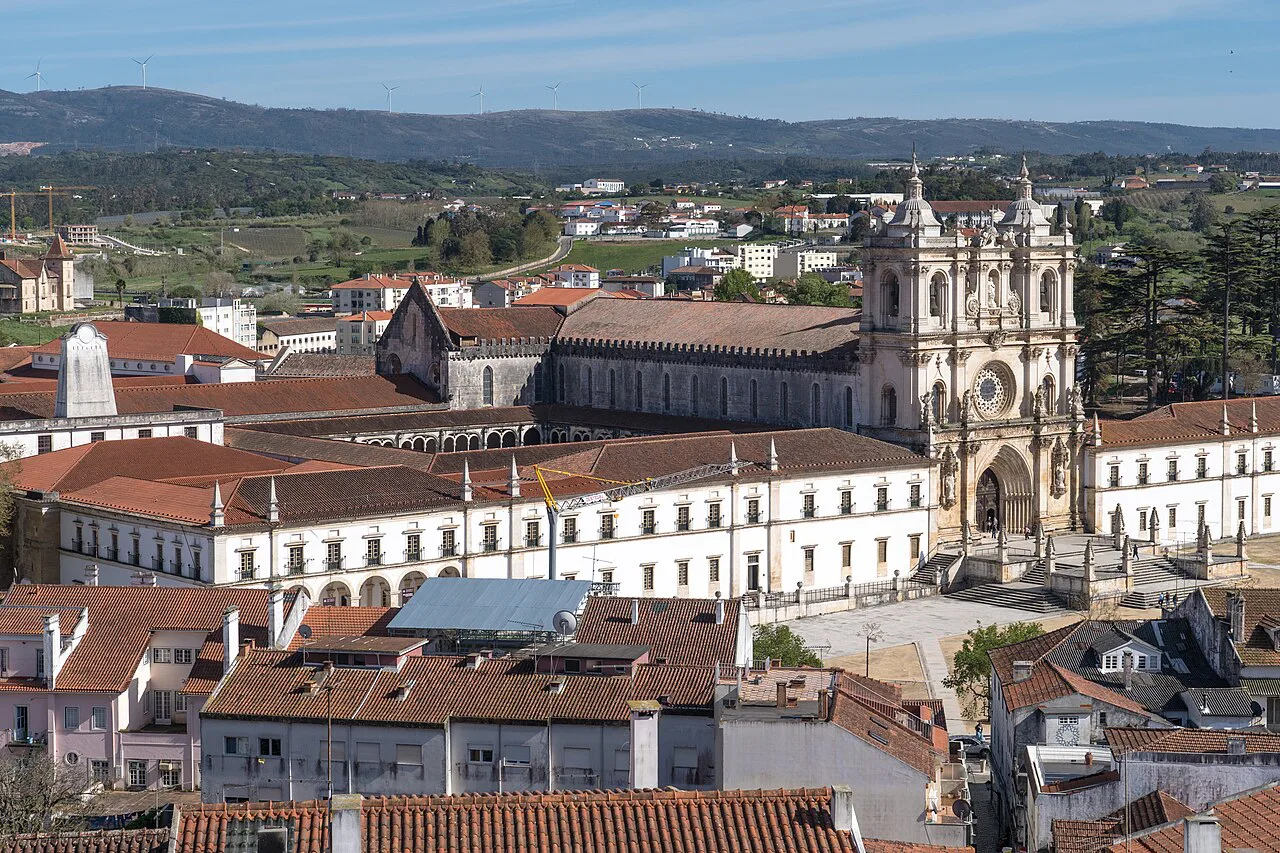
The church is the headline: a vast, austere Gothic hall built by the Cistercian order, whose rule favoured plain surfaces over ornament. That restraint is the point, and it makes the carved tombs inside stand out all the more. The monastery was founded in the twelfth century and the church was completed in 1223, with later Baroque work layered onto the facade.
The essentials: where it sits and how the visit works
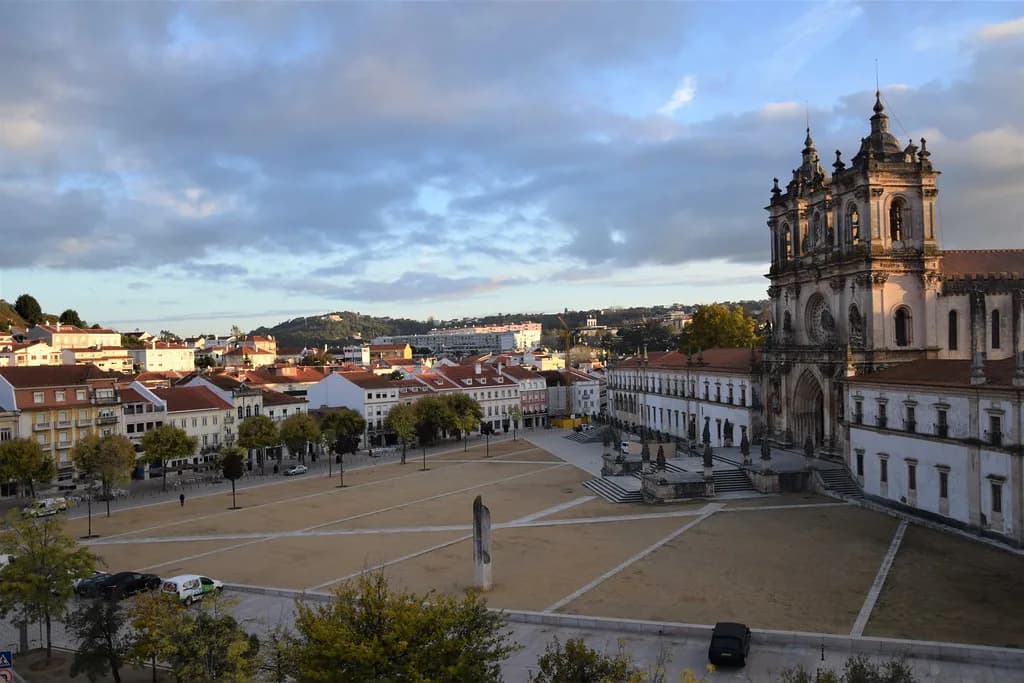
The monastery sits at the top of the town's central square, so you reach the frontage on foot from almost anywhere in Alcobaça within a few minutes. Visitors describe the town as small and easy to navigate on foot, with parking close to the main square. Arrive early in the day if you want the church nave close to empty, because coach parties build through the morning.
The visit splits in two. The church is entered through the main portal and, in visitor accounts, has been free to walk into, while the cloister, kitchen, refectory and remaining monastic rooms form a paid circuit. Treat the free entry as something reported by visitors rather than a guarantee, and pick up the ticket desk's current arrangement when you arrive.
The tombs of Dom Pedro and Dona Inês
Two intricately carved tombs dominate the transept, those of Dom Pedro and Dona Inês, and they are laid foot to foot rather than side by side. The legend holds that Pedro chose the arrangement so that on rising in the afterlife the two would face each other first. Whatever you make of the story, the placement is what you notice before the carving.
Look at the ends of the tombs rather than the lids. The Last Judgment is carved at the foot of Inês's tomb and the Wheel of Fortune at the head of Pedro's, so the two ends carry different programmes and reward a slow walk around both. The history behind them is grim: Inês was killed on the orders of Pedro's father, and Pedro had her body moved into the abbey once he became king.
Inside the church: the scale of the nave
The nave runs about 106 m long and 23 m wide, and the effect is less of decoration than of volume, with rows of massive pillars carrying the vault. Walk the full length before turning back, because the proportions only register from the far end. The Cistercian interior is deliberately bare, which is why the tombs and the later additions read so strongly against it.
The monastery in context: foundation and later additions
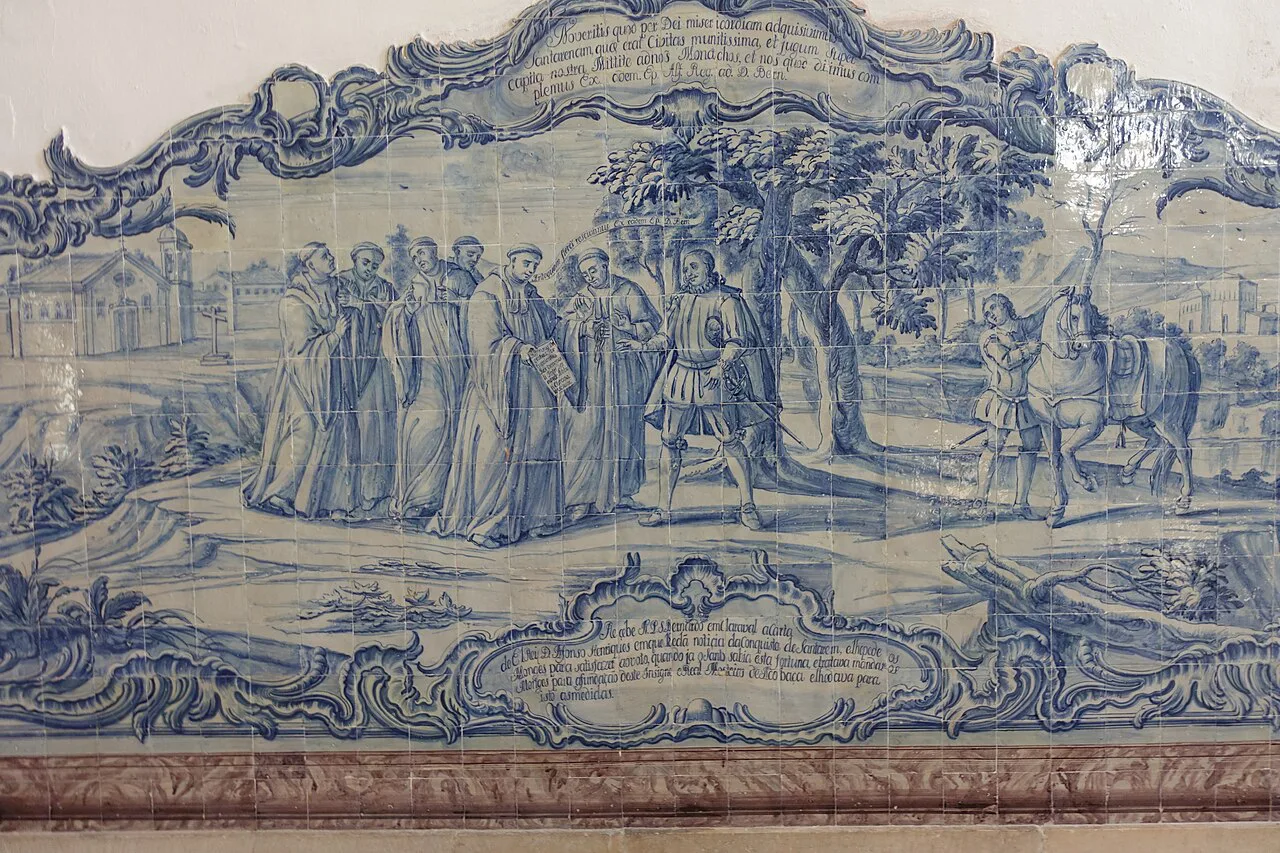
King Afonso I commissioned the abbey in the twelfth century to mark his taking of Santarém, and the church was finished in the thirteenth. The original Gothic facade was later altered, so that only the doorway and the rose window survive from the first design, with wings added in the seventeenth and eighteenth centuries. Knowing this helps you read the frontage: it is a Gothic core wearing a later coat.
If you are comparing abbeys across the region, Alcobaça is the austere one. Batalha, half an hour or so up the road, is the flamboyant counterpart, and the two together explain why this stretch of central Portugal carries so many inscriptions. Our companion guide to the Batalha monastery covers the Royal Cloisters and the Unfinished chapels in the same detail.
The cloister and the monastic rooms
The Claustro do Silêncio, the Cloister of Silence, is the most rewarding part of the paid circuit: two storeys of arcading around a garden courtyard, quiet enough to hear the gravel under your feet. The washhouse and the monks' refectory sit off the same route and give a sense of how the community actually lived rather than just prayed. Set aside more time here than you expect.
The kitchen is the surprise. It is enormous, built to feed a large community, and the chimney and stone tables stay in the mind longer than the refectory does. Because the monastic rooms are plain and modestly furnished, some visitors find the circuit sober after the church; the reward is the cloister itself rather than displays.
How long the monastery takes
Two hours is the honest budget for most travellers: forty minutes in the church and around the tombs, an hour in the cloister and monastic rooms, and the rest moving between them. Art and architecture enthusiasts should allow three. Anyone short of time can do the church and tombs in half an hour, though skipping the cloister misses the best-preserved part of the abbey.
Pace it that way round because the church fills first. Go straight to the tombs on entry, then take the paid circuit once the initial crowd has moved on. If you are visiting on a Saturday or Sunday, expect the cloister to be busier than the church.
Alcobaça town: the square and the frontage
The monastery frontage faces onto the town's central square, a broad open space with cafés along its edges and the abbey filling one entire side. The walk between the square and the monastery door is short enough that there is no transport involved, and the town's grid of streets radiates out from it. Use the square as your meeting point and orientation.
Allow forty minutes on top of the monastery for a coffee in the square and a look along the surrounding streets. Alcobaça is not a town that needs a day of its own; the abbey is the reason to come and the square is where you decompress afterwards.
Getting there and pairing it with Nazaré or Batalha
Alcobaça is about a 1.5-hour drive from Lisbon, and the town is straightforward to reach by bus from the capital if you would rather not drive. Once you are in the area, Alcobaça, Batalha and Tomar sit within roughly 65 km of each other, which makes a two-monastery day realistic and all three a long one.
Nazaré is the closest pairing for a short break: a coastal town with a famous big-wave reputation that works as an afternoon after a morning at the abbey. Batalha is the stronger pairing if you want more architecture rather than sea air, and the drive between the two abbeys is short. Tomar, with the Convent of Christ, is the third point of the triangle and needs its own half-day.
Tickets, opening times and what to confirm
Ticket prices and opening hours for the monastery can change, so confirm them before you travel and check whether the day you plan falls on a Portuguese public holiday. Buy on arrival rather than pre-booking unless you are visiting in high summer, when the paid circuit queues most.
Is the Alcobaça Monastery worth the stop?
Yes, for the tombs and the Cloister of Silence, even on a tight itinerary. Two hours covers the essentials, and pairing the abbey with Batalha makes a full but manageable day from a base in central Portugal. If you only have time for one monastic interior and want gold leaf and carved stone, choose Batalha; if you want severity, scale and a story, choose Alcobaça.
Explore more Portugal guides
Frequently Asked Questions
Who is buried at the Alcobaça Monastery?
Dom Pedro and Dona Inês lie in two carved tombs in the transept of the church, placed foot to foot. Their story — a secret marriage, her murder on royal orders, and his later recovery of her body — is the reason the tombs draw so much attention. Look at the carved ends: the Last Judgment on hers and the Wheel of Fortune on his.
Do you have to pay to enter the Alcobaça Monastery?
The church has been free to enter in visitor accounts, while the cloister, kitchen and remaining monastic rooms sit behind a ticket. Check the current arrangement at the desk or on the official listing before you go, because access policy is set by the monument rather than the town.
Sources
Notes for your next Portuguese break
Optional updates to our town guides.
You might also like
Continue reading
More guides you'll find useful