
UNESCO Sites in Portugal: All 17 Listed Places Explained
Portugal has 17 UNESCO World Heritage sites, from Évora's centre to Bom Jesus do Monte in Braga. Here is every inscription, what it is and where it sits.
On this page
Portugal has 17 properties inscribed on the UNESCO World Heritage List, according to the Portuguese delegation to UNESCO. They fall into three rough types: historic town centres, individual monuments and churches, and wider cultural landscapes such as a wine region or an island vineyard. Knowing which is which matters, because a town-centre listing means you are walking through the site rather than queueing for a ticket to it.
This page lists all 17 in date order, then regroups them by region so you can see what fits into a break in Guimarães or Coimbra, what needs a car in the Alentejo, and which four sit on islands and rarely fit a mainland trip. Years given are the inscription dates recorded by the Portuguese delegation.
How the Portuguese list divides up
The list is not 17 equivalent days out. Six are historic centres you enter on foot: Angra do Heroísmo, Évora, Guimarães, Porto and Sintra's cultural landscape, plus the central zone of Angra do Heroísmo in the Azores. Six are predominantly religious buildings or complexes, including Batalha, Alcobaça, Tomar's Convent of Christ and Braga's Bom Jesus do Monte. The rest are a university, a fortified border town, a royal palace complex, a rock-art valley, two island landscapes and a wine region.
Inscription years cluster in three waves: 1983, when five Portuguese properties were added, a second group through the 1990s, and a final pair in 2019 covering Mafra and Bom Jesus do Monte. For a visitor, the year tells you little about what a site is like on the ground; the grouping by type above is more useful when planning.
The 17 inscriptions in date order
The Portuguese delegation's own list runs as follows: the Central Zone of the Town of Angra do Heroísmo in the Azores, the Monastery of the Hieronymites and Tower of Belém in Lisbon, the Monastery of Batalha, and the Convent of Christ in Tomar, all inscribed in 1983; the Historic Centre of Évora and the Monastery of Alcobaça; the Cultural Landscape of Sintra; and the Historic Centre of Oporto with the Luiz I Bridge and the Monastery of Serra do Pilar.
The list continues with the Prehistoric Rock Art Sites in the Côa Valley and Siega Verde, the Laurisilva of Madeira, the Historic Centre of Guimarães and the Alto Douro Wine Region, the Landscape of the Pico Island Vineyard Culture, the Garrison Border Town of Elvas and its Fortifications, and the University of Coimbra – Alta and Sofia, before finishing with the Royal Building of Mafra and the Sanctuary of Bom Jesus do Monte in Braga.
Several entries are composite: the Lisbon listing pairs a monastery with a tower, the Porto listing joins a centre to a bridge and a monastery across the river, and the Côa listing is shared with Spain as a cross-border inscription extended in 2010. Plan for a listing to cover more than one building.
Northern Portugal: Guimarães, the Douro, Porto and Braga
Guimarães was inscribed in 2001 and its historic centre is compact enough to walk in a morning, with the castle, the Paço dos Duques de Bragança and the Igreja de São Miguel close together. Porto's listing is a composite of the riverside centre, the Luiz I Bridge and the Mosteiro da Serra do Pilar on the Gaia side, so a short break there covers one inscription across two banks, and the wider region's options are set out in our guide to the best towns in northern Portugal.
The Alto Douro Wine Region, inscribed in 2001, is a working landscape rather than a sight with an entrance, so treat it as a drive or a train ride along the river between towns rather than a destination to tick off. Braga's Sanctuary of Bom Jesus do Monte, added in 2019, is a baroque hillside pilgrimage complex reached by stairways and a lift, and works well as a half-day from the city.
Central Portugal: Alcobaça, Batalha, Tomar and Coimbra
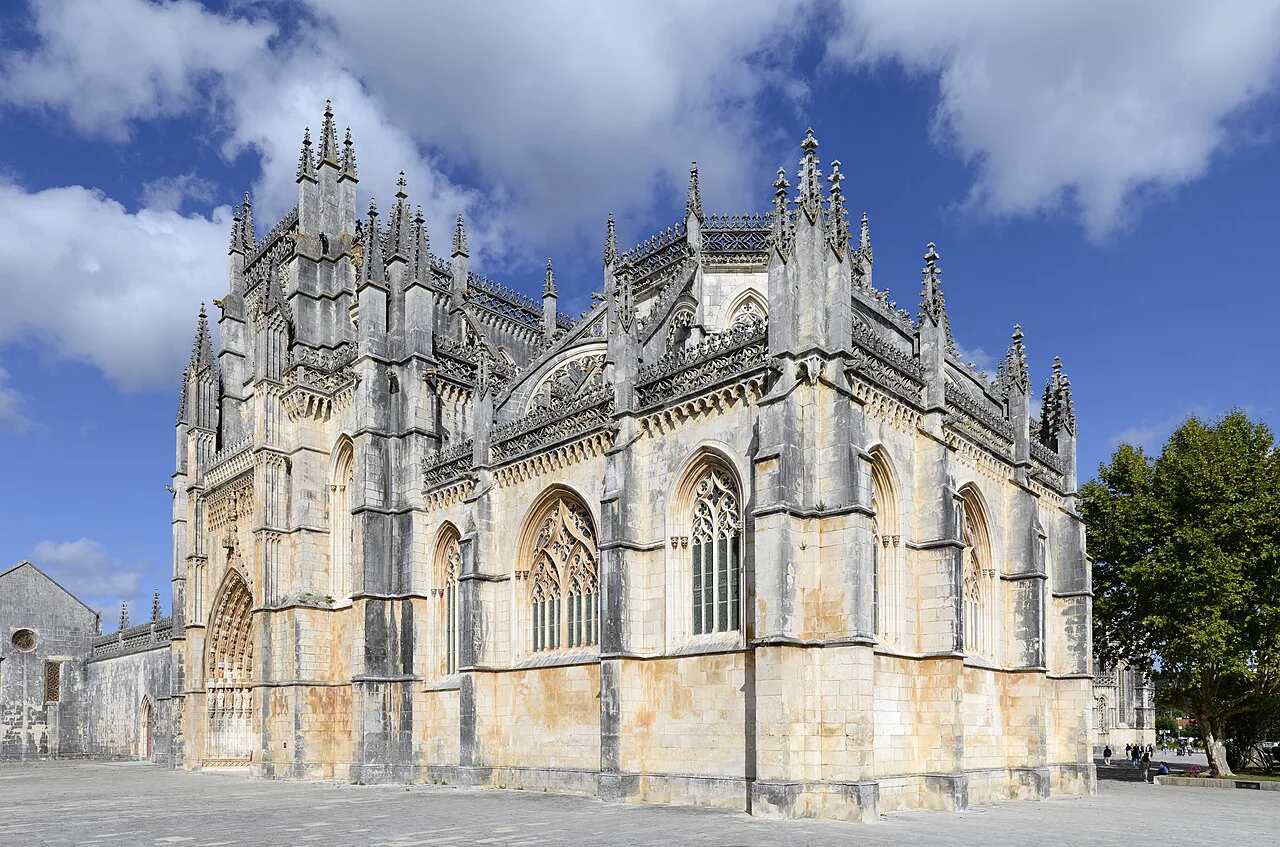
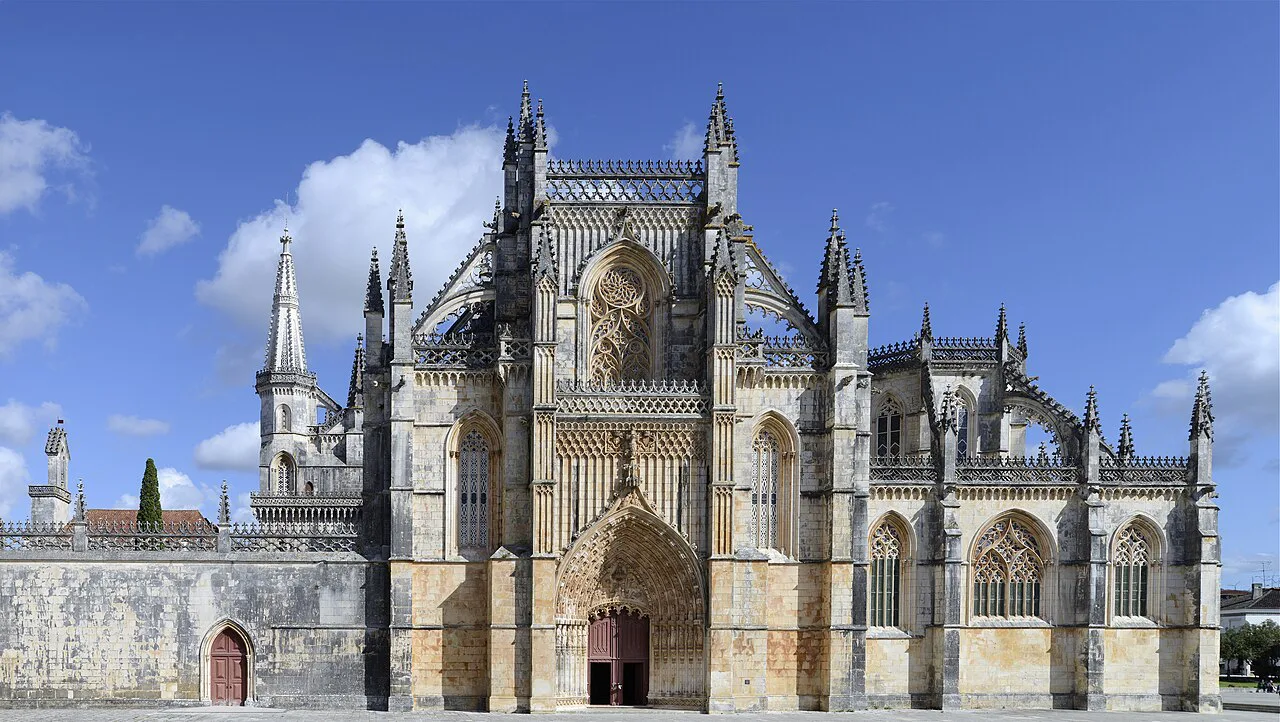
This is the tightest cluster on the whole list. The Mosteiro de Santa Maria de Alcobaça, inscribed in 1989, and the Batalha monastery, inscribed in 1983, sit roughly half an hour apart by road and can be paired in one day if you start early. Both are working monuments, so check the day you plan to go rather than assuming an opening.
The Convent of Christ in Tomar, inscribed in 1983, is a former Templar stronghold whose charola rotunda and Manueline window repay a slow two hours. The convent sits above the town, so allow for the climb. Coimbra's listing, inscribed in 2013 as the University of Coimbra – Alta and Sofia, covers the upper town and the university buildings including the Biblioteca Joanina; check the library's ticket arrangements before you go.
If you are based in Coimbra and have a spare afternoon, the Roman site of Conímbriga lies south of the city and is not part of the UNESCO listing, but it is the best-preserved Roman town in Portugal, so it earns its place on a central-Portugal itinerary anyway.
Lisbon region and the Alentejo: Belém, Sintra, Évora and Elvas
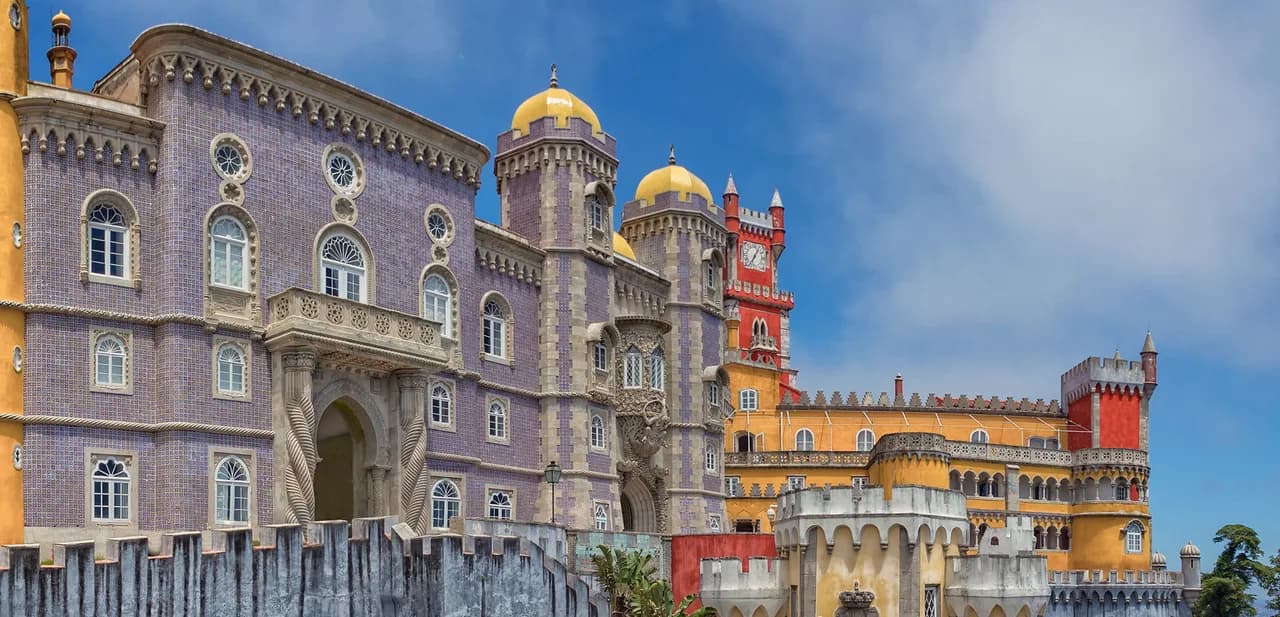
Belém's two-part listing, inscribed in 1983, pairs the Mosteiro dos Jerónimos with the Torre de Belém; both sit within walking distance of each other on the Lisbon waterfront, and both are separately ticketed with their own queues. Sintra's Cultural Landscape, inscribed in 1995, is not a single site but the wooded hillside, palaces and quintas around the town, which is why a day there barely scratches it.
Évora's Historic Centre, inscribed in 1986, is one of the easiest listings to enjoy because the cathedral, the Roman temple and the Praça do Giraldo all sit within the old walls, and walking is the whole point. The Capela dos Ossos is a separate chapel inside the city and is not itself part of the inscription.
Elvas, inscribed in 2012 as a garrison border town and its fortifications, is the most military listing on the list: a walled town with outer forts and an aqueduct. It rewards a full day rather than a stop-off, and our guide to Elvas, Portugal sets out what the fortifications actually consist of.
The far edges: Mafra, the Côa Valley, the Azores and Madeira
Mafra, added in 2019 as the Royal Building of Mafra – Palace, Basilica, Convent, Cerco Garden and Hunting Park, is a single colossal complex north-west of Lisbon and needs half a day on its own. The Côa Valley, inscribed in 1998 and extended with Siega Verde in 2010, protects open-air Palaeolithic engravings; visits are by guided tour from the museum near Vila Nova de Foz Côa, so check tour arrangements before you travel.
Three inscriptions sit offshore: the central zone of Angra do Heroísmo on Terceira in the Azores, the Laurisilva of Madeira, and the Landscape of the Pico Island Vineyard Culture, added in 2004. These are genuine trips rather than add-ons, requiring flights and, in Pico's case, a further island hop.
Which listings work as a short break from one base
For a one-to-four-day break, the Coimbra–Alcobaça–Batalha–Tomar axis is the strongest single base: one city with a university listing and three religious monuments within about an hour and a half of each other. Porto and Guimarães make a second natural pair, with Braga's Bom Jesus a short trip from Porto. Évora and Elvas can be strung together from a single Alentejo base but demand a car or careful bus planning.
Lisbon's Belém listing and Sintra's landscape can be done from Lisbon itself, though Sintra deserves a full day rather than an afternoon. Mafra is a half-day from Lisbon, and the Côa Valley is best treated as part of a Douro trip rather than a stand-alone journey.
Reading the list carefully: what is and is not inscribed
Inscription attaches to specific components, not to a town's entire tourist offer. Évora's Roman temple and cathedral are inside the historic-centre listing; the Capela dos Ossos is a separate monument. Coimbra's listing names the Alta and Sofia quarters and the university, not every church in the lower town. When planning, check which buildings actually fall inside the boundary.
The same applies to visits: opening days, ticket prices and guided-tour times vary between monuments and change with the season. The listing tells you what is protected, not how to get in. For any given monument, check the operator's own site or the ticket desk before building a day around it, particularly where guided access is the only option.
One practical note for anyone assembling an itinerary: several of these monuments are monasteries or convents still used for worship, so visits may pause around services. That is a reason to allow slack in the day rather than a reason to skip the site.
Which UNESCO listing should you build your trip around?
For most short-break travellers the answer is the central Portugal cluster: Coimbra plus Alcobaça, Batalha and Tomar gives you four inscriptions in three or four days without long drives. If you are flying into Porto instead, pair the city with Guimarães and Braga and leave the Douro for a slower visit, since the wine region rewards lingering over a landscape rather than a checklist.
Whichever you choose, pick one or two anchor monuments and let the town around them fill the rest of the day. The point of a town-centre listing is that the walking, the pastelarias and the azulejos Portugal is known for are part of the experience, not a preamble to it.
Explore more Portugal guides
Frequently Asked Questions
How many UNESCO sites are there in Portugal?
The Portuguese delegation to UNESCO lists 17 properties inscribed on the World Heritage List, from the 1983 additions including Batalha and Tomar through to Mafra and Bom Jesus do Monte in 2019. The total includes island inscriptions in the Azores and Madeira as well as mainland monuments and town centres.
Why are some listings recorded as more than one place?
Several entries are composite. The Lisbon listing pairs the Monastery of the Hieronymites with the Tower of Belém, the Porto listing joins the historic centre to the Luiz I Bridge and the Monastery of Serra do Pilar, and the Côa Valley listing is shared with Spain as a cross-border inscription extended in 2010. A single inscription can therefore cover more than one building or a whole town centre.
Can you visit several UNESCO sites in one short break?
Yes, if you concentrate on central Portugal. Coimbra, Alcobaça, Batalha and Tomar sit within roughly an hour and a half of one another, so three or four days covers four inscriptions without long drives. Northern Portugal pairs Porto with Guimarães and Braga similarly well.
Are the island UNESCO sites reachable from the mainland?
Only with flights. Angra do Heroísmo is on Terceira in the Azores, the Laurisilva is on Madeira, and the Pico Island vineyard landscape needs an additional island hop. Treat these as separate trips rather than additions to a mainland itinerary.
Sources
Notes for your next Portuguese break
Optional updates to our town guides.
You might also like



Continue reading
More guides you'll find useful




