Azulejos in Aveiro: Where to See the Painted Tiles
Where to see azulejos in Aveiro, from the Misericórdia church nave to the historic station, plus what the panels show and a short walk between them.
On this page
You can see Aveiro's azulejos in half a day on foot: the Igreja da Misericórdia nave panels, the historic station hall and the façades around Praça da República sit within a short walk of each other. The city has no single blockbuster tile collection, so the pleasure lies in the sequence. This guide names each tiled sight, explains what the panels show, and sets out a walking order with an honest view on timing.
What you will see: Aveiro's azulejos in one paragraph
Aveiro's tiles divide into three registers. Church interiors supply the oldest work, with seventeenth-century patterned tiles covering the nave walls of the Igreja da Misericórdia, a Mannerist building with Baroque interior decoration. Civic architecture supplies the eighteenth-century note, with the Câmara Municipal de Aveiro a Pombaline-style palace of the late eighteenth century, and the Art Nouveau Teatro Aveirense beside it.
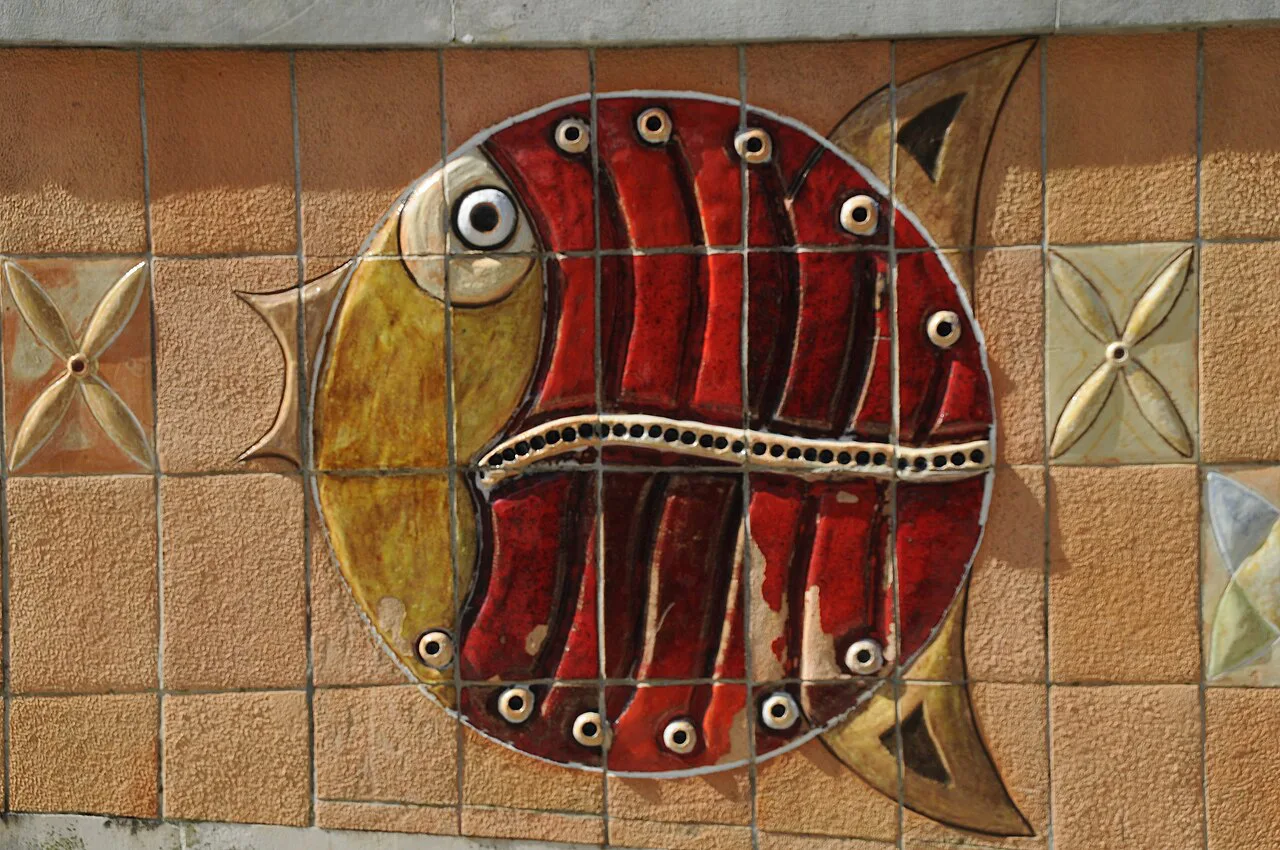
The Misericórdia church nave: seventeenth-century patterned tiles
The Igreja da Misericórdia de Aveiro is the strongest single stop for tiles. Built in the transitional decades between the sixteenth and seventeenth centuries in a Mannerist style, with Baroque elements in the interior decoration, it keeps its most impressive feature in the seventeenth-century pattern tiles covering the nave walls. The building belongs to the Santa Casa da Misericórdia, an organisation with medieval origins.
Entry is free, but only when the church is open, so treat the interior as a bonus rather than a guarantee. If the door is shut, the walk still works: the square, the street façades and the station need no ticket. Keep the nave in the middle of your route so a closed door does not spoil either end.
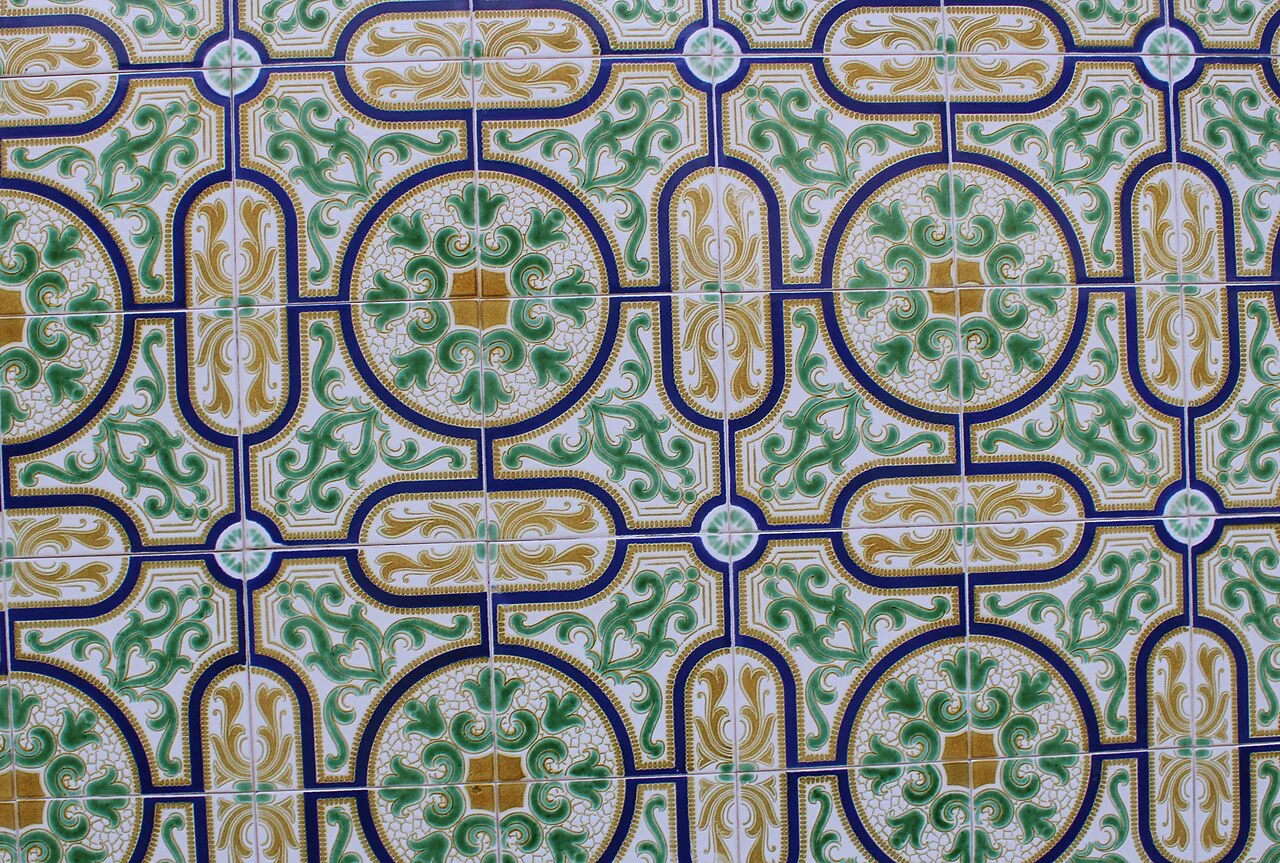
Aveiro's historic station: a tiled entrance hall
The historic station works as an ornamental museum of sorts, inviting passers-by and passengers alike to look at its nineteenth-century tiled decoration. It is the easiest tiled sight in Aveiro: no ticket, and the hall is open to anyone catching or meeting a train. Treat it as a ten-minute stop rather than a destination in itself, and keep clear of travellers with luggage.
Set your expectations to match: this is a station hall, not a gallery, so the panels reward a close look rather than a long visit. If you want a tiled interior where you can linger, save that time for the Misericórdia nave. Pairing the two gives you the range of Aveiro's tiles in a single morning.
Rua Direita and the old-town façades
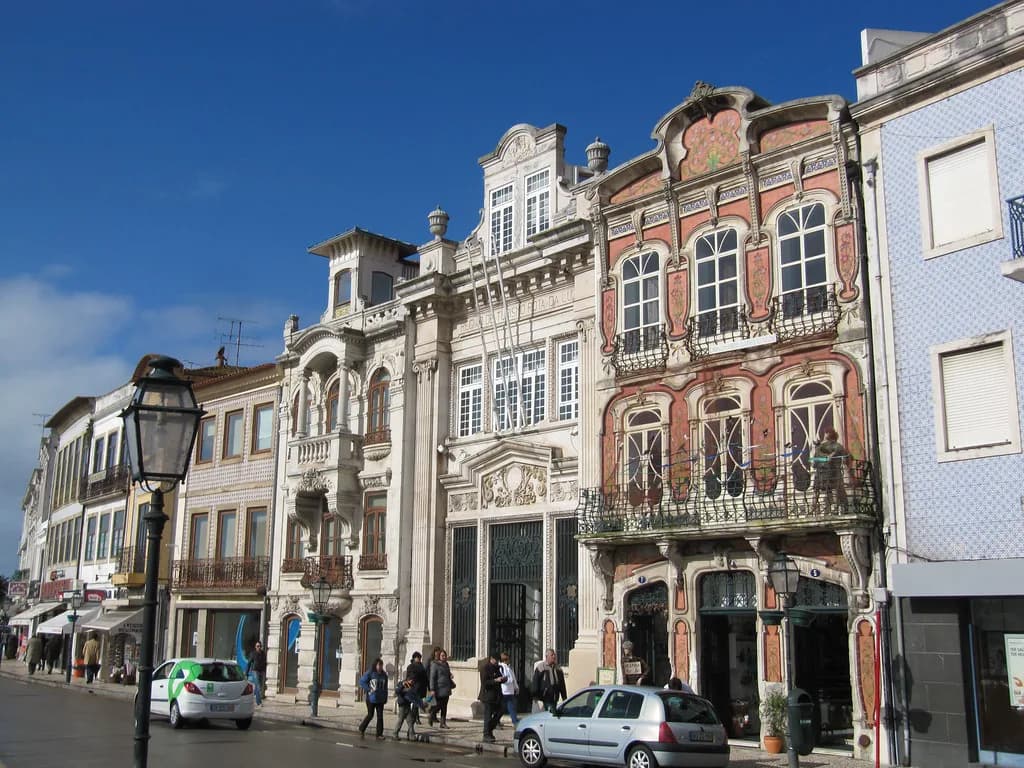
Rua Direita is the natural spine of the walk. In Portugal the Direita streets usually correspond to the main street of the old town, and that holds in Aveiro, where walking it brings you past the heritage pieces. It also carries the story of Portuguese pavement, tied here to the salt and sea trades that shaped the city.
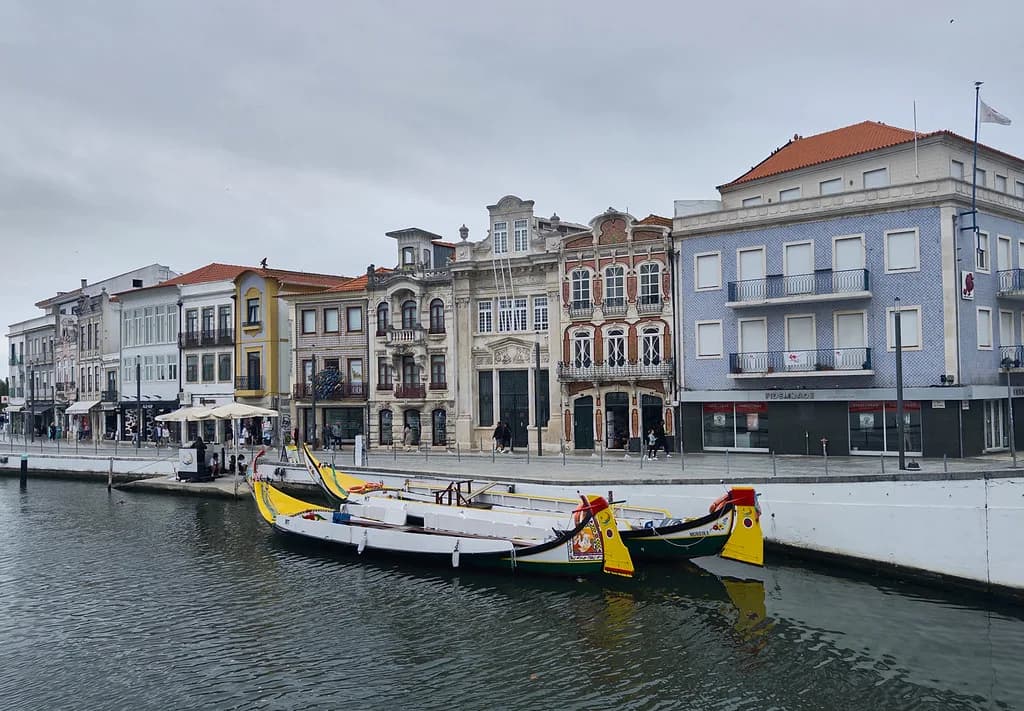
Look up rather than down for the tiles: upper storeys and shopfront surrounds carry the patterned façades that give the street its colour. The lanes feeding off Rua Direita repay the same habit, and they fold easily into a wander through the old town.
Largo da Praça da República and the Câmara Municipal
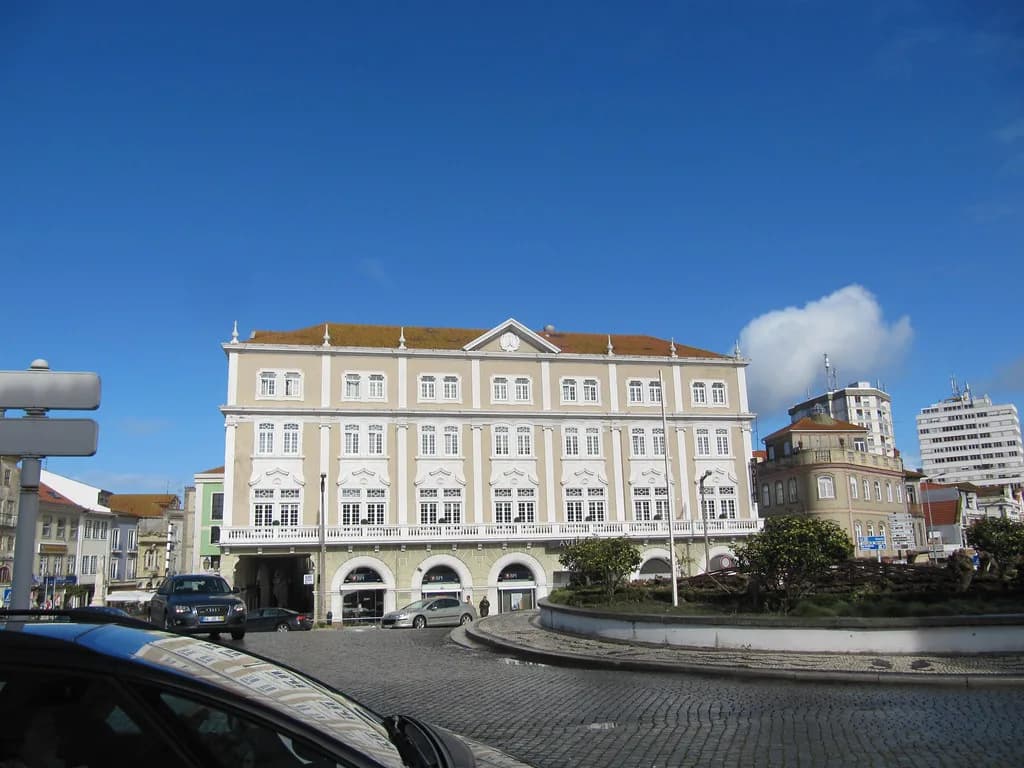
Praça da República is where the walk begins. The Câmara Municipal de Aveiro, a Pombaline-style palace from the late eighteenth century, carries the coat of arms of the Kingdom and the municipal arms on its front. Around it stand the Teatro Aveirense, an Art Nouveau building, and the statue of José Estêvão, which needs a moment's context to make sense of its place in the square.
Starting here sets up the walk's two other threads: the council palace shows civic pride in ordered eighteenth-century architecture, while the theatre shows the Art Nouveau wave that followed. From the square, Rua Direita takes you into the older commercial streets and on towards the Misericórdia church.
A short walking route between the tiled sights
Start in Praça da República near the statue of José Estêvão, where the free walking tour meets, and take in the Câmara Municipal, the Teatro Aveirense and the statue before setting off. Head along Rua Direita, watching the upper façades, then continue to the Igreja da Misericórdia for the nave tiles. The station is the natural finish if you leave by train, or an easy first stop if you arrive that way.
The tiled sights cluster tightly enough that the route is a morning's wander rather than a day out. Fill the rest of the day with the things to do in Aveiro beyond the tiles, such as the canals and the Ria de Aveiro waterfront, which the tile walk naturally leads you towards.
How long the azulejos walk takes and how to pace it
The guided tile walk runs for two hours across eleven stops, a fair marker for how much time the tiled heart of Aveiro rewards. Doing it yourself, with the same pauses for façades and church interiors, fits comfortably into a morning. The station and church tiles cost nothing to see, though church entry depends on the building being open when you arrive.
Split the walk: square and façades first, church interior second, station last. That order puts the least predictable stop in the middle, so a closed church door does not derail the day. On a longer stay, spread the tiles over two short outings and give the saved time to the museums.
Free walking tour versus doing it yourself
The azulejo-themed free walking tour is the simple option. It runs two hours in English, Spanish, French and Portuguese, meets at Rua de Coimbra 19 by the statue of José Estêvão in Praça da República, and covers eleven stops, including the Misericórdia interior when it is open. Free tours have no fixed price: you pay the guide what you think fair at the end. Payment is cash only, bookings run to a maximum of fifteen people, and a minimum of five people is needed for the walk to go ahead.
Doing it yourself costs nothing beyond what you spend in cafés and lets you linger at the station or double back along Rua Direita. The trade-off is context: the tour explains tile history and artistic movements that a solo wanderer will miss. The route is not suitable for people with reduced mobility, so a self-guided version gives more control over pace and surfaces.
What the panels show: Mannerist interiors, Pombaline civic buildings and Art Nouveau
The tiles tell a story of three architectural moments. The church interior belongs to the Mannerist and Baroque world, its patterned panels designed to cover large wall surfaces and frame the altar rather than to depict a single scene. The Câmara Municipal belongs to the ordered, symmetrical world of Pombaline rebuilding, announced by coats of arms on the façade. The Teatro Aveirense brings the decorative curve of Art Nouveau, a reminder that Aveiro was a trading city plugged into European taste.
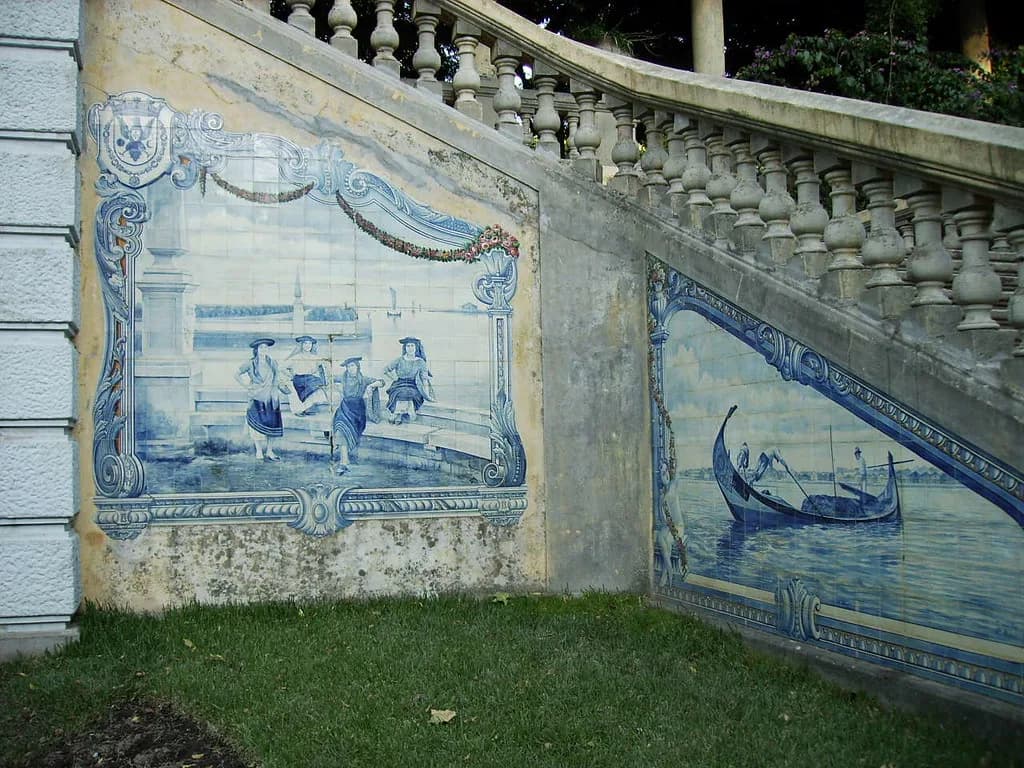
These painted tiles let you travel in time, reading history and different artistic movements along with the multicultural influences hidden in a centuries-old decorative tradition. Hold on to that framing as you walk, because the panels are not simply pretty surfaces. They record who paid for each building and which fashions they followed.
Where azulejos sit in Portuguese tile tradition
Azulejos are a Portuguese decorative tradition rather than a Spanish one in the way most visitors meet them, and the blue-on-white palette that travellers picture took hold in Portuguese façades and interiors. It is still the reference point for modern tile design inspired by the country's streets, including pieces sold as Aveiro-inspired souvenirs.
Spain has its own strong tile tradition, so the two are neighbours rather than rivals. For a short break, the practical point is that Aveiro's tiles belong to buildings you can visit rather than to a single tile museum, which makes the city a good place to learn to read azulejos in context.
Which tiled sight should you start with?
Start at the Igreja da Misericórdia for the richest single sight, or at the station if you want a guaranteed look at tiles without depending on opening. Praça da República is the best starting point for the walk as a whole, because it puts the civic and Art Nouveau buildings first and leads you naturally into Rua Direita. Whichever order you choose, the circuit fits a morning.
Book the guided walk if you want the tile history explained and do not mind paying what you judge fair in cash; walk it yourself to linger and keep costs at zero. The station is free and open to anyone, so it makes a sensible first or last stop on a short break.
Explore more Aveiro guides
Frequently Asked Questions
Is the azulejo walking tour in Aveiro free?
The tour has no fixed price: you contribute what you consider fair at the end, and the operator suggests a guideline range per participant. Payment is cash only, groups are capped at fifteen people, and a minimum of five people is needed for the walk to run. Check the booking page for the meeting point and language options before you go.
Can I see Aveiro's azulejos without paying?
Yes. The historic station's tiled entrance hall is open to anyone using the building, and the Misericórdia church has free entry when it is open. Façades along Rua Direita and around Praça da República are on the street and cost nothing to look at. Only the guided walk involves a discretionary payment to the guide.
Sources
Notes for your next Portuguese break
Optional updates to our town guides.
You might also like
Continue reading
More guides you'll find useful