Free Things to Do in Aveiro: Canals, Tiles and Churches
Free things to do in Aveiro, from the canals and moliceiro boats to Art Nouveau facades, tiled churches and the old station, with honest trade-offs.
On this page
Most of Aveiro's best sights cost nothing. Walking the Canal Central, watching moliceiro boats slide past, crossing the ribbon bridges and reading the tile fronts along the old streets fills a full day without a single ticket, and the town is compact enough to do it on foot. This guide separates those genuinely free stops from the paid extras, so you can budget honestly.
Aveiro sits on the Ria de Aveiro lagoon, and its canals earned it the nickname Venice of Portugal. The comparison holds for the waterfront, but Aveiro is a working Portuguese city with an Art Nouveau heritage rather than a stage set, and much of its charm is in the street detail: azulejo facades, iron balconies and the painted bows of the boats.
What you can do in Aveiro for free: the short answer
The free list is longer than most visitors expect. It covers the canals and their bridges, the riverside architecture, the tiled facade of the old railway station, the exteriors of the cathedral and several churches, browsing the market, and a look at the salt pans on the edge of town. What you pay for is the moliceiro boat ride, pastries and museum interiors, and those are optional rather than compulsory.
Plan around a single loop rather than criss-crossing the city. Start at the Canal Central, fan out through the old town streets, then head to the station before looping back along the water. Costa Nova is a separate outing, not a city-centre stop, so treat it as a half-day add-on if the striped houses appeal.
Walk the Canal Central and watch the moliceiro boats go by
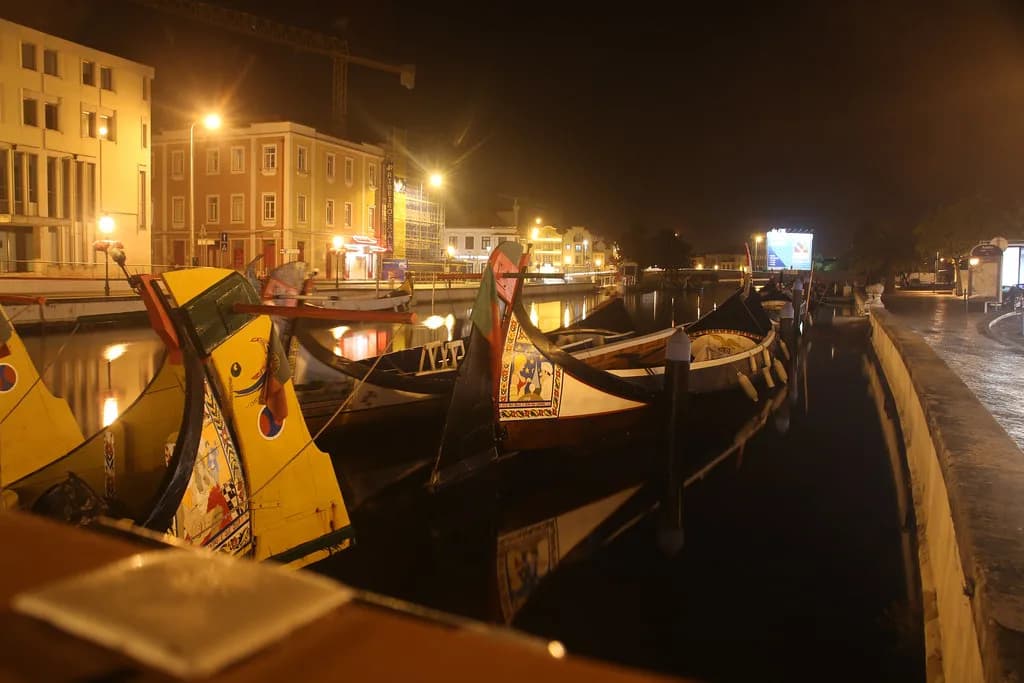
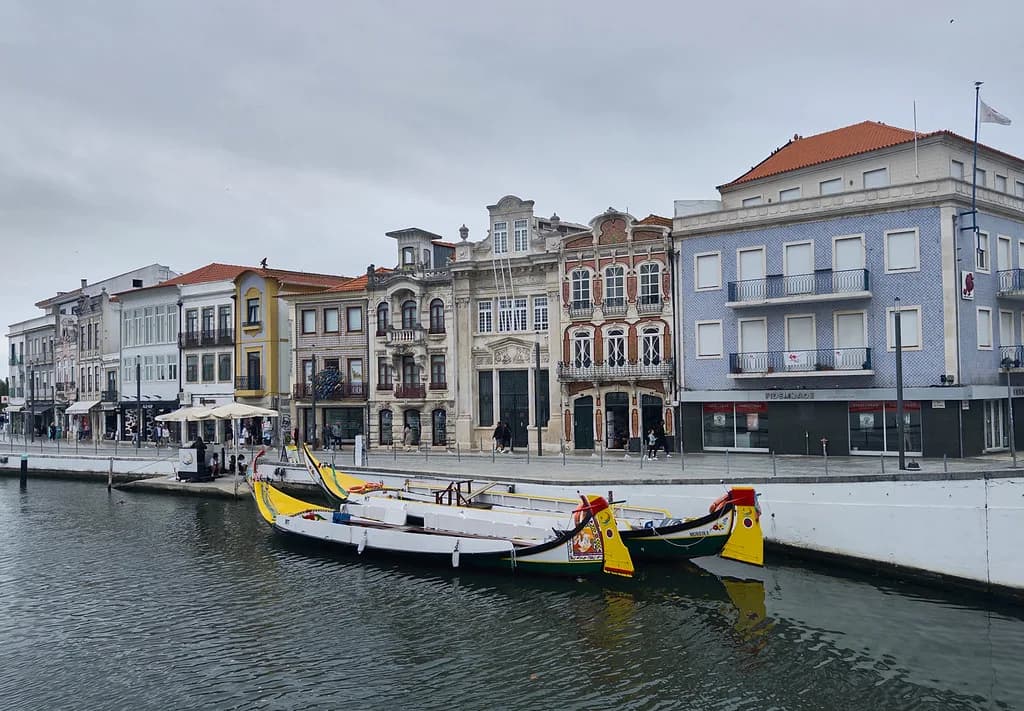
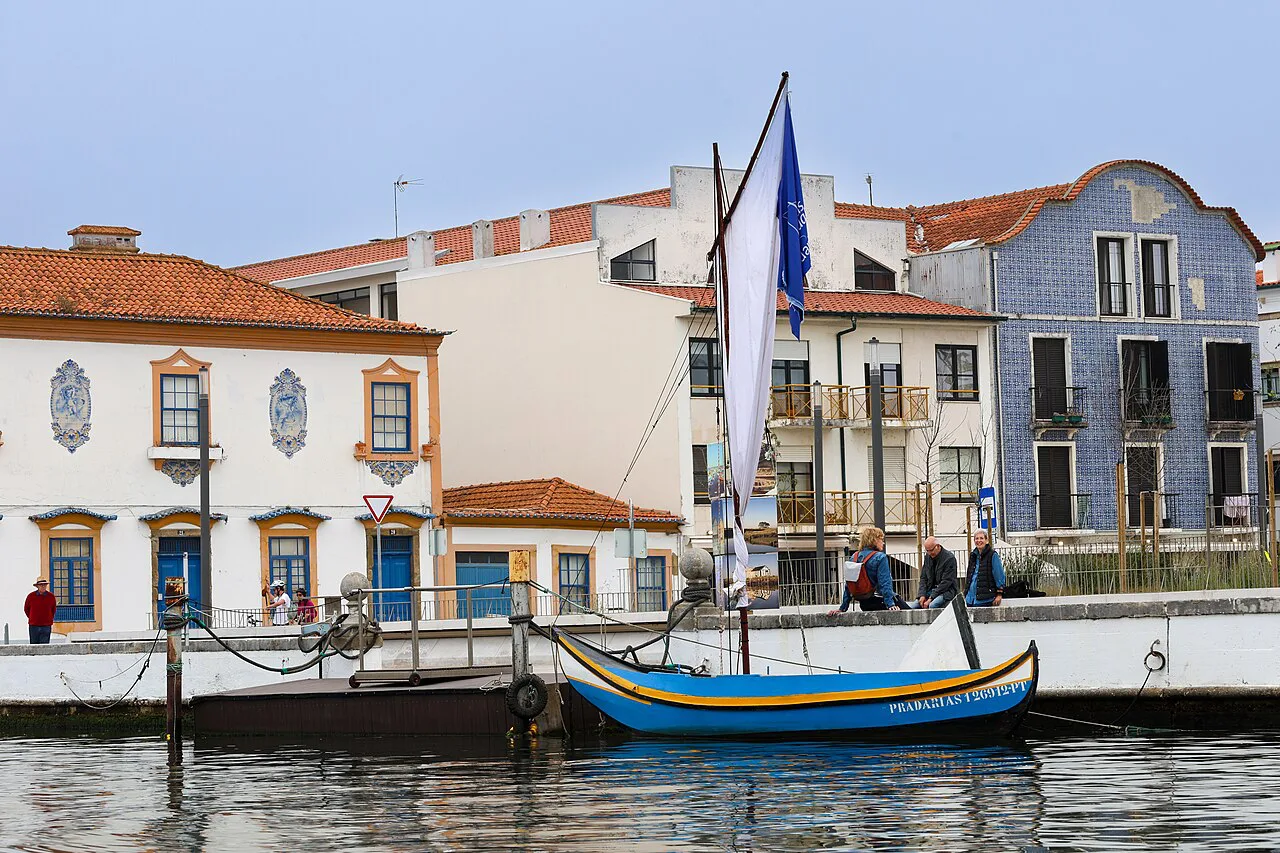
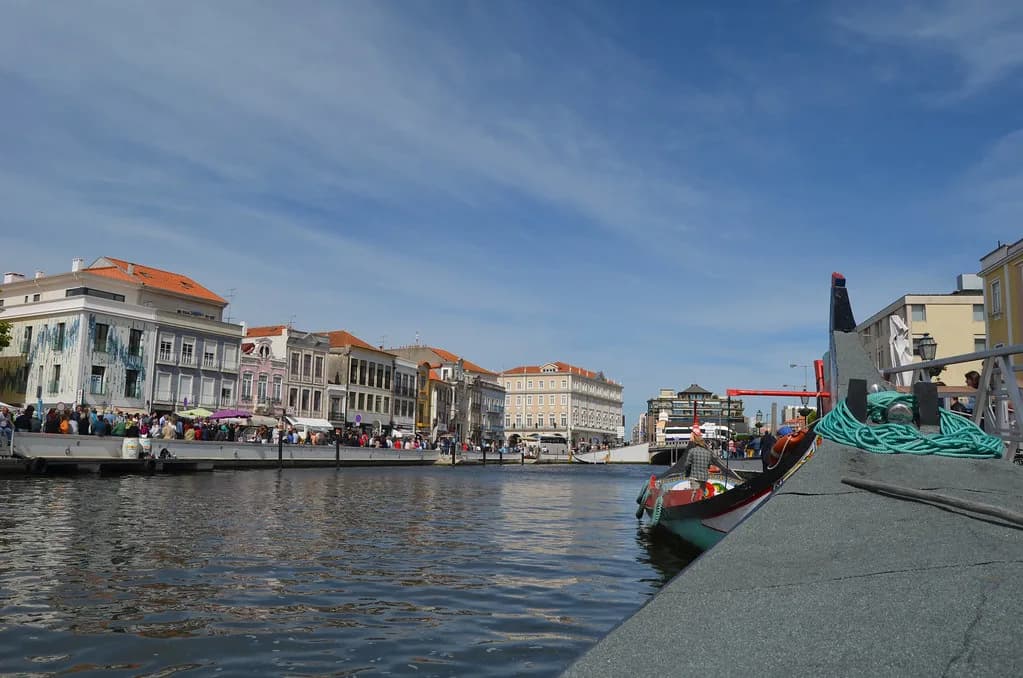
The Canal Central is Aveiro's front room, and strolling its banks costs nothing. The moliceiro boats are the star: flat-bottomed craft once used to harvest moliço, the lagoon algae sold as fertiliser until chemical fertilisers took over in the 1960s, now repainted with brightly coloured scenes on their bows and used for visitors.
You can see plenty of the canal network from the towpaths. Boats run past the waterfront Assembleia Municipal de Aveiro, the Fonte Nova canal basin in front of the old Antonio Maria Campos brick factory, the circular Ponte dos Botirões and stretches of salt pan. Walking the quays gives you those views for nothing; only stepping aboard costs money.
Cross the ribbon bridges and read the names on the ribbons
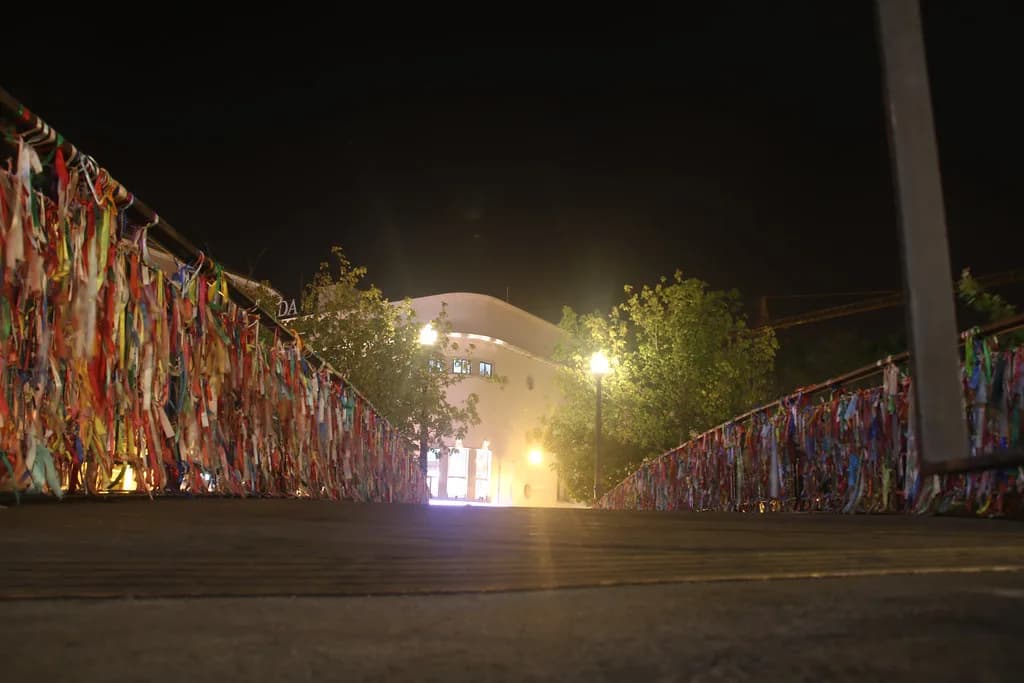
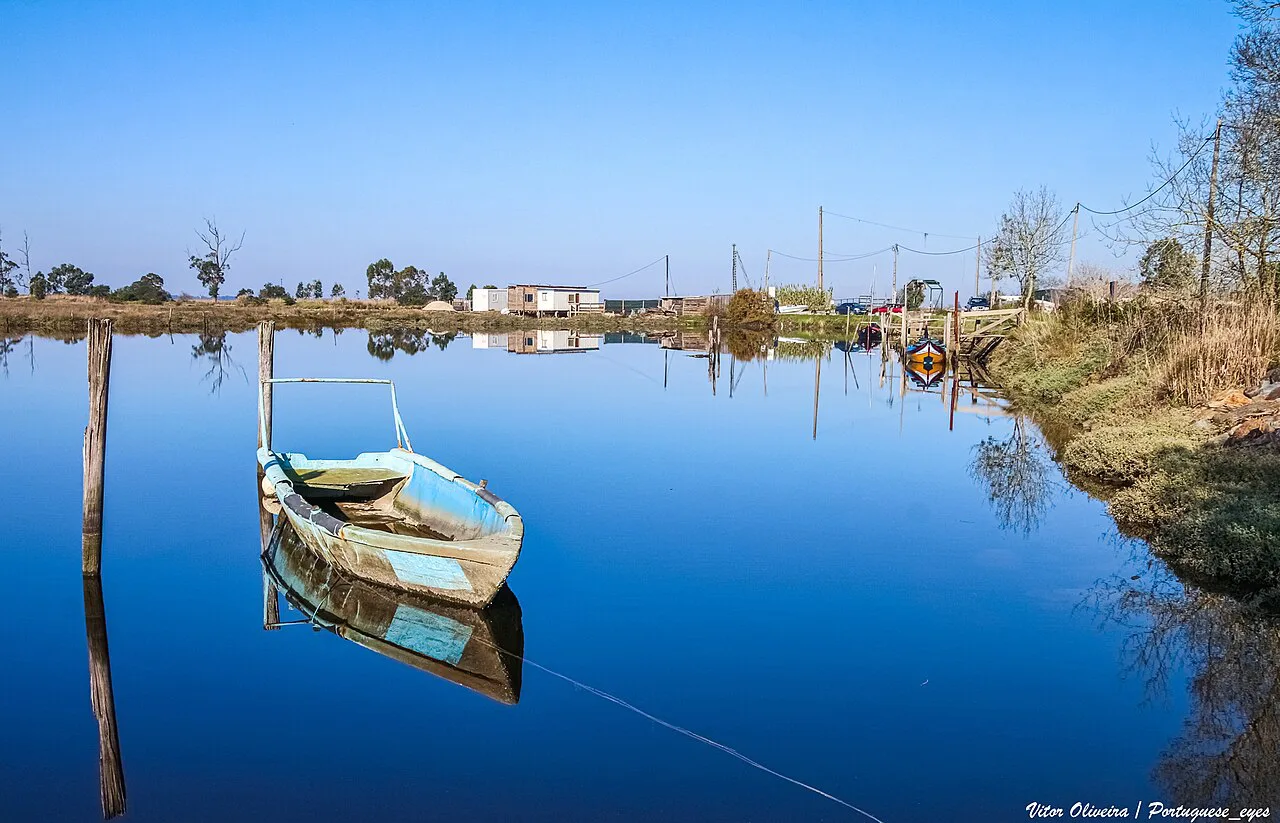
Near the Forum shopping centre, the canal bridges are festooned with bright ribbons carrying couples' and friends' names, Aveiro's answer to love locks. The tradition is said to have started with two students who tied ribbons to the Ponte Laços de Amizade as a mark of friendship, and the habit spread along the canal. It is a free stop and a good place to watch boats pass underneath.
Spot Art Nouveau facades on the riverside streets
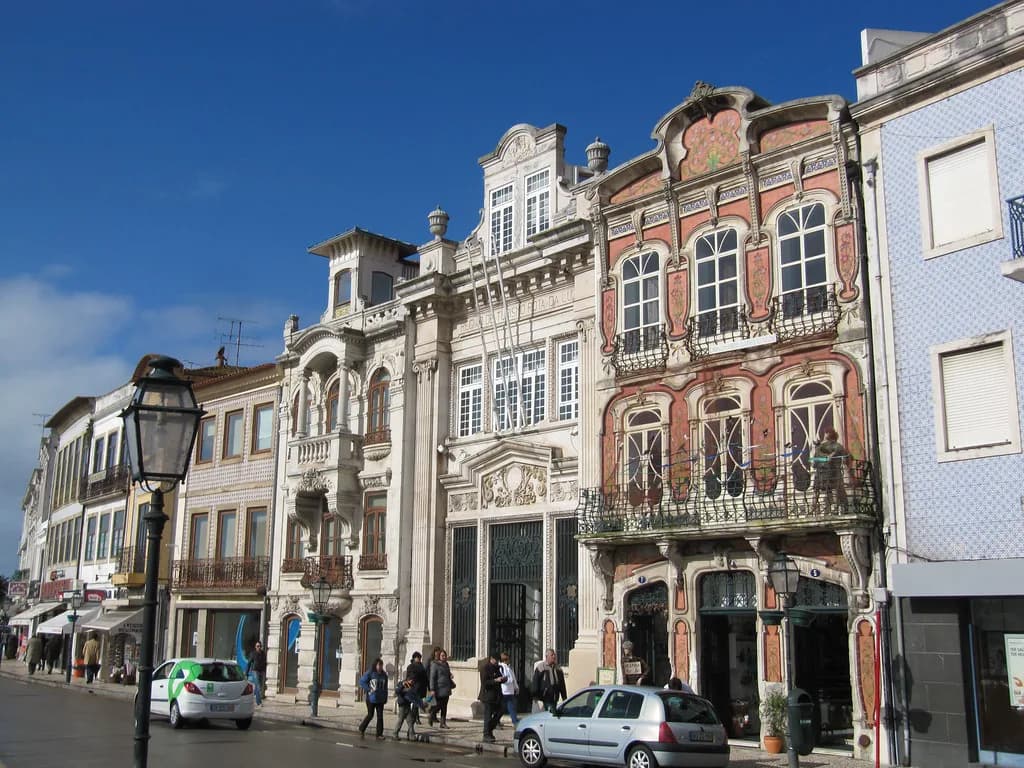
Aveiro grew wealthy in the late nineteenth and early twentieth centuries as its transport links and artificial canals expanded, and the new money built in the Art Nouveau style. The city belongs to the Réseau Art Nouveau Network, a group of European towns with strong Art Nouveau heritage, and the riverside streets hold the best concentration of decorated facades. Look up above shop level for curving ironwork, floral stucco and coloured tiles.
Look for azulejo tile fronts on the streets around the centre
Glazed tile facades are part of Aveiro's everyday streetscape, and hunting them down is free. Many are on ordinary residential and commercial buildings rather than museums, so you view them from the pavement. Pair the hunt with the Art Nouveau facades, since the two often appear on the same stretch of street.
Old Aveiro Railway Station and its tile panels
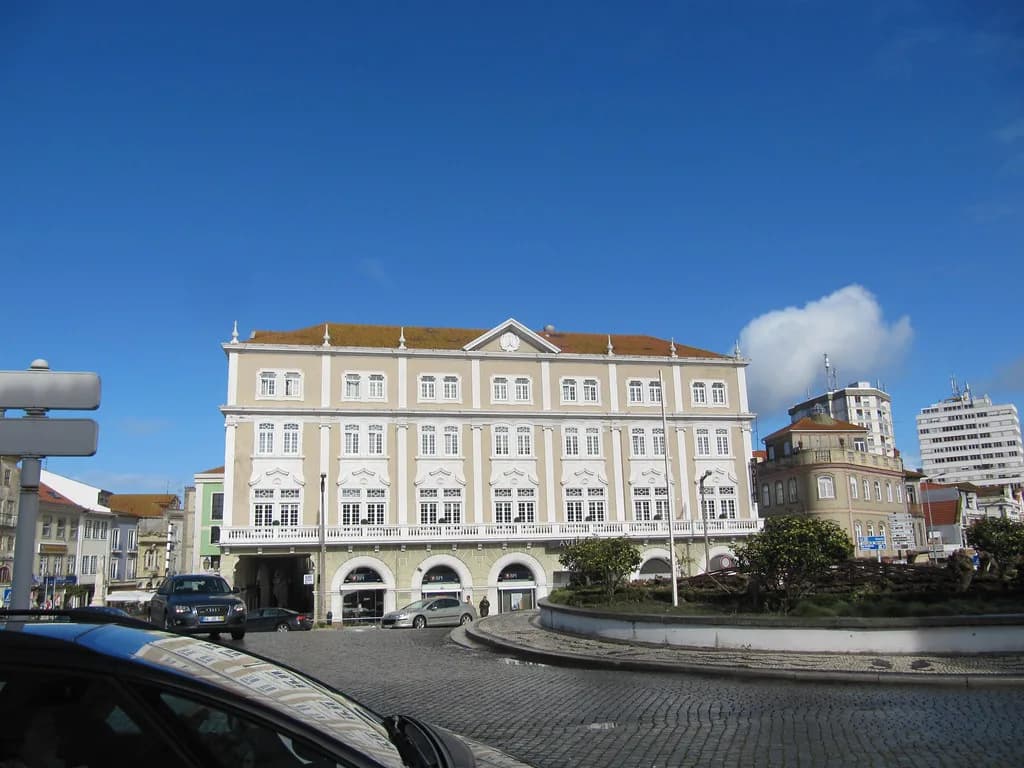
The old railway station is worth the short walk from the centre for its tilework alone, which is visible without buying anything. It is a working station, so you can step inside, look at the panels and leave; the tiled walls are the free sight, and platform access follows normal station rules.
Igreja da Misericórdia de Aveiro and the Carmelita church
Aveiro's churches give you a free architecture trail from the outside. The Igreja da Misericórdia de Aveiro and the Carmelita de Aveiro church, the latter known for its gilded interior, both sit within the central streets and can be admired from their doorsteps. Whether you can step inside depends on services and opening arrangements, so treat the exteriors as the reliable free sight.
Igreja de São Domingos and the Cathedral of Aveiro from outside
The Sé de Aveiro, Aveiro's cathedral, anchors the old town and can be circled on foot without spending anything. The Igreja de São Domingos is another central church whose facade and setting reward a look. Between them you get a sense of the city's religious architecture while keeping your wallet shut.
Free corners of the Mercado Coletivo Aveiro and the salt pans
The Mercado Coletivo Aveiro is worth a browse for souvenirs and local flavours, and wandering the stalls costs nothing even if you buy nothing. On the edge of the city, the Salinas de Aveiro salt fields give you a free look at the industry that shaped the lagoon. Both are short stops that slot between the bigger sights.
Costa Nova for the striped fishermen's houses
Costa Nova's striped fishermen's houses are the region's most photographed sight, and walking among them costs nothing. The catch is distance: it is a short trip out of Aveiro rather than a city-centre stop, so build in travel time and check how you will get there before you set off. Save it for a day when you have already covered the centre.
What is not free, and what is worth paying for
The moliceiro ride is the obvious paid extra. Vendors in official uniforms sell trips from the Canal Central, and rides last about 45 minutes, reported at around 10 EUR. That is reasonable value for seeing the canals from the water and hearing the city's stories, but it is not part of a free day.
Two other temptations cost money: ovos moles, the egg-and-sugar pastry in its rice-paper shell, and museum interiors such as the Aveiro museum in the old Mosteiro de Jesus. Buy a single ovos moles to try rather than a box, and decide on museums only once you have walked the free sights. Entry prices and opening days change, so check the museum's own listing before you go.
How to fill a free day in Aveiro on foot
Begin at the Canal Central, walk the quays and cross the ribbon bridges near the Forum. Then head into the old town for the church exteriors and tile-fronted streets, and finish at the old railway station before returning along the water. That route gives you canals, architecture and tilework in one gentle loop, with no ticket required.
If time and budget allow, add the boat trip or a single ovos moles as your one paid treat. Everything else, including Costa Nova on another day, can stay free. Opening arrangements for churches and museums can change, so check before building the day around an interior.
Is a free day in Aveiro enough?
One free day covers Aveiro's canals, bridges, facades, station and church exteriors comfortably on foot. If you can spare a second day, spend it in Costa Nova or on the paid boat trip, and keep the centre for the things that cost nothing.
Explore more Aveiro guides
Frequently Asked Questions
What city in Portugal is known as the Little Venice of Portugal?
Aveiro, on the Ria de Aveiro lagoon, is the city nicknamed the Venice of Portugal for its canals and traditional moliceiro boats. The comparison is fair for the waterfront, but Aveiro is a working Portuguese city with its own Art Nouveau heritage and tile-fronted streets.
Is Aveiro worth visiting?
Yes, especially for a short break. Aveiro combines canals and boats with Art Nouveau architecture, azulejo facades and a compact, walkable centre, and much of it can be seen for free. The moliceiro boat ride and local pastries are the paid extras worth considering.
How long does a moliceiro boat trip take?
Trips from the Canal Central last about 45 minutes. Vendors in official uniforms sell them on both sides of the main canal. Fares are set by the operators, so confirm the current price with the company before you board.
Sources
Notes for your next Portuguese break
Optional updates to our town guides.
You might also like
Continue reading
More guides you'll find useful