Free Things to Do in Braga: Churches, Gardens and Views
Braga's free day means the Bom Jesus stairway, the old-town lanes, arcaded squares and gardens. See what is free at each sight and what needs a ticket.
On this page
Braga's free day out is the stairway and sanctuary at Bom Jesus do Monte, the cathedral quarter, the old-town lanes and a run of gardens and squares that cost nothing to enter. The city is compact enough to chain them on foot, with one hilltop complex on the edge of town. This guide sets out ten free sights in a walking order, flags the parts of each site that sit behind a ticket, and explains where a small payment buys you something worth having.
The distinction that matters is within sites rather than between them. At the Palácio dos Biscainhos the gardens are open to the public for free while the mansion carries a small fee, and at Bom Jesus the stairs are one way up while the historic funicular is the alternative. Check current opening days with each site before you build a day around it.
Why Braga suits a free day out
Braga packs its sights into a walkable centre: the cathedral, the main shopping street, two gardens and an arcaded square sit within minutes of each other, so you are not paying transport fares between them. The city is often described as Portugal's religious centre, and the density of churches is what makes a no-ticket day work — the interiors are the attraction, not the admissions desk.
There is a young edge too, from the two universities, which keeps the streets busy and the cafés cheap. Porto is the usual arrival hub for travellers coming by train, but the day itself needs nothing beyond your own feet once you are in the centre.
Bom Jesus do Monte: the 577-step stairway
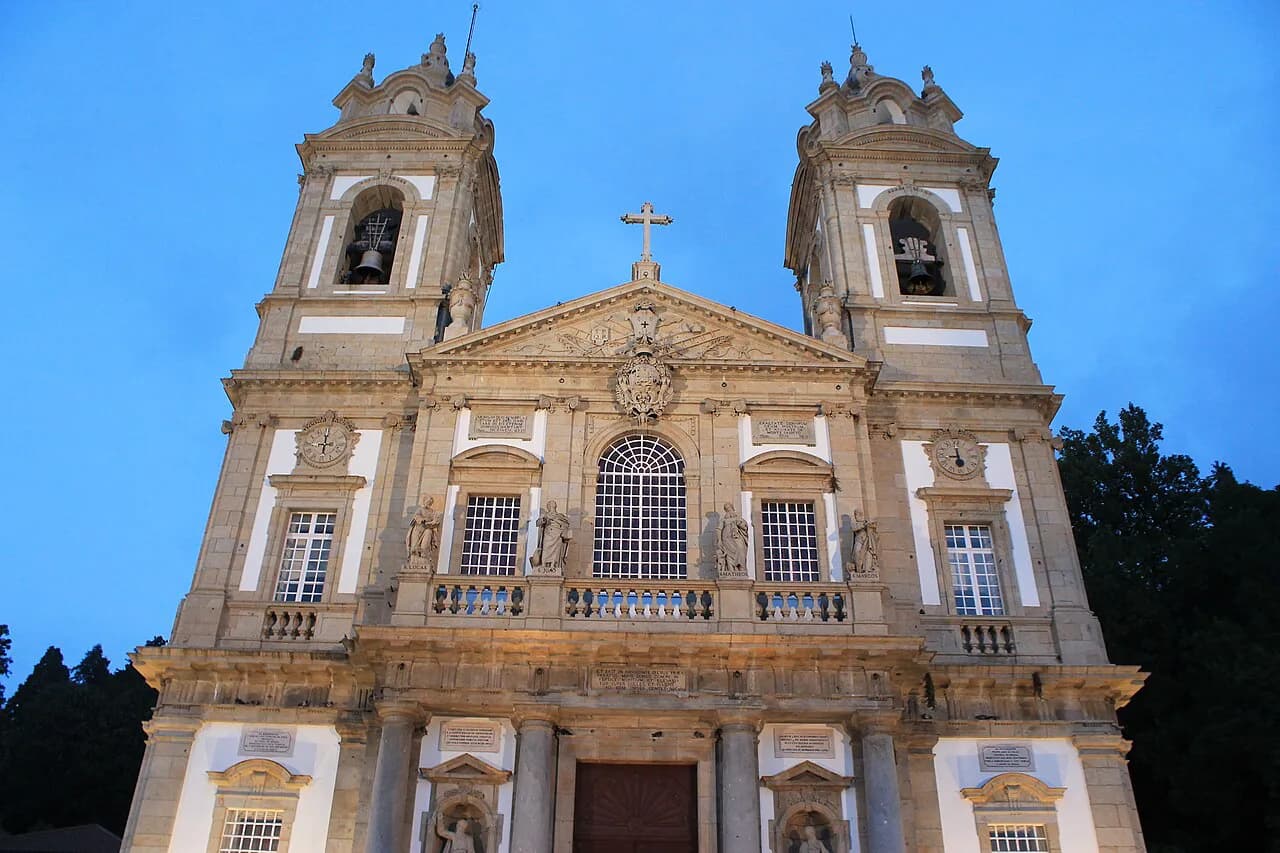
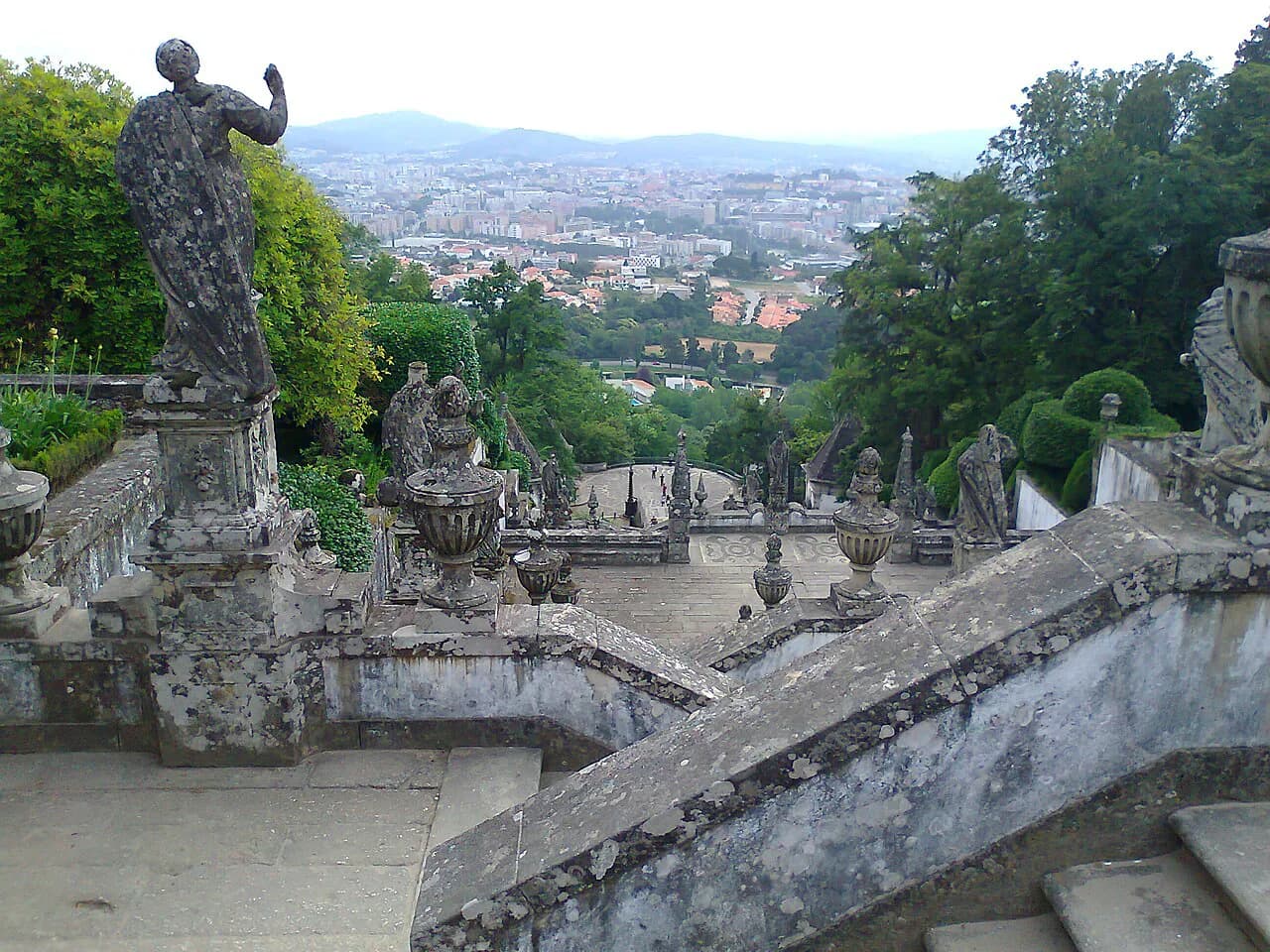
Start at the Santuário do Bom Jesus do Monte, the hilltop sanctuary east of the centre and a UNESCO World Heritage Site, where the climb up 577 steps is the point rather than an obstacle. The staircase zigzags up through statues, fountains and chapels, and the whole complex took more than 600 years to complete, an account set out in this guide to the sights of Braga. Walk it and you have seen the best of Braga for nothing.
The trade-off is the climb itself. A historic funicular dating to 1882 runs up the hill on a counterbalance water-weight system, the alternative if knees or heat make the stairs a bad idea. From the train station, the number 2 bus terminates at the funicular near the bottom of the stairs, so arriving here first thing and working back into town is the sensible order.
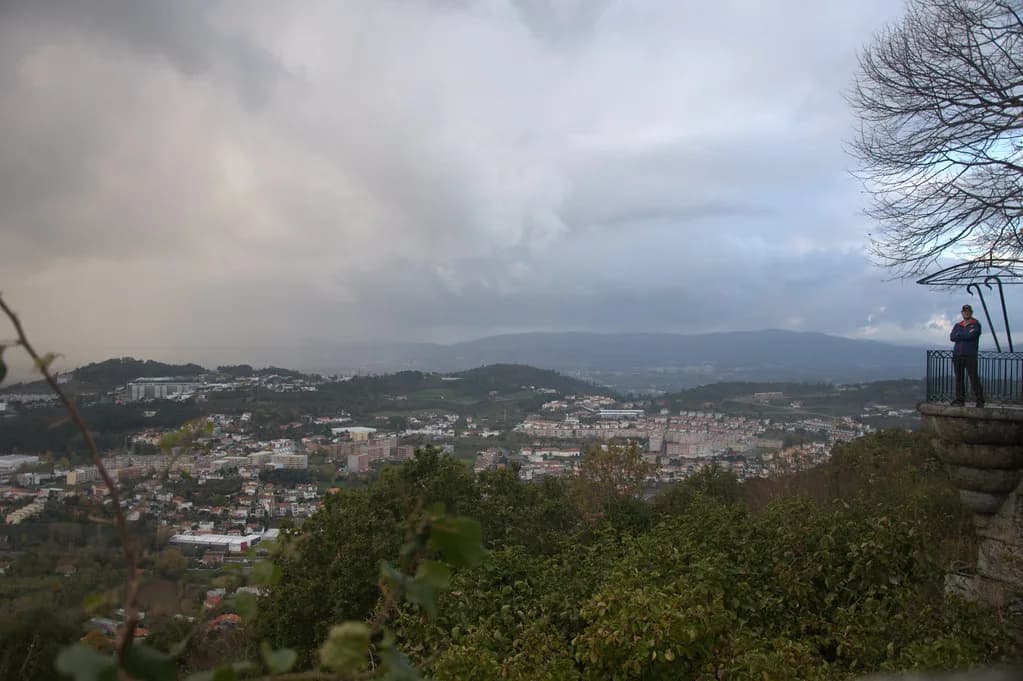
At the top, the church and the terrace give you the panorama; coffee, ice cream and a rowing boat on the lake are the optional extras. This is the one sight on the list outside the centre, so budget the transfer time accordingly.
Braga Sé: what you see without the ticket
The cathedral, the Sé de Braga, anchors the historic core, with the adjacent Chapel of Kings alongside it. Check the current terms of entry at the door: the cathedral is the free visit to aim for, while any museum or treasury rooms sit behind their own arrangement. Decide on the day whether the carved art and vestments are worth the spend.
If you want the fuller picture of the cathedral and the churches around it, a closer look at the Sé de Braga and its neighbours lays out the interiors worth your time. Otherwise, treat the cathedral as the halfway marker of the walk back down through the lanes.
Arco da Porta Nova: the two faces of the old gate
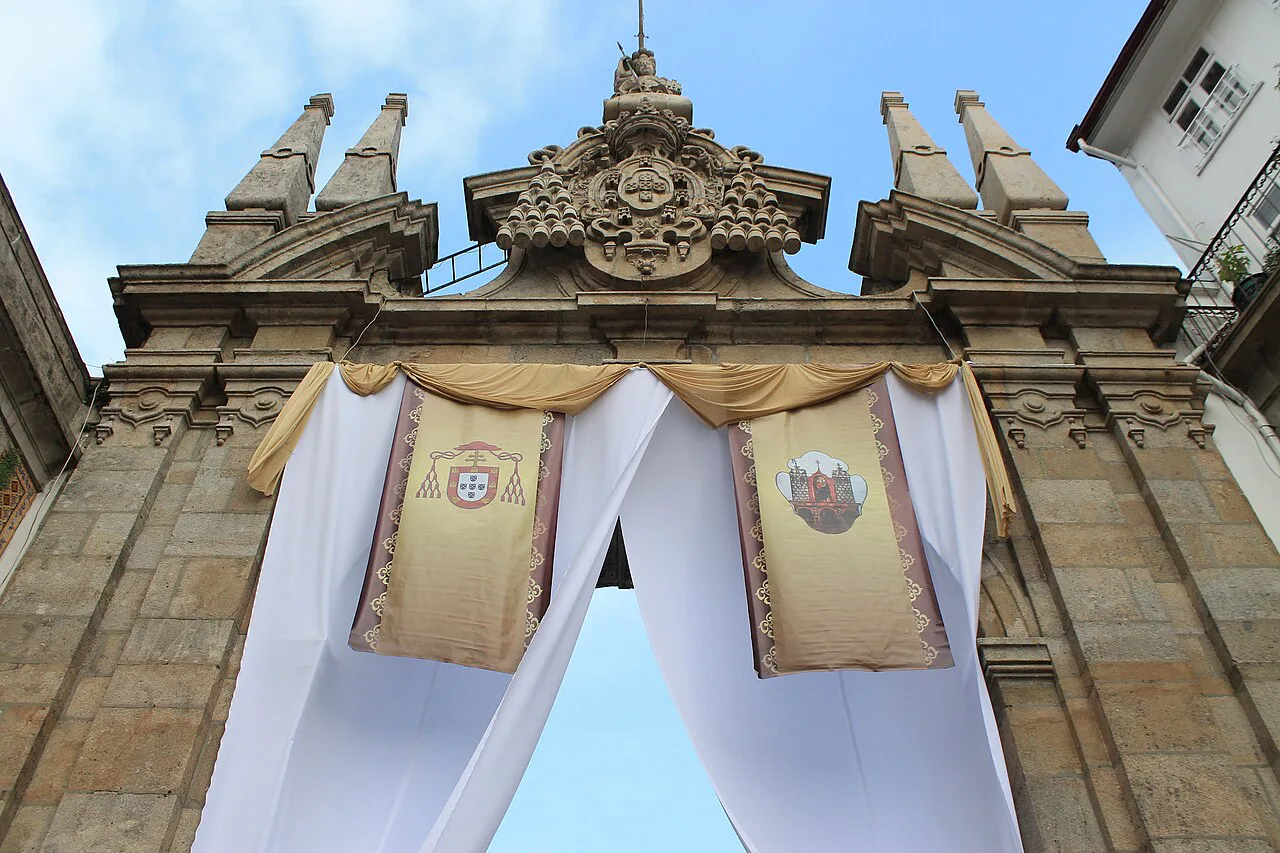
The Arco da Porta Nova began as the western gate through Braga's defensive walls in the early 1500s and was rebuilt in the 18th century as a triumphal arch. It is free, it takes a minute, and the reward is the double façade: Baroque on the western face, Neoclassical on the eastern side.
Walk through it rather than photographing it from one side, then turn around and look back. It works best as the starting point of the old-town stretch rather than a destination in itself, and its place in the city's story belongs with the rest of the Braga history you will pass on the way.
Rua do Souto and the old-town lanes
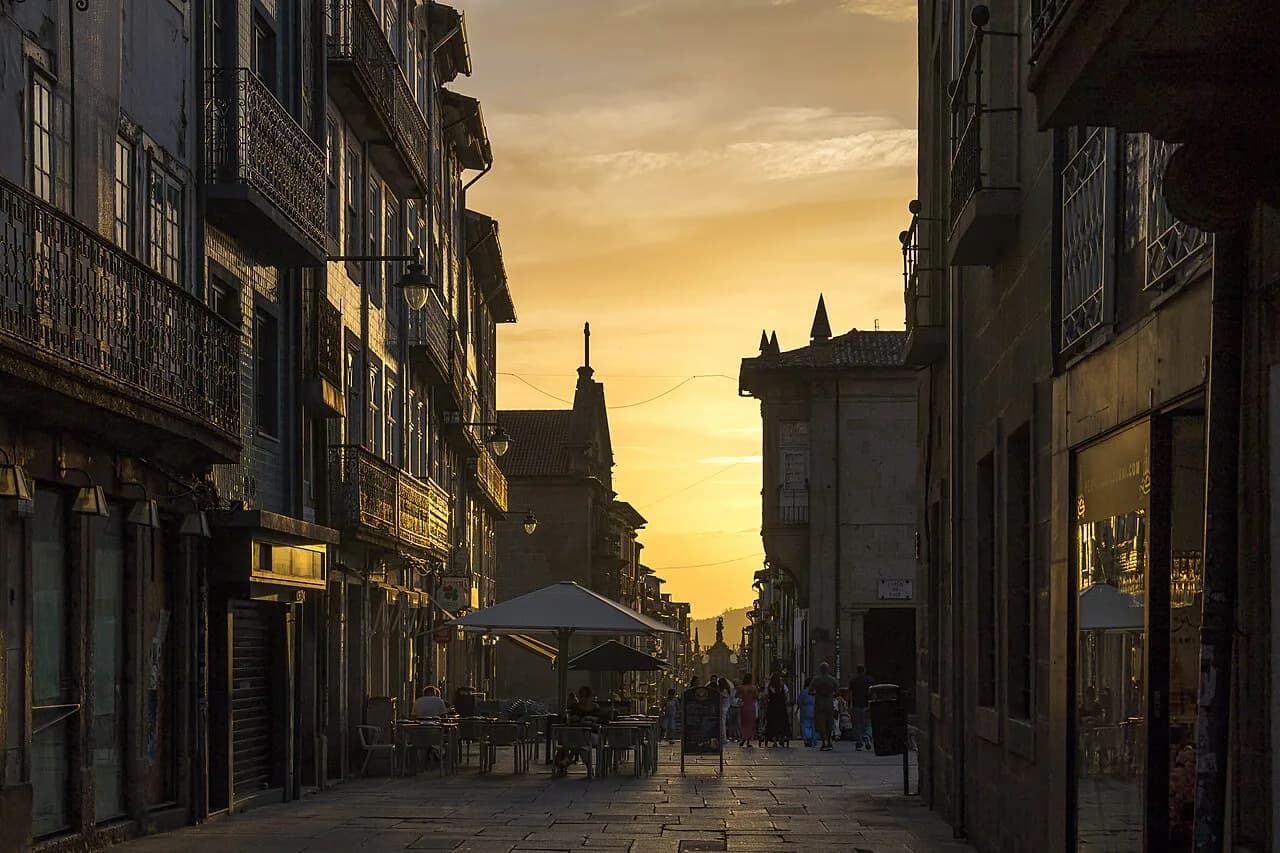
Rua do Souto runs from the arch into the commercial heart of the centre, lined with shops and pastelarias, and it is the natural spine of a free wander. Branch off into the side lanes for the granite façades, the tiled fronts and the small squares that do not appear on any must-see list.
If you would rather have the route narrated, a Braga walking tour does the same ground with context; on your own, the cost is only the coffee you stop for. Allow an hour for the street and its detours, more if the shops pull you in.
Praça do Município and its arcades
Praça do Município is the arcaded square at the centre of the old town, ringed by civic buildings and worth a slow lap under the arches. The architecture does the work here: the arcade itself, the façades above it and the way the square opens off the surrounding lanes.
Sit on the steps for ten minutes and you have had the square at its best. It is also a good orientation point: from here the gardens and the cathedral are both a short walk away.
Jardim de Santa Bárbara: flowers beside the palace
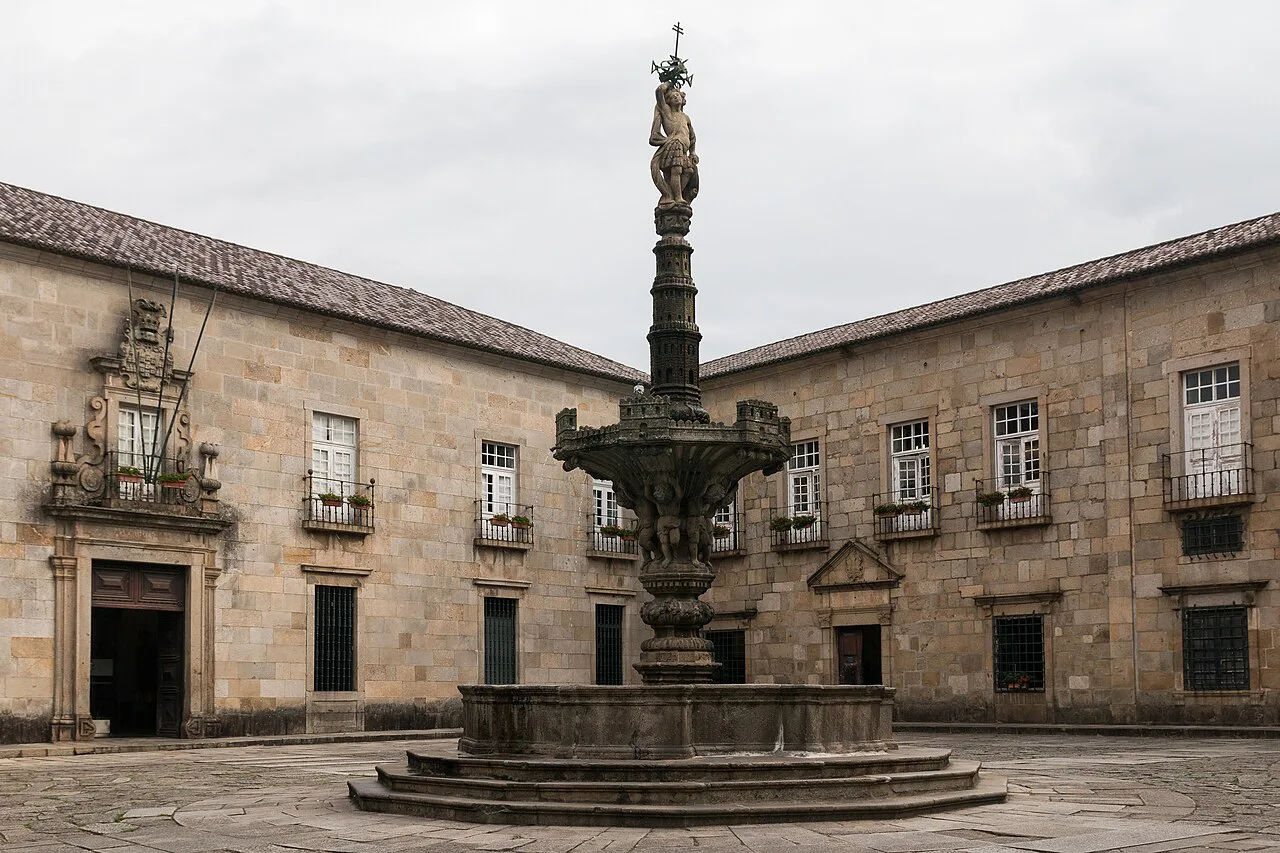
The Jardim de Santa Bárbara is the flower-filled garden beside the Archbishop's Palace, and it costs nothing to walk through. The beds are the draw, set against the palace stonework, and it makes a natural pause between the square and the cathedral.
It is small — a garden to pass through rather than a park to settle into. Pair it with the cathedral, which is minutes away, instead of treating it as a separate outing.
Jardim da Avenida Central: the sit-down between sights
The Jardim da Avenida Central is the garden strip running down the middle of the central avenue, and it is the obvious place to sit when your feet need a break. Free benches, shade and a view of the city going about its business.
Treat it as the hinge of the day: old town on one side, the walk out towards Bom Jesus on the other. A coffee from a nearby café is the only cost.
Igreja do Populo: azulejos and gilded wood
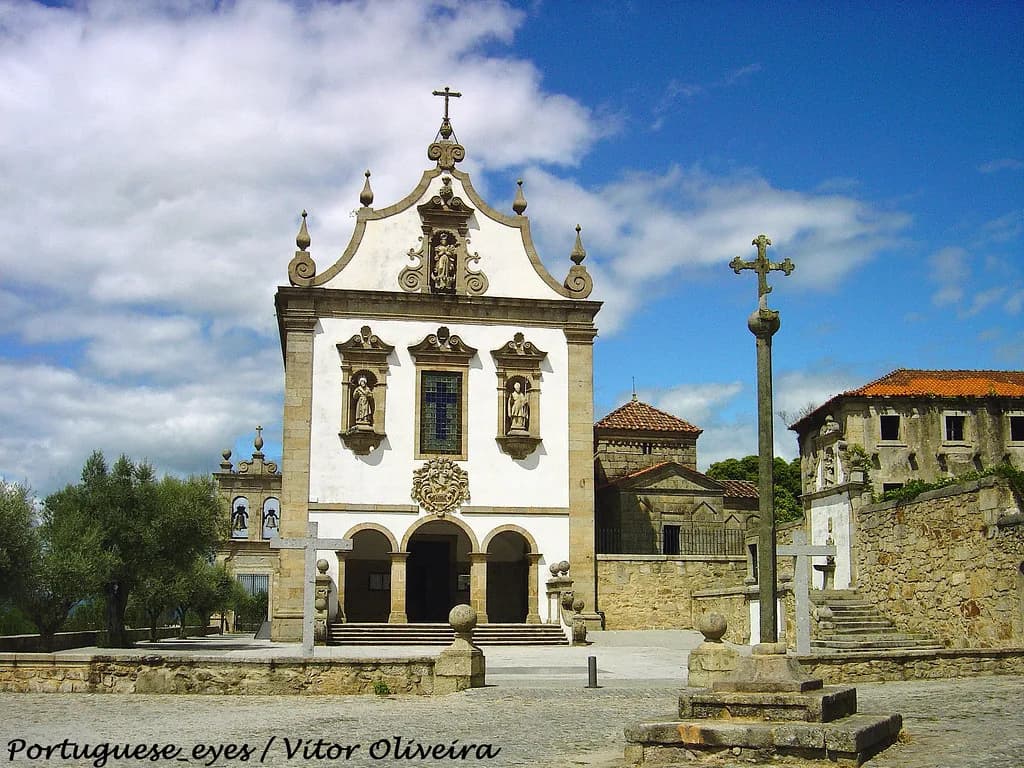
The Igreja do Populo has one of the richest interiors in the city, its walls sheathed in azulejo tiles and the nave heavy with gilded Baroque carving. The structure dates to the 16th century, with an 18th-century Neoclassical façade added later, and the adjoining convent building now houses local government offices.
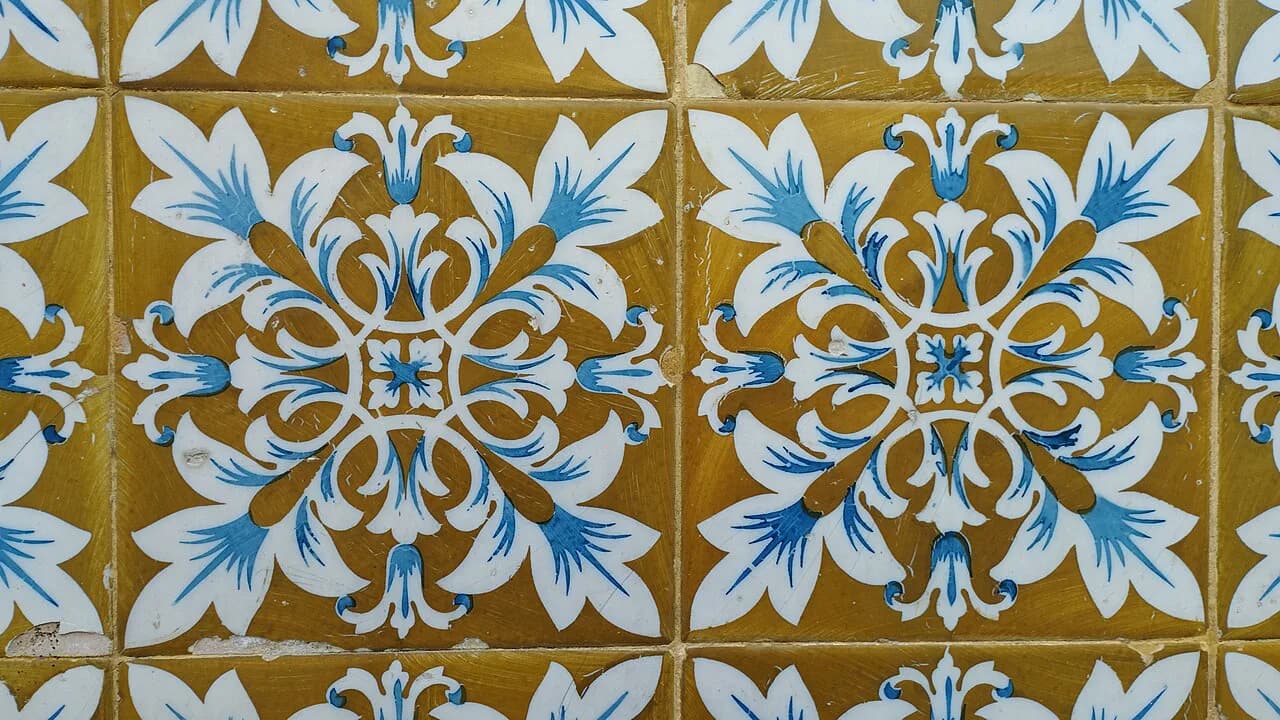
Step inside for the tiles alone; the blue-and-white panels are the reason to come. For more of the same across the city, our guide to Braga tiles picks out the other interiors worth seeking out.
Palácio dos Biscainhos: free garden, paid house
The Palácio dos Biscainhos splits neatly into two decisions. The Baroque gardens — fountains, statues and what is described as the biggest tulip tree in Portugal — are open to the public for free, while the 18th-century noble family's mansion carries a small fee for the guided tour of its furniture, ceramics and art.
Take the garden at no cost, then judge the interior on the day: the house is the better call if you like period rooms and decorative arts, and skippable if you are chasing stairways and churches. Our round-up of museums in Braga helps you weigh it against the city's other collections.
Mercado Municipal de Braga: browsing the stalls
The Mercado Municipal de Braga is a working produce market where browsing costs nothing and the produce does the talking. It is the kind of stop that fills half an hour pleasantly, especially if you are self-catering or just want to see what the region grows.
Our Braga market guide covers what to look for on the stalls and how to fit the market into a short break.
Putting a free day in order
Ride the number 2 bus out to Bom Jesus first, climb the stairs and take in the sanctuary, then come back into town and start at the Arco da Porta Nova. From there the route runs down Rua do Souto to Praça do Município, through the Jardim de Santa Bárbara to the cathedral, and on past the Igreja do Populo, the Jardim da Avenida Central, the Palácio dos Biscainhos and the market as energy allows.
The walk chains without backtracking because the sights sit along one line through the centre. Do the hill first, while legs are fresh and the light is good, and let the town be the gentle second half, with the layout of the old town filling in the gaps between stops.
Free versus paid: where the money goes
Almost everything on this list is free at the door; the paid extras are the Biscainhos house interior and any museum or treasury ticket at the cathedral. Each is a judgement call rather than a necessity: the stairs cover the sanctuary without a fare, the cathedral interior covers the essentials, and the Biscainhos garden gives you the setting without the ticket.
Spend where the thing you came for sits behind the ticket. If carved gilt and church treasure are your reason for visiting Braga, the cathedral's paid rooms earn their fee; if you came for the stairway and the gardens, keep your euros for lunch.
Where the free day gets harder
The constraint on a free day is opening times, not cost. Church interiors and museums keep their own hours, and a locked door turns a free sight into a wasted walk. Build the day around the interiors you most want — the cathedral and the Igreja do Populo — and let the squares and gardens fill the gaps around them.
Check the day's opening times with each site before you set out, and keep the outdoor sights as your fallback. Bom Jesus, the arch, the lanes, the squares and both gardens do not depend on a keyholder.
Skip the funicular or climb?
Climb the 577 steps at Bom Jesus. The staircase is the sight, the funicular is transport, and the walk itself costs nothing. Take the number 2 bus to the bottom, climb, and let the rest of the day run downhill through the old town.
If you have a second day, spend it on the paid interiors you skipped, and use our full guide to things to do in Braga to decide which. The free day is not a compromise in Braga; it is most of what the city has to offer.
Explore more Braga guides
Sources
Notes for your next Portuguese break
Optional updates to our town guides.
You might also like
Continue reading
More guides you'll find useful