Braga Tiles: Where to See the City's Azulejos and What They Show
See Braga's azulejos in the churches and chapels the city council names, learn why the archbishops drew the best tile artists, and walk between the panels.
On this page
Braga's historic tiles are concentrated in the two places the city council singles out: the body of the Igreja do Salvador (Church of the Saviour) and the chapel of São João da Ponte, which now holds panels from the demolished church of Remédios. Both are church interiors rather than museum displays, so you see the panels in the kind of setting they were made for. This guide covers why Braga accumulated such good tilework, what the panels show, and how to plan a short walk between the two sites.
The short answer is both: many tiles were brought to Braga from Lisbon, while other artists came to the city to work for its archbishops and confraternities. The city council's account of Braga's tilework makes this distinction explicit, so the town's azulejos reflect more than a single workshop. Expect the mark of a wealthy archdiocese rather than the output of one local factory.
What Braga's azulejos are and why the city has so many
Azulejos are the glazed, painted ceramic tiles that cover church interiors, staircases and façades across Portugal. In Braga the emphasis falls on interiors, because the surviving panels the city council names line the walls of churches rather than street fronts. The tiles arrived with Arab influence and passed through several stylistic phases, with the Baroque and Neoclassical periods producing especially heavy output.
The reason for the quality is institutional. Braga was the seat of Portugal's most important archdiocese, which gave it the money to attract leading tile painters. The city council notes that while many tiles were imported from Lisbon, many artists also came to Braga to satisfy the commissions of archbishops and confraternities. In practice that means the panels you see were funded by church wealth, not civic decoration.
One caution for anyone searching online: much of what appears under the 'Heritage Braga' name is contemporary ceramic floor and wall tile sold as a modern product, not historic azulejos. If you want the real thing, head for the church interiors the city council names.
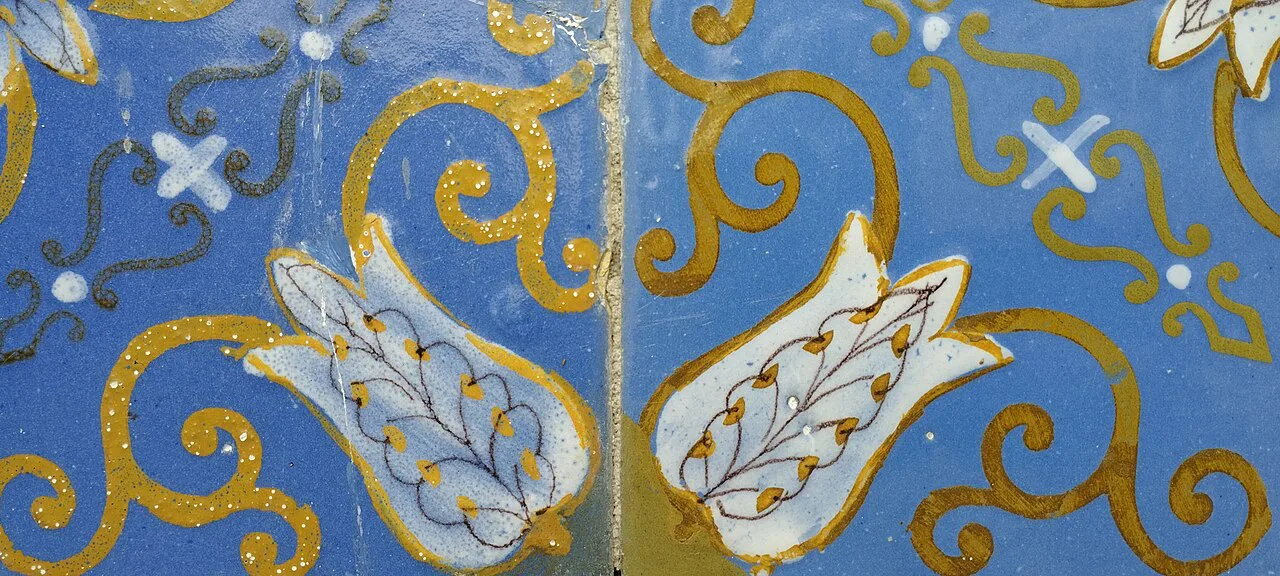
Why the archbishops mattered: the prelature of D. Rodrigo de Moura Telles (1704-1728)
The single clearest reason Braga's tilework looks the way it does is the prelature of D. Rodrigo de Moura Telles, dated to 1704-1728. The city council singles out this period for a declared commitment to hiring well-known tile artists. That is the mechanism behind the panels: a patron with a budget and a taste for named painters rather than anonymous workshops.
For a visitor this is more than trivia. When you stand in front of a figural panel, you may be looking at a commission shaped by a church patron's preferences in the early eighteenth century, which helps explain the ambition of scale and iconography. Treat 1704-1728 as the frame for the city's richest period rather than a date for any one panel.
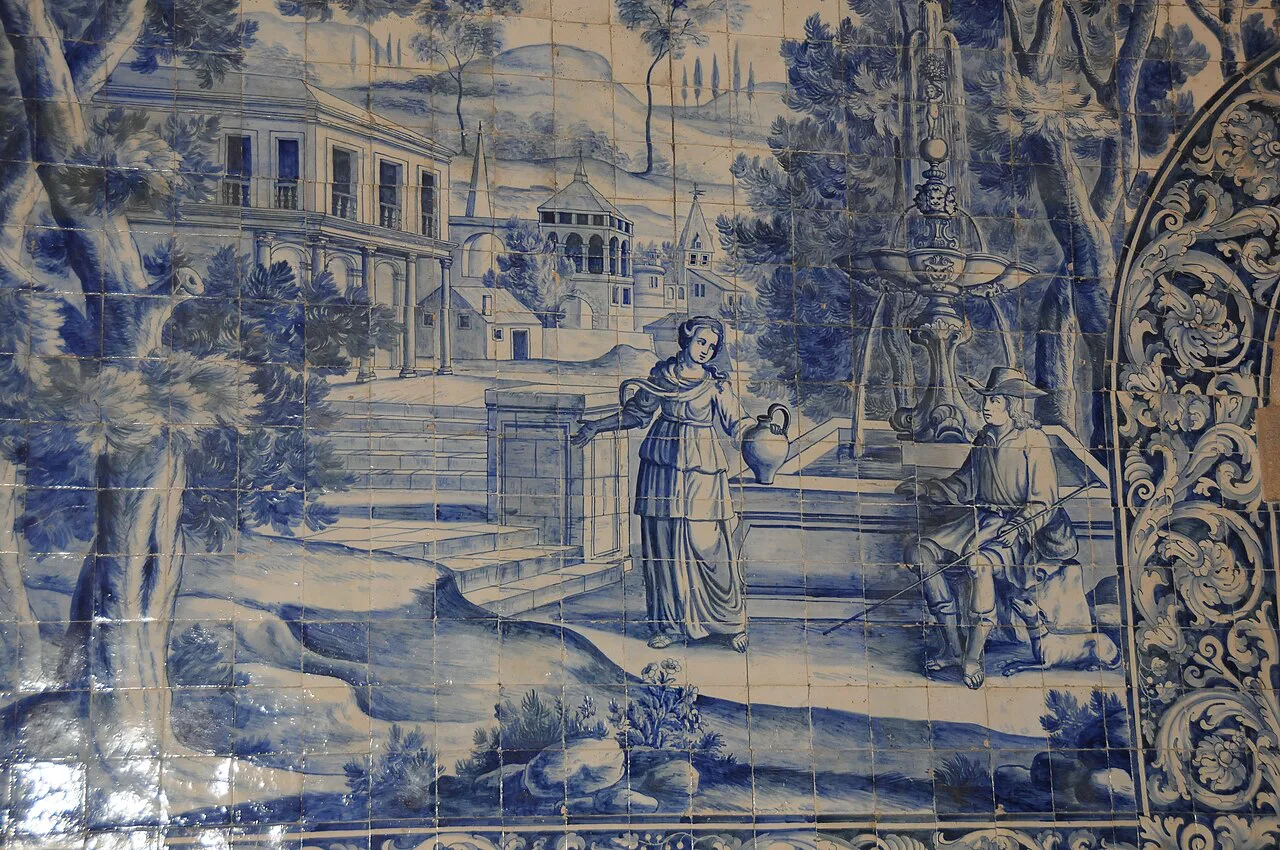
The blue-and-yellow 'carpet' pattern and where it was used
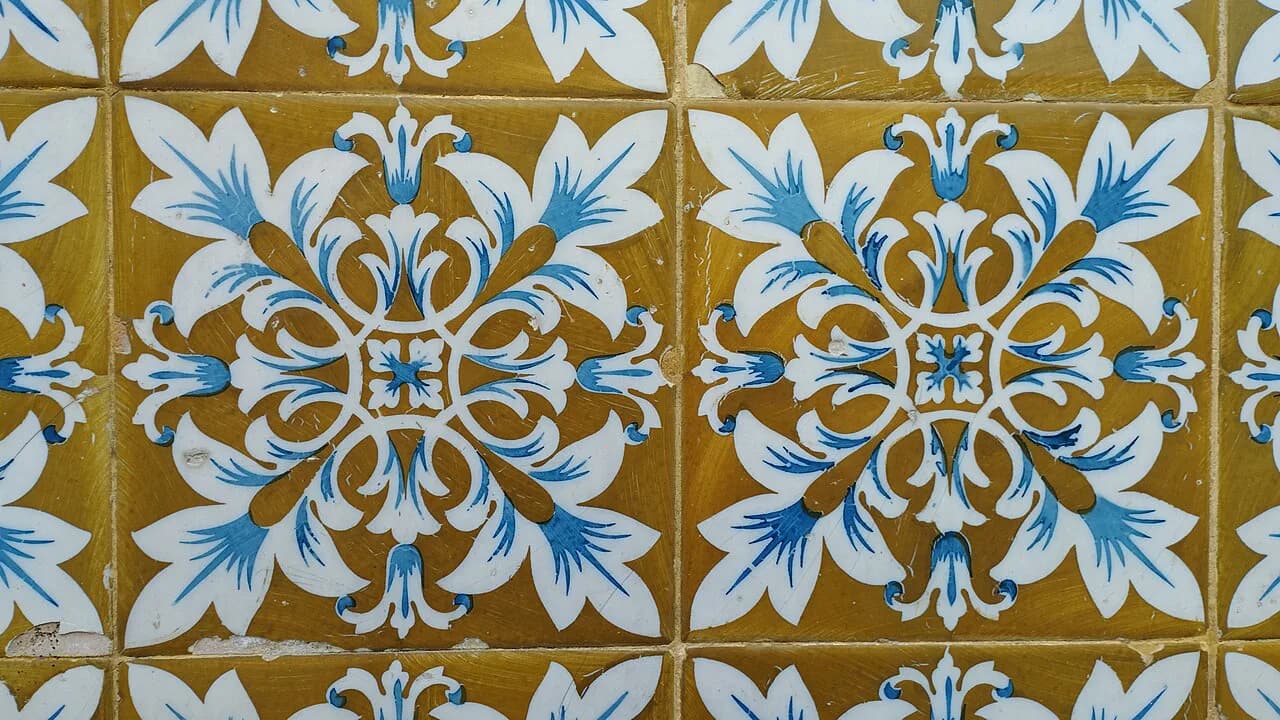
Not every church wall could afford a figural scheme. The city council describes a seventeenth-century type of tilework using repeated motifs in blue and yellow, very fashionable in its day, which was popular for lining temples with no means to hire renowned artists. It is the economical option: rhythm and colour instead of narrative.
This is useful for reading what you see. A wall of repeating blue-and-yellow motifs points to a temple or confraternity working to a modest budget, whereas a large scene with figures points to a wealthier commission. Once you notice the difference, a quick look around a nave tells you something about who paid for it.
Where to see them: the Church of the Saviour (Igreja do Salvador)
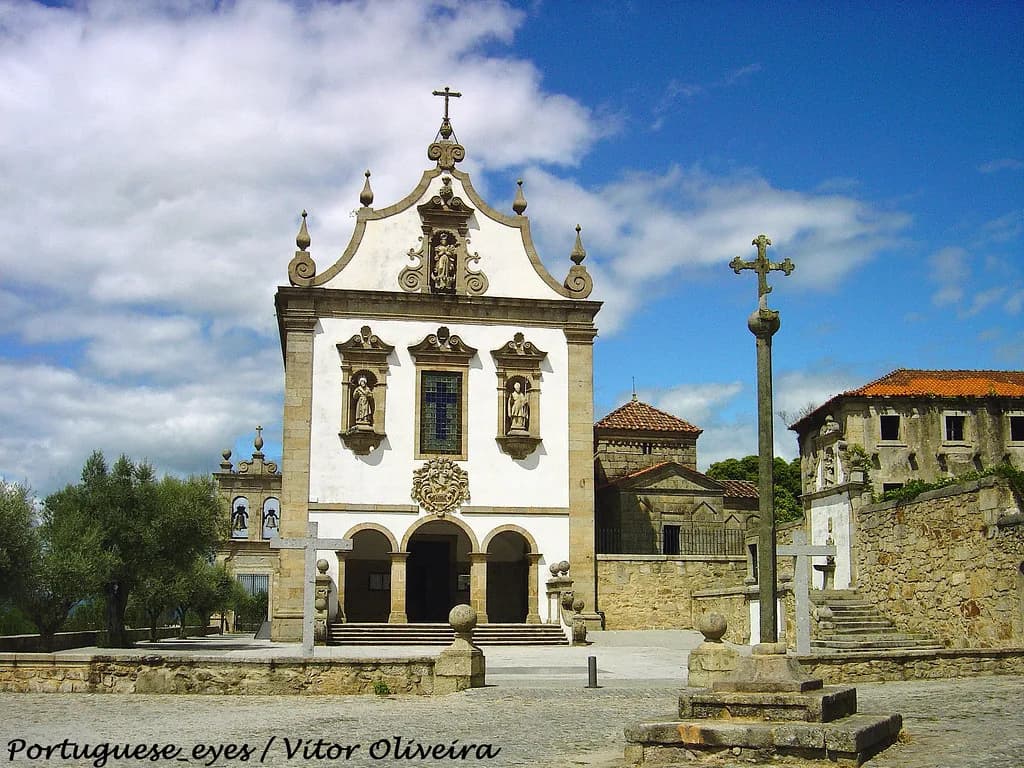
The Igreja do Salvador is the city council's first named example of Braga's historic tilework, cited for the tiles of the body of the church. That phrase matters: the body of the church means the main interior volume, not a side chapel or a museum case. Look along the length of the nave rather than hunting for a separate display.
Be realistic about access. The Igreja do Salvador is an active place of worship rather than a museum, and the city council's page is a heritage account rather than a visiting timetable. Check the times posted at the door before you build a walk around this interior, and see our Braga Old Town guide for the surrounding streets.
Where to see them: the chapel of São João da Ponte and the Remédios tiles
The chapel of São João da Ponte is where the city council says you can see the tiles that once lined the demolished church of Remédios. The panels survived the loss of their original building and can now be seen in this chapel, which makes it the essential second stop for anyone tracing Braga's tilework. You are looking at relocated work, so read the setting as well as the panels.
The move is a reminder that Braga's tile heritage is not all in its original places. Portuguese churches have been rebuilt, enlarged and occasionally demolished over centuries, and panels were sometimes salvaged and reused. The Remédios tiles are the clearest example the city council gives of that process in Braga.
The chapel is a working place of worship, so treat the visit as dependent on the chapel being open when you arrive. Confirm the approach on a map and check the door before counting on the interior.
Reading a panel: hagiographic scenes of patron saints
In churches, the city council explains, the themes usually painted were hagiographic: narratives from the lives of patron saints, told across the wall. Look for the figure who appears repeatedly; that recurring person is the saint whose story is being told. The scheme was meant to be read as a sequence rather than admired as pattern alone.
This is the difference between photographing a wall and reading it. A single scheme can carry several episodes from a saint's life, and a little patience with one wall usually reveals more than a quick sweep of the whole interior.
Walking between the two named sites
Plan the two named sites as a pair rather than two separate trips, allowing for the walk between them through the centre. Start with the Igreja do Salvador, then continue to the chapel of São João da Ponte for the Remédios panels, and check opening times before you set out.
Build in a fallback. If one church turns out to be shut, the centre still offers tiled façades and a wider circuit of churches to fill the time. A Braga Old Town wander works as a backup plan when a specific interior is unavailable.
Museums make a sensible wet-weather or closed-church substitute, and the Sé de Braga anchors the central streets and gives you a landmark to navigate by. Check opening days before you set out for either.
Practical points: checking church opening times
Church opening hours in Braga vary, especially around services, and neither named interior publishes a fixed visitor timetable. Check the times posted at each door or ask at a tourist office in the centre, and be ready to return later if a church is closed for a service.
Keep the visit flexible: confirm the door times on the day, and follow any notices about photography or behaviour inside. Two short checks save a wasted walk across town.
Is the São João da Ponte detour worth it?
Yes, if you want to see the panels the city council treats as the surviving record of a demolished church. The Igreja do Salvador gives you azulejos in their original setting, while the chapel of São João da Ponte gives you the rescue story and the Remédios tiles that outlasted their building. Together they give you a compact, specific tile trail rather than a vague hunt for blue walls, and they slot naturally into a wider Things to Do in Braga plan.
Line up your day against the rest of the centre—the Sé, the old-town squares and the market—so a closed chapel does not waste the trip. The city's streets repay a slow wander even when a particular interior is shut.
Explore more Braga guides
Frequently Asked Questions
Are Braga's azulejos Portuguese or imported from Lisbon?
Both. Many tiles were imported from Lisbon, and many artists also came to Braga to work on commissions for its archbishops and confraternities, so the surviving panels reflect a mix of outside workshops and artists working in the city.
How long does it take to see the tiles in Braga?
The city council names two church interiors, so plan a short walk between them and allow extra time if you want to look at the wider old town.
Can I see the tiles without entering a church?
The panels the city council names are interior church decoration, so you need the doors to be open to see them. Tiled façades elsewhere in the centre can be seen from the street, but they are not the panels described here.
Sources
Notes for your next Portuguese break
Optional updates to our town guides.
You might also like
Continue reading
More guides you'll find useful