Braga Walking Tour: A Self-Guided Route Through the Old Centre
Walk Braga on a self-guided route past the Praça Municipal, the Sé and the Roman baths, with stop-by-stop pacing, opening days and ticket prices.
On this page
Braga rewards walkers: a compact centre of squares, church fronts and azulejo-clad interiors, with the Roman baths up the hill at Alto da Cividade closing the loop. This route puts the stops in walking order so you can follow it without a guide, and it flags the one stop with firm published hours and prices. Budget roughly half a day for the centre alone and a full day if you add the baths and a long lunch. Our Braga Old Town guide covers the streets of the historic centre in more depth.
The walking is steady rather than strenuous, mostly flat between the Praça Municipal and Rua dos Biscainhos, with a climb to the baths at the end. Treat the timings here as pacing guidance rather than measured distances. For the broader picture before you set out, our guide to the things to do in Braga slots this walk into a longer stay.
Praça Municipal: the sensible starting point
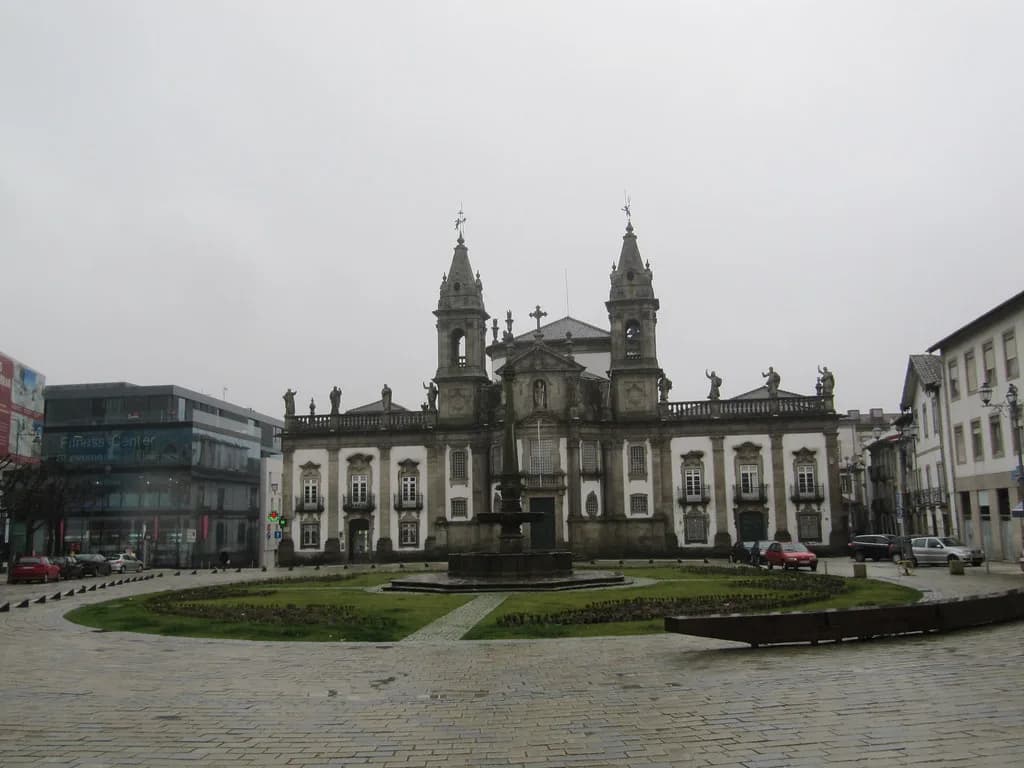
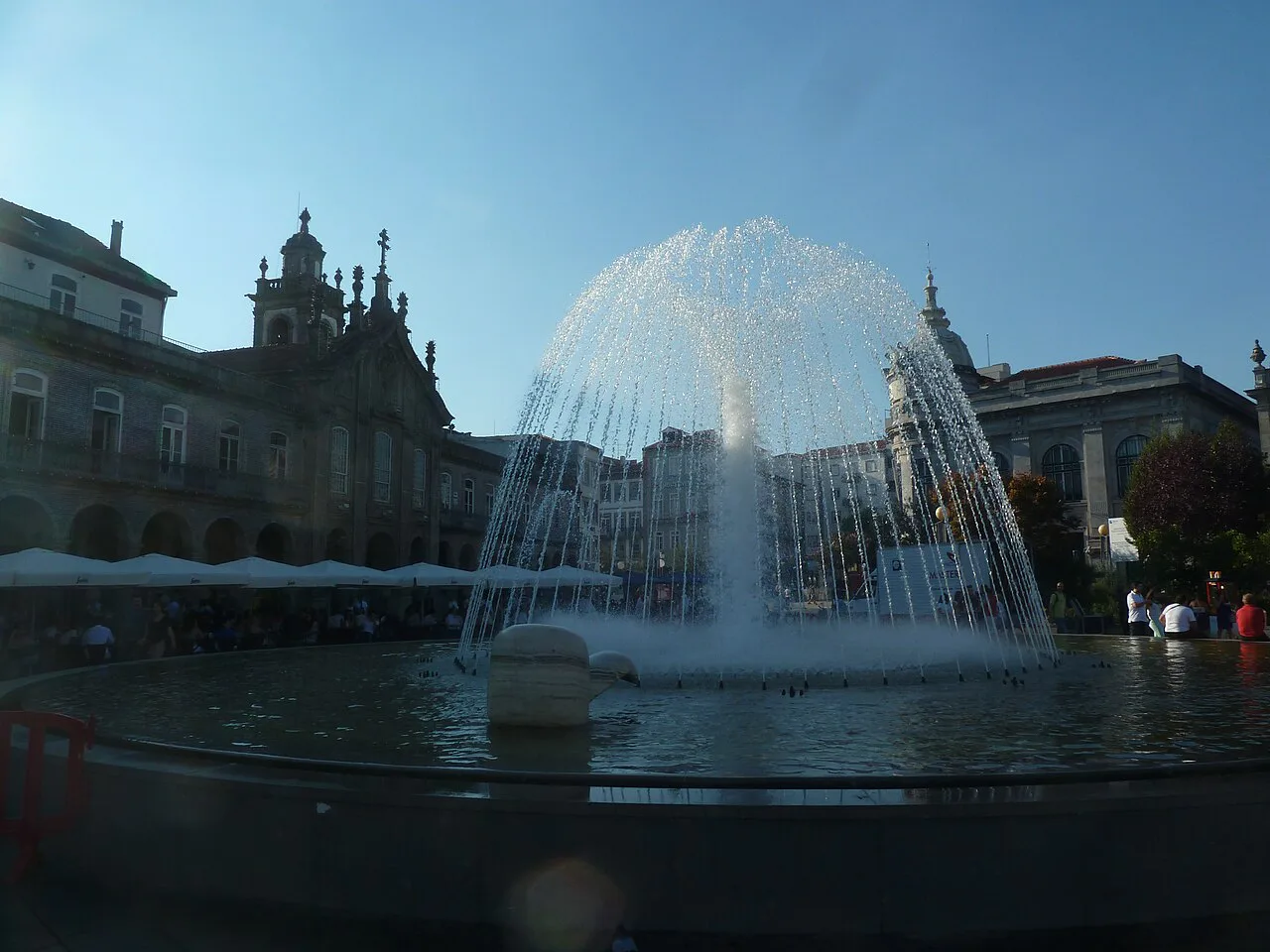
Begin in the Praça Municipal, the civic square at the heart of the centre and the address the municipality uses for its archaeology and museum services. It is easy to find, gives you a fixed orientation point, and puts you within a short walk of the cathedral quarter. Arrive in the morning if you want the cathedral and the Biscainhos house in the same block of time.
From the square, the arcaded streets and the old town lanes radiate outward; if you want to wander before committing to the route, our Braga Old Town guide covers the tangle of streets, lanes and small squares around the centre. Give the square ten minutes for orientation, then head for the Sé.
The Sé and the old-quarter streets around it
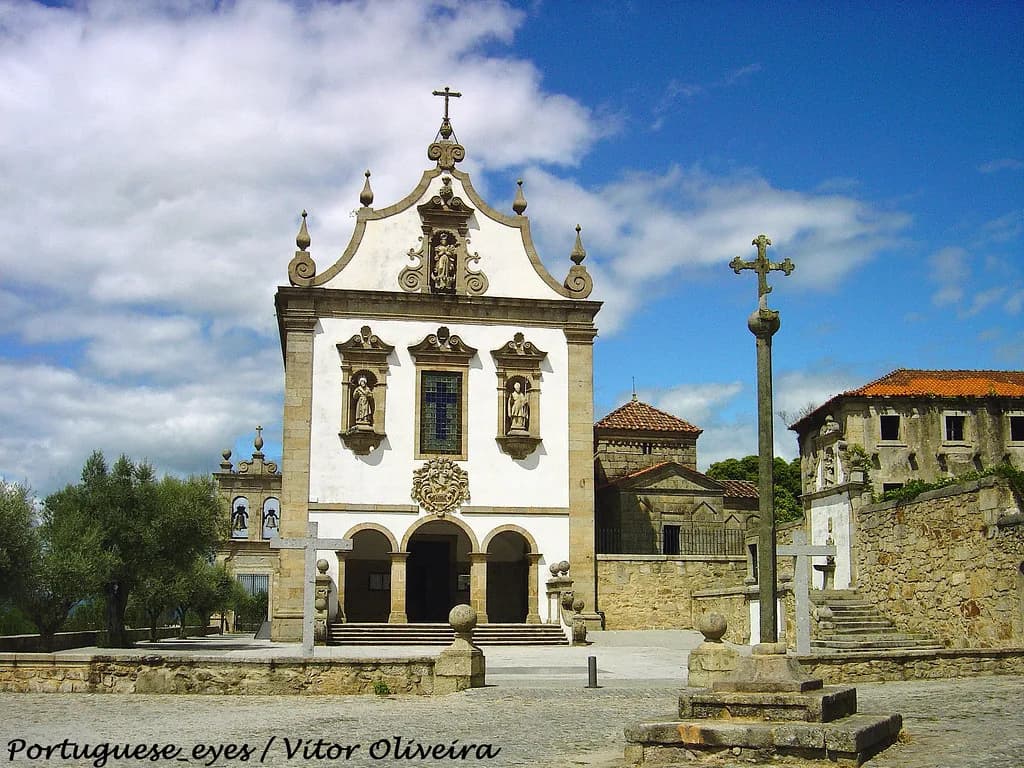
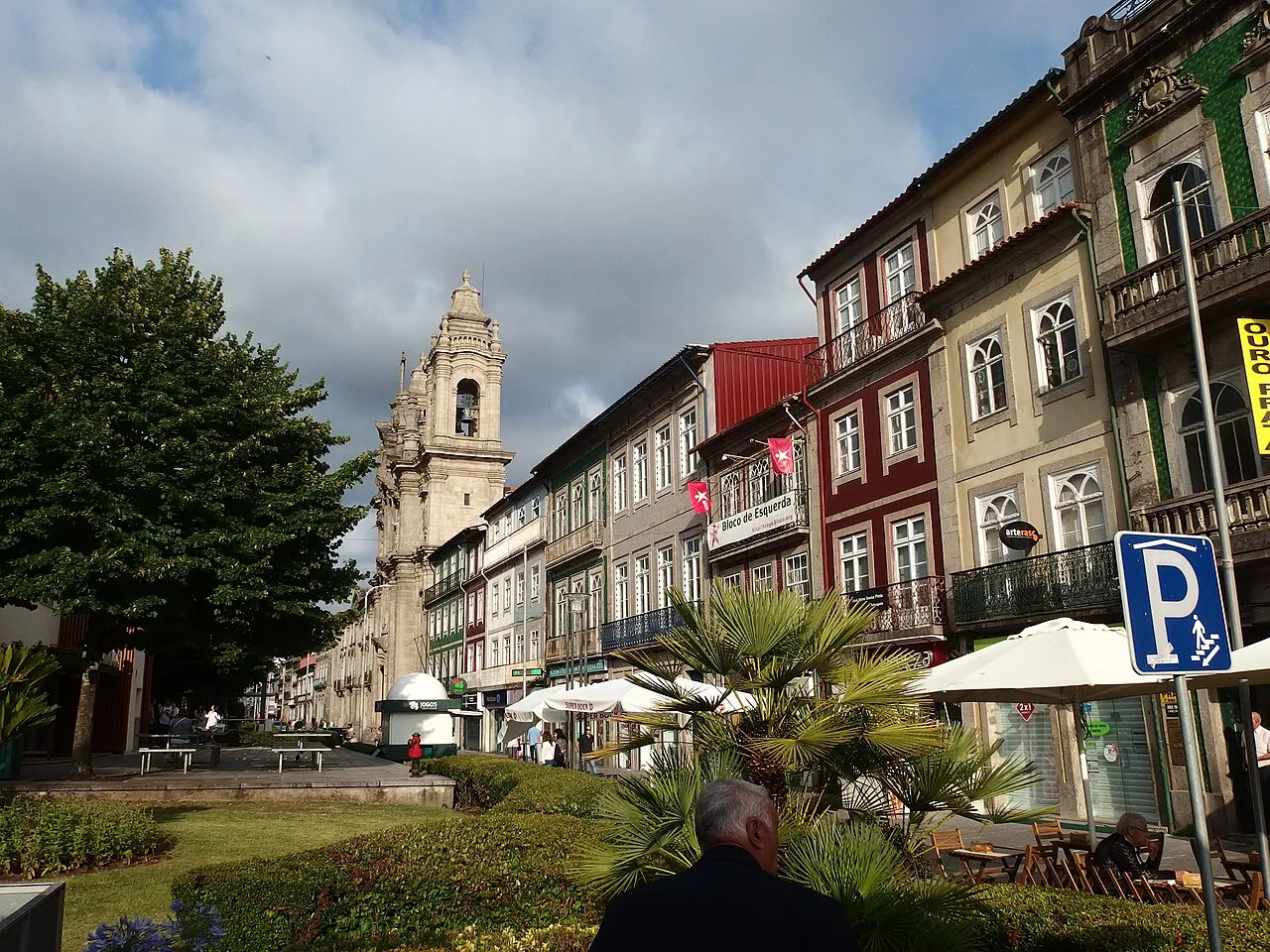
The Sé de Braga anchors the historic centre, and the streets immediately around it are the most atmospheric part of the walk, with stone facades, narrow pavements and church fronts appearing at odd angles. Walk a slow loop of the surrounding lanes rather than a straight line, and pause at any open church door that invites you in. The municipality's own account of tilework singles out the tiles of the body of the Salvador church in Braga, so interiors are worth a look where access allows. For the building itself, see our guide to the museums and monuments of Braga.
Allow around an hour for the cathedral quarter at an unhurried pace. If the cathedral itself is the reason for your trip, our guide to the museums and monuments of Braga is the place to start on the building; otherwise treat this as the walk's architectural opener.
Museu dos Biscainhos: azulejo rooms and a garden
The Museu dos Biscainhos occupies a noble townhouse and garden on Rua dos Biscainhos, and its programme is built around life in a Portuguese aristocratic household of the seventeenth and eighteenth centuries. The interiors are the draw: rooms lined with eighteenth-century azulejos and ceilings with painted and ornamental treatment. It is the single best place on this route to see tiles in a domestic setting rather than a church.
Set aside around an hour for the house and garden; the museum's own listing describes the building and garden as a combined heritage set, so the garden is part of the visit rather than an afterthought. Check the museum's published hours before you build your day around it.
Rua dos Biscainhos as the link south
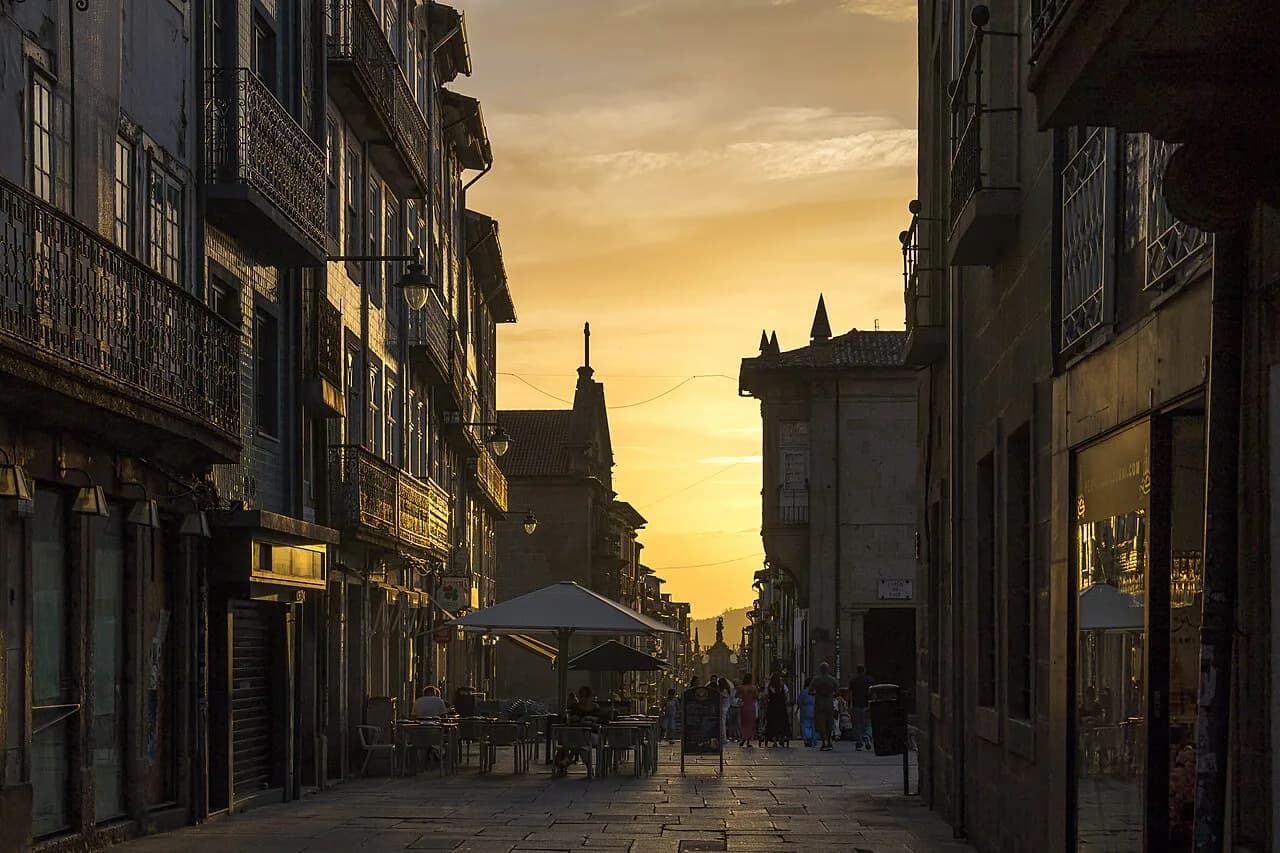
Rua dos Biscainhos does double duty: it holds the museum and serves as your connecting street back towards the centre of things. Walk it slowly in one direction and you have seen the museum frontage; walk it in the other and you rejoin the commercial core for coffee. This is the natural hinge of the half-day version of the route.
If you plan to return to the centre afterwards, note the street name rather than trying to memorise turns; Braga's centre is legible once you have two or three named anchors. The Praça Municipal is a useful reference point when you are reorienting, and our Braga Old Town guide maps the central streets in more detail.
Termas Romanas do Alto da Cividade: the Roman baths on the hill
The Termas Romanas do Alto da Cividade are the remains of Roman public baths, classified as a National Monument since 1986 and open to the public since November 2004, set inside a protected archaeological area on the Alto da Cividade hill. The municipality publishes firm visiting times: Monday to Friday 9.30–13.00 and 14.00–17.30, Saturday 11.00–17.30. They close on Sundays and public holidays, which makes this the one stop that dictates the shape of your day.
Prices are published too: €2.05 for a normal ticket and €1 for concessions such as students, teachers, visitors aged 65 and over, youth-card holders and pensioners. Children up to the age of 14 are admitted free. A joint ticket covering the baths and the Fonte do Ídolo costs €3.70, so buy that if you intend to see both. Check the hours and prices on the municipality's page before travelling, since the published timetable is split across lunchtime.
Fonte do Ídolo and the joint ticket
The Fonte do Ídolo is the second half of the combined ticket, a Roman-era monument that pairs naturally with the baths on the same outing. Because the €3.70 joint ticket covers both, the sensible sequence is to see the baths and the fountain in one block rather than splitting them across two days. Budget another half hour for the fountain.
If Roman Braga, or Bracara Augusta as the Roman city was known, is what brought you here, the archaeology collections at the Museu de Arqueologia D. Diogo de Sousa extend the story beyond what the open-air sites show. Our guide to the museums in Braga helps you choose between them if time is short.
Azulejo spotting: which church interiors reward a detour
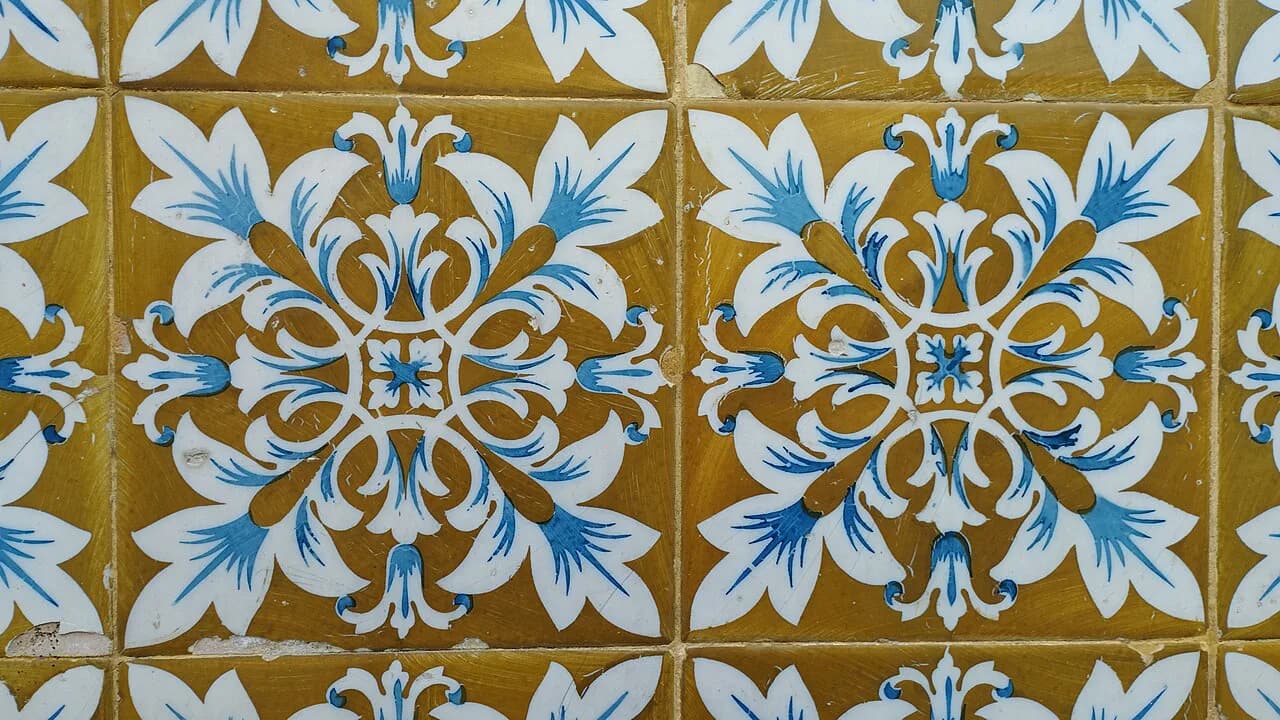
Braga had the wealth, as Portugal's leading archdiocese, to attract leading tile artists, and the municipality's account of the craft singles out the Prelature of D. Rodrigo de Moura Telles between 1704 and 1728 for its deliberate hiring of well-known tile painters. In practice that means church interiors are where the best tile work sits, with hagiographic scenes in churches and blue-and-yellow carpet-style patterns in temples that could not afford famous designers. The tiles of the Salvador church body and the panels from the demolished Remedios church, now in the chapel of São João da Ponte, are the named examples.
Treat tile-spotting as a rule rather than a fixed stop: if a church door is open along your route, step in and look at the walls. Church opening is variable, so build the detour around whatever is accessible on the day rather than expecting a specific interior.
How long the route takes and how to split it
The half-day version runs Praça Municipal, the cathedral quarter, the Museu dos Biscainhos and back through Rua dos Biscainhos, with a coffee stop folded in. That is comfortable in a morning, and leaves the afternoon free. The full-day version adds the climb to the Termas Romanas and the Fonte do Ídolo and takes the published lunchtime closure of the baths into account, so you either go before 13.00 or after 14.00.
Both versions assume you are on foot throughout the centre; the climb to the baths is the only stretch that asks anything of you. Our Things to Do in Braga covers the wider city if you want a town-wide plan rather than a single route.
Where the walk breaks for a pastelaria or a tasca lunch
Braga's centre has plenty of pastelarias and tascas, and the natural break is between the Biscainhos house and the climb to the baths. Keep the pause short if you are doing the full-day version, because the baths shut over lunch and the afternoon slot only starts at 14.00. A sit-down tasca lunch fits the half-day route better, when nothing on the clock is pressing.
Order a pastel de nata with a coffee mid-morning and save the longer meal for after the baths. If you would rather have someone else do the narrating, self-guided audio tours for Braga exist through VoiceMap, though the content and quality are worth sampling before you commit.
Which version of the walk should you do?
Choose the half-day route if you have one clear block of time and want the cathedral quarter and the Biscainhos azulejos without clock-watching. Choose the full day only if the Roman baths matter to you, because their Sunday and public-holiday closure and the lunchtime gap shape everything else.
Either way, start at the Praça Municipal, carry the baths' published hours with you, and buy the joint ticket if the Fonte do Ídolo is on your list. Confirm the current timetable and prices on the municipality's page before you set out.
Explore more Braga guides
Frequently Asked Questions
Is Braga a walkable city?
Yes. The historic centre, from the Praça Municipal through the cathedral quarter and Rua dos Biscainhos, is compact and best covered on foot. The one climb is up to the Roman baths at Alto da Cividade.
Can you do a free walking tour in Braga?
Free walking tours are advertised in Braga, but schedules, meeting points and operators change, so confirm the details directly with the operator before relying on one. This route is designed to be followed without a guide.
Sources
Notes for your next Portuguese break
Optional updates to our town guides.
You might also like
Continue reading
More guides you'll find useful