Lisbon to Cascais: Train, Bus or Car for a Short Break
How to get from Lisbon to Cascais by commuter train, bus or car, where each one drops you, and how the journey fits a one to four day break in Cascais.
On this page
Take the commuter train from Lisbon's Cais do Sodré station. It is the simplest way to reach Cascais for a short break: a suburban line with no reserved seats, no online ticket to print and a drop-off a few minutes' walk from the old centre. This guide sets the train against coach and car, explains where each one lands you, and then turns to what the journey time buys you over one to four days in town.
The trade-off is straightforward. The train is cheap and puts you at the top edge of the centre; a car gives you Cabo da Roca and the coast road on your own clock but hands you a parking problem in a compact resort town.
The commuter train from Lisbon to Cascais
The Linha de Cascais runs from Cais do Sodré out along the river and the coast, and it behaves like a city metro rather than an intercity service. There are no reserved seats and no advance fare to chase, so you turn up, pay and board; travellers commonly load a stored-value balance or buy a 24-hour ticket rather than booking ahead.
Journey time is commonly quoted at somewhere between forty and sixty minutes end to end. Treat that as a planning bracket rather than a promise and confirm the current timetable with the operator before you set an alarm. The practical upshot is that Cascais sits comfortably inside a morning.
Where the train leaves and where it puts you in Cascais
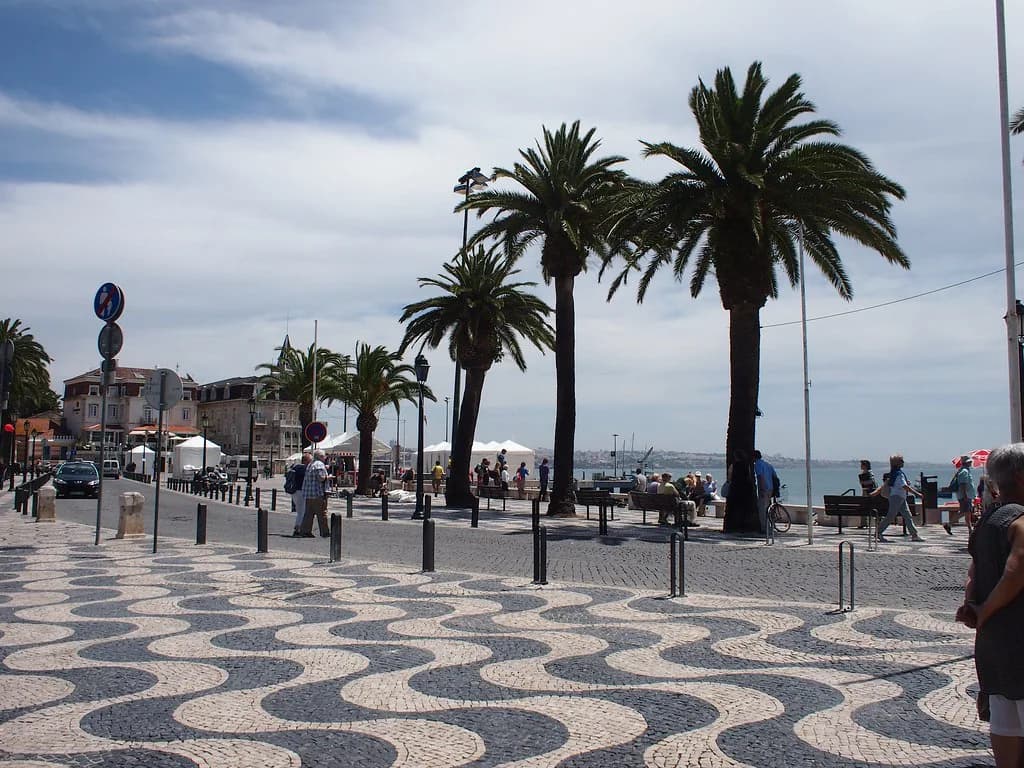
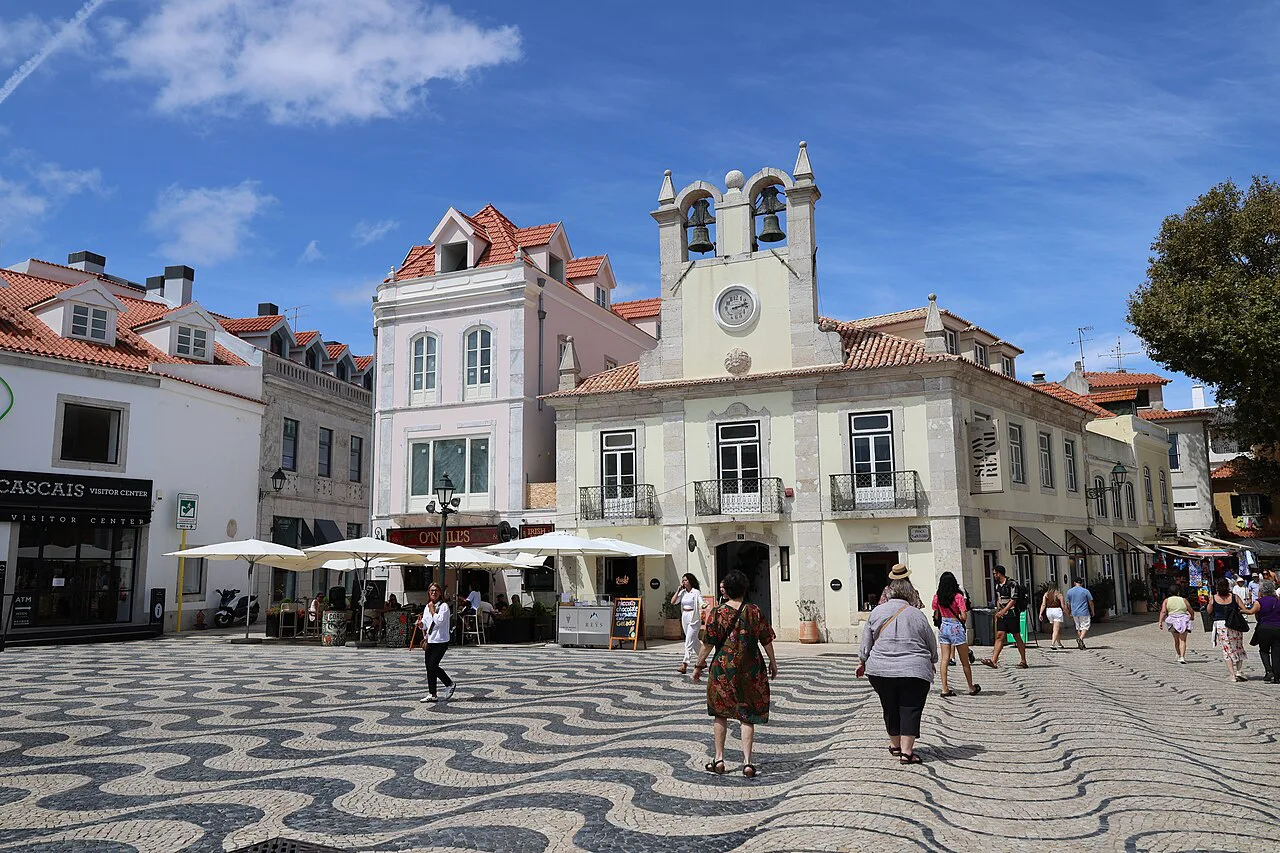
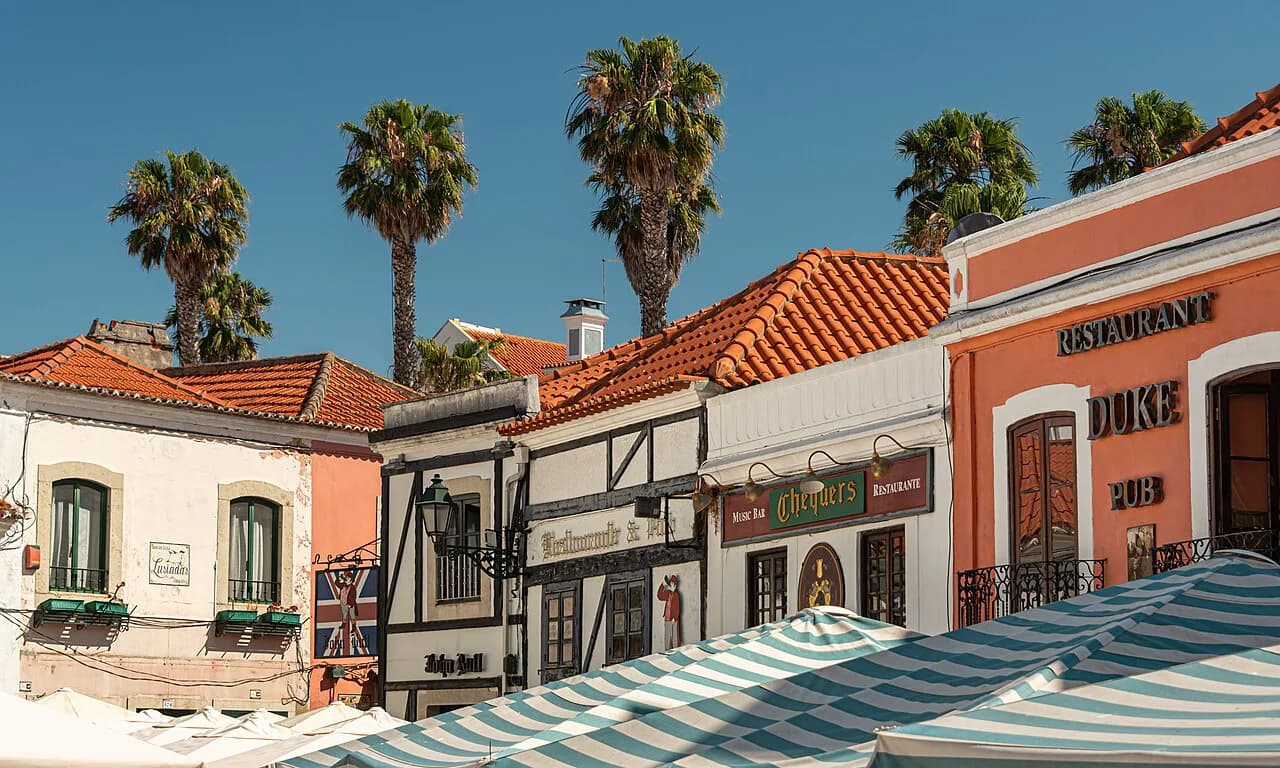
At the Lisbon end, Cais do Sodré is the terminus, on the riverfront just west of Praça do Comércio. Allow a little slack to find the right platform in a busy commuter station, especially with luggage. At the Cascais end, the train drops you steps from the central historic district, above the shopping streets and the palm-lined squares.
That arrival point matters for how you plan the day. You come out at the top of town, so the first ten minutes are about orienting yourself downhill towards the water. If you are only in town for a day, start with the centre and leave the coast road for the afternoon, which is roughly the order set out in our Cascais Itinerary.
Buying a ticket: fares, zapping and travel cards
The line sells single journeys rather than bookable seats, and the usual way to pay is a stored-value card you top up and tap, with a 24-hour ticket available that also covers buses and commuter services. That logic is worth understanding before you queue, because it means there is nothing to buy in advance.
For the exact current fare, check the CP fare pages or the ticket machines at Cais do Sodré on the day, since prices are set by the operator and change. Groups travelling together should price the 24-hour ticket against singles before committing.
Coach and bus options from Lisbon
Long-distance coach operators such as Rede Expressos and FlixBus connect Lisbon with towns across Portugal, but the coach is not the obvious pick for Cascais. A coach departure would leave from a Lisbon terminal rather than the city-centre riverfront, which adds a metro or taxi leg at the start of your journey.
The coach only makes sense if you are already staying near the bus terminal or arriving with a lot of luggage and a fixed departure. Guided day tours from Lisbon that combine Cascais with Sintra, Cabo da Roca and the coast are another option, useful if you would rather not plan the legs yourself.
Driving to Cascais and what parking means for your day
Driving gives you the coast road, Cabo da Roca and the beaches west of town on your own schedule, which is a real benefit over a day or two. The cost is parking: Cascais is a compact resort town with narrow streets in the historic centre, so expect a paid car park on the edge of the centre rather than kerb space.
Once the car is parked, it usually stays parked, because the centre, the marina and the Cidadela de Cascais are close enough to cover on foot. Drive only if the coast road is central to your plan, or if you are arriving with heavy luggage from outside Lisbon.
Arriving from Lisbon Airport
Humberto Delgado Airport sits north-east of the city centre, so getting to Cascais involves crossing Lisbon first. The usual route is metro or taxi into the centre, then the train from Cais do Sodré, which means allowing well over an hour in total. A taxi or ride-hailing car straight to Cascais is simpler but a cross-city journey of real length, so take a fixed quote in the app rather than guessing.
How Cascais is laid out once you step off
Cascais is small enough to cross on foot in an afternoon. The historic centre clusters around pedestrian shopping streets and small squares, the marina and the Cidadela sit to the west, and the coast runs south towards Estoril on one side and the wilder beaches towards Cabo da Roca on the other. The Bairro dos Museus, the town's museum quarter, groups several cultural venues within walking distance, including the Centro Cultural de Cascais.
Inland from the centre, the Parque Marechal Carmona is a green space for the town. Pair it with the museum quarter for a half-day that needs no transport at all, then use an afternoon for the coast.
One day or two in Cascais: what the journey time buys you
Because the transfer is short, Cascais works as a one-day outing from Lisbon: arrive mid-morning, walk the centre, see one museum, eat fish by the water and be back in the capital for dinner. Our guide to One Day in Cascais sketches that rhythm, and for a first visit it is enough to get the measure of the place.
Two days is the sweet spot. Day one takes the centre, the Cidadela and the museum quarter; day two heads west along the coast towards Cabo da Roca or takes the short hop to Estoril. Three days or more starts to justify a car or a few bus rides, and the Cascais Itinerary lays out how to sequence those extra days.
Cascais or Sintra for a day out of Lisbon
Sintra and Cascais pull in different directions. Sintra is a hill town of palaces and gardens that rewards an early start and a full day; Cascais is a level, walkable resort where the sea, the centre and the museums sit within minutes of each other. If you have one spare day and want palaces and woodland, choose Sintra; if you want a gentle coastal day with fish and a promenade, choose Cascais. Weigh Cascais vs Sintra side by side if you are still torn.
Whether Cascais is worth visiting at all comes down to whether you want a low-effort base with easy walking and good seafood. If that sounds like your kind of short break, the town delivers, and the Cascais Attractions: 7 Visitor Guides collection covers the sights in detail.
Should you take the train or drive?
For most short breaks, take the train. It is the least fussy option, it drops you within walking distance of the centre, and it frees you from parking in a town where the car is mostly a liability. Drive only if the coast road and Cabo da Roca are central to your plan.
Whichever you pick, plan around the arrival point: start downhill in the centre, put the museum quarter and Parque Marechal Carmona on the same half-day, and keep the coast for a dry afternoon. If you are still deciding between the coast and the hills, weigh up Cascais vs Estoril for a shorter coastal alternative.
Explore more Cascais guides
Frequently Asked Questions
How long does the train from Lisbon to Cascais take?
It is a suburban line, and the end-to-end run is generally quoted at between forty and sixty minutes. Check the current CP timetable for the service you intend to catch, since not every train has the same stopping pattern.
Is it cheaper to buy train tickets in advance in Portugal?
Not on this line. The Lisbon to Cascais service is a commuter route paid for by tapping a stored-value card or buying a ticket at the station, with no reserved seats and no advance fare. There is nothing to gain by booking ahead.
Which is nicer, Sintra or Cascais?
They suit different days. Sintra is a hill town of palaces and gardens that needs an early start and a full day. Cascais is flatter and easier to walk, with the centre, museums and seafront close together, so it works well for a relaxed one- or two-day break.
How much is a taxi or ride-hailing car from Lisbon Airport to Cascais?
Fares vary with traffic, time of day and demand, so take a fixed quote in the app before you accept a ride. The alternative is to take the metro or a taxi into central Lisbon and then the commuter train from Cais do Sodré.
Sources
Notes for your next Portuguese break
Optional updates to our town guides.
You might also like

Continue reading
More guides you'll find useful