Cascais Viewpoints: The Best Miradouros and Coastal Views
Cascais viewpoints worth seeking out, from old-town miradouros to the Santa Marta lighthouse and the Guincho dunes, with how to reach each on foot.
On this page
The best viewpoints in Cascais are Miradouro Fernandes in the old town, the clifftop Miradouro da Azarujinha on the way to Estoril, the seafront by the Farol de Santa Marta, and the big Atlantic panorama at Praia do Guincho and the Cresmina dunes to the west. The first three sit within walking distance of the centre; the last needs a bus, car or bike.
This guide groups the viewpoints by how you reach them from the centre rather than as a flat list, so you can build a half-day route on foot and treat the western coast as a separate outing. It also flags where the wind, the hills and the distance genuinely change the plan.
Miradouro Fernandes and the old-town rooftops
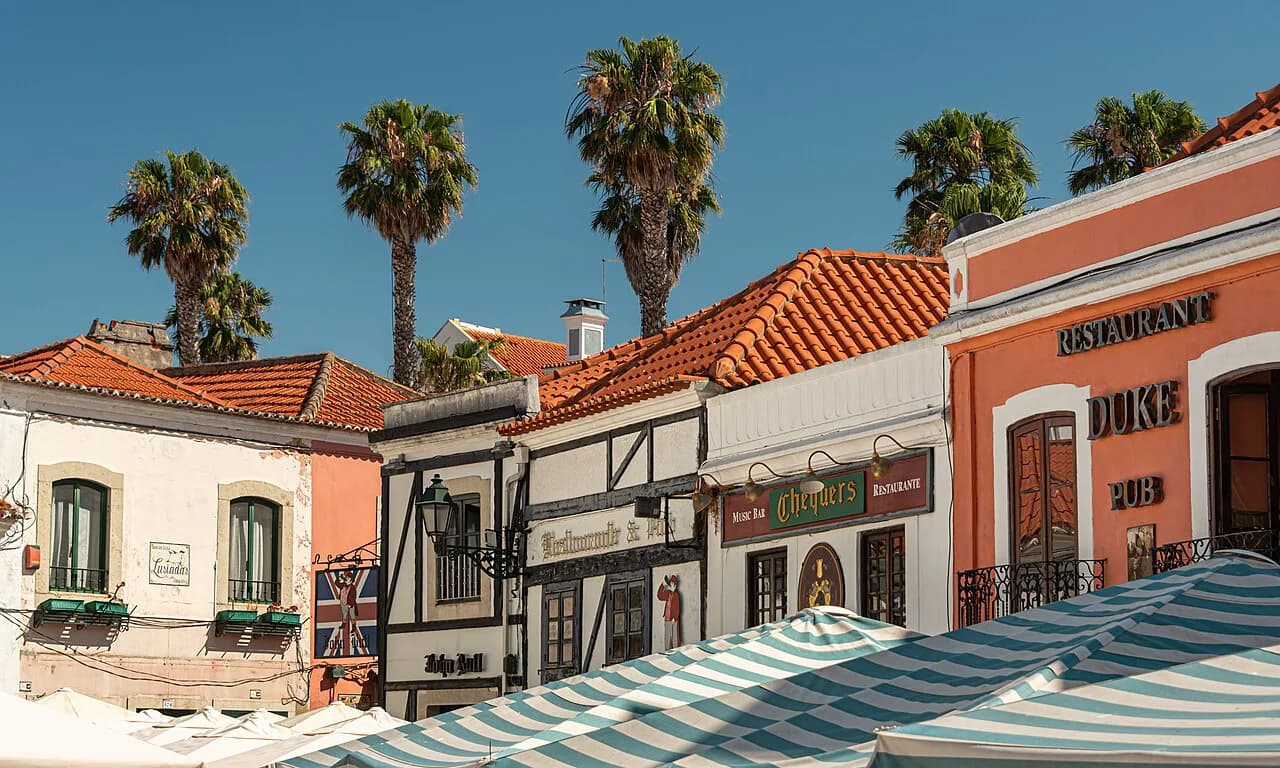
Miradouro Fernandes sits in the old town and gives you the classic Cascais composition: terracotta roofs, white walls and a slice of blue water beyond. It is the natural first stop because you reach it on foot from the centre.
The old town's lanes climb, so treat the miradouro as the top of a slow wander rather than a single destination. A photographer's guide to Cascais lists Miradouro Fernandes among its favourite framing spots in the town, alongside the seafront and the western beaches.
Pair it with the surrounding streets, where tiled façades and small squares reward a slower pace. If you want the architecture and history behind what you are looking at, the walking tour covers the centre on foot.
Miradouro da Azarujinha and the clifftop walk towards Estoril
Miradouro da Azarujinha is the clifftop stop on the coastal path that runs from Cascais towards Estoril, with the small Praia da Azarujinha below and open Atlantic ahead. It works best as part of the walk rather than a stand-alone trip, because the value is in the string of sea views along the way.
The path is exposed, so a windy day will cut a lingering visit short and a calm evening will keep you longer than planned. Wear proper shoes for the uneven sections and keep to the marked route rather than scrambling down to the water.
Trails around Cascais are mapped for walkers who want elevation and sea views, which is useful if you plan to extend the clifftop stretch into a longer route. Check distances before committing, since the coast rises and falls more than the map suggests.
Farol de Santa Marta and Praia de Santa Marta
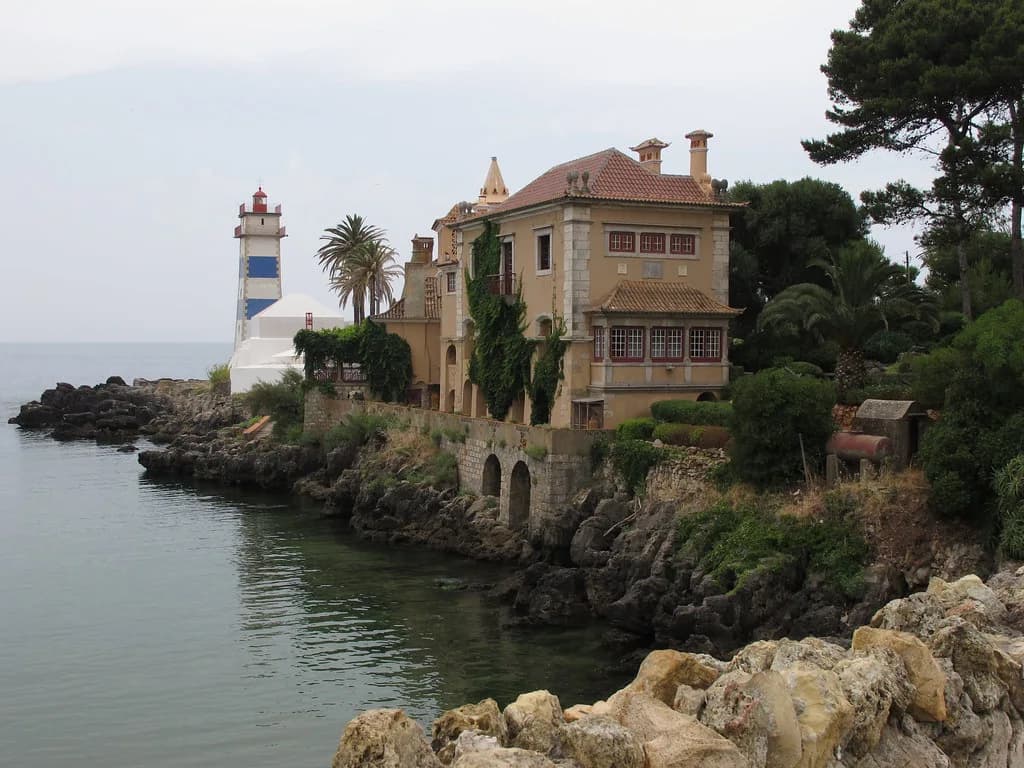
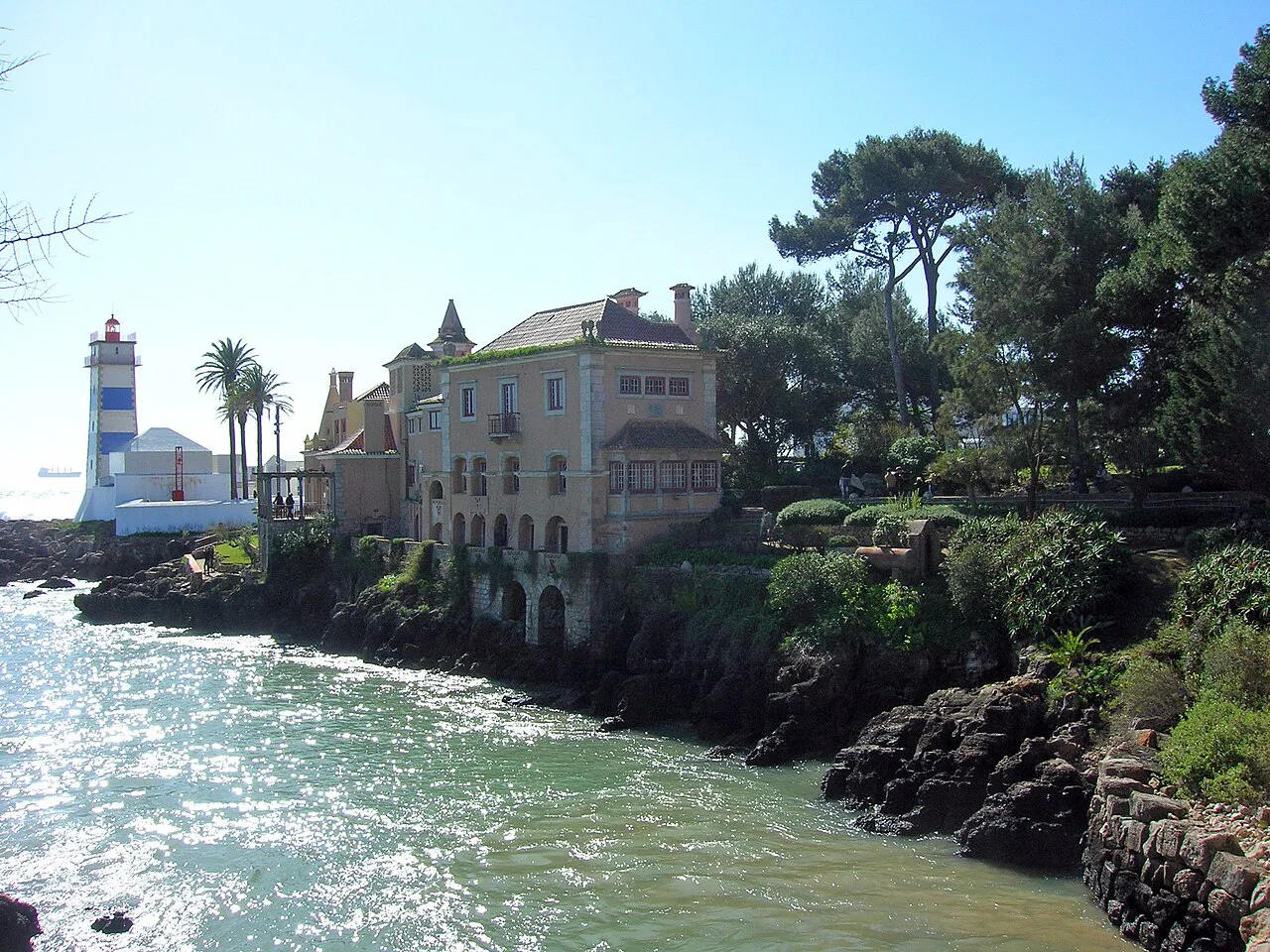
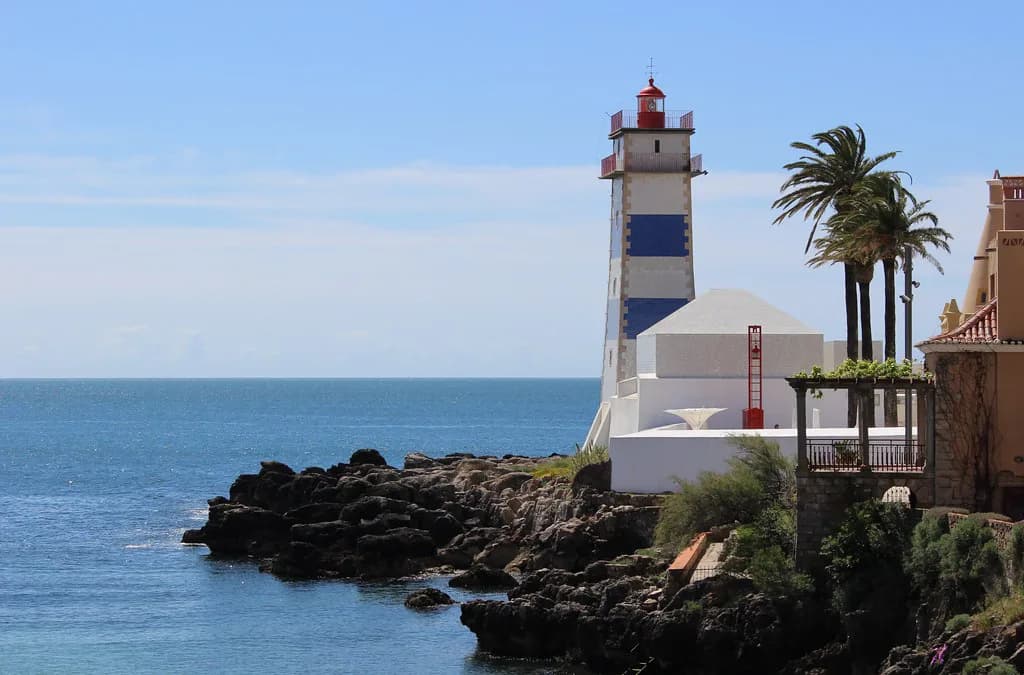
The Farol de Santa Marta is a lighthouse on the coast just north of the centre, and its clifftop setting makes it one of the most photogenic stops in town. It is unstaffed but still in working order, so treat it as a view and a landmark rather than an attraction you tour inside.
Next to it, Praia de Santa Marta is a small cove framed by rocks, which gives you a different angle on the same stretch of coast. The combination of lighthouse, cliff and beach in one short stop is why this area earns its place on a viewpoint route.
The beachfront promenade: views from the old town seafront
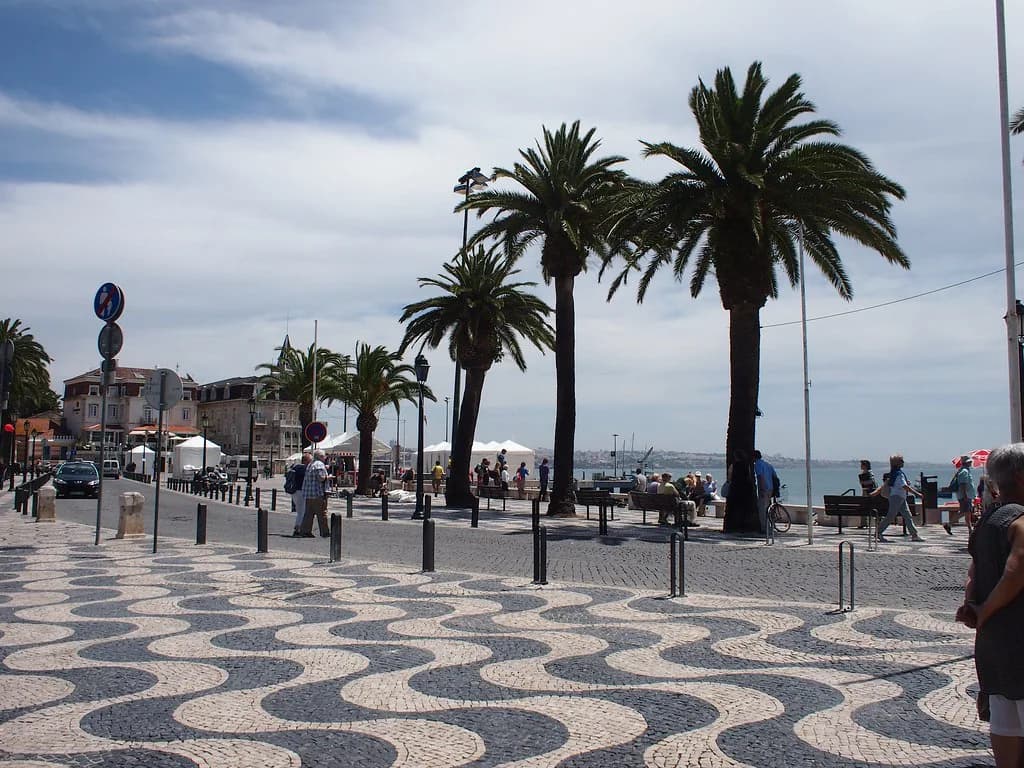
The beachfront promenade is the easiest viewpoint in Cascais because it asks little of you: no climb and no timetable. Walk it from the old town towards Santa Marta and Praia da Rainha and you get a continuous sequence of sea and town views.
Praia da Rainha, tucked into a tiny cove below the town, is the most enclosed of the central beaches and the one that best shows how the town folds around the water. It is a viewpoint as much as a beach, and a short detour off the promenade.
Casa da Guia and the Boca do Inferno side of the coast
Casa da Guia is a clifftop complex west of the centre that photographers treat as a favourite local spot, with terraces over the water and an easy walk back along the coast. It suits a slower hour rather than a quick photo stop.
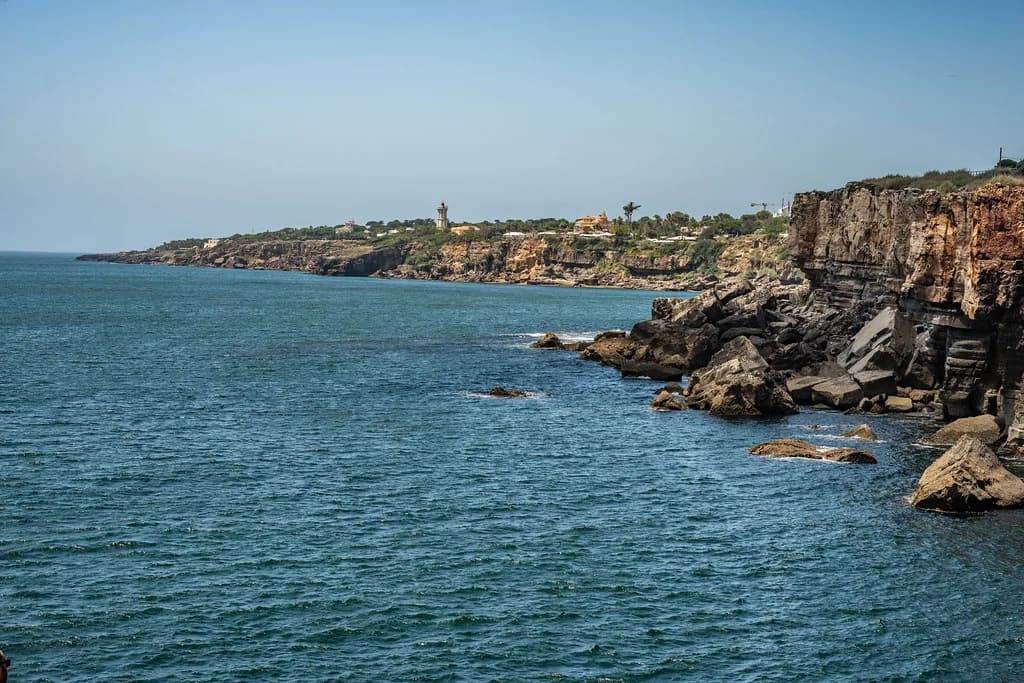
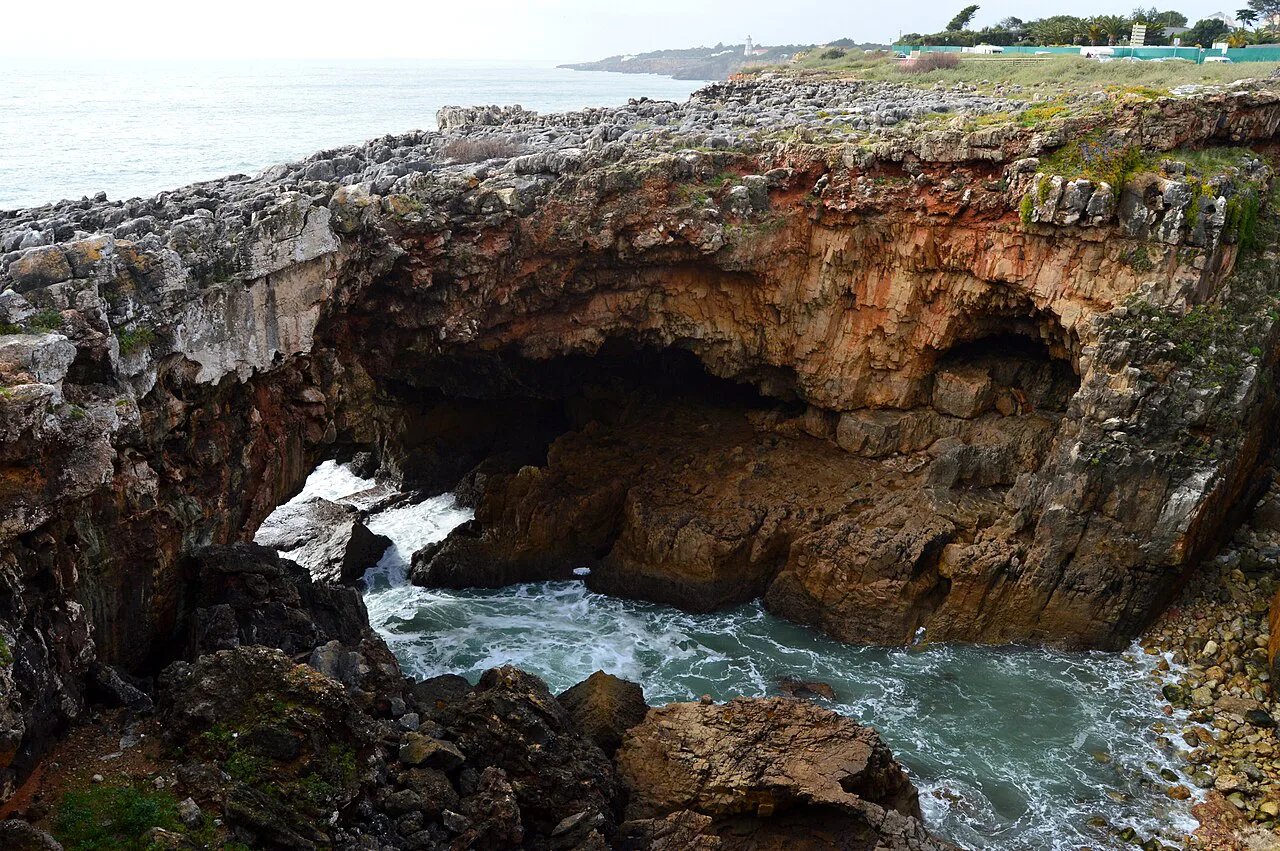
Continue west and the coastline turns rugged, with cliff edges and viewpoints along the Boca do Inferno side. Keep back from the rim on windy days and stay behind any barriers.
If your visit falls on a wet or windy day, the town's museums make a sensible substitute for cliff-edge viewpoints, since several sit close to the centre. They also explain the royal-resort history that shaped the seafront you have been walking.
Praia do Guincho and the Cresmina dune boardwalk
Praia do Guincho is the big Atlantic panorama: deep blue water, sand and wind, with a wooden boardwalk through the dunes leading to the beach. It is the westernmost and most dramatic viewpoint on this list, and the one that most rewards an evening visit.
Do not plan to walk there from the town station: the source puts it at 7km one way and recommends a car, bus or electric bike or scooter instead. That distance applies to Guincho, not to the central viewpoints, so keep the two outings separate.
The Cresmina dune system covers about 66 hectares above Praia da Cresmina, with a circular boardwalk and a café at the top of the dunes. Stay on the designated paths and behind the fences, because the dune habitat is fragile and the sand is constantly on the move.
Forte de Cresmina and the two viewpoints either side of Praia da Cresmina give you a second angle on the same coast without another long walk. Cresmina is often called Guincho, but they are technically different beaches, so use the names when asking directions.
Linking the viewpoints on foot: a half-day order
Start at Miradouro Fernandes in the Cascais Old Town, walk down through the lanes to the beachfront promenade, then follow the seafront past Praia da Rainha towards the Farol de Santa Marta and Praia de Santa Marta. That sequence keeps the climbing at the beginning and the sea on your left on the way out.
If you have the energy, continue along the clifftop towards Miradouro da Azarujinha and on towards Estoril, then turn back when the light or the wind dictates. Treat Casa da Guia as an optional extension rather than a fixed stop.
Save Guincho and the Cresmina dunes for a separate half-day by bus, car or bike, ideally ending at sunset. Trying to combine both in one walk turns a pleasant morning into a long march.
Honest trade-offs: wind, hills and short visits
Guincho and Cresmina are wild and often windy, which is part of their appeal but also the reason a viewpoint visit there can be brief. Take a layer, expect sand in the air and do not count on a calm picnic.
In the old town the lanes climb steadily, so the miradouros are a reward for a short ascent rather than a flat stroll. Anyone with limited mobility should prioritise the promenade and the Santa Marta area, which give sea views with far less gradient.
For a one-day visit, pick the old town and promenade viewpoints and leave the western coast for a longer stay. The central stops sit close together and need little planning, which makes them the safest bet when time is short.
Which viewpoint suits your day?
Choose Miradouro Fernandes and the promenade if you have an afternoon, the Azarujinha clifftop if you want a walk towards Estoril, and Guincho with the Cresmina boardwalk if you can arrange transport and want the full Atlantic view. The Santa Marta lighthouse area is the best single stop that combines a landmark with a sea view.
The viewpoints themselves involve no entry charge, so the main costs are transport to the western coast and your own time. Check bus times for Guincho before you set out, since the distance rules out an easy walk back after sunset.
Explore more Cascais guides
Frequently Asked Questions
Is Cascais worth seeing for the views alone?
Yes, if you keep the route compact. The old-town miradouro, the promenade and the Santa Marta lighthouse area give you a full morning of sea views on foot from the centre, with no transport needed. The western beaches add the big panorama but require a bus, car or bike.
Which is nicer, Cascais or Sintra?
They offer different things rather than competing on the same terms. Cascais is a coastal town of cliffs, beaches and promenades, while Sintra is an inland town of palaces and wooded hills. If views over water are the priority, Cascais is the clearer choice.
Sources
Notes for your next Portuguese break
Optional updates to our town guides.
You might also like
Continue reading
More guides you'll find useful