Cascais Walking Tour: A Self-Guided Route for a Short Break
Plan a self-guided Cascais walking tour through the old town lanes, marina and citadel, with the route in order, walking times and how to split a short break.
On this page
This self-guided Cascais walking tour fits comfortably into half a day, because the old town lanes, the marina, the citadel quarter and the town park sit close enough together to cover on foot without a bus, a train or a taxi. The route below puts the stops in order, gives realistic walking times and explains what to look for at each one. It is written for a short break of one to four days, so it also shows how to split the walk if you would rather spread it over two or three mornings.
Cascais sits at the end of the Lisbon commuter line on the Estoril coast, which makes it an easy base for a compact city break and an easy day out from the capital. The town itself is small, hilly in places and best taken at a slow pace rather than rushed as a checklist.
What a Cascais walking tour covers
A good Cascais walk covers three things in one continuous loop: the old town, the waterfront and the citadel quarter, with the town park as a natural ending. That combination gives you streets, sea views, a fortress and green space without long transfers between them. The centre is compact, so you can walk the whole thing in an afternoon and still stop for coffee.
Plan for about two to three hours of actual walking at a relaxed pace, more if you go inside the cultural centre or sit in the park. Add a proper lunch stop and the half-day becomes a full one. Cobbles and short hills are part of the deal, so wear shoes that cope with uneven paving.
Cascais promotes itself around three themes that map neatly onto this route: exceptional beaches, fish and seafood, and an entire neighbourhood of museums, parks and gardens to explore year-round. That framing is a useful test of how you build your day if you have only one afternoon in town, because you will inevitably choose between the sea and the museums. This route keeps both in play by running along the waterfront between cultural stops.
Where to start and how the town is laid out
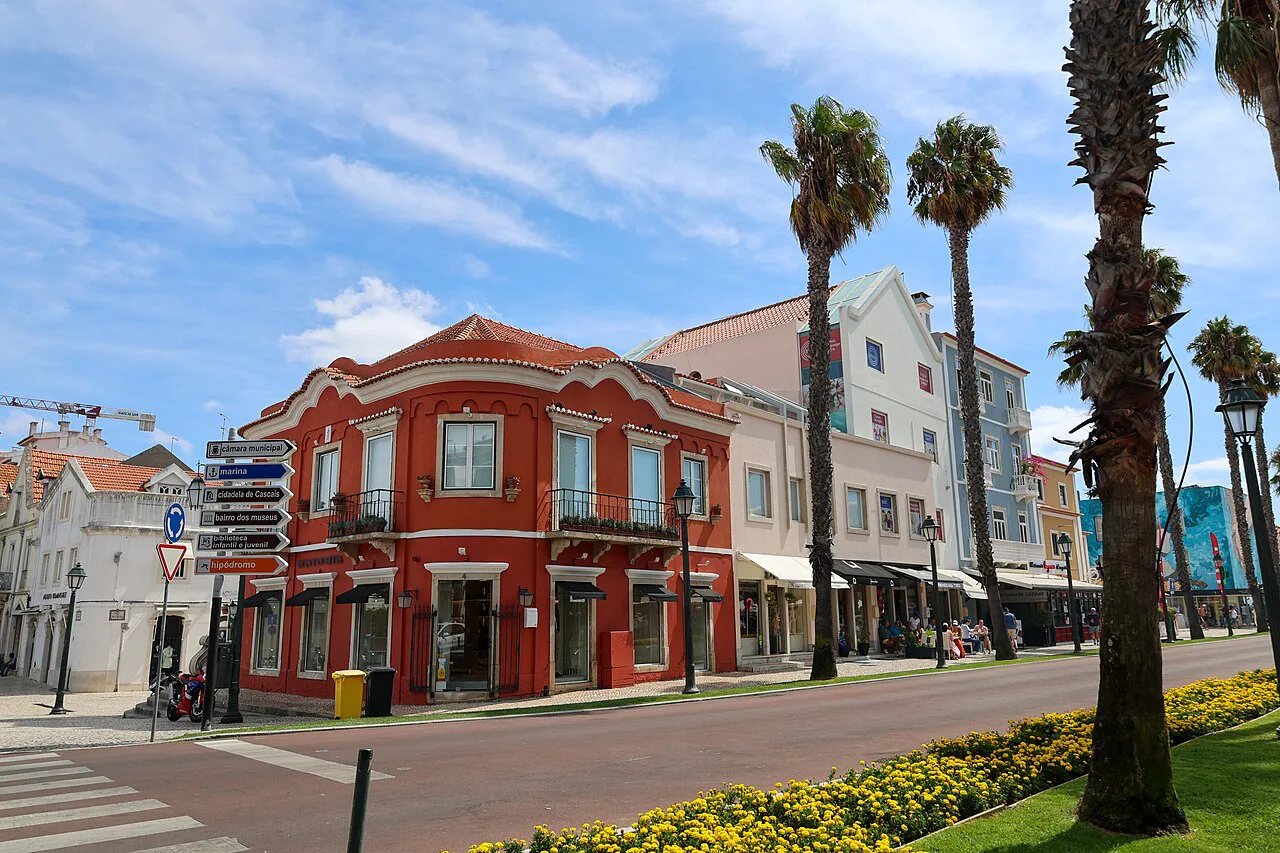
Start at the top of the old town rather than at the station, so the walk flows downhill towards the water. From the centre, the lanes drop towards the marina and the seafront, with the citadel to the west and the town park just beyond the old streets. That downhill direction also saves your legs for the museum and park stops at the end.
Cascais rewards a loose shape rather than a fixed line. The Centro Histórico de Cascais is a mesh of narrow streets rather than a single main drag, so you will wander and double back a little. Treat the stops below as anchors and let the lanes between them fill in the gaps.
If you arrive by train and want to walk straight into the route, aim for the heart of the old town first and leave the waterfront for later in the day, when the light on the sea is better and the promenade is livelier. This order also means you finish near the park, where you can sit down rather than retrace your steps uphill.
Stop 1: the old town lanes and the parish church
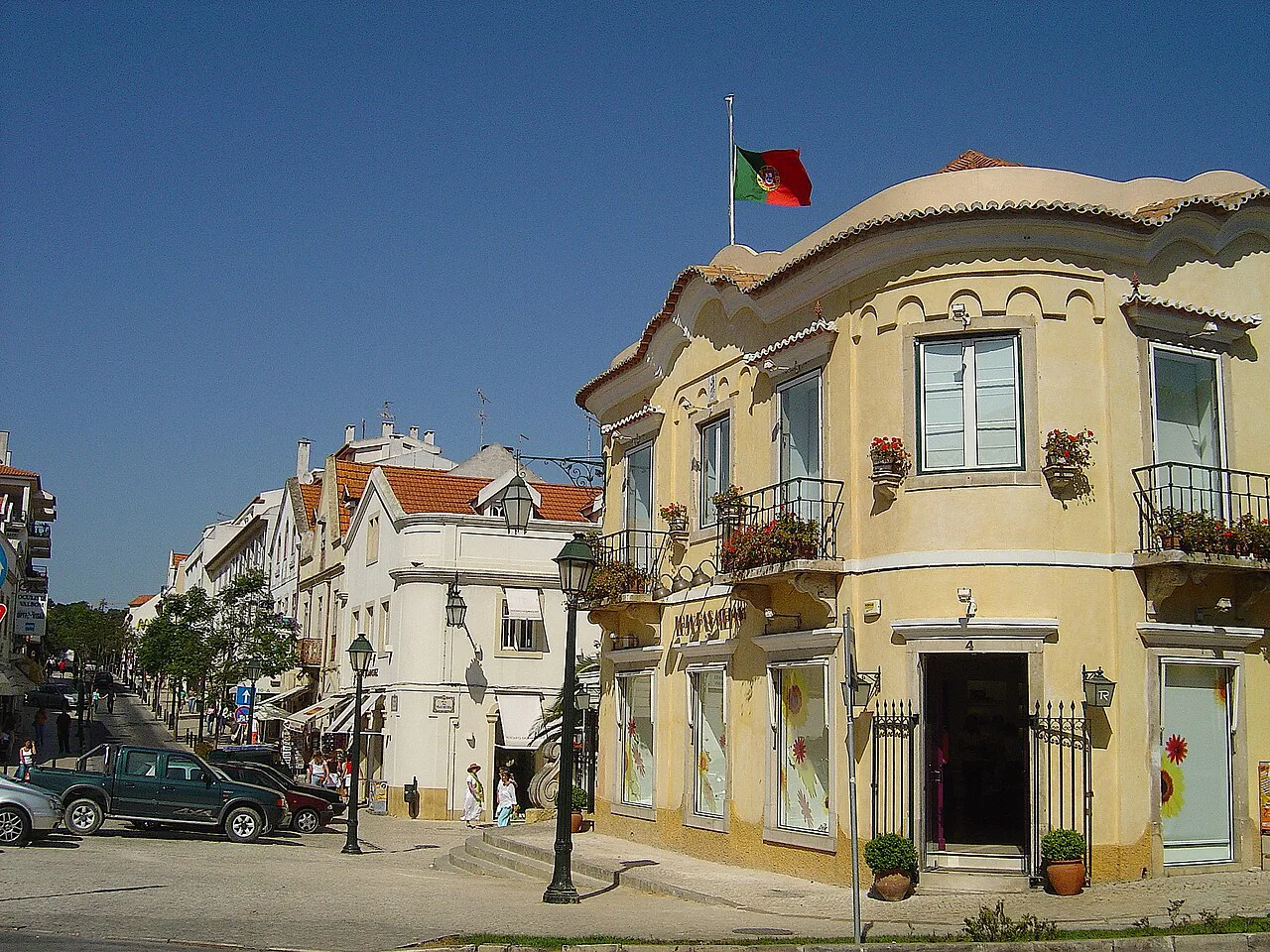
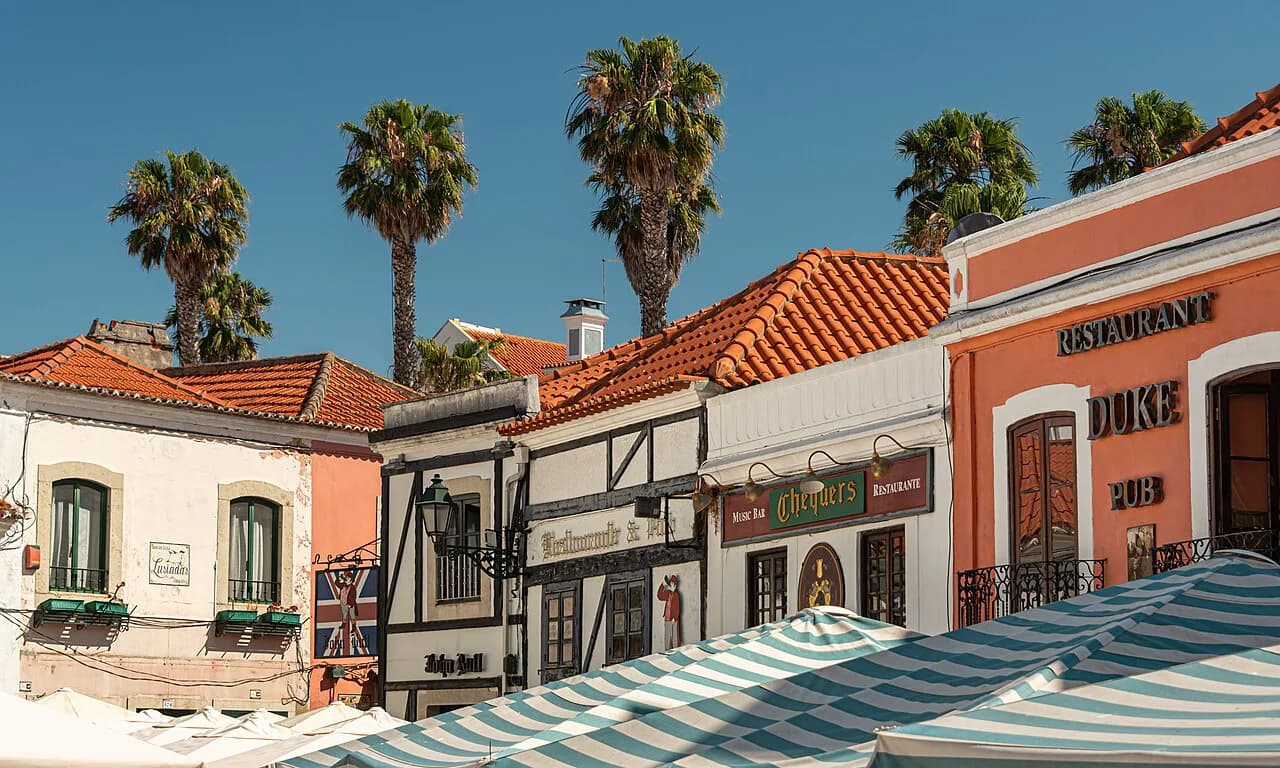
Begin among the whitewashed lanes of the old town, where the scale is small and the details are the point: tiled facades, wrought-iron balconies, small shops and pastelarias tucked into corners. This is where Cascais feels most like a Portuguese town rather than a resort. Allow twenty to thirty minutes to loop through without a fixed purpose.
The parish church of Cascais is the natural architectural anchor for this stretch, standing within the old streets rather than on the waterfront. Step inside if it is open, and look at the altarpiece as well as the tiled surfaces elsewhere in the centre, since Cascais is good for azulejos throughout the old town. Coverage of the town's places of worship, including opening patterns, sits in the wider guide to churches in Cascais.
If tiles are your interest, slow down here rather than at the waterfront, because the old town has the richest concentration of decorated facades and entrances along the route. The dedicated guide to azulejos in Cascais helps you read what you are seeing instead of walking past it. Keep the church and the tiled streets together as one stop so you do not break up the old town twice.
Stop 2: the marina and the seafront promenade towards Estoril
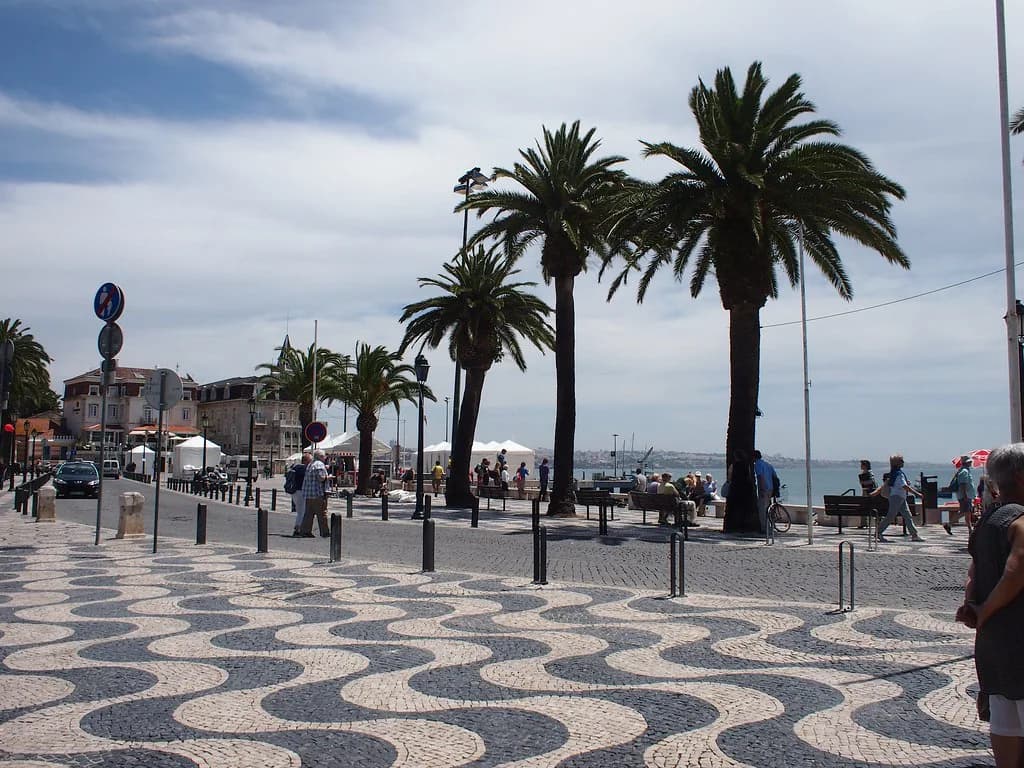
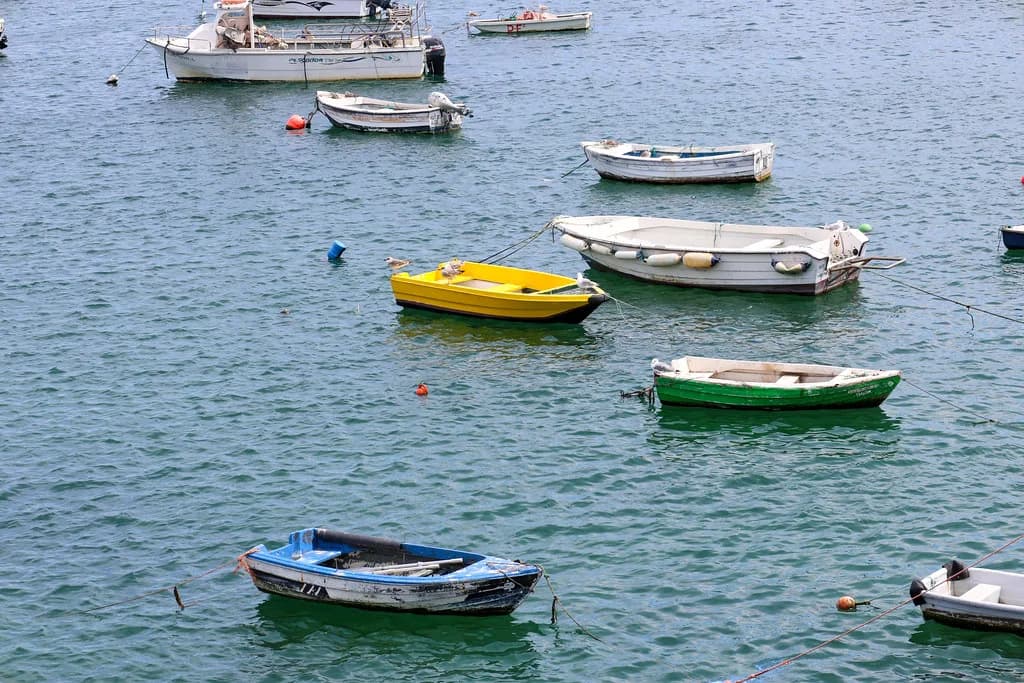
From the old town, walk down to the marina and follow the seafront east for as long as the mood takes you. The promenade towards Estoril is flat, wide and easy, which makes it the most relaxed part of the route and the best place to pick up speed after the lanes. Boats are moored in the marina and the open sea opens up beyond the harbour wall.
You do not need to walk all the way to Estoril to get the reward. A twenty to thirty minute out-and-back along the promenade is enough for the sea air and the view back to town, and it keeps the route within a half day. Treat the promenade as an extension rather than a separate excursion; the seafront is part of the same walk.
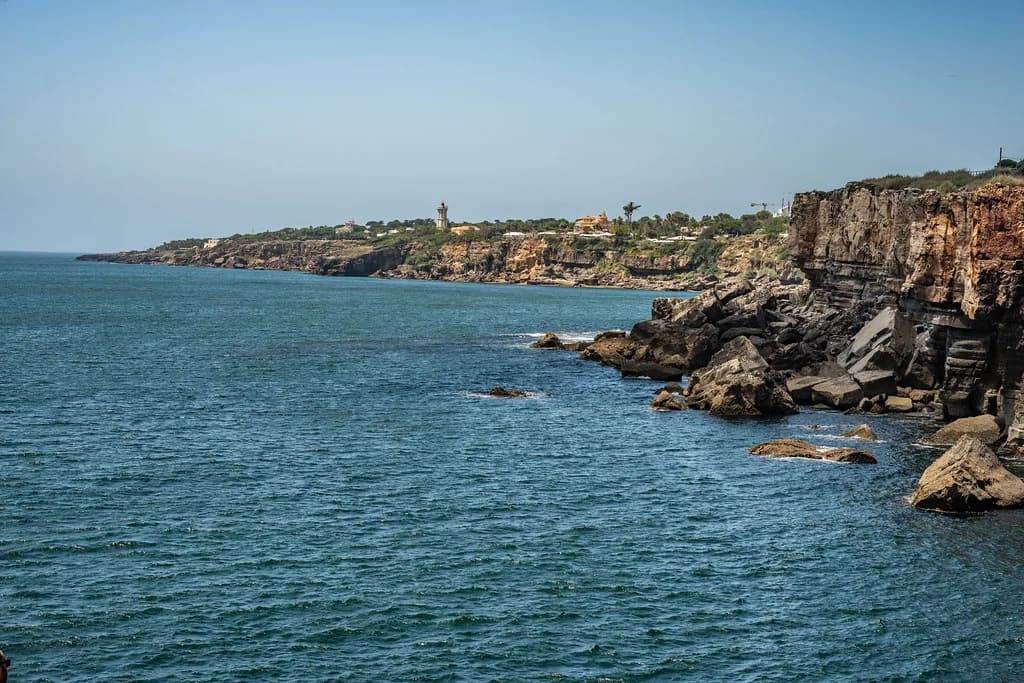
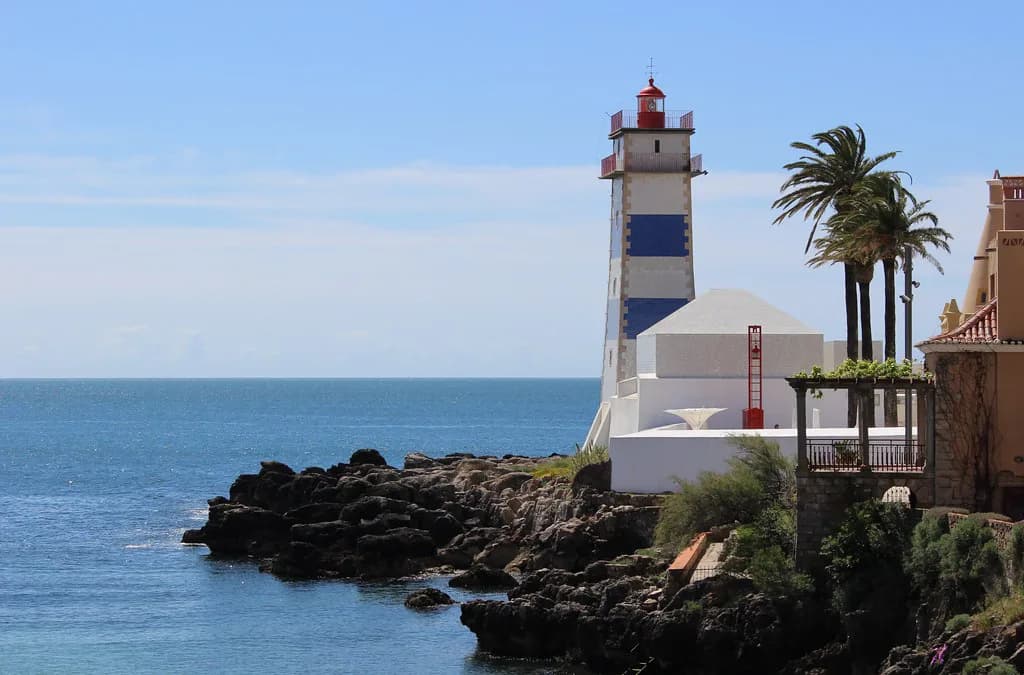
The waterfront is also where you will find the lighthouse at Santa Marta, a small landmark that marks the eastern edge of the walkable centre and gives you a natural turning point if you want a clear stopping place. Details on it and the rest of the town's sights sit in the guide to things to do in Cascais.
Stop 3: the Cascais Citadel and the Pousada
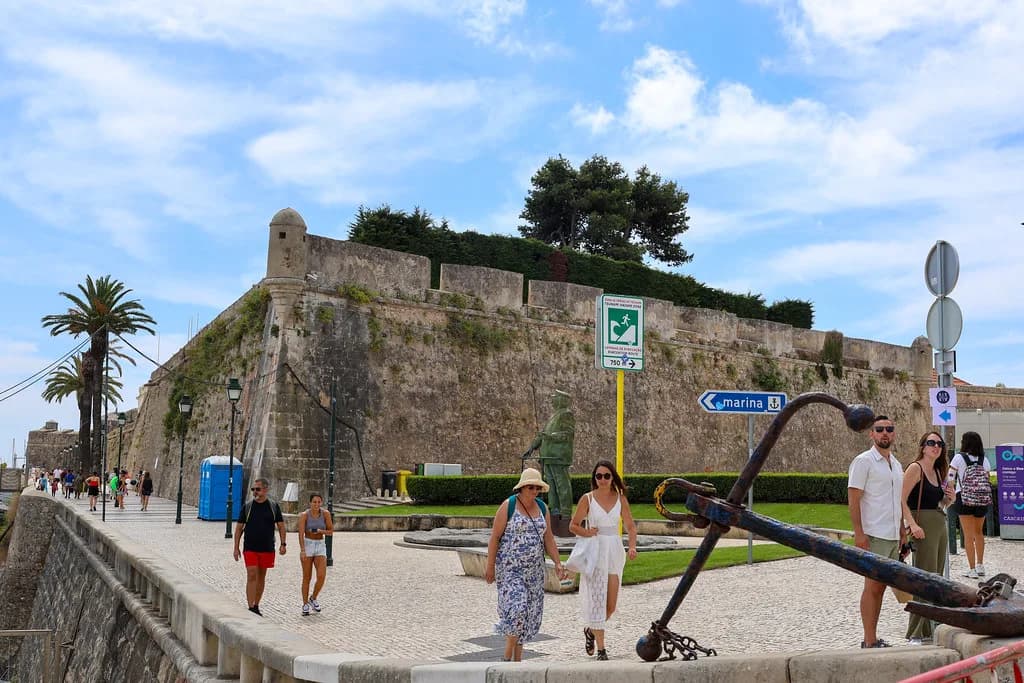
Turn west to the citadel quarter, the old fortress area whose walls enclose a historic hotel within the old defensive circuit. Walk the outer edges and the gateways rather than expecting a museum interior, because the appeal here is the scale of the fortifications and the position above the water. It is a short stop, perhaps fifteen to twenty minutes, and a good place for photographs.
This is also a sensible pause point if you have split the walk across two days, since the citadel sits at one end of the seafront and pairs naturally with the marina on a second morning. Keep the citadel and the marina in the same half of the route, and reserve the old town and the park for the other.
Stop 4: the Centro Cultural de Cascais and the Bairro dos Museus
The Centro Cultural de Cascais anchors the Bairro dos Museus, the town's museum neighbourhood, and it is the stop where you decide whether to spend time indoors or press on. It runs exhibitions rather than a fixed collection, so what you see depends on the programme in place when you visit; the venue's own pages set out its current exhibitions, accessibility and contact details.
Treat the Bairro dos Museus as a cluster and choose one or two venues rather than trying to tick off the whole neighbourhood in an afternoon. The wider guide to museums in Cascais helps you pick between them, including the Museu da Vila, if you want the town's history in one place. Spreading the museums across a second day is often the better trade if you are staying more than one night.
Stop 5: Parque Marechal Carmona
Finish in Parque Marechal Carmona, the town park next to the centre, which gives you shade, paths and a place to sit after the cobbles. It is the natural full stop to the walk and a good reason to keep the pace gentle earlier on. Families and tired walkers will both be glad of it here rather than at the start.
The park is managed by Cascais Ambiente as one of the municipality's green spaces, so its own page is the place to confirm access and any current restrictions before you go. Check that page for the latest park information rather than relying on older descriptions. It is also the easiest place on the route to spend an unstructured hour.
How long the walk takes and how to split it
One day is enough for the full route at an easy pace, with time for a long lunch and one museum. Two days lets you give the old town and museums a morning each, with the waterfront and park on the second afternoon. Three days is generous but works well if you also want a half day out of town.
A practical split is: day one for the old town, marina and promenade; day two for the citadel, the Centro Cultural and whichever museum you choose; and day three for the park plus anything you skipped. That keeps each day under three hours of walking. Doing the whole loop in one go is fine, but it leaves little room for lingering.
Self-guided versus guided
For most visitors the map on your phone plus the route above is enough, because the centre is small and the stops are close together. A self-guided smartphone tour is a reasonable middle option if you want commentary without a group, and app-based audio guides exist for Cascais in multiple languages. Compare what a given product actually covers before you rely on it, since these apps vary widely.
A paid guided walk earns its place when you want someone else to handle the history, the timing and the navigating in one go, or when you are travelling with people who would rather follow than plan. Booking platforms list Cascais tours and excursions, so check what is actually included and how long the walk runs before committing.
If you are weighing a guided walk against doing it yourself, ask what you want from the day: structure and interpretation, or freedom to stop for a pastel de nata whenever you like. Traveller forums carry first-hand accounts of walking tours in Cascais that can help you judge whether a particular format suits you. Read those with the usual caution, since experiences vary by guide and group size.
Cascais or Sintra: which suits a walking day better
Cascais is the easier walking day. The centre is flat-ish, compact and coastal, and the route above needs no transport between stops. Sintra is hillier and more spread out, with its palaces and gardens set apart from the town centre, so a walking day there involves more climbing and more planning. If you want a gentle, self-contained day on foot, Cascais wins.
Sintra still wins on sheer spectacle, with its palace-and-garden landscape, so the choice is really between convenience and drama. Cascais suits a short break that mixes sea air with museums; Sintra suits a day built around monuments. Both are reachable from Lisbon, though Sintra's sights sit further from the station, so allow more time there.
Is the full loop worth it, or just the old town?
Walk the full loop if you have a day to spare, because the marina, citadel and park each add something the old town alone cannot give you: sea air, fortifications and a place to rest. If you have only a morning, the old town lanes and the waterfront are the essential pair. Either way, keep the Centro Cultural and one museum as your indoor option for the middle of the day.
Pin the route down to a day and a start time before you arrive, then confirm the cultural centre's current programme and the park's access on the official pages before you set out.
Explore more Cascais guides
Sources
Notes for your next Portuguese break
Optional updates to our town guides.
You might also like
Continue reading
More guides you'll find useful