Azulejos in Coimbra: Where to See the City's Painted Tiles
Azulejos are Portugal's painted tin-glazed tiles, and Coimbra wears them on university buildings and street façades. Here is how to read and find them.
On this page
Coimbra is a tile city, and the quickest way to see azulejos is simply to walk uphill through the old centre, where blue-and-white panels cover the façades of old university buildings. Azulejo means a painted, tin-glazed ceramic tile, an Iberian craft used as much for decoration as for protecting walls. This guide explains what you are looking at, how to tell the main styles apart, and how to link the best tile-spotting into a half-day route.
It is also a practical guide: what to look for on a panel, where tiles sit relative to the main sights, and how to buy new work from a Coimbra maker without mistaking a showroom for a museum. For the wider sightseeing picture, our guide to things to do in Coimbra sets the tiles alongside the monuments.
What azulejos are and why they cover so much of Coimbra
An azulejo is a glazed ceramic tile painted with a design, usually in cobalt blue on a white ground, though colour appears too. The tradition is Iberian rather than purely Portuguese, and the tiles served a practical purpose as well as an ornamental one, cladding walls that would otherwise weather badly. That double role explains why you meet them on ordinary street fronts as often as inside churches.
Coimbra's density of tiled surfaces comes from its building stock: old university and civic buildings, church walls and townhouses all use the same material. Treat the town as an open-air gallery and you will notice panels you would otherwise walk past. The best results come from looking up at first-floor level, where façades keep their original cladding.
How to read a Coimbra panel: blue-and-white versus polychrome
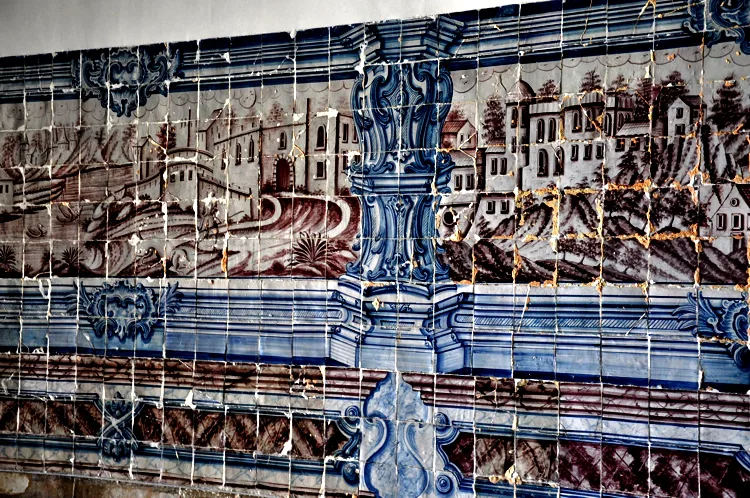
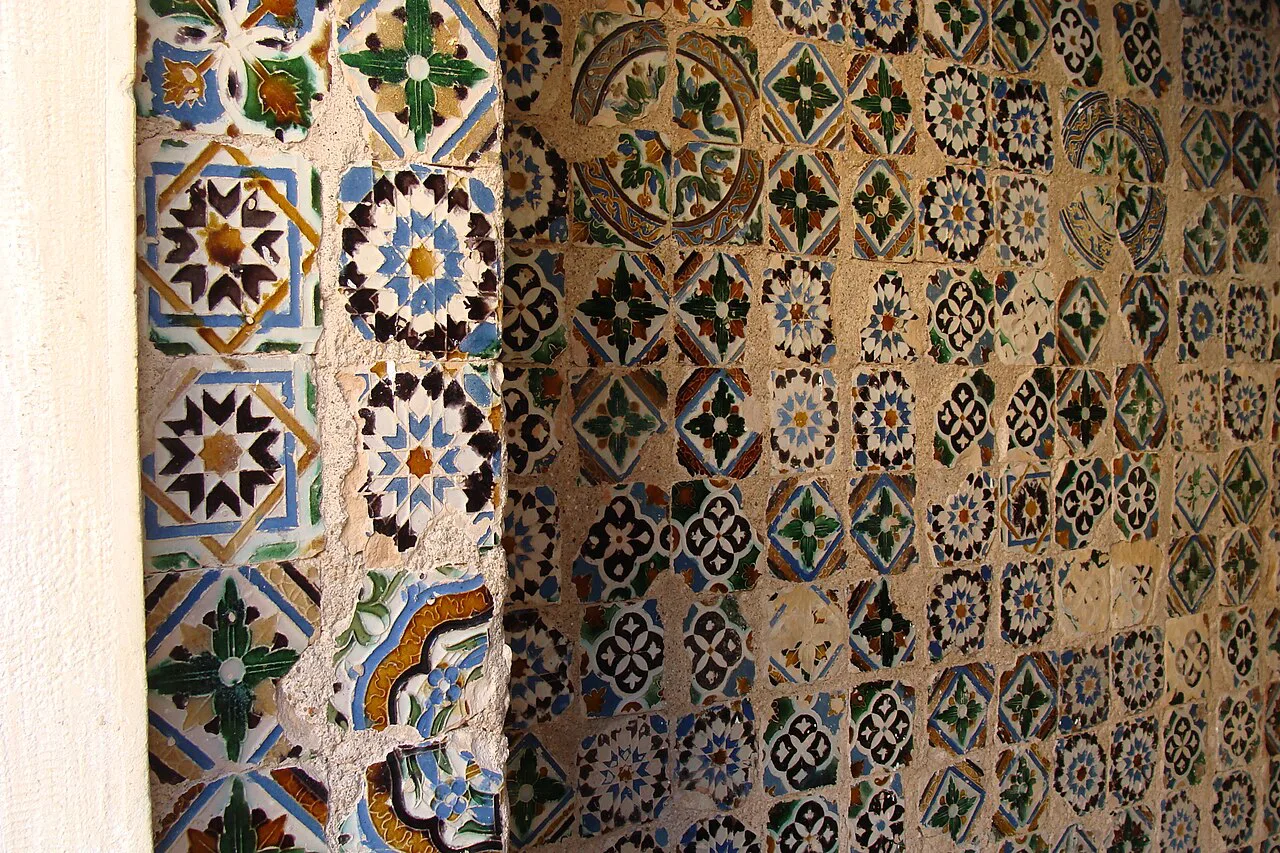
The distinction that matters most is date. Coimbra's ceramics tradition includes 17th-century blue work and 17th-century colour work, alongside a 15th-century line, which tells you the city's makers moved between polychrome and blue-and-white fashions across several centuries.
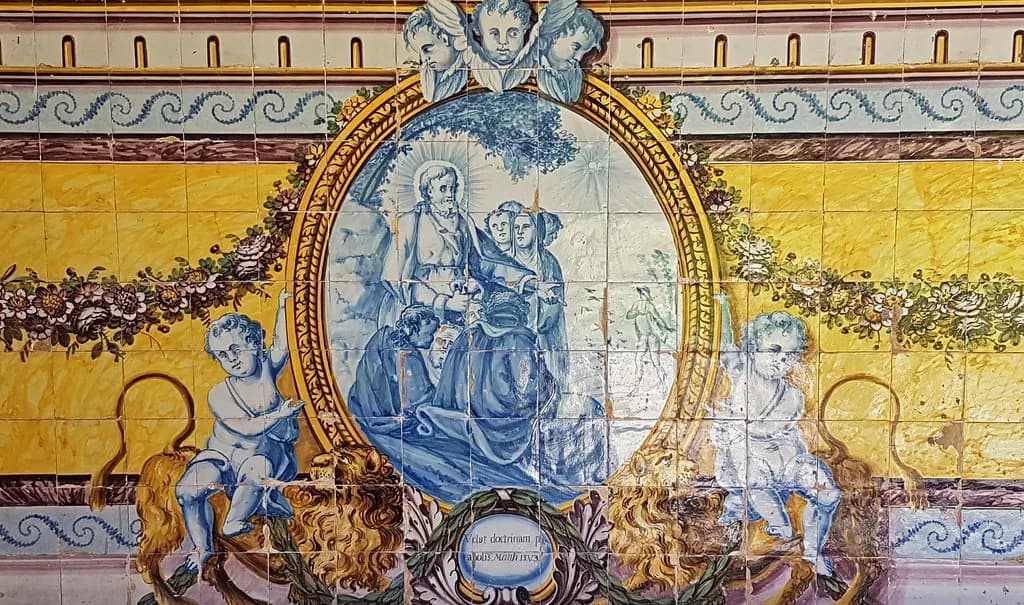
Blue-and-white panels tend to read as a single picture, with the design repeated across a run of tiles; polychrome work uses a wider palette and often busier patterns. When you look at a façade, check whether the pattern is a repeating module or a composed scene, because that tells you quickly which tradition you are seeing. Neither is 'better': the blue style is simply the more familiar look of Portuguese tiled fronts, while colour pieces often stand out on showier facades.
Look closely at the joins between tiles. A composed scene will have figures or ornament that continue across the grout lines, whereas a repeating pattern restarts at each tile edge. This is the fastest way for a non-specialist to date a panel roughly and to spot later replacement tiles, which often sit slightly out of register.
University of Coimbra façades and the blue tilework on old buildings
The most photographed tilework in Coimbra sits on the old university buildings, where blue tiles with floral motifs decorate the façades. The ornament is decorative rather than narrative work: you are reading pattern, not a story.
Set the tiles in context by pairing the façades with the university buildings themselves, which are the centrepiece of the city's sightseeing. Our walking tour guide covers the courtyards and halls that sit behind the tiled exteriors.
The practical point is that the best tile façades sit on the climb between the lower town and the university quarter, so you see them on the way up rather than as a separate errand. Walk slowly on the steep sections and keep to the shaded side, where the glaze catches light without glare.
Church interiors and façades where tiles carry the decoration
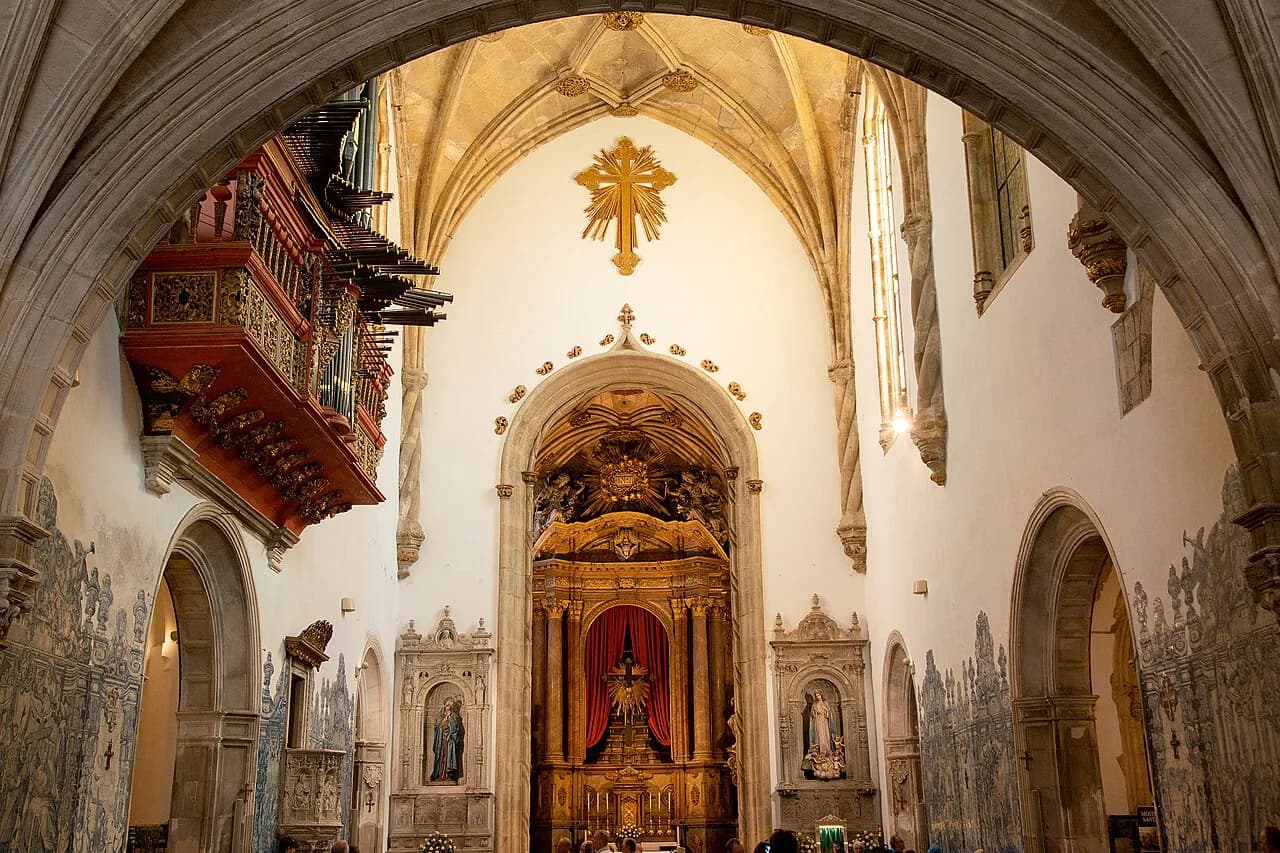
Church walls are where azulejos do the most work as interior decoration, and Coimbra's churches are worth entering for the tile panels alone. The Coimbra cathedral, the Sé Velha, anchors the upper old town and makes a natural first stop on a tile walk.
Expect the strongest tiled interiors in the older churches rather than the later ones, and look at the lower walls, which is where panels usually sit. Photography is often restricted in religious buildings, so check signage at the door rather than assuming you can use a flash.
If tiled church interiors are your main interest, build the day around two or three churches rather than ticking off every one; the repetition dulls the eye and the best panels deserve a slow look. Our guide to churches in Coimbra sets out which buildings are worth the detour.
Street-level azulejos: house fronts, fountains and stairwalls
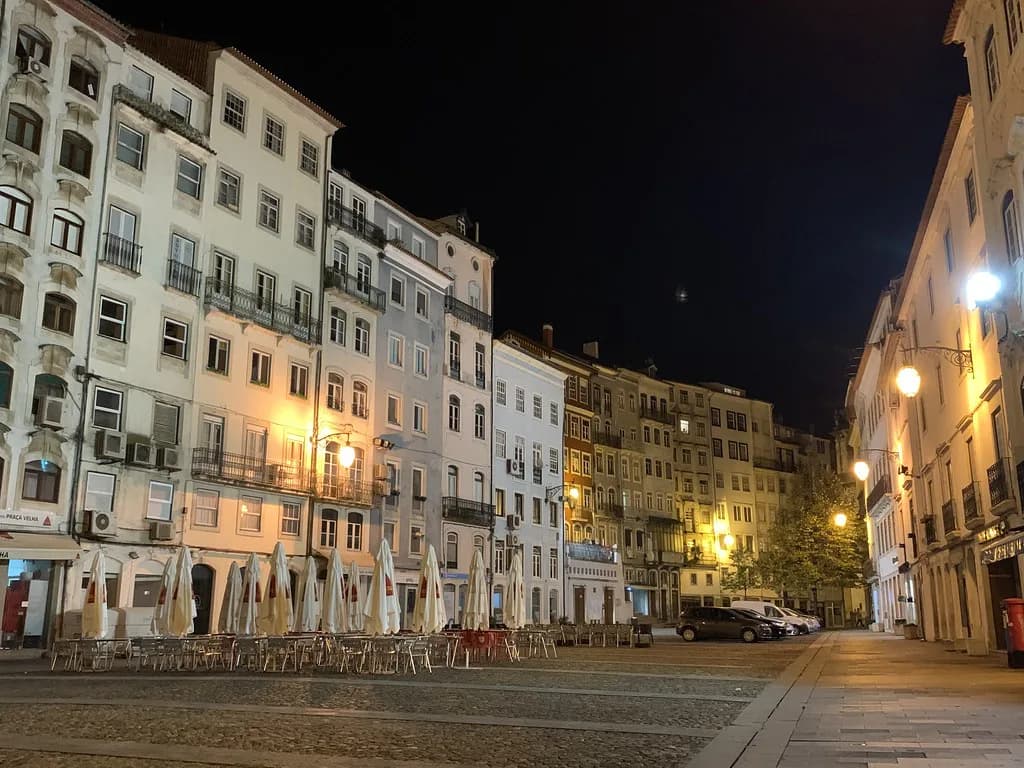
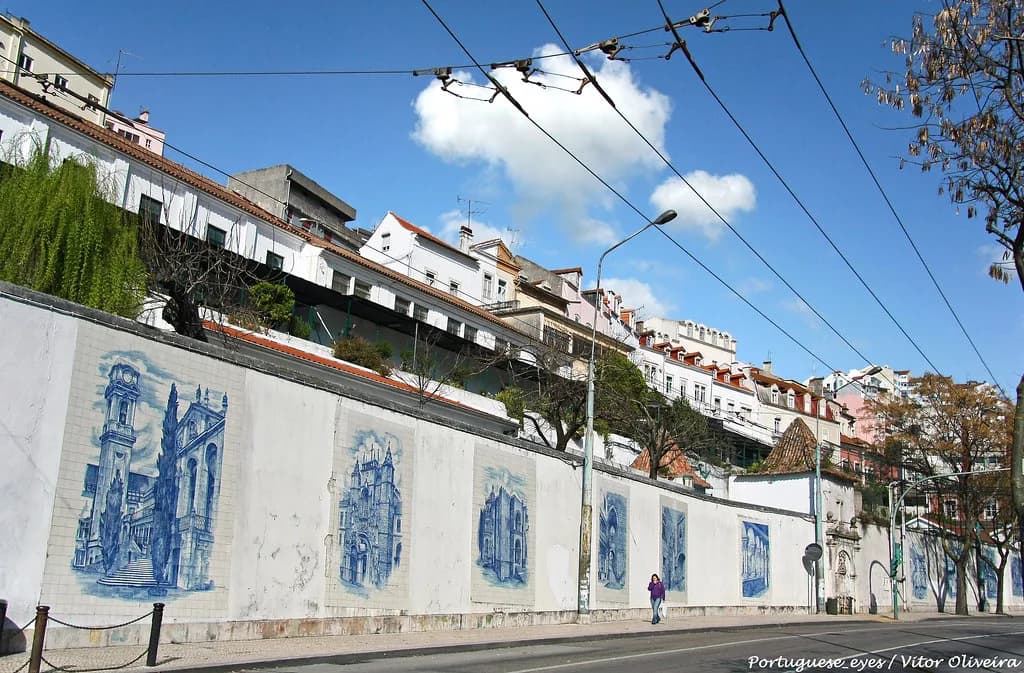
Away from the monuments, Coimbra's residential streets carry tiled house fronts where the pattern was chosen by the owner rather than a church committee. These are the panels that show the fashion of a neighbourhood: modest repeating designs on ordinary terraced fronts, often in better condition than you would expect because the glaze is hard-wearing.
Stairwalls and fountains use tiles to guard against splash and wear, so they survive where paint would have failed. Look at the edges of a tiled wall, where the last column of tiles is often a cheaper plain colour, a small clue to how the work was costed.
Wander the Coimbra old town on foot for the best street-level examples, since the lanes are too steep and narrow to see properly from a bus. Our old town guide covers the layout and where the steepest sections begin.
For orientation, start low in the old town and work uphill, keeping to the shaded side of the street so the tiled façades catch the light without glare.
A short walking route linking the main tile-viewing spots
A sensible tile route follows the natural gradient: begin in the lower town, climb through the shopping streets, then finish at the university quarter and the cathedral. Three to four hours covers the core comfortably, with time to stop at two churches and one café. This is a walk, not a tour, so pace it to your own interest in the panels.
Slot the tile viewing around the museums, since several sit close to the route and give you an indoor break from the climb. Our guide to museums in Coimbra lists the options near the centre.
Refreshment stops matter on this walk, and the market area is a good halfway point for a coffee. Our Coimbra market guide covers the stalls and the streets around it.
Buying tiles and seeing how they are made in Coimbra
To see how modern work is produced and to buy pieces, go to Cerâmicas de Coimbra, a working ceramics company with a showroom rather than a museum. Its tiles can be painted with the company's own decorations or with designs suggested by the customer, so it is a place to commission and compare rather than a heritage display.
The showroom also covers tableware and glazed stoneware, which makes it useful if you want a usable souvenir rather than a fragile panel for the wall. Ask about shipping before you choose a full tile run, because carrying a boxed set home is the usual practical snag.
Be clear about the difference between looking at historic panels in the city and shopping for new ones here: the showroom is commercial, and visiting is about seeing current production, not the town's older tile heritage.
How much time to allow and when to go
Allow half a day for the core tile walk plus a church or two, and a full day if you want the university buildings and a museum as well. Tiles are exterior decoration, so the light matters more than the time: a clear morning gives the best reading of blue-and-white panels without the heat of the early afternoon climb.
Weekdays are better than weekends for the street-level route, because residential lanes are quieter and easier to photograph. Many church interiors have their own restricted hours, so plan the indoor part of the day loosely and treat the outdoor façades as the fixed element.
Is Coimbra worth it for tiles alone?
Yes, but not as a dedicated tile pilgrimage: Coimbra's azulejos are best taken as the thread through an ordinary day of sightseeing, with the university façades, two church interiors and a street-level wander in the old town. Build in the showroom only if you actually want to buy or commission work. If you have one day, do the climb and the cathedral; if you have two, add the museums and the market.
The tiles reward looking up and looking closely at the joins; that habit alone will change how you see the rest of the town.
Explore more Coimbra guides
Frequently Asked Questions
What do azulejos mean?
Azulejo refers to a painted, tin-glazed ceramic tile, a form of Iberian tilework used both as ornament and as wall protection. The name is used for the individual tile and for the tradition as a whole.
Is Coimbra in Portugal worth visiting?
Coimbra earns its place on a short Portuguese break through its historic university buildings, its cathedral quarter and its street-level tilework. It suits travellers who like walking steep lanes and looking at architecture rather than beach time.
What are some traditional Portuguese tiles?
The main styles in Coimbra are blue-and-white panels and polychrome work, including 17th-century blue and colour lines and a 15th-century tradition. Repeat patterns and composed scenes are both common, which is why reading the joins between tiles helps identify what you are seeing.
Sources
Notes for your next Portuguese break
Optional updates to our town guides.
You might also like

Continue reading
More guides you'll find useful