Coimbra Old Town: What to See and How to Walk It
Walk Coimbra's old town from the university Alta down to the Baixa, with the sights worth your time, a sensible route and how long each half takes.
On this page
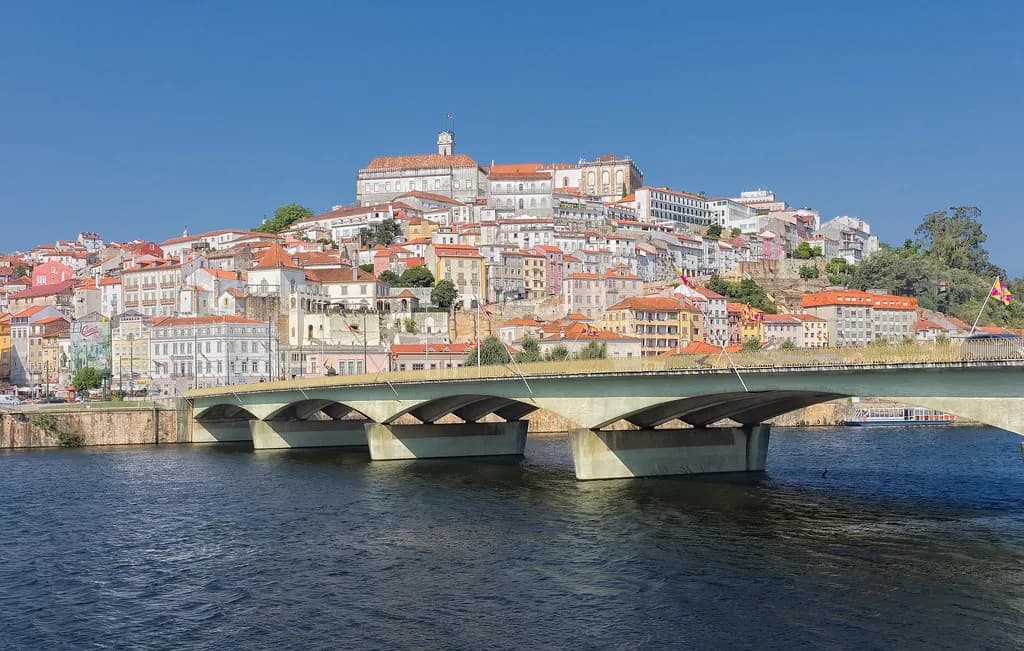
Coimbra old town is a half-day walk for the core and a full day if you add one museum. It comes in two halves: the Alta, the upper town that grew around the university, and the Baixa, the commercial lower town around Praça do Comércio. This guide sets out what to see in each, in what order, and how the day fits together.
The shape matters more than any single sight. The university quarter sits on a hill above the riverfront streets, and the sensible plan is to climb or ride up early, work through the Alta, then let gravity carry you down through the Baixa. Plan lunch or a coffee stop for the bottom of the hill rather than the top, so the walk ends with a square to sit in.
What the old town covers: the Alta and the Baixa
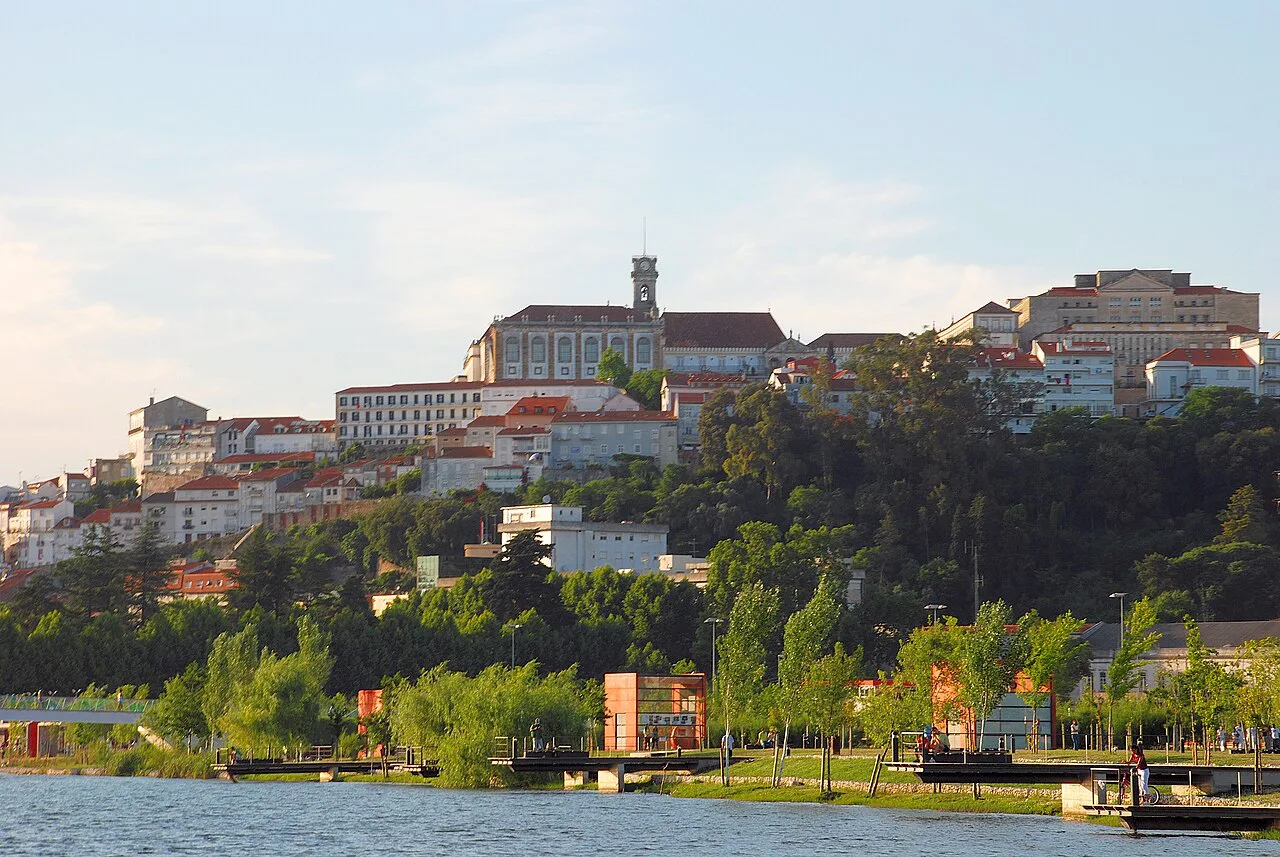
The Alta is the university hill: the Paço das Escolas courtyard, the Torre, the Biblioteca Joanina, the Machado de Castro museum and the botanical garden. The Baixa is the flatter commercial town below, centred on Praça do Comércio, where the streets are lined with shops and cafés. Treat them as one continuous walk rather than two separate outings.
The university buildings are not a single monument but a district. The UNESCO listing covers "Universidade de Coimbra – Alta e Sofia" and takes in 31 buildings across 81.5 hectares, inscribed in June 2013.
The Alta is a maze of narrow streets with timeworn shops and tiny tascas, and one of the pleasures of Coimbra is simply wandering it. Give yourself slack for getting lost between sights; the hill is small enough that a wrong turn costs minutes, not the morning.
How long you need
Budget half a day for the core walk: the Paço das Escolas, a look at the Torre, the courtyard rooms, the library exterior, and the descent through the Baixa. That half-day assumes you are not queueing substantially or lingering long inside any single attraction.
Give it a full day if you want the Machado de Castro properly, or both the library and the museum. The library and the university rooms compete for the same morning, so decide which one you will linger in and treat the other as a quick look.
If you have only one day in Coimbra, this old-town walk is the day. Save anything outside the centre for another visit rather than squeezing it in and rushing the hill.
Start at the Paço das Escolas
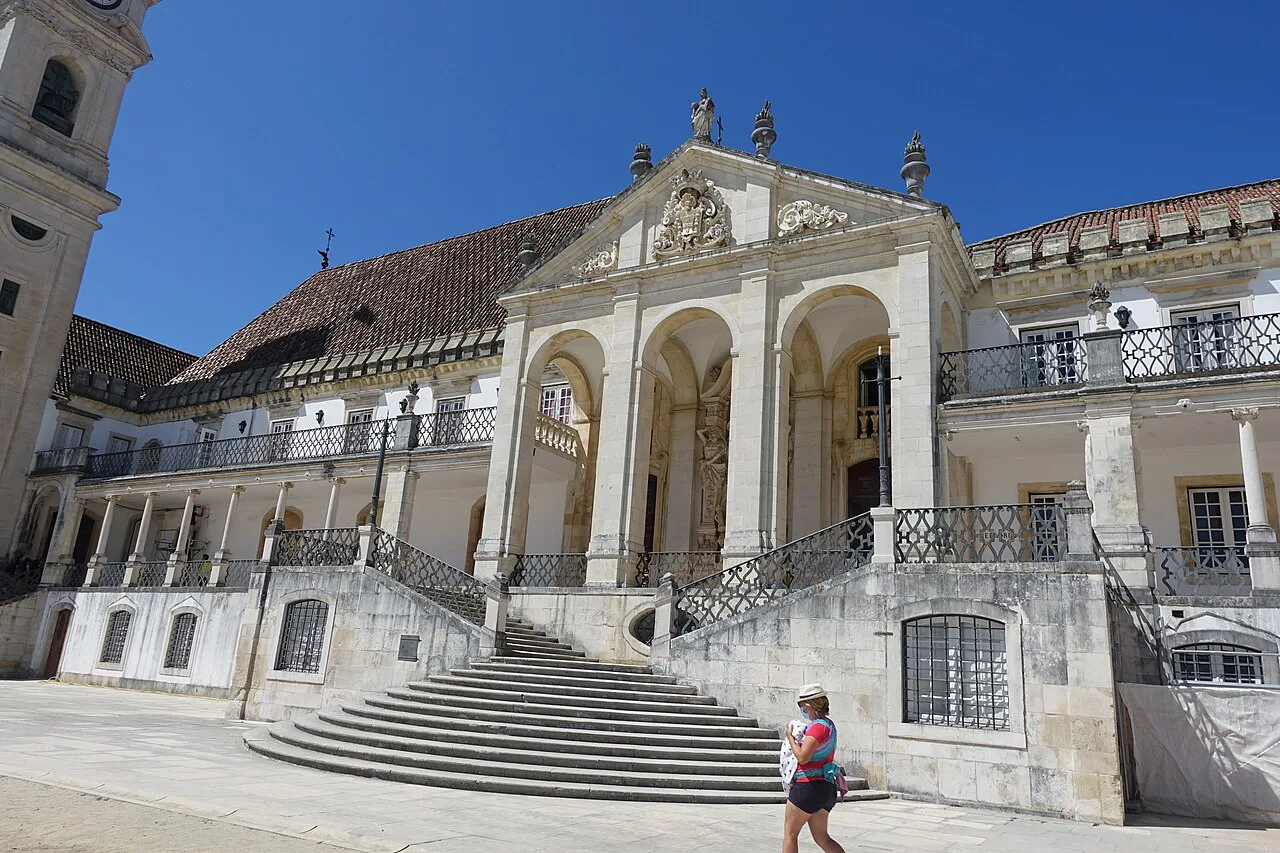
Begin in the Paço das Escolas, the courtyard at the top of the Alta. The Torre da Universidade, an eighteenth-century tower holding the clock and bells that mark academic life, dominates the square. Plan to arrive early so you have the courtyard before the groups do, and check the university's own timetable for the rooms before you commit to a slot.
The Sala dos Capelos is the university's main hall and is still used for academic ceremonies; it is also known as the Sala Grande dos Actos. A visit there takes in the Sala do Exame Privado and the Sala das Armas, which holds the halberds of the Royal Academic Guard, still carried at solemn ceremonies.
The Capela de São Miguel, a Manueline chapel, sits within the same complex and is worth ten minutes even if you are otherwise hurrying. Check the university's published arrangements for which rooms are open on your date and buy your ticket accordingly.
Biblioteca Joanina: the anchor of the visit
The Biblioteca Joanina is the reason many people come up the hill. Its baroque interior, with painted ceilings, gilded shelving and balustrades, makes it one of Europe's most spectacular libraries. Check the university's published arrangements for the library before you commit to a slot, since how the morning fits together depends on when you can get in.
The trade-off is real: the library and the university rooms both want your best hour. If you can only take one slowly, take the library; if you want the ceremonial rooms, do those first and treat the library as a timed stop.
Museu Nacional Machado de Castro
The Machado de Castro is the other headline of the Alta and deserves more than a passing look. The site was a Roman administrative centre and a Christian temple from at least the eleventh century, became an episcopal palace from the second half of the twelfth century, and has been a museum since 1911. That layered history shows in the courtyard and the sixteenth-century loggia.
The Roman cryptopórtico in the basement is the part most visitors miss. It once supported the forum courtyard above, and the museum's collections of sculpture, precious metals and ceramics run from the twelfth to the eighteenth century. Give the sculpture and the Rainha Santa Isabel treasury the bulk of your time.
The museum's seasonal timetable shapes the day. October to March it opens 10:00–12:30 and 14:00–18:00; April to September it runs 10:00–18:00. That winter lunchtime closure means the museum suits either a first thing start or an afternoon slot, not the middle of the day.
Museu da Ciência: a change of register
If you need to break up the heavy sightseeing, the Museu da Ciência da Universidade de Coimbra is a hands-on museum that displays the university's scientific instruments and collections. It works well with children and after a morning of gold leaf and baroque ceilings. It is a different mood, so pick it deliberately rather than adding it by default.
If museums are your priority, compare opening days across the city before committing. Check which collections close on which days and build the walk around them.
Jardim Botânico: the green breather
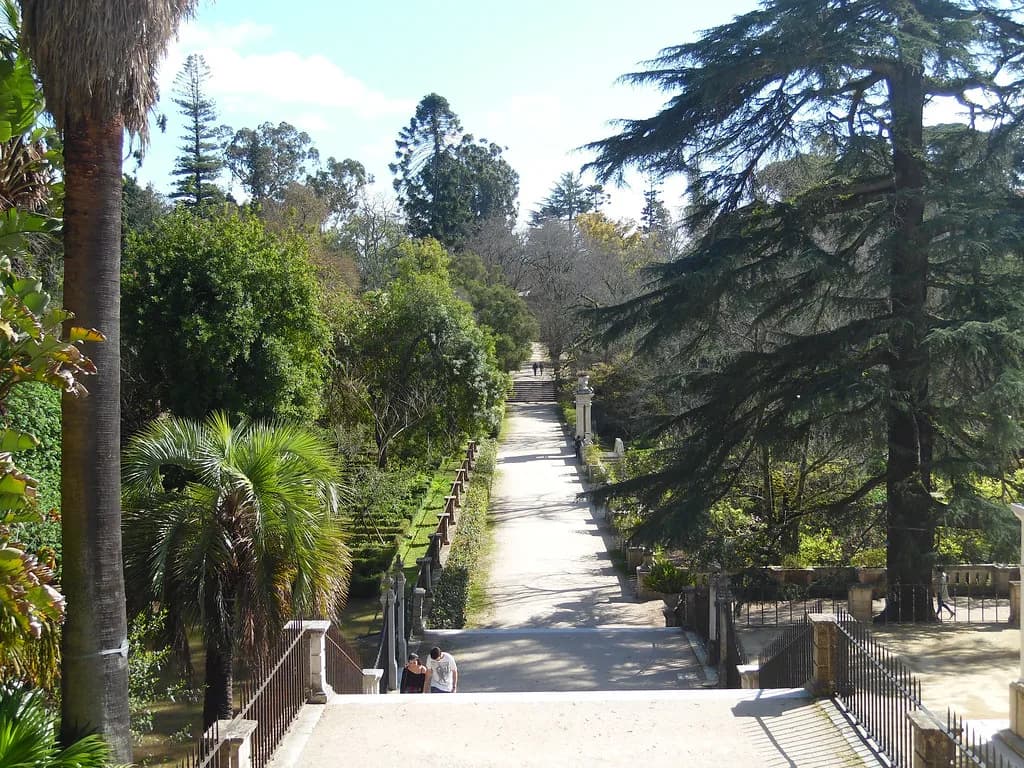
The Jardim Botânico da Universidade de Coimbra sits between the Alta and the lower town and is the most useful pause on the route. Use it to sit down, let your legs recover and reset before the descent. It is a garden, not a sight to tick off, so allow a relaxed half hour rather than ten minutes.
The Baixa: Praça do Comércio
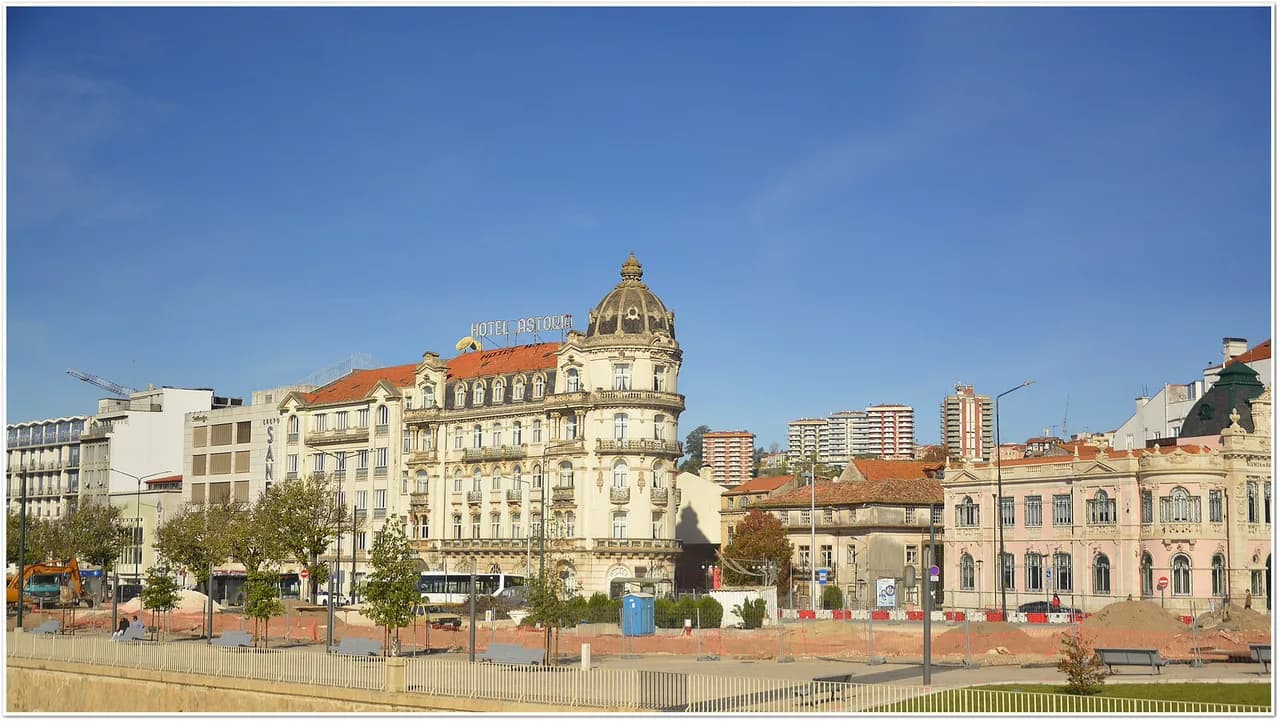
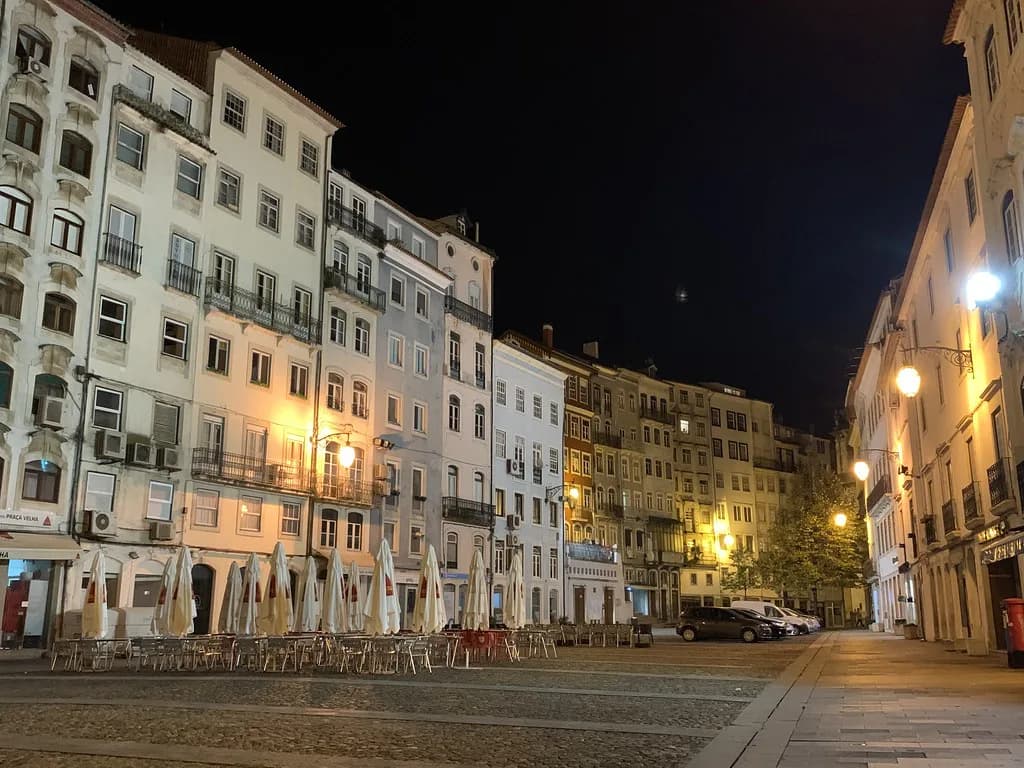
The Baixa centres on Praça do Comércio, one of the largest squares in Coimbra, ringed by nineteenth-century buildings and lined with eateries with outdoor seating. It is the right place to end the walk: the frontages give you shade, the tables give you a seat, and the square gives you a sense of the commercial town below the university.
From the Baixa, the streets of the lower town reward a slow wander before you commit to a table. Duck into churches and squares along the way; the old town is small enough to explore on foot without a fixed route.
Eating in the old town
Tascas and pastelarias suit the walk better than a long sit-down lunch. A tasca is a small, plain eating house and a pastelaria is a café-patisserie, and both let you eat and move on without losing the afternoon. Buy pastries for later and keep your main stop for the Baixa.
Restaurant closing days can shape the plan, so check the door or the menu board before you build your day around a specific table. As anywhere in Portugal, many places take one day a week off. Book nothing you cannot walk away from.
Opening days and hours to build around
The only fixed timetable to anchor the day is the Machado de Castro's: October to March 10:00–12:30 and 14:00–18:00, and April to September 10:00–18:00. Everything else needs checking with the operator on the day.
Opening hours for the university's rooms and the library are set by the university, so confirm them directly before you rely on a fixed timetable.
A walking route that strings the Alta and Baixa together
Start at the Paço das Escolas for the Torre and the university rooms, then take the Biblioteca Joanina when you can get in. Walk on to the Machado de Castro for the cryptopórtico and the sculpture, and give it a proper hour. Pause at the Jardim Botânico, then descend through the streets to Praça do Comércio for a late lunch. Prefer a guided version? Compare options in our Coimbra Walking Tour.
If you have time left, the Museu da Ciência or a wander through the lower town fills the afternoon. Finish with a coffee in the Baixa before heading back up or on.
Where the old town fits if you have one day
With one day in Coimbra, the old town is the day. Do not try to bolt on anything outside the centre; the hill gives you more than enough for a full day, and cutting the library or the museum to squeeze in a detour costs more than it gains.
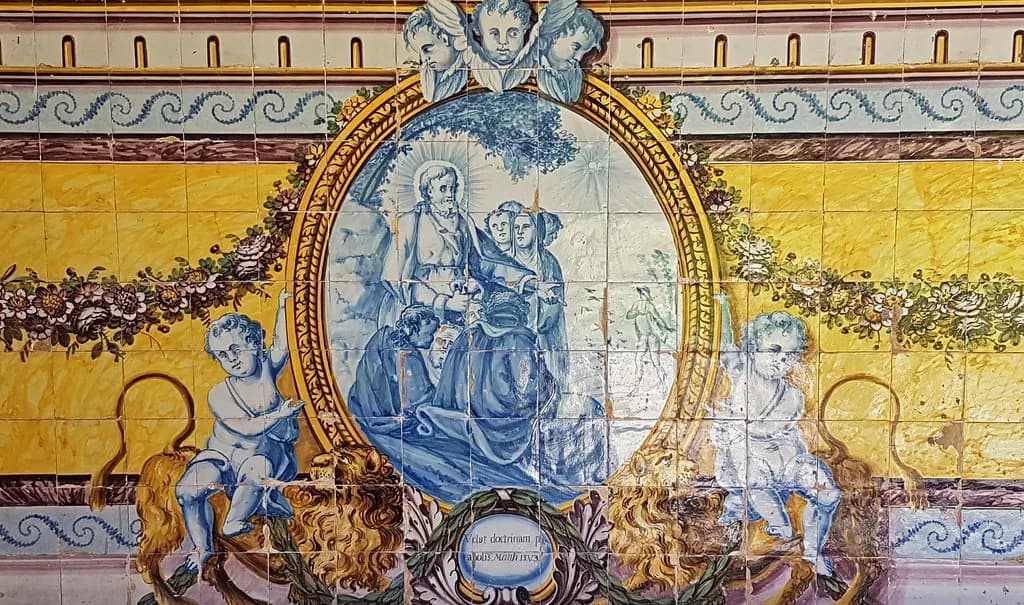
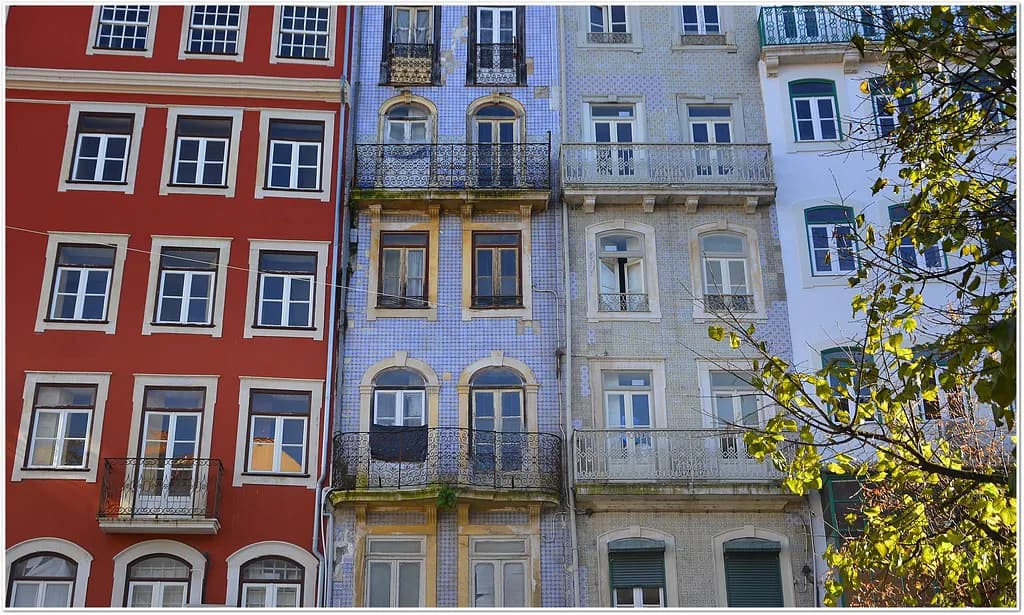
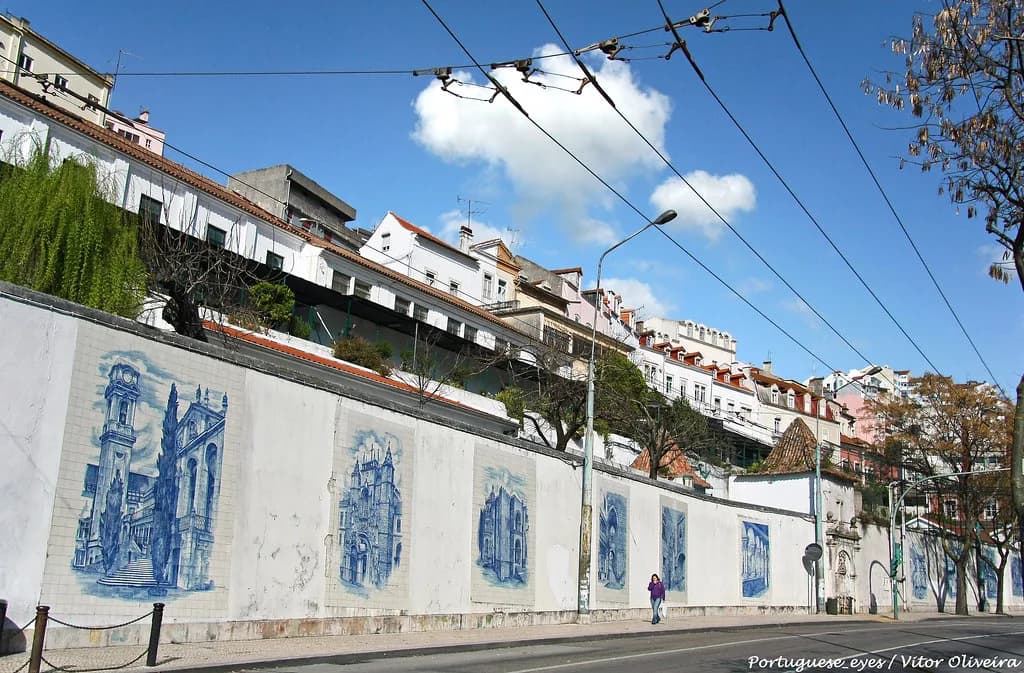
If you have two days, split it: Alta and the museums on day one, Baixa and the lower town on day two. That gives the Machado de Castro and the library room to breathe, and leaves time for the azulejos and churches that reward a slower look.
Should you start at the top or the bottom?
Start at the top. The Paço das Escolas, the Biblioteca Joanina and the Machado de Castro are all in the Alta, and walking down through the Baixa to Praça do Comércio gives you a natural finish with somewhere to sit. Check the Machado de Castro's seasonal timetable and the university's arrangements for the library before you set out.
Explore more Coimbra guides
Frequently Asked Questions
Is Coimbra old town walkable?
Yes. The Alta and Baixa are compact and best covered on foot, though the university sits on a hill above the lower town. Walk uphill first and descend through the Baixa, so the steepest part is behind you before lunch.
Is Coimbra worth visiting for its old town?
Yes, if you give it a full day. The university quarter, the Biblioteca Joanina and the Machado de Castro are the anchors, and the lower town around Praça do Comércio gives you a place to sit afterwards. It rewards a slow walk rather than a rushed stop.
Is there much to do in Coimbra old town?
More than a single morning's worth. The Paço das Escolas, the university rooms, the library, the Machado de Castro, the science museum and the botanical garden are all in or near the Alta, and the Baixa adds squares, churches and cafés for the afternoon.
Sources
Notes for your next Portuguese break
Optional updates to our town guides.
You might also like
Continue reading
More guides you'll find useful