
Biblioteca Joanina: Visiting Coimbra's Baroque Library

The Biblioteca Joanina is worth roughly 30 to 45 minutes of a Coimbra day, not a half-day of its own: you move through three floors of a Baroque library rather than sit and read. Its draw is the Golden Halls on the Noble Floor, the painted vaulted ceilings above them and the academic prison below, all inside the Universidade de Coimbra complex at the top of the old town. This guide covers where to find it, what the visit takes in, and how to slot it into a wider University of Coimbra day.
What the Biblioteca Joanina is and why it draws visitors
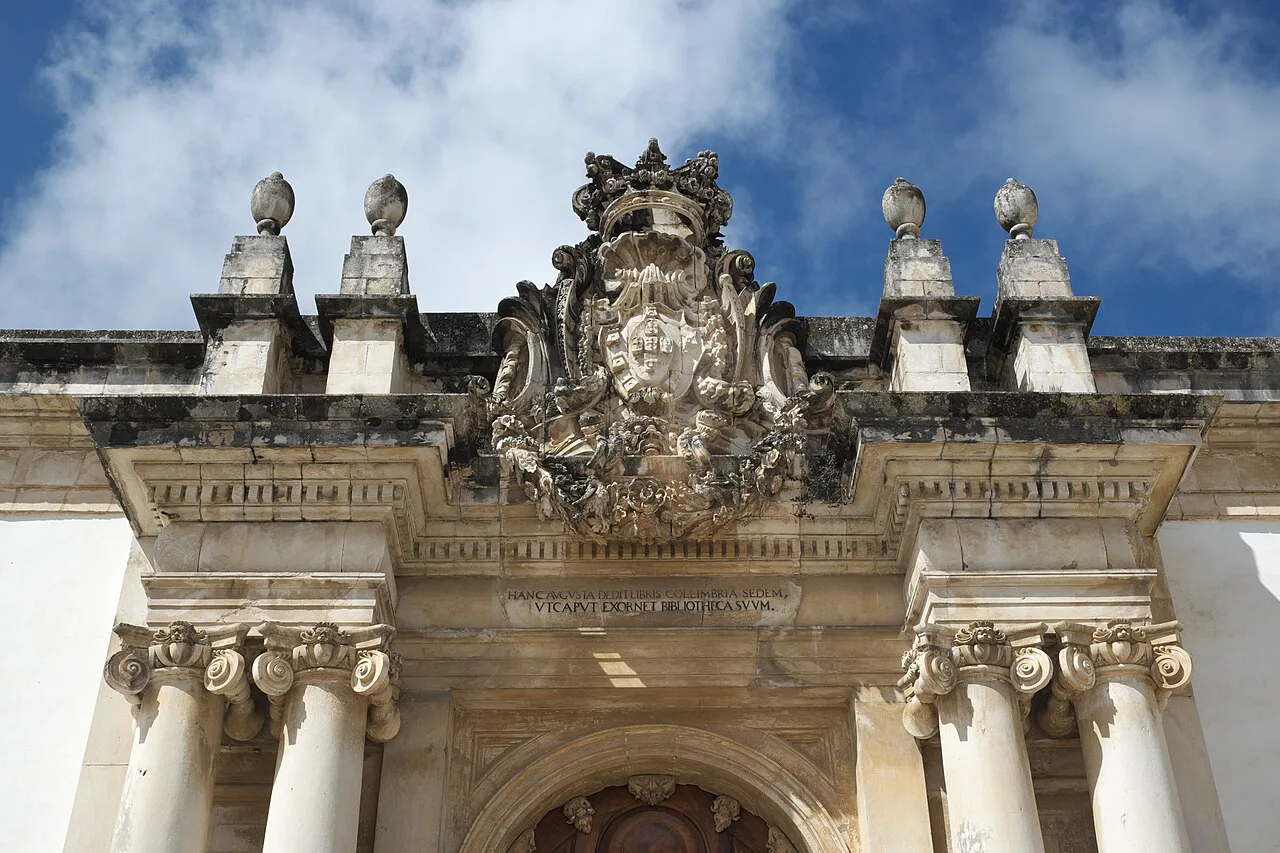
The Joanina Library is one of Europe's richest Baroque libraries, built between 1717 and 1728 under King João V and named for him. Its patron drew on wealth from Brazil's gold and diamonds to create a building meant to embody royal magnificence, and the result is closer to a temple than a working reading room. It sits within the university complex, declared a UNESCO World Heritage Site in 2013, so the library is one stop inside a much larger listed ensemble.
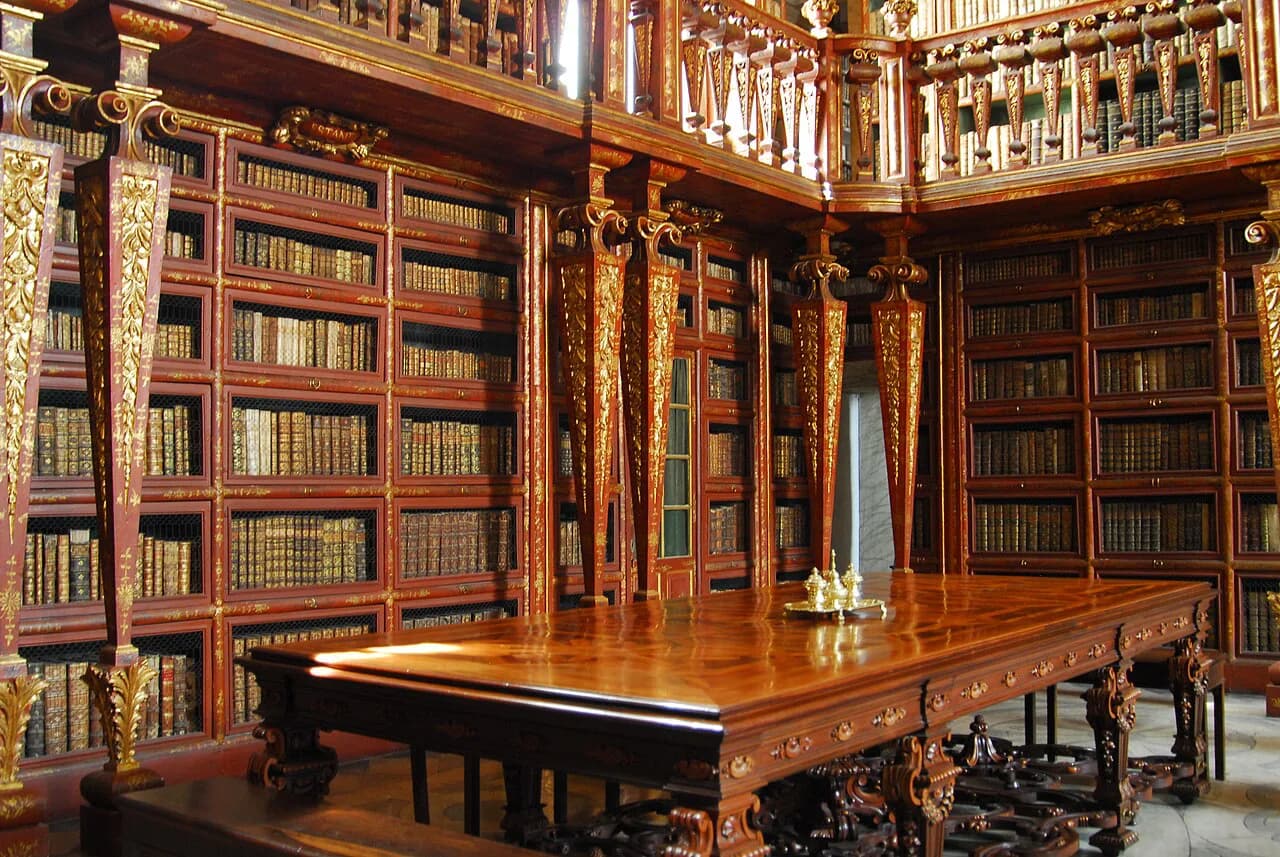
What most people come for is the interior: gilded oak shelving, vaulted ceilings painted with trompe-l'oeil effects, and a collection of roughly 60,000 to 70,000 volumes, most printed in the 16th to 18th centuries. Visitors tend to lower their voices on entry. Treat it as an architectural and historical set piece and you will get more from it than from hunting for a famous book.

Where it is: the Paço das Escolas at the top of Coimbra's old town
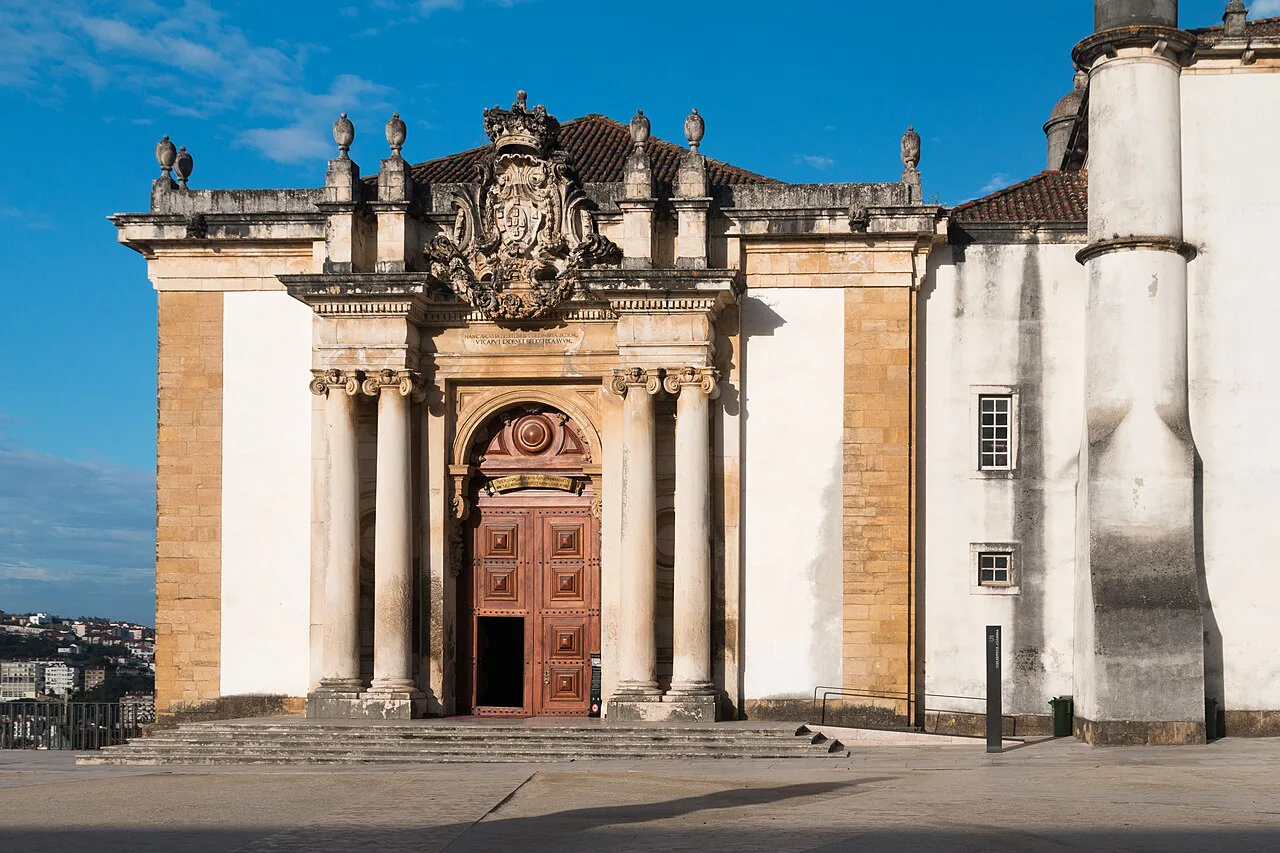
The library stands at the highest point of Coimbra, inside the university's historic core, which grew out of the former Royal Palace. From the lower town you climb: the old town is a knot of steep lanes and calçada steps, so allow more time than the map suggests and wear shoes with grip. If you are plotting a day around the hill, the wider set of Coimbra Attractions: 10 Visitor Guides shows what else sits within walking distance once you are up there.
Access is through the university complex rather than from a separate street entrance, so build the library into your arrival at the palace courtyard instead of treating it as a standalone address. The Sé Velha, Coimbra's Romanesque old cathedral, sits down the hill, which makes a sensible pairing before or after the climb.
What you see inside: the Noble Floor and the King João V portrait
The Noble Floor is the heart of the visit: three lavishly decorated halls aligned like the naves of a basilica, with vaulted painted ceilings and double-storey oak shelves, some with built-in ladders and all decorated with gold leaf. Where a church would place its high altar, the library hangs an imposing portrait of King João V, a deliberate statement about patronage and power. Look up as much as forward; the painted ceilings use false depth to stretch the space beyond its walls.
The gold leaf and the profusion of fine woods make this the most photographed part of the building, and it is also where groups bunch up. If you want a calmer look at the ceiling painting and the shelving detail, hang back at the end of your group rather than pressing forward with the crowd.
Lower floors: the intermediate level and the academic prison
Below the Noble Floor, the intermediate level once served as support space for the guards of the academic prison and as book storage; it is now part of the tourist circuit. Its finish is deliberately raw stone, and you can still pick out the small marks stonemasons engraved on the arcade stones to track work and payment. That contrast with the gilded floor above is the most interesting part of the building for many visitors.
Beneath it all lies the academic prison, a surviving reminder that the university held its own jurisdiction over the university community. It had ordinary cells and two solitary confinement cells nicknamed "Secrets", and offences ranged from stealing library books to cheating in exams or falling asleep in class. Some detained students were still allowed to attend lectures under escort and returned to their cells afterwards, a system that lasted into the first half of the 19th century.
The books and the building: Baroque oak shelves and painted ceilings
The collection is the reason the building exists, but the building is what you actually see. The oak shelves retain their original gold-leaf decoration, and the painted vaults create an illusion of depth that photographs flatten badly. Give yourself a moment in each hall to look at the shelf structure and the ceiling rather than only at the portrait end of the room.
It is not a place to settle in with a volume: you walk through the historic floors rather than browse the shelves. That is the honest trade-off, and knowing it in advance stops the stop feeling rushed. Go for the Baroque interior and the prison, not for a library experience in the everyday sense.
How much time to allow and how it fits a university visit
Set aside around 30 to 45 minutes for the library floors themselves and rather more for the wider university complex, which holds several monuments and historic buildings within the same UNESCO listing. Plan the hill as one block of your day rather than as two separate outings. If time is short, the library and the courtyard outside are the two things to prioritise.
Group your visit with the other university landmarks on the same courtyard so you are not climbing the hill twice. The Capela de São Miguel, with its own azulejo panels and organ, is a natural addition to the same stop, and the things to do in Coimbra list helps you sequence the rest of the day around it.
Tickets, hours and booking for the Biblioteca Joanina
Visiting times and admission for the library and the wider complex are set by the Universidade de Coimbra, and they can change with the academic calendar, so check the university's own visit page for current tickets, entry times and any booking requirement before you travel. Buy or reserve ahead if you are visiting in a busy period.
This is a working university, so parts of the complex can shut or restrict access around term dates and ceremonies. Build flexibility into your Coimbra itinerary so a closed door on the hill does not sink the whole morning.

Nearby: the rest of the University of Coimbra and the old town
Once you are on the courtyard, the Torre da Universidade de Coimbra is the other obvious climb. The Sé Velha and the old-town lanes below are a short walk downhill, which makes a logical second half to a morning on the hill.
For the wider set of sights around the historic centre, including churches, museums and viewpoints, use the Coimbra Attractions guide to plan which ones fit around your library slot. Anything that requires a separate ticket is best checked the day before rather than assumed open.
Is the Joanina Library worth it?
Yes, if you accept it for what it is: a compact, spectacular Baroque interior with an unusual prison beneath it, seen as part of a broader university visit. It is not worth a separate trip to Coimbra on its own, and it is not the place for a quiet afternoon with a book. If you are already climbing the hill for the university, make it the centrepiece of that stop.
Skip it, or keep it brief, if you are travelling with young children who will not tolerate a walk-through, or if your interests lie in the old-town churches and streets rather than in university interiors. Either way, check the university's current visit arrangements before you set out.
Booking the library into your Coimbra day
Treat the Biblioteca Joanina as the anchor of a morning on Coimbra's hill: courtyard first, then the library floors, then whichever tower or chapel still fits before lunch. Check the university's current visiting times and ticket arrangements before you travel, and leave slack in the plan for closures around academic events.
Explore more Coimbra guides
Frequently Asked Questions
Why is the library called the Joanina?
It is named for its patron, King João V, who reigned as Portugal drew on wealth from Brazil's gold and diamonds. The library was built between 1717 and 1728 and is considered one of Europe's richest Baroque libraries, forming part of the University of Coimbra complex listed by UNESCO in 2013.
Is the Biblioteca Joanina the oldest library in the world?
No such claim is supported here. The Joanina is celebrated as one of Europe's richest Baroque libraries, built between 1717 and 1728 under King João V, and it forms part of the University of Coimbra complex listed by UNESCO in 2013.
Can I read or borrow books at the Biblioteca Joanina?
No. The visit is a walk-through of the historic floors, including the Noble Floor and the academic prison below, rather than a working reading room where you settle in with a volume.