
Igreja de Santa Cruz, Coimbra: what to see and how long it takes

The Igreja de Santa Cruz deserves an hour of your Coimbra day, and possibly ninety minutes if you linger in the cloister. It is the church of the former Mosteiro de Santa Cruz, founded in the first half of the twelfth century, and it holds the tombs of Afonso Henriques, Portugal's first king, and his son Sancho I. This guide covers where it sits in the old centre, the published visiting hours and ticket rates, what to look for inside, and how to fit it into a walk through the historic city.
Treat it as a compact, high-density stop rather than a museum: there is no long gallery to work through, and the highlights sit within a few steps of each other. The trade-off is that the church is busy with visitors and worshippers alike in the middle of the day, so an early or late slot gives you a calmer look at the carving and tilework. Pair it with the cathedral and the university quarter, both within easy walking distance.
What the Igreja de Santa Cruz is and why it earns an hour
Santa Cruz means Holy Cross, and the complex began as an Augustinian monastery founded in the first half of the twelfth century. Afonso Henriques, who laid its cornerstone in 1131, was a regular worshipper here and is buried inside the church beside his son, King Sancho I. That royal connection makes it one of the most historically weighty monuments in central Portugal, not merely a pretty parish church.
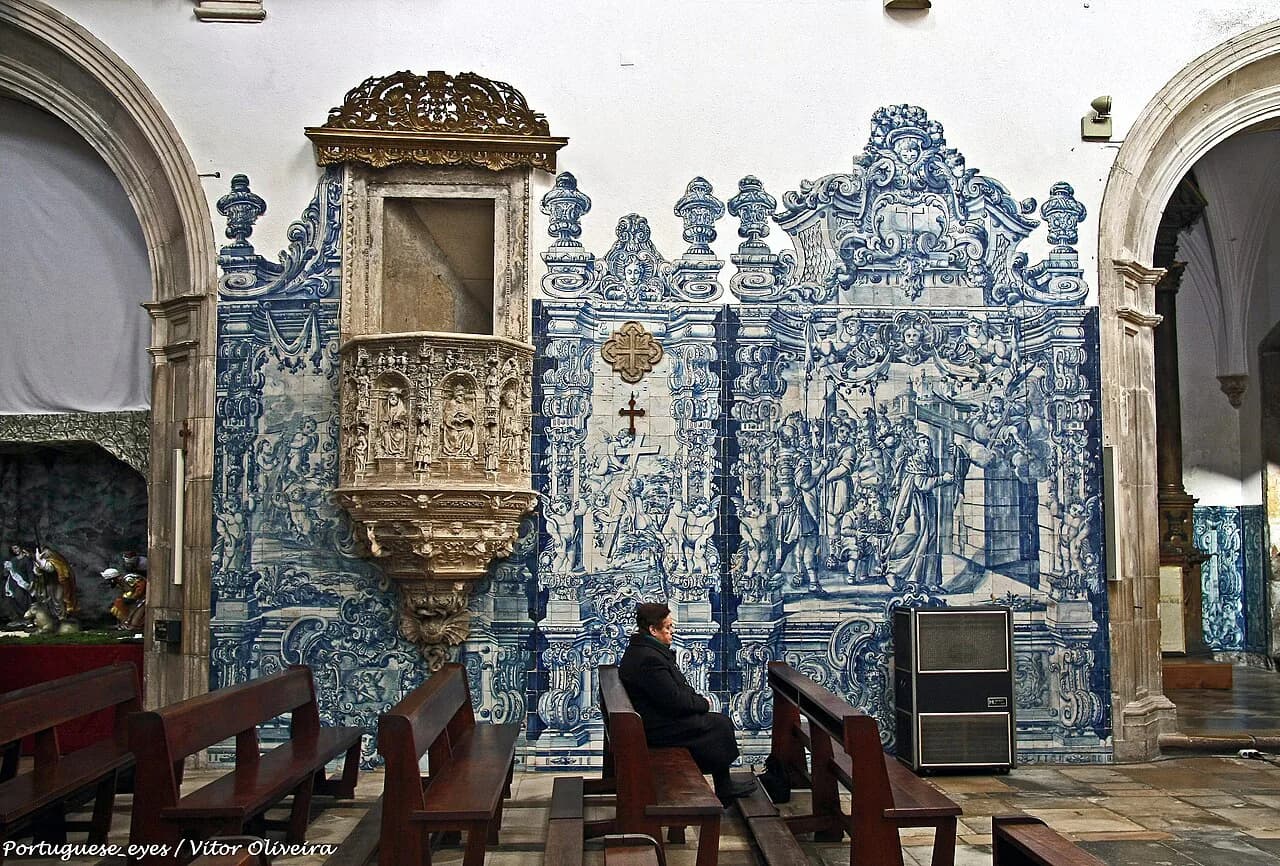
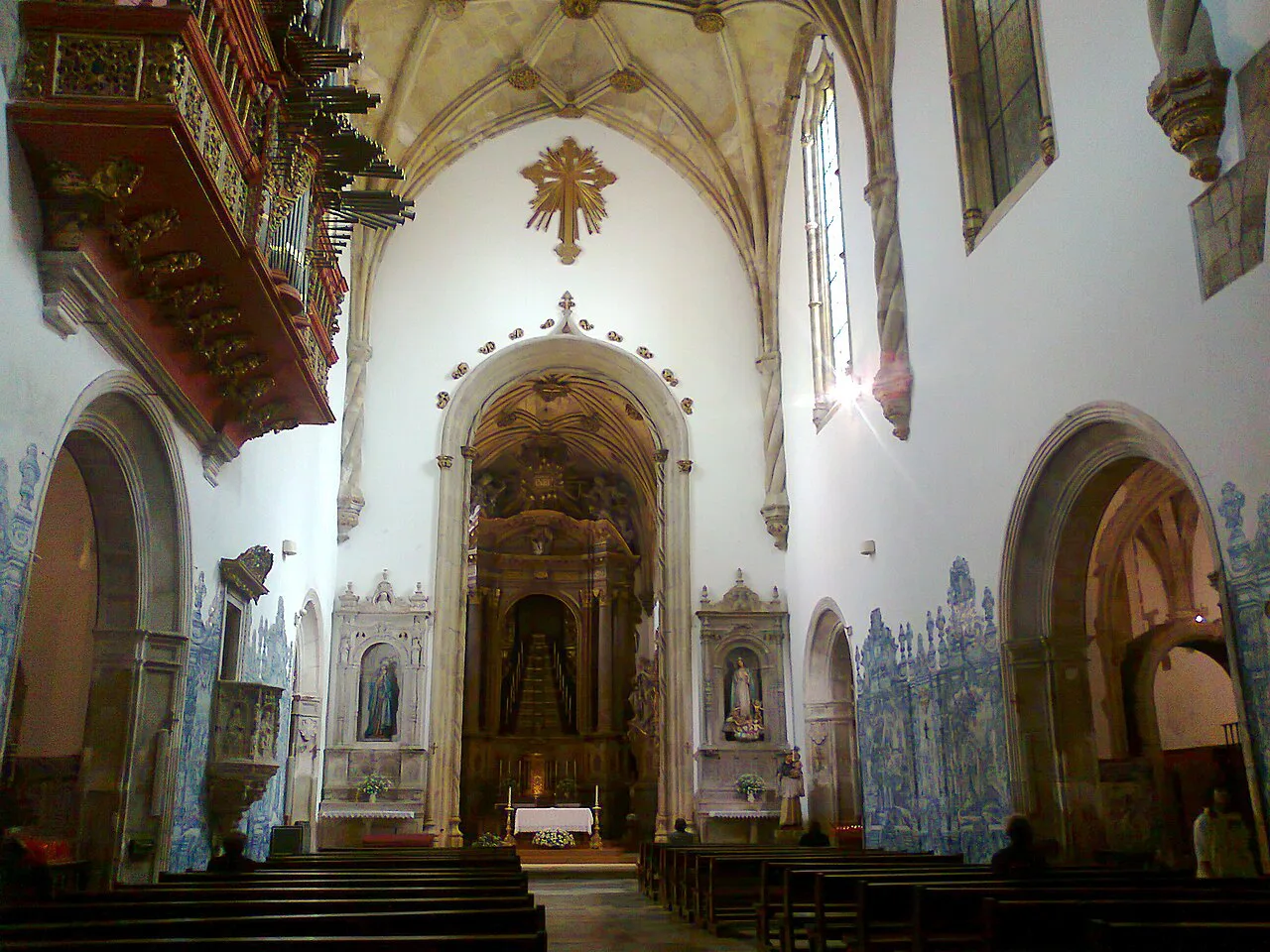
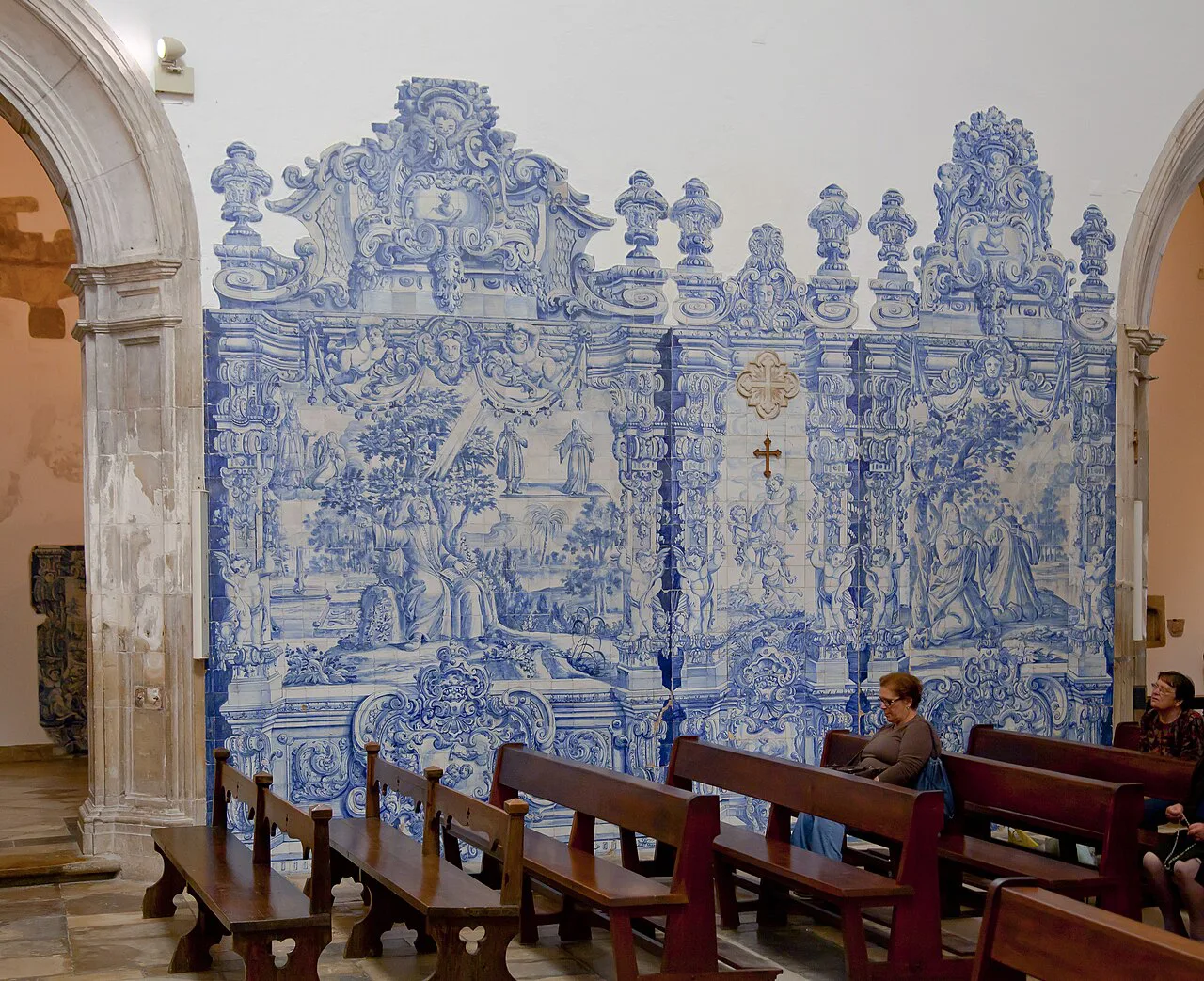
The artistic case is just as strong. The church carries an exuberant Manueline façade and patterned azulejo tiles along its walls, and its relatively narrow nave is overlooked by a single-manual organ dating from 1724 that is described as the largest of its kind in the world. In the Middle Ages Coimbra was the base of a major sculptural school, and French and Portuguese masters left their mark here across the sixteenth century.
If you have limited time in the city, this is the interior to prioritise over a scatter of smaller churches. The whole visit is indoors, close to the river end of the old centre, and takes less time than the university buildings uphill from it.

Where it is: Rua Martins de Carvalho in the old centre
The church stands at Rua Martins de Carvalho, number 3, in the heart of the old university city, a short walk from the riverside end of the historic centre. Its parish address places it in central Coimbra, with the Sé Velha and the university quarter both on the same side of town, so it slots naturally into a walking circuit rather than a separate trip.
On foot is the sensible way to arrive: the surrounding streets are narrow and the main sights cluster together. Come downhill from the university or uphill from the river, and you will pass other historic churches on the way, including the Igreja da Graça and the Igreja do Carmo in very close proximity.
The café next door occupies the former Igreja de São João das Donas, a former church contiguous with the Mosteiro de Santa Cruz, and it is one of the city's most characteristic spaces. That makes the church's doorstep an easy place to pause before or after your visit without planning a separate stop.

Opening hours: weekday, Saturday and Sunday visiting times
The parish publishes visiting hours from Monday to Saturday, 09:30 to 16:30, and on Sundays and religious holidays from 14:00 to 17:00. Plan your slot around those windows, since they are the only published times the monument is open to visitors.
The published closure days are 25 December, 1 January, Easter Sunday, the Sunday of the Queima das Fitas cortege, Corpo de Deus and 24 October. The two Sunday closures move each year with the university calendar and the liturgical calendar, so check the parish page before a spring visit in particular.
Because weekday visiting stops in the late afternoon and Sunday visiting only begins after lunch, neither first thing in the morning on a Sunday nor late afternoon on a weekday will get you in. Building the church in before 16:30 on a weekday is the simplest plan, and the Sunday afternoon window suits a slower day that starts elsewhere.
Ticket prices in euros: individual, group and school rates
Entry is ticketed rather than free. The published rates cover an individual ticket, per-person rates for groups of at least 12, and per-pupil rates for schools. Group organisers should contact the parish in advance via the details on its visiting-hours page to arrange the reduced rate.
Bring the entry fee in mind when you budget the day: the church ticket is separate from the charges at the university buildings uphill, which have their own prices and hours.
What to see inside: the Manueline façade, azulejos and the royal tombs
Start with the façade before you go in: it is an exuberant Manueline composition, and the sixteenth-century Gate of Majesty, designed by Diogo de Castilho in 1523, carries carvings by the French artist Nicolas Chanterène. Look for the detail on the portal before the interior pulls your eye away.
Inside, the narrow nave is lined with patterned azulejo glazed tiles and spanned by a superb carved ceiling, with the great organ above. The choir stalls date from 1530 and are among the oldest of their kind in Portugal, carved with scenes from The Lusiads and the voyages of Vasco da Gama in gilded high relief.
The tombs of Afonso Henriques and Sancho I are the historical heart of the church. Afonso is shown in armour amid a profusion of sacred emblems in the Manueline style, despite his habit of attending services in monastic robes. Paintings by Portuguese masters including Cristóvão de Figueiredo, Gregório Lopes and Vasco Fernandes, known as Grão Vasco, hang in the same interior.
The Silent Cloister, the Renaissance pulpit and the Capela de São Teótonio
Do not leave without the two-tiered Gothic-Manueline Claustro do Silêncio, set around a whispering fountain. Its columns are twisted like ropes, and the floor is inlaid with preserved thirteenth-century tombs. It is the quietest part of the visit and the reason to allow more than a quick glance.
Off one corner of the cloister sits the oval Capela de São Teótonio, which houses the tomb of Saint Theotonius, the monastery's first prior in the twelfth century. Back in the church, the sixteenth-century pulpit carved from a single block of stone is one of the supreme achievements of the Renaissance in Portugal, so give it a proper look rather than passing beneath it.
These three elements are what lift Santa Cruz above the city's other churches: the cloister for atmosphere, the pulpit for craftsmanship and the chapel for the monastery's founding story. If you are short of time, the nave and cloister are the pair to see.
How much time to allow, and when to slot it in
Allow around an hour for the church, the cloister and the chapel at an unhurried pace; forty-five minutes covers the essentials. Add time if you like reading tomb inscriptions and tile panels closely, and subtract if you are moving briskly between sights.
Mid-morning on a weekday is the most comfortable slot, since the visiting window begins in the morning and you will be ahead of the midday crowd. On Sundays and religious holidays the church only opens in the afternoon, which makes it an afternoon stop after a morning at the university.
The honest trade-off is that Santa Cruz competes for your time with the hilltop sights, and walking between them eats into a short break. Keep the church for the lower part of your day and climb to the university afterwards, rather than zigzagging up and down the hill twice.
Nearby: the Sé Velha, the university quarter and the café next door
The Sé Velha, Coimbra's old cathedral, is one of the closest major monuments, alongside the university and the Igreja do Carmo and Igreja da Graça. Together they make a natural lower-town circuit that starts at Santa Cruz and works uphill.
The university quarter above the old town is the other half of a Coimbra day, and it needs its own time budget. The Paço das Escolas, the university's historic courtyard, and the Biblioteca Joanina are the headline stops, and each has its own ticket and hours to check separately.
For a wider set of options with walking times and honest comparisons, the full Coimbra Attractions: 10 Visitor Guides covers the other churches, museums and viewpoints worth adding. Build the day around two or three of them rather than trying to see everything.
Is Santa Cruz worth an hour of your Coimbra day?
Yes, if you want royal tombs, a superb Manueline interior and a cloister in one compact visit, all for a modest ticket. It is the best single church interior in the city and the easiest to fit around the university.
Skip it only if your short break is already full of hilltop sights, or if you are in town on a closure day or outside the published visiting windows. In that case, give the hour to the Sé Velha and the university quarter instead, and see the University of Coimbra and Biblioteca Joanina for the uphill half of the day.
Explore more Coimbra guides
Frequently Asked Questions
Do I need to book tickets for the Igreja de Santa Cruz in Coimbra?
Individual visitors can simply turn up during the published visiting hours and pay the individual rate at the door. Groups of 12 or more get a reduced per-person rate and should contact the parish in advance via the details on its visiting-hours page.
When is the Igreja de Santa Cruz closed?
The parish lists closures on 25 December, 1 January, Easter Sunday, the Sunday of the Queima das Fitas cortege, Corpo de Deus and 24 October, plus occasional other situations. The Queima das Fitas cortege and Corpo de Deus dates move each year, so check the parish page before a spring visit.
Is the café next to the church part of the monument?
No. The café occupies the former Igreja de São João das Donas, a former church contiguous with the Mosteiro de Santa Cruz. It makes a convenient pause before or after your visit to the church.