
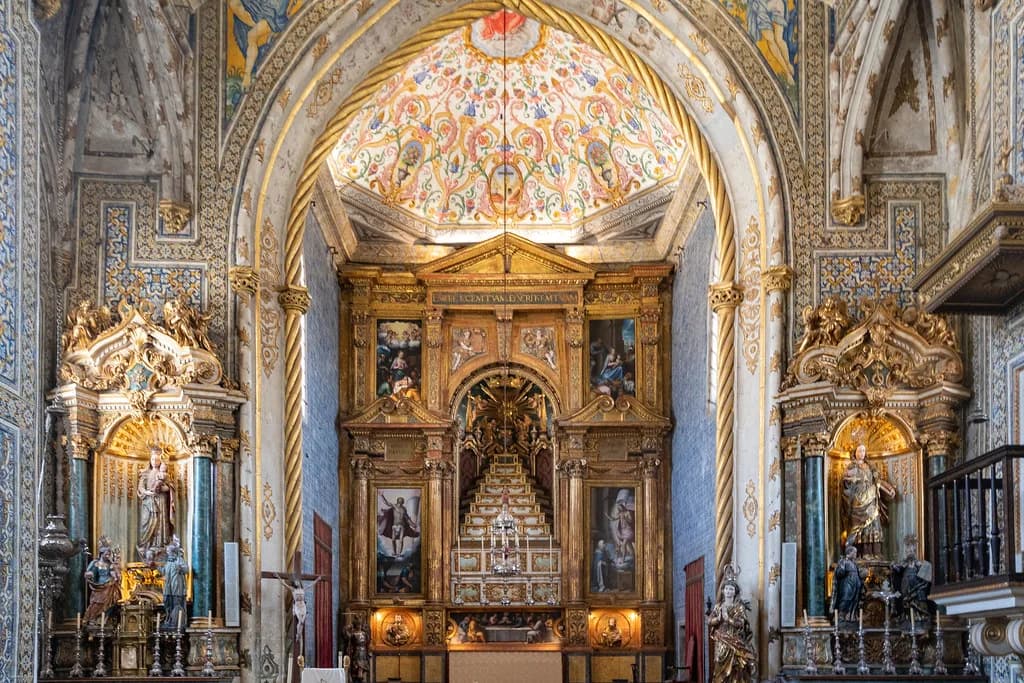
Capela de São Miguel: the University of Coimbra's Chapel in the Paço das Escolas
The Capela de São Miguel is the University of Coimbra's chapel, built into the Paço das Escolas — the old royal palace complex that became the heart of the university. It is not a parish church you wander into from the street; it belongs to the historic university ensemble, so the sensible way to see it is as one stop on a visit to the Paço das Escolas rather than a separate outing. This page covers where it sits, how to walk to it from the old town, what to look for once inside, and what is close enough to pair with it.
What the Capela de São Miguel is and why it sits inside the university
The chapel stands within the Paço das Escolas, the architectural complex that forms the historic core of the University of Coimbra. That setting explains its double status: the ensemble is classed as a Monumento Nacional and inscribed on the UNESCO World Heritage list, and the chapel is part of that listing rather than a monument in its own right. Building work on the chapel ran from the sixteenth to the eighteenth century, which is why the visitor who expects a single-period church finds a layered interior instead.
Treat it as a room within a larger visit. The chapel is one element of the Paço das Escolas, alongside the courtyards and towers that draw most of the crowds, so reading it in that context stops you from arriving expecting an independent church with its own street entrance and opening board. If you want the wider picture of what the upper town holds, the Coimbra Attractions: 10 Visitor Guides collection maps the individual sights.
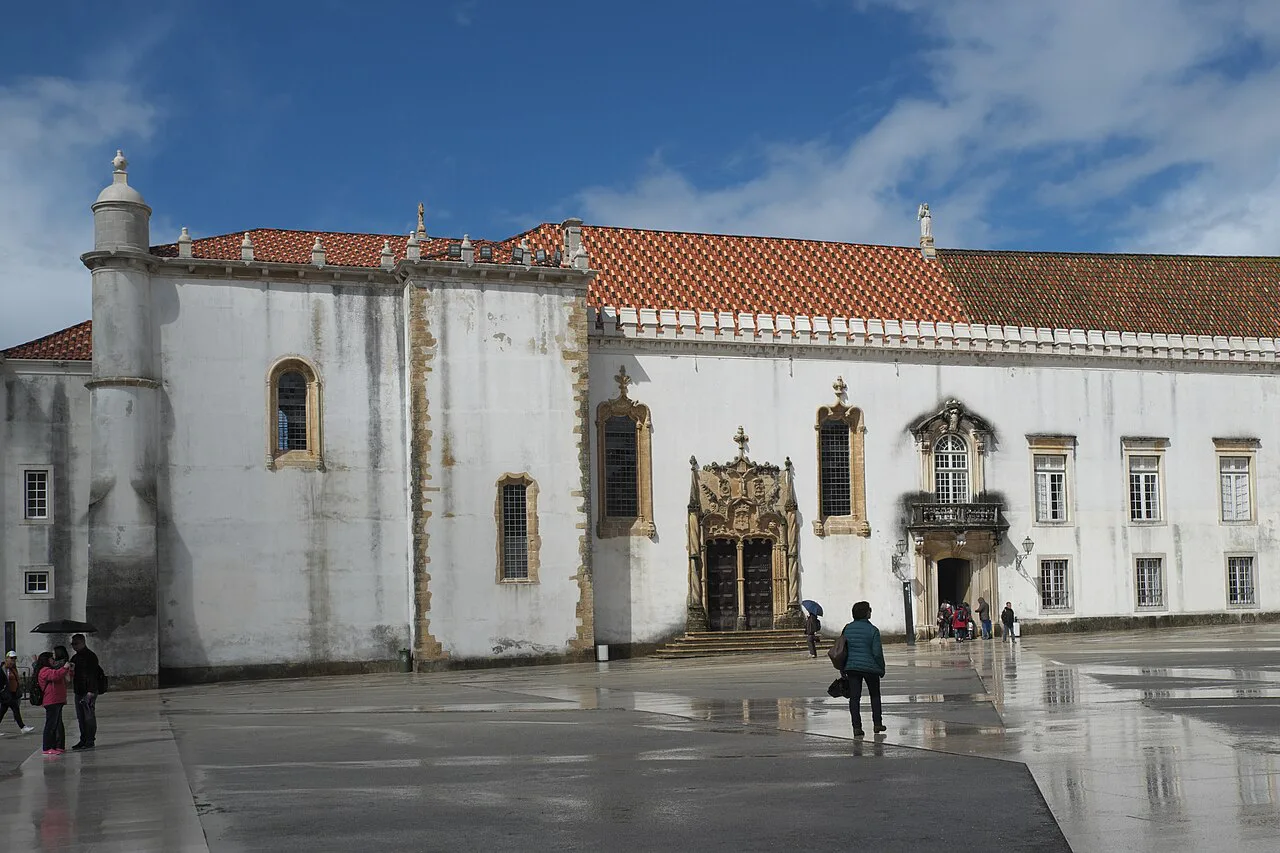

Where to find it in the Paço das Escolas
You reach the chapel through the university precinct at the top of Coimbra's old town, the hill that rises from the riverside to the Pátio das Escolas. The upper town is compact and steep, so the practical approach is to walk up through the old streets from the lower city and treat the climb as part of the visit; the Sé Velha, the Sé Nova and the university buildings all sit within a few minutes of each other.
Once inside the precinct, the chapel is close to the Biblioteca Joanina and the university buildings, so you can group them without any extra legwork. Maps place the chapel at roughly 40.207° north, 8.426° west, which puts it squarely in the historic centre rather than on the outskirts.
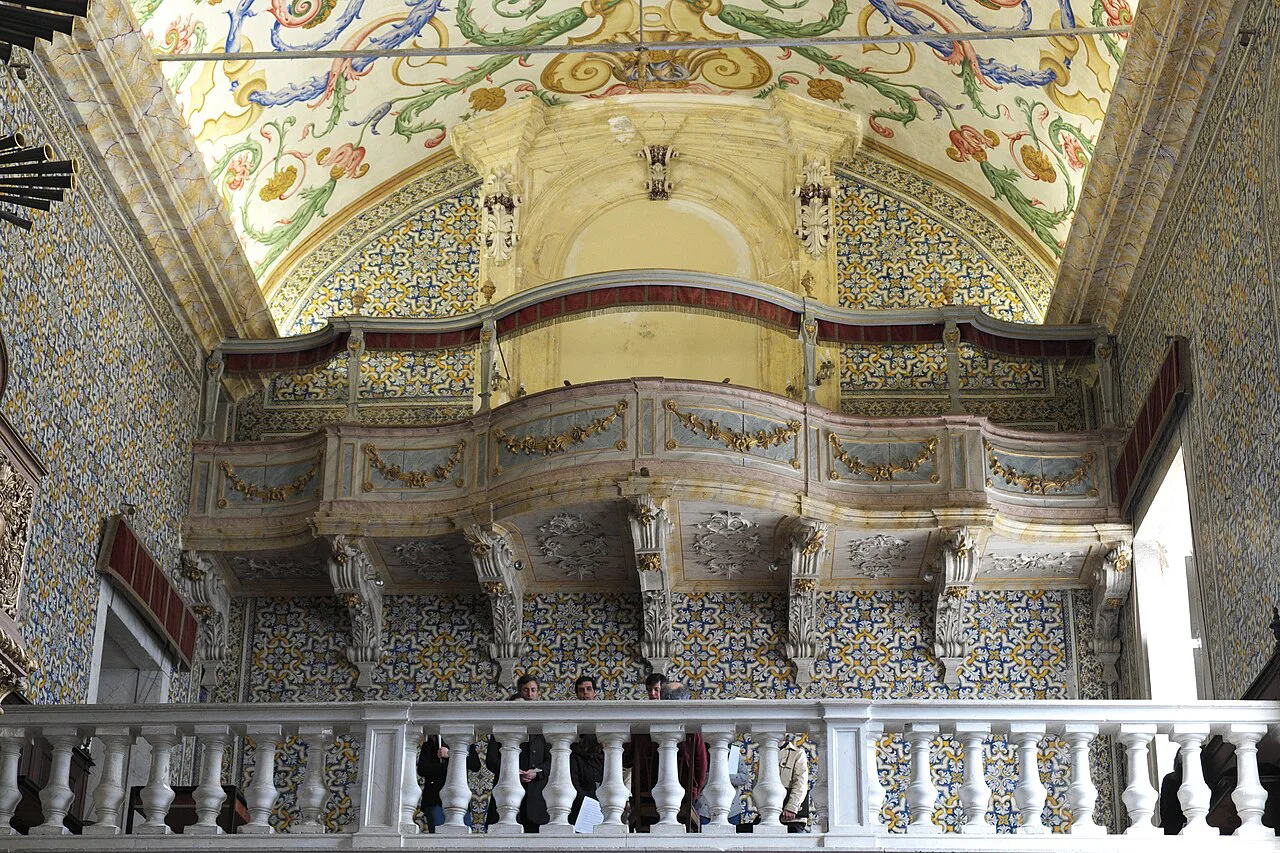

The chapel's fabric: the sixteenth-century rebuild and the tiled floor
The present chapel is often credited to Marco Pires and dated to between 1517 and 1522, and its tiled floor to 1613 — dates reported in a visitor review rather than an official account. Taken together they suggest looking at the structure as a Renaissance rebuild rather than a medieval survivor, and looking down at the pavement as a deliberate seventeenth-century intervention rather than background.
An academic paper on the chapel traces its passage from a royal palace chapel to a chapel of the Real Paço das Escolas, the shift that explains why an academic building carries such an ornate place of worship. If you like your architecture with the political history attached, that framing is worth a read before you go. The room has accumulated layers over the centuries rather than presenting a clean single-period shell.
What to look at inside: the ceiling and the tiled floor
Start with the ceiling. Visitor comments single it out as the highlight, and the decorated surface is the element most likely to hold your attention longer than the rest of the room. Then look down at the 1613 tiled floor, easy to miss when you are looking up; the pavement completes the decorative scheme underfoot.
Remember what kind of room you are in. This is a university chapel rather than a museum display, so keep your voice down and step aside if a service or an academic ceremony is in progress; the room is small enough that a group arriving mid-event is immediately conspicuous.
How long to allow, and pairing it with the Biblioteca Joanina
Fifteen to twenty minutes is enough to look properly at the ceiling and the floor, which means the chapel works as a short stop inside a longer university visit rather than a destination on its own. Budget most of your upper-town time for the library and the tower, and slot the chapel in between them.
The Biblioteca Joanina is the near neighbour and the biggest single draw of the precinct, so the sensible order is library first while your legs are fresh, chapel second when you want somewhere quieter to slow down. The baroque library interior and the chapel's decorated ceiling make a natural pairing: one is a showpiece of wood and gold, the other a smaller room of tile and paint.
Tickets and opening times: confirm them with the university
The university publishes visitor information for the Paço das Escolas and its buildings, including access arrangements for the chapel, so confirm the current position there before you climb the hill. Do not assume the chapel is open to casual drop-in visitors: it forms part of a managed complex, and access can be tied to the wider university visit rather than sold separately at a chapel door.
Plan the rest of your day around that confirmation. Portuguese museums and monuments commonly keep fixed weekly closing days and vary their hours on public holidays, so check the date you intend to visit rather than relying on a pattern from another city. If the chapel is closed on your chosen day, the courtyard, the tower exterior and the streets of the upper town still justify the climb.
Nearby: Sé Velha, Sé Nova and the Edifício do Chiado
The Sé Velha, Coimbra's Romanesque old cathedral, sits roughly 160 metres north of the chapel, a couple of minutes on foot and the obvious next stop if you are working through the upper town on foot. Its fortress-like exterior and dim interior make a sharp contrast with the university's chapel.
The Edifício do Chiado, a museum building, is about 250 metres north-west of the chapel, close enough to fold into the same hour. The Sé Nova, the newer cathedral, stands in the same quarter, so a loop taking in both cathedrals and the university precinct covers the historic core without any transport at all.
If you have a taste for religious architecture, the Igreja de Santa Cruz and the Mosteiro de Santa Cruz down in the lower town are the other pair worth giving time to, both connected with the early Portuguese monarchy. The Museu Nacional Machado de Castro, built over the Roman cryptoporticus, rounds out a full day of the upper and lower city.
Is the chapel worth building into your university visit?
Yes, as a twenty-minute stop rather than a standalone sight. The Capela de São Miguel earns its place through the decorated ceiling and the 1613 floor, and it costs you almost no extra walking once you are inside the Paço das Escolas. Go in knowing that access runs through the university visit, confirm the arrangements on the university's visitor page, and build the rest of your upper-town hour around the Biblioteca Joanina and the Sé Velha.
Explore more Coimbra guides
Frequently Asked Questions
Do I need a separate ticket for the Capela de São Miguel?
Access is managed as part of the University of Coimbra's Paço das Escolas visit rather than sold at a chapel door. Check the university's visitor information for how the chapel is included and what the current arrangements are before you go.
How much time should I give the chapel?
Fifteen to twenty minutes covers the ceiling and the 1613 tiled floor comfortably. It works best as a short stop between the Biblioteca Joanina and the rest of the upper town.
Is the chapel the same as the Sé Velha?
No. The Sé Velha is Coimbra's old cathedral and stands about 160 metres north of the chapel, while the Capela de São Miguel is the university's chapel inside the Paço das Escolas. They are separate buildings with separate histories.