
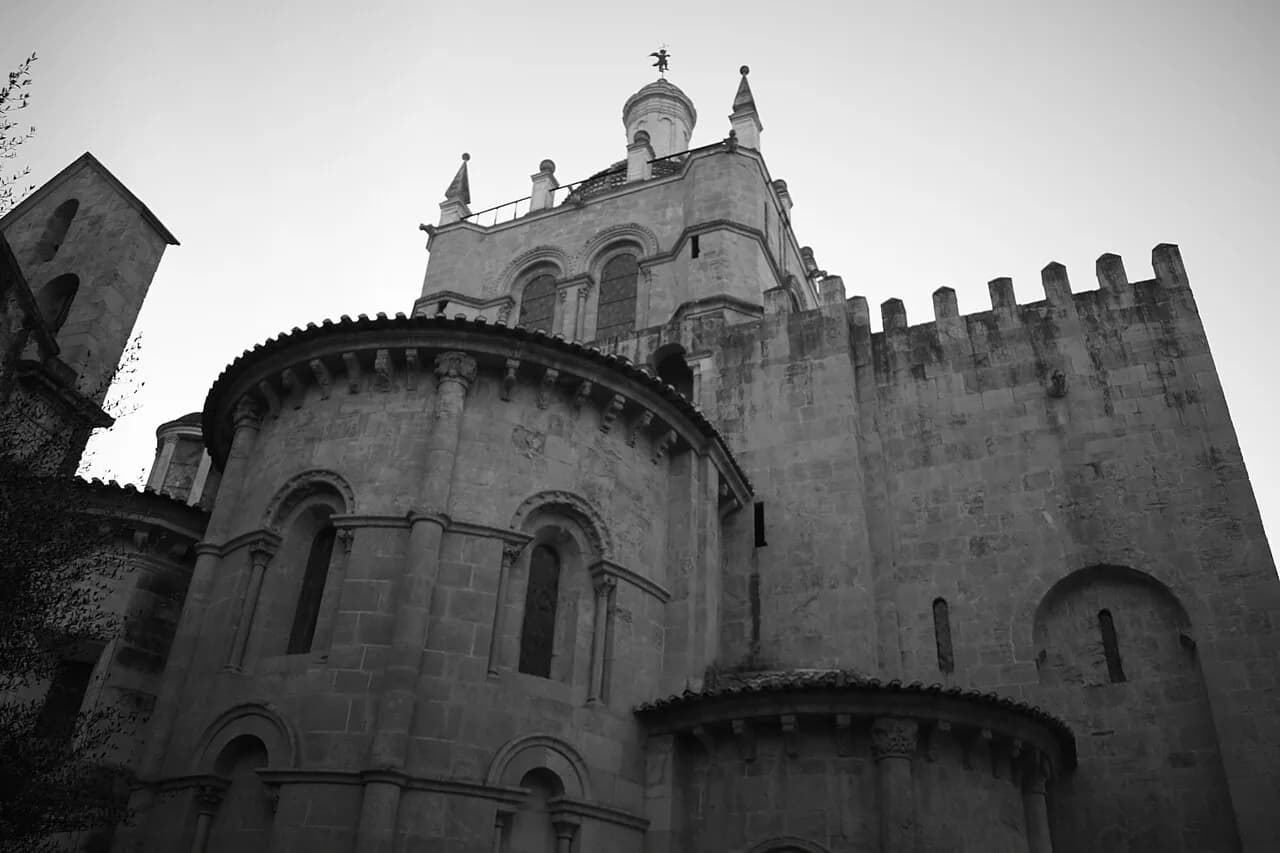
Sé Velha (Old Cathedral), Coimbra: What to See and How Long to Allow

Allow 30 to 45 minutes for the Sé Velha, Coimbra's Romanesque old cathedral, and go before or after Mass rather than during it. The building sits at the heart of the medieval Almedina neighbourhood, a short climb up steps from the Arco de Almedina, and the visit chains naturally into the university quarter above it. This page covers where the cathedral is, how the approach works, what to look at outside and inside, the admission charge and hours, and the sights you can pair with it.
Why Coimbra has an Old Cathedral and a New One
The Sé Velha keeps the word "old" because a second cathedral took over the title in the eighteenth century: the church formally known as the Catedral de Santa Maria de Coimbra dates from 1117, and the Sé Nova later became the city's seat. That distinction matters for planning, because the two cathedrals stand at opposite ends of the historic centre rather than side by side.
Its Romanesque character has survived unusually well. Much of the original medieval fabric is still in place in a country where major churches were often rebuilt later, and additions arrived over the following centuries rather than replacing what was there. Seen in that light, the building is a compact lesson in how Portuguese church architecture developed. For the broader picture of the city, the [[Coimbra Attractions: 10 Visitor Guides|azulejowalks.com]] collection sets this cathedral among the rest of the sights.

Where the Sé Velha Sits in the Almedina Neighbourhood
The cathedral faces a small square, Largo da Sé Velha, inside the tangle of lanes that formed the medieval city. This is the Almedina area, and the lanes around the square are steep and cobbled, with little in the way of level ground.
Arriving on foot is the norm, and the natural route is up the steps from the Arco de Almedina, the old gateway into the walled town. Treat the square as a target rather than a through-route: the streets here bend, and the cathedral's high walls only appear once you are close. That enclosed setting is part of the point, because the church was built to sit inside the defensive town rather than look out from it.

Getting There and Carrying On to the University
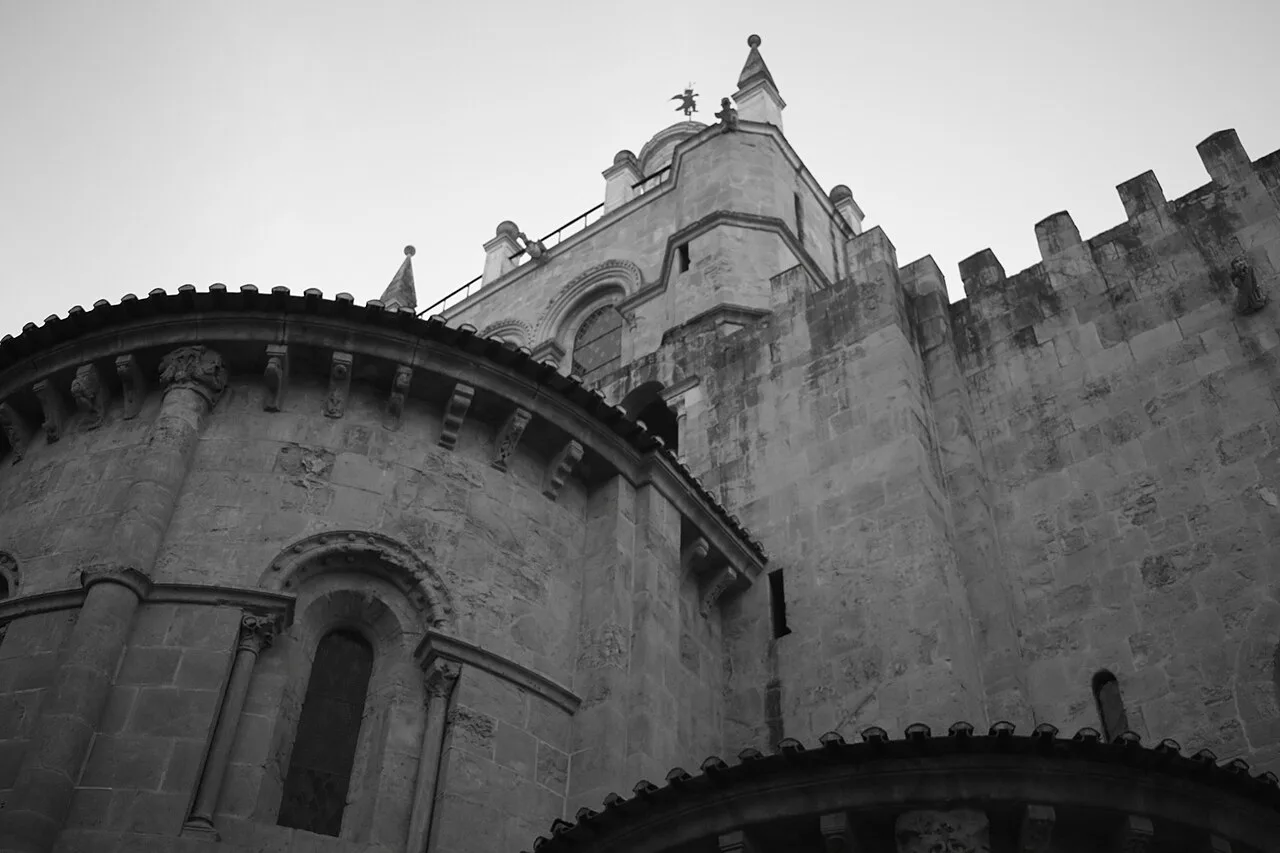
From the Arco de Almedina, climb the staircase and follow the lane round to Largo da Sé Velha; the cathedral's apse gives you a bearing before the main facade appears. The climb is short but uneven, so wear shoes you can trust on stone and calçada.
One of the appealing things about this stop is what comes after it. Continuing up the hill behind the cathedral brings you out at the university and the Machado de Castro National Museum, so the visit fits neatly into a single upward walk instead of a there-and-back detour. The [[university of Coimbra|azulejowalks.com]] is the next major set piece on that route.
What to Look For Outside
The exterior reads as a fortress before it reads as a church: high, plain stone walls with few openings and a heavy, defensive air. Look for the side portal, which breaks that severity with Renaissance ornament and reminds you what the building actually is.
At the front, the main portal carries Islamic-influenced decoration and is set above a flight of steps. Those steps hold a place in local student culture as the stage for the May serenade that closes the academic year, when graduating men sing fado as a farewell — a tradition attached to the spot rather than an event with fixed dates worth building a trip around.
What to See Inside
The interior is dark, low and largely Romanesque, so give your eyes a moment after the brightness of the square. Over the centuries the church gained a small group of later works: tiles brought from Seville in 1503, Gothic altarpieces in the chancel and baroque paintings elsewhere.
The highlight is the chancel, where Flemish sculptors made an elaborate gilded Gothic altarpiece in the early sixteenth century. This is the part of the visit to slow down for; the rest of the church rewards a quiet circuit rather than a checklist sweep. The Seville tiles are the other detail easy to walk straight past, so look at the wall surfaces as well as the furniture.
The Cloisters: Portugal's First Gothic
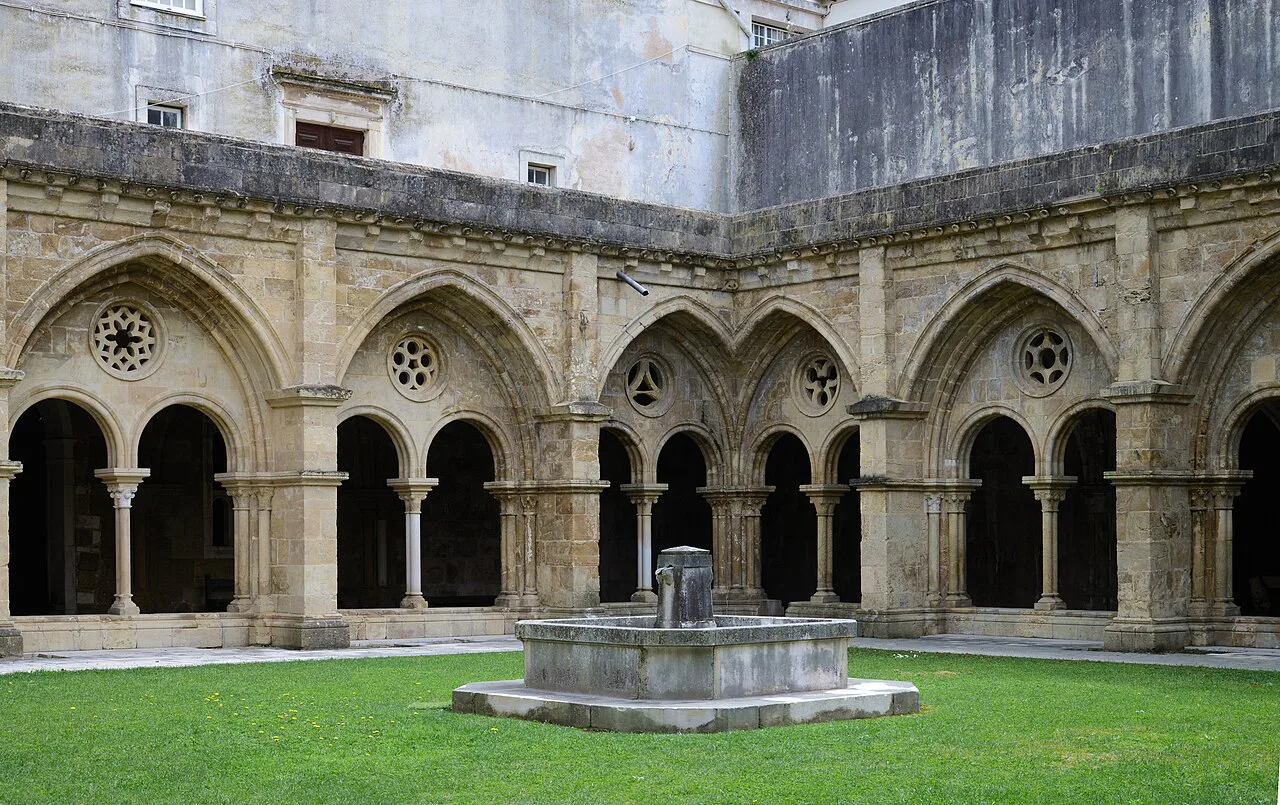
The cloisters, begun in 1218, were the first in Portugal to follow the Gothic style, which is a surprising thing to find tacked onto a Romanesque church. They are quiet and enclosed, and the carved capitals and arches are the reason to linger rather than hurry back out to the square.
Tickets and Opening Hours
Admission to the Sé Velha costs €2.50, which makes it one of the cheaper ways to spend half an hour in Coimbra. It is open daily from 10am to 5.30pm on weekdays, until 6.30pm on Saturdays, and from 11am to 5pm on Sundays.
The building is still a working church, and visits are not allowed during Mass. Mass runs at 5.30pm on weekdays, 6.30pm on Saturdays and 9.30am on Sundays, so a late-afternoon arrival on a weekday can be turned away. Build the cathedral earlier in the day and the conflict disappears.
How Long to Allow and How to Combine It
Half an hour covers the nave and chancel; add ten to fifteen minutes if you want to sit in the cloisters. That makes the Sé Velha a natural first stop on a morning that carries on uphill, rather than a half-day on its own.
Pair it with the university and the Machado de Castro National Museum, both a short climb away. The university's own sights take considerably longer, and the [[Museu Nacional Machado de Castro|azulejowalks.com]] is a substantial museum, so give the cathedral the early slot. If you are planning the whole visit, the guide to [[things to do in Coimbra|azulejowalks.com]] helps you spread the sights across your days.
Nearby Sights Within a Few Minutes
The most obvious counterpart is the [[Sé Nova Coimbra|azulejowalks.com]], the later cathedral that took over the title, sitting near the university end of the old town. Seeing both makes the old-versus-new naming click into place.
Downhill from the cathedral, the [[Mosteiro de Santa Cruz, Coimbra|azulejowalks.com]] anchors the lower town around Praça 8 de Maio, with the [[Igreja Santa Cruz Coimbra|azulejowalks.com]] attached to it. Together with the lanes of Almedina, these fill an afternoon without a bus or a taxi.
Up on the hill, the university complex is a cluster rather than a single building: the [[patio das Escolas Coimbra|azulejowalks.com]] is the courtyard at its centre, the [[Capela de São Miguel|azulejowalks.com]] its chapel, and the [[Torre da Universidade de Coimbra|azulejowalks.com]] the landmark you climb for the view. The [[Biblioteca Joanina|azulejowalks.com]] needs its own timed slot and is best booked ahead.
Is the Sé Velha Worth Half an Hour?
Yes, if you are already walking up to the university: the €2.50 ticket buys a rare surviving Romanesque interior, a superb Gothic altarpiece and cloisters most visitors hurry past. Skip it only if your time in Coimbra is down to a few hours and the university quarter is the priority.
Go in the morning, before the weekday 5.30pm Mass closes the church to visitors, and carry on uphill afterwards rather than retracing your steps. Confirm the day's opening times on the door or with the cathedral before you set out.