
University of Coimbra: a Visitor's Guide to the Paço das Escolas
The University of Coimbra comes down to one compact group of buildings: the Paço das Escolas, the former royal palace on the hill above the old town, which has been the university's heart since 1537. A visit of roughly two hours covers the courtyard, the tower, the chapel and the library at an unhurried pace; the page below walks you through them in the order you meet them and explains where the hill sits in the city.
Do not go looking for a single sprawling campus. Teaching buildings are scattered across the city, but everything a short-break visitor wants to see is inside or beside the Paço, so you plan one climb rather than several.
What the University of Coimbra is and why it matters
King Dinis founded the university in 1290, making it the oldest higher education institution in Portugal, and it was definitively transferred from Lisbon to Coimbra in 1537, when it took over the royal palace buildings. UNESCO listed it as a World Heritage Site in 2013, citing its influence across four continents of the former Portuguese empire and the way its architecture records key periods of Portuguese art and thought.
The buildings themselves carry that history: the reigns of João V and José I brought reforms in teaching and new construction in Baroque and Neoclassical styles, which is why the upper city reads as a layered complex rather than a single facade.

Where it sits on the hill
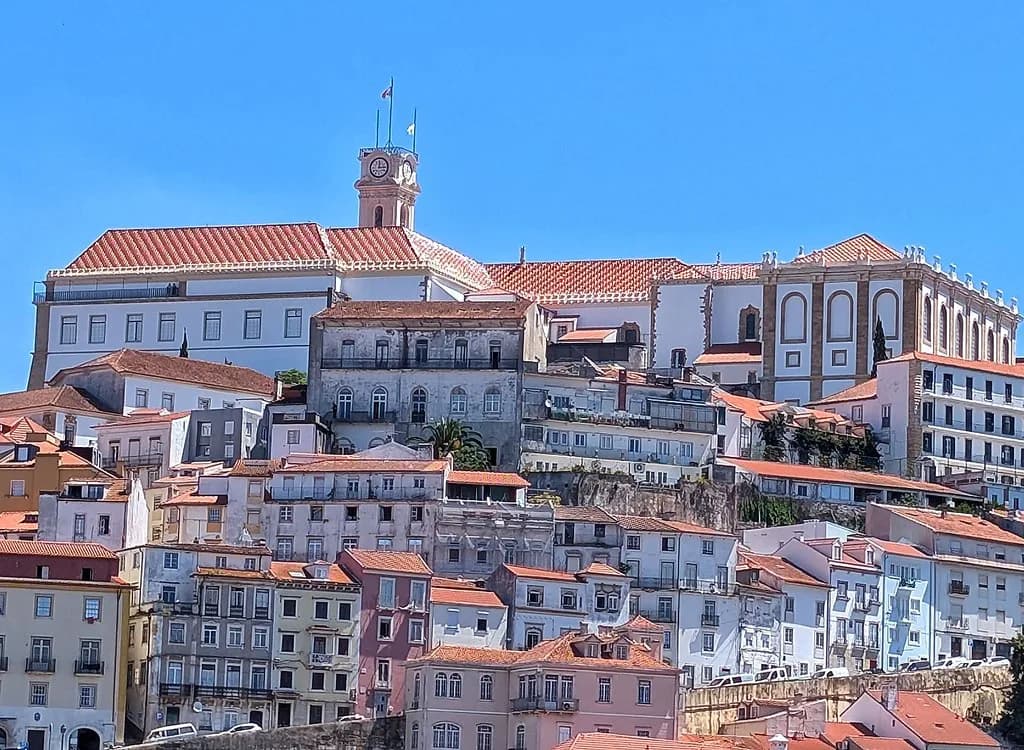
The Paço das Escolas occupies the top of Coimbra's upper town, on the hill directly above the old cathedral and the tangle of streets running down to the river. You reach it on foot: from the Baixa, the riverside lower town, the climb is steep in places and takes a steady fifteen to twenty minutes at walking pace, and it is worth doing once rather than shuttling up and down between sights.
Wear shoes that cope with calçada, the polished stone cobbles that turn slippery when wet, and allow for shade stops on the way up. The reward is that the Sé Velha, the university and several museums sit within a few minutes of each other at the top.
The wider set of things to do in Coimbra makes more sense once you see this layout: the historic centre is small and walkable, so the hill is the anchor of a half-day rather than a separate excursion.

The Iron Gate and the Via Latina
You enter through the Porta Férrea, the Iron Gate, originally the doorway of the old royal palace; two portals added in 1634 carry allegorical sculptures of the four old faculties of Medicine, Law, Theology and Canons, alongside kings Dinis and João III and the emblem of Sapiência. Passing through it into the courtyard is the moment the visit starts, so pause to read the figures rather than hurrying towards the tower.
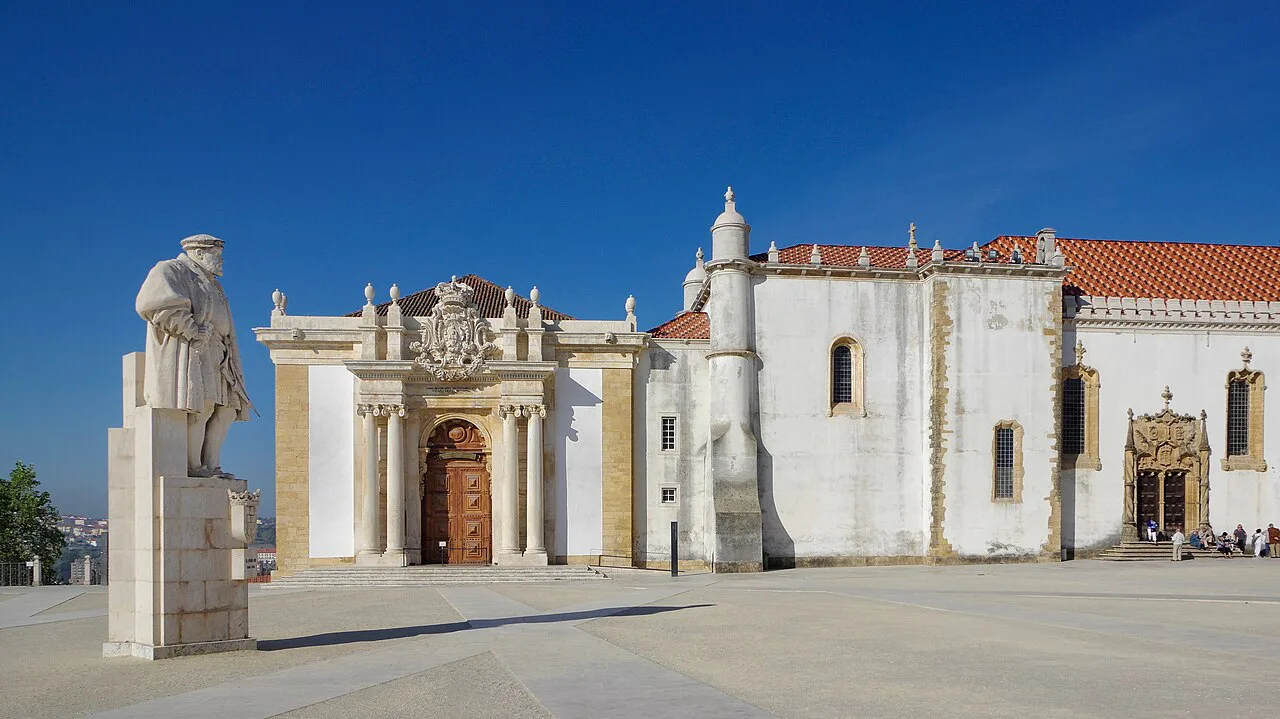
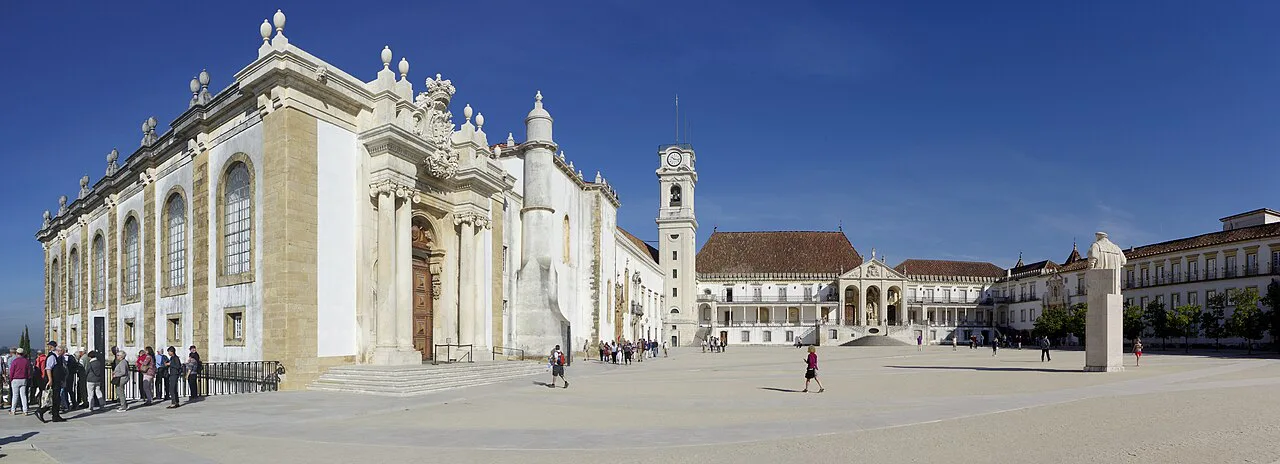
Inside, the Via Latina is a late eighteenth-century colonnade named after the old rule that forbade any language other than Latin within it. The Monument to D. João III, a monumental historicist statue inaugurated in 1948, stands in the courtyard: it is a piece of Estado Novo official imagery as much as a royal tribute, which is worth knowing before you photograph it.
The tower and the view over the city
The Torre rises directly from the courtyard and is one of the named structures of the Paço, and the silhouette you see from much of Coimbra. It is an obvious marker to steer by when you get lost in the streets below; whether you can go up on the day is worth checking at the entrance before you plan around it.
Treat the tower as dependent on access on the day rather than as guaranteed with your visit, and ask at the entrance before counting on the climb; the same applies to the library. Whether tower entry is included or separately ticketed, and any closing days, is best confirmed at the ticket desk.
The Capela de São Miguel and the Sala dos Capelos
The Capela de São Miguel is the palace chapel inside the Paço das Escolas, small enough that groups bunch up inside, so take it slowly rather than shuffle through. It is one of the named structures of the complex, so factor it in when budgeting your time on the hill.
The Sala dos Capelos was the throne room of the royal palace, adapted in the seventeenth century to host the most important events of academic life: the solemn opening of the academic year, doctoral examinations and the conferring of honours. The room's layout, with examiners raised above the candidate, tells you more about the university's rituals than any label could.
The Joanina Library and the Casa da Livraria
The Biblioteca Joanina is the reason many visitors climb the hill at all: a Baroque library of gilded tiers and painted ceilings in the Casa da Livraria, the Bookstore House. Access is managed in short timed slots rather than browsing at leisure, so the experience is brief and hushed; check the slot arrangement at the ticket desk before you commit.
Because the library depends on slot-based access and visitors are moved through quickly, the surrounding complex deserves as much of your attention as the interior itself. Photography and access rules inside the library are strict, so read the notices at the entrance rather than assuming flash is allowed.
The Academic Prison and Colégio de São Pedro
The Prisão Académica, the Academic Prison, is one of the complex's more surprising rooms, a reminder that the university once held its own jurisdiction over students. The Colégio de São Pedro, St Peter's College, is the other named building in the complex.
Both are easy to miss if you head straight for the library and turn back, so check the visitor plan at the entrance and work out what is open before you start moving through the complex. If time is short, the courtyard, the chapel and the library deserve priority over the peripheral rooms.
How much time to allow and how the visit works
Allow around two hours for the Paço das Escolas, more if you climb the tower and queue for the library, and less if you only want the courtyard and the chapel. The interiors are visited in sequence rather than as a free-roaming museum, and the university promotes a UC Tour as its organised way through the complex, which suits anyone who wants the rooms explained rather than just seen.
The honest trade-off is that the headline rooms depend on timed access and on what is open on the day, so a ticket may buy a shorter or more structured look than you expect. Build in slack, keep the visit to the morning when the hill is quieter, and leave the lower town for the afternoon.
Tickets, opening days and closures
The university does not publish a single fixed price and timetable for the whole complex in a way that stays stable, and the current cost of visiting the Paço das Escolas, the library and the tower, together with any combined ticket, is set out at the ticket office and on the university's site. Check opening days before you climb, particularly around public holidays and academic ceremonies, when parts of the complex can be unavailable.
Rather than rely on a figure quoted in an old guidebook, buy on the day or check the official pages for the current arrangement. The one habit worth keeping is asking at the entrance which rooms are open and whether the library slot is included before you pay.
Nearby sights to pair with the climb
The Sé Velha, Coimbra's old cathedral, sits downhill from the Paço in the old town, an obvious next stop on the way back down. The Sé Nova, the new cathedral, stands at the upper end of the university area, so the two cathedrals bracket the hill.
The Museu Nacional Machado de Castro occupies the former bishop's palace just below the university terrace. Give it an hour and it slots neatly between the Paço and the walk down.
Lower down, the Igreja de Santa Cruz and the adjoining Mosteiro de Santa Cruz hold much that many visitors overlook in favour of the university. Both sit in the flat lower town and are easy to reach once you have descended from the hill.
Is the climb to the Paço das Escolas worth it?
Yes, provided you go for the complex as a whole rather than one famous room. The courtyard, the chapel, the Capelos hall and the tower give you a rounded picture of a working institution, and the walk up repays the effort.
Go early, buy at the desk after asking what is open, and treat the library slot as the cap on your visit rather than its purpose. Then walk down to the Sé Velha and Santa Cruz while your legs still agree to it. For more, see Coimbra guide.