
Torre da Universidade de Coimbra: What You See and How to Visit
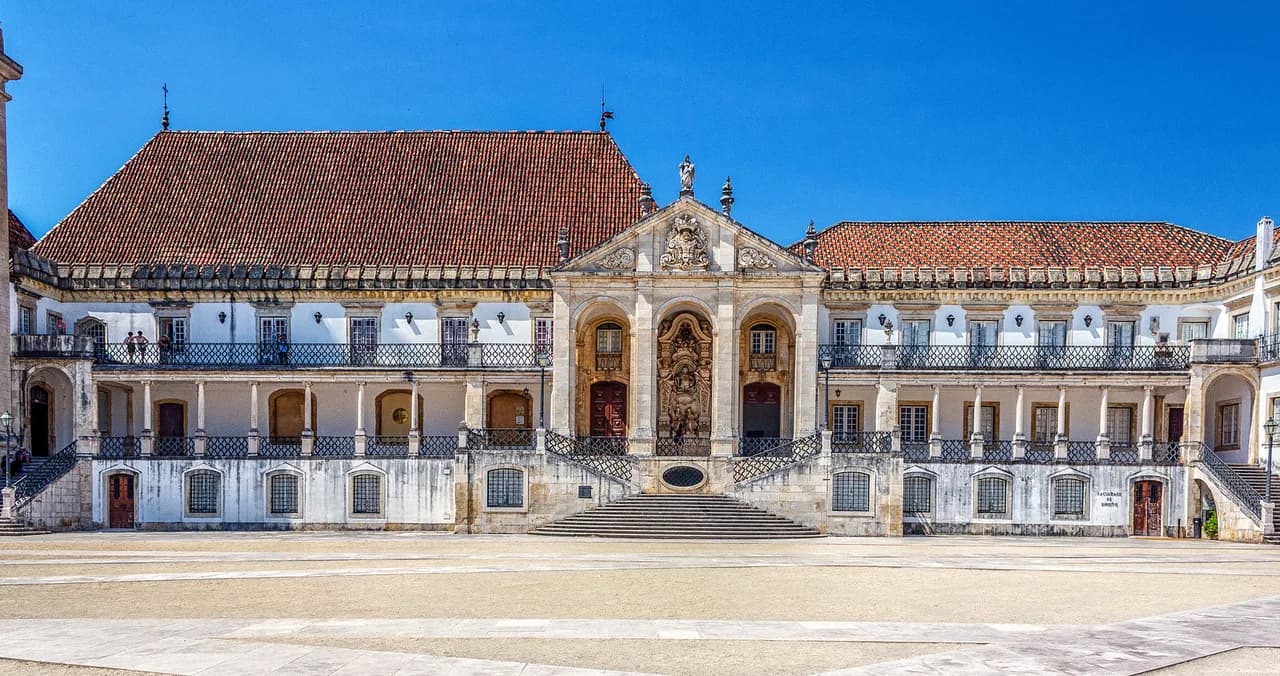
The Torre da Universidade de Coimbra is the clock tower that rises above the Paço das Escolas, the square at the top of the Alta, and it is the landmark most visitors use to find the university. You do not climb it for a panorama; you see it as part of a circuit through the old royal palace, with the ceremonial halls and the baroque library below and beside it. This guide covers where the tower sits, what a visit includes, how much time to allow and what to see nearby.
What the Torre da Universidade de Coimbra is
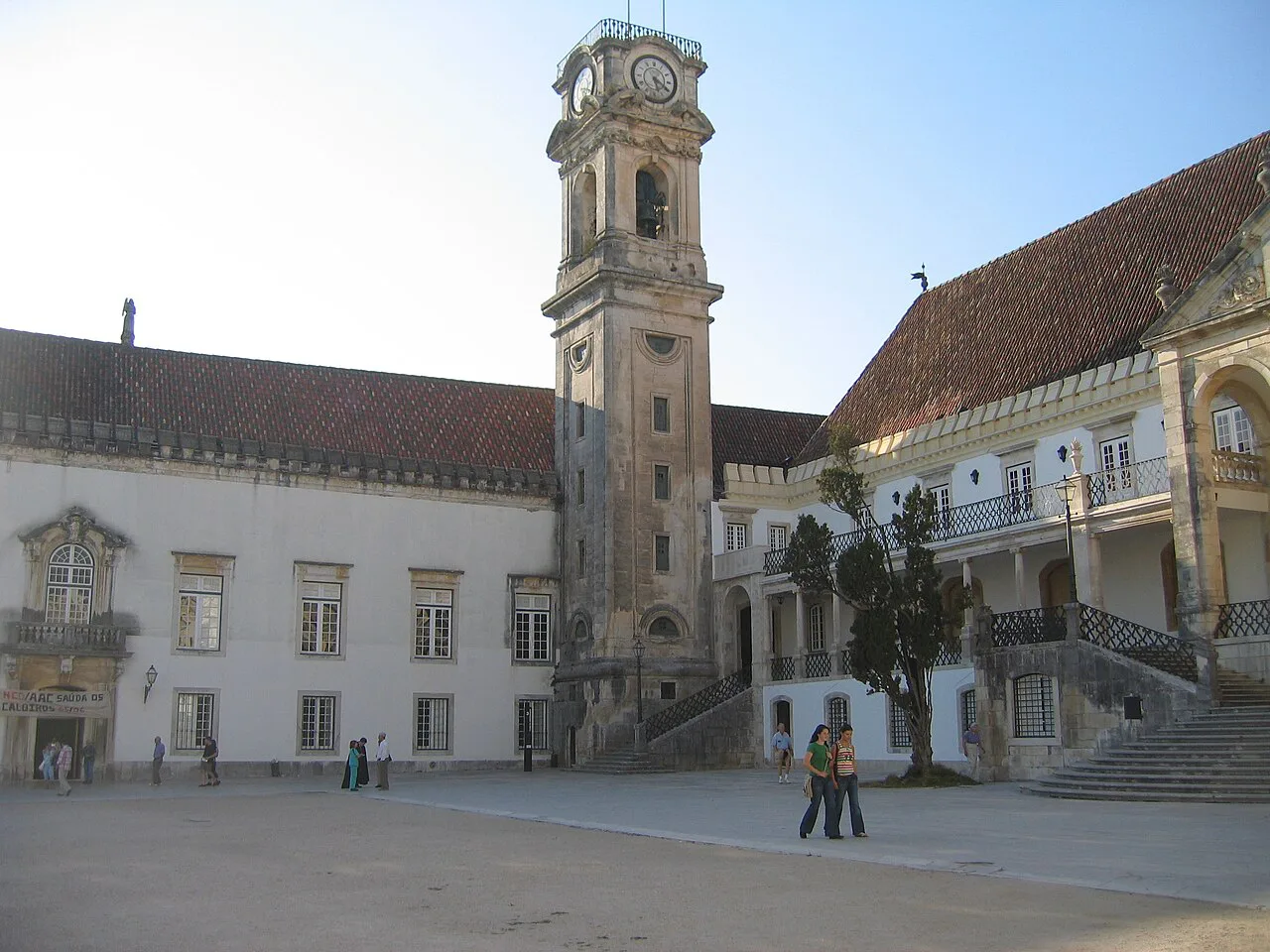
The tower houses the clock and bells that regulate academic life, and it dominates the Paço das Escolas. Its origin goes back to 1537, when the university, about to move into the palace of D. João III, argued that it could not keep good order without a clock; the structure you see today is eighteenth-century.
Treat the tower as the emblem of the university rather than a separate attraction. It marks the entrance to the historic complex, and the ticket and itinerary you book are for the university buildings as a whole, not for the tower alone.

Where it sits in the Alta
The tower stands in the Paço das Escolas in the Alta, the hilltop quarter that grew around the university. The Universidade de Coimbra – Alta e Sofia has been inscribed on the UNESCO World Heritage list since 2013, a listing that covers 31 buildings across 81.5 hectares, including the colleges along Rua da Sofia and the Pombaline and twentieth-century additions.
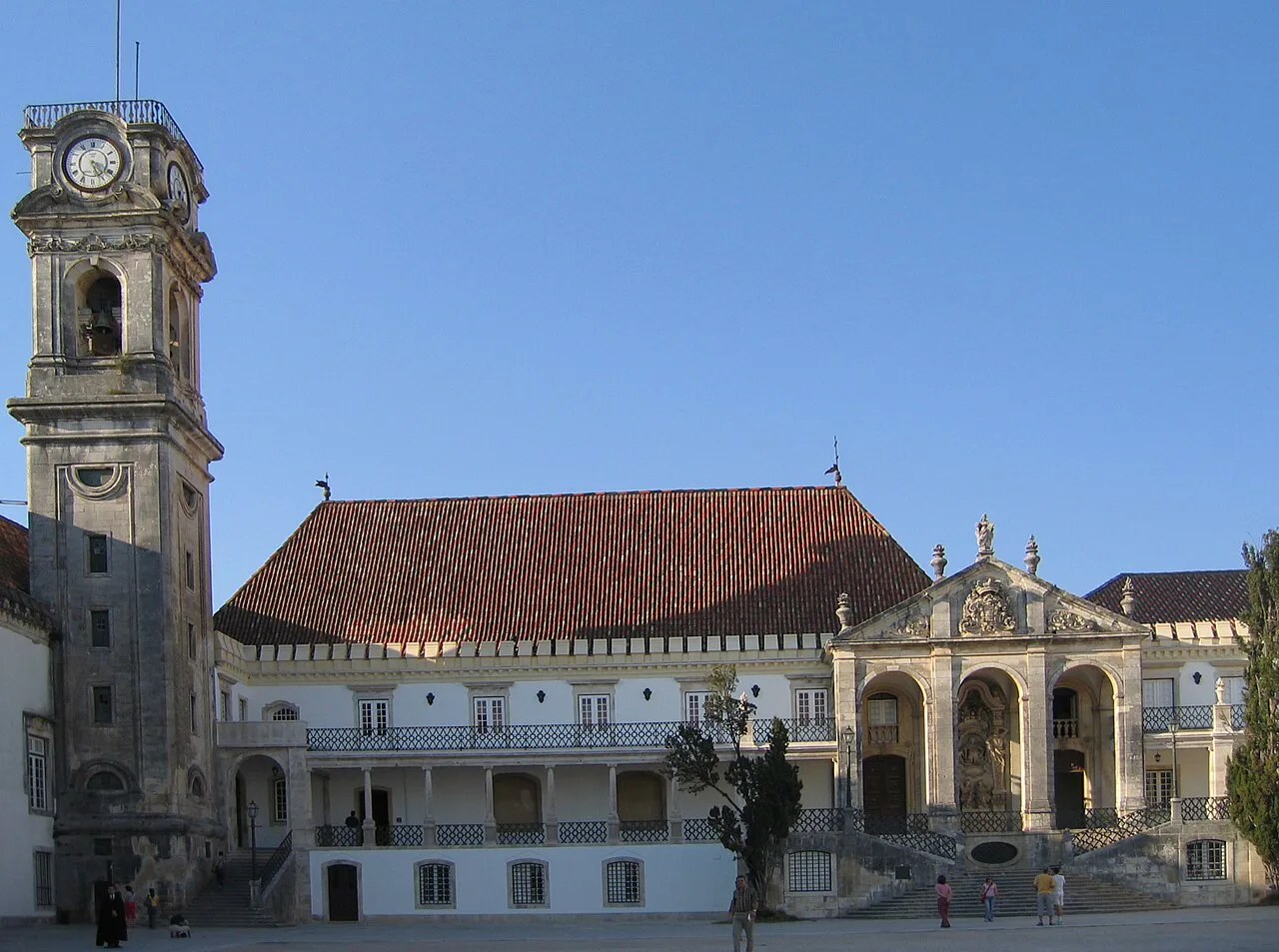
Within the square, the tower rises over the former royal palace of the Alcáçova, which has housed the university since 1537. The courtyard is the natural starting point for the tower, the ceremonial rooms and the library, so plan your visit around it rather than treating each sight as a separate outing.

How to reach the tower
You reach the tower on foot, climbing through the Alta's steep, narrow streets to the Paço das Escolas. Wear shoes with grip for the calçada, especially after rain, and allow extra time on the climb if you are carrying bags.
Travellers with limited mobility should plan the approach before setting out, because the historic centre is hilly and the streets are uneven. The wider university complex and its other sights fit into a single morning or afternoon once you are up in the Alta.
What a tower visit includes
The visit covers the tower alongside the Sala dos Capelos, the Sala do Exame Privado and the Sala das Armas. The Sala das Armas belonged to the royal wing of the old palace and holds the halberds of the Academic Royal Guard, still carried by the Archeiros at solemn ceremonies such as honorary doctorates and the investiture of the Rector.
The tower's clock and bells still mark the academic day, and the courtyard below is where students and visitors cross paths. Book the university visit as one block rather than expecting to enter the tower separately.
The Sala dos Capelos
The Sala Grande dos Actos, better known as the Sala dos Capelos, is the university's main hall and still hosts academic ceremonies. Its painted ceiling and portraits of monarchs give the room the formal weight you would expect from a institution that has run for more than seven centuries.
Visit it as part of the same circuit as the tower, since the rooms sit within the former palace and are shown together. Photography rules and access to individual rooms can vary during ceremony days, so check before you commit to a time slot.
Adding the Biblioteca Joanina
The Biblioteca Joanina, the baroque library with gilded shelving, tropical wood and painted ceilings, is the highlight most visitors remember. Built in the early eighteenth century as part of the university's expansion, it holds thousands of volumes and is shown on the same circuit as the tower and the ceremonial halls.
Book the university visit that includes the library rather than turning up and hoping, since capacity is limited and slots go fastest in high season. If you have to choose, take the library; you can see the tower from the courtyard without a ticket.
Other university sights a short walk away
The Capela de São Miguel, a Manueline chapel within the Paço das Escolas, is one step from the tower and worth ten minutes for its azulejo panels and painted ceiling. Nearby, the Museu da Ciência occupies the old chemistry laboratory and presents the university's scientific instruments.
The Jardim Botânico, laid out in the eighteenth century as part of the university, gives you a calm, green break after the stone and gold of the palace. It sits a short downhill walk from the Paço das Escolas.
How much time to allow
A realistic half-day covers the tower, the Sala dos Capelos, the Sala do Exame Privado, the Sala das Armas and the Biblioteca Joanina, with time to pause in the courtyard. Add an hour if you want the Capela de São Miguel and the Museu da Ciência, both of which reward a slower look.
If you are visiting Coimbra for a short break, give the university a full morning and leave the afternoon for the lower town. That split avoids the worst of the midday heat on the climb and leaves you fresh enough for the old streets afterwards.
Tickets and opening days
The university publishes its visitor circuits and the spaces open on each tour on its own booking pages. Check those pages for the current ticket price, opening days and any closures before you travel, because access to individual rooms can change during ceremonies and term time.
Do not assume the tower is open simply because the courtyard is accessible; the two are separate. Booking online saves queuing and confirms which rooms are included on your chosen day.
Nearby after the tower
The Museu Nacional Machado de Castro stands on the slope below the university and occupies a building that has served as a Roman administrative centre, a Christian church, a bishop's palace and, since 1911, a museum. Its Renaissance loggia and Roman cryptoporticus make it the strongest single sight after the university itself.
Walking down from the Alta, you pass the Sé Velha, Coimbra's Romanesque old cathedral, and the Sé Nova on the edge of the university quarter. Both are worth a short stop before you drop into the Baixa for a coffee or a tasca lunch.
Is the tower worth it?
Yes, as the headline of a university visit that takes in the library and ceremonial halls. The tower is a symbol more than a viewpoint, so judge your ticket by the indoor spaces rather than by any hope of climbing to the bells.
If your budget or time is tight, skip the tower circuit and see the library and the courtyard instead. If you are staying two or three days, the full university visit plus the Museu Nacional Machado de Castro makes a solid first day in Coimbra.
Is the tower worth the climb?
The tower is best treated as the entry point to a visit of Portugal's oldest university rather than as a standalone climb. Book the circuit that includes the Biblioteca Joanina and the Sala dos Capelos, go early, and wear shoes that grip the calçada on the way up.
Explore more Coimbra guides
Frequently Asked Questions
Do you climb the Torre da Universidade de Coimbra?
The university's tours focus on the tower alongside the ceremonial halls and library, and access to the bell chamber is not part of the standard visit. Check the official visit page for what each ticket covers before you book.
How long does the tower visit take?
Plan on at least two hours for the tower, the Sala dos Capelos, the Sala do Exame Privado and the Sala das Armas, and a bit more if you add the Biblioteca Joanina. A half-day lets you combine all of the Paço das Escolas with one nearby sight.
When should you visit the tower?
Mornings are quieter and cooler for the climb through the Alta. Book in advance during peak periods and avoid days with academic ceremonies if you want unrestricted access to the ceremonial rooms.