
Mosteiro de Santa Cruz, Coimbra: What to See and How Long It Takes

Allow roughly 40 minutes at the Mosteiro de Santa Cruz in Coimbra, the monastery church on Praça 8 de Maio that holds the tombs of Portugal's first two kings. It is a compact, central stop rather than a half-day monument, and it slots easily between the old cathedral and the university hill. This guide covers where it sits, the opening hours that decide which day you visit, what to look at inside and what is within a few minutes' walk.
The building is formally the Igreja de Santa Cruz, the church of a monastery founded in 1131, and it has held the status of Panteão Nacional since 2003 because D. Afonso Henriques and his son D. Sancho I are buried in the chancel. That combination of royal burial and a Manueline interior is the reason to step inside rather than admire the façade from the square. The 40-minute figure is a planning allowance, not a measured time, so treat it as a rough budget.
What the Mosteiro de Santa Cruz is and why it earns 40 minutes
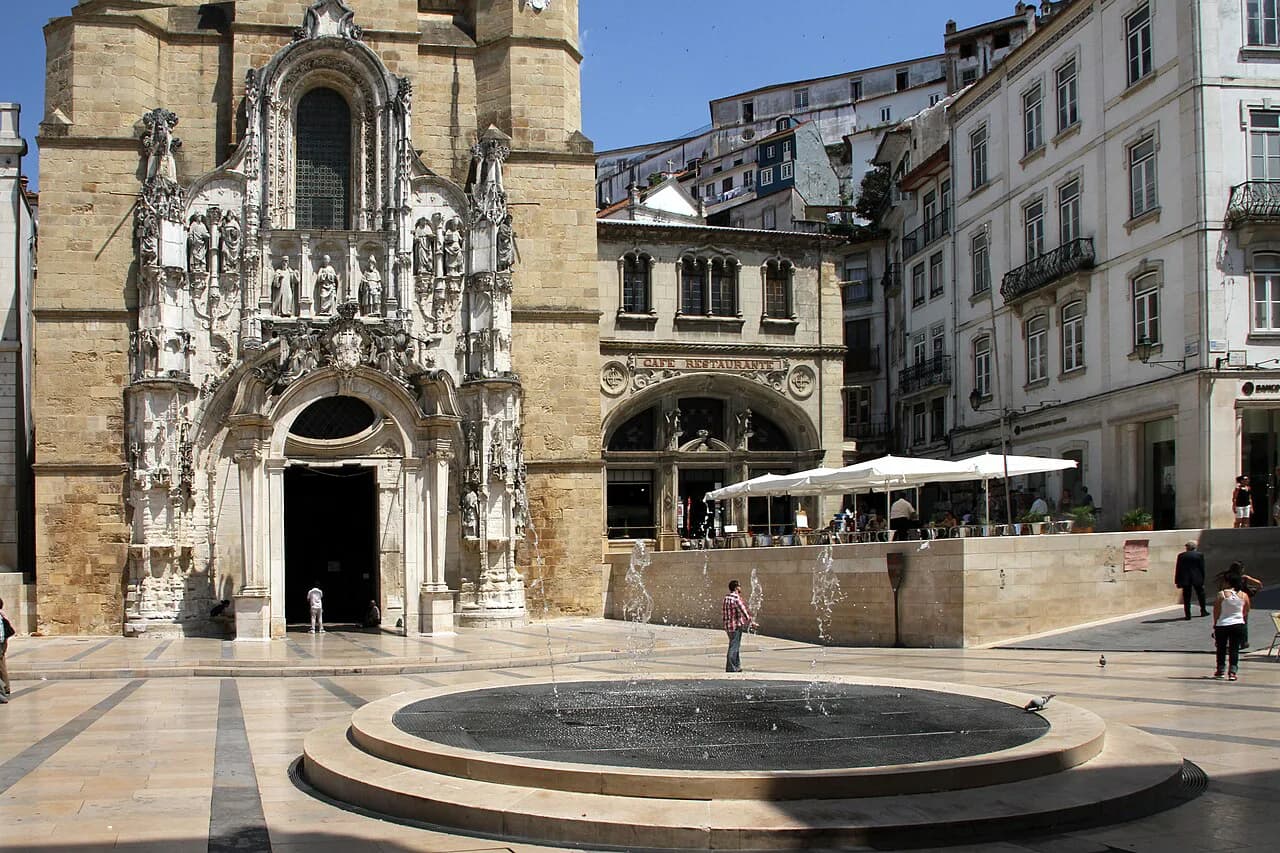
Santa Cruz was the most influential monastic house in Coimbra during Portugal's early centuries, founded in 1131 with the backing of D. Afonso Henriques for the Order of Saint Augustine. It became a centre of theological study with a celebrated library and scriptorium, and figures associated with it include Santo António and, by tradition, the poet Luís de Camões. Little of the Romanesque fabric survives because D. Manuel I and D. João III ordered major rebuildings and extensions in the 16th century.
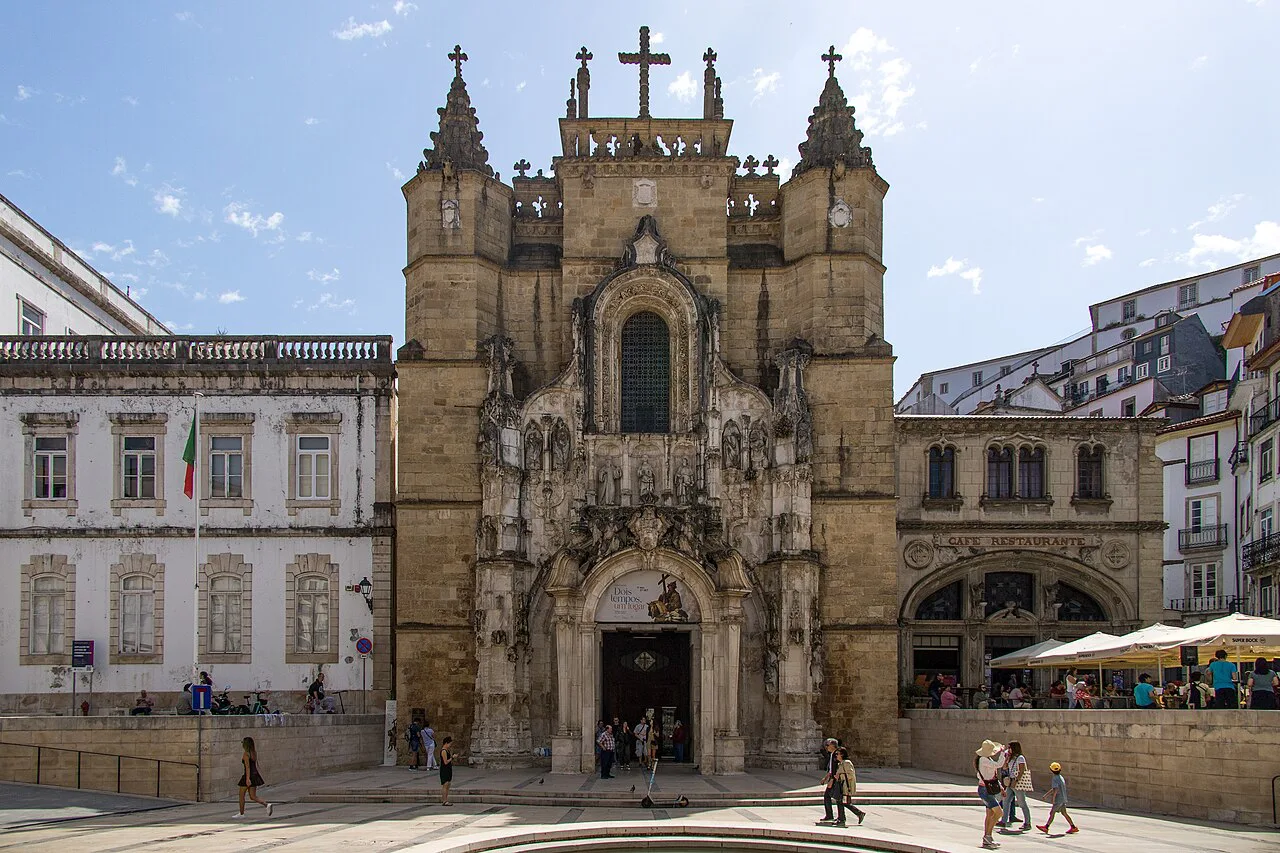
That 16th-century campaign is what you actually see today: a monumental Manueline portal, a richly carved interior and the royal tombs commissioned from the sculptor Nicolau de Chanterenne. The church was recognised as a national pantheon in 2003 by law, without interrupting religious use of the building. Treat 40 minutes as a sensible allowance for the church and its principal artworks; groups that linger over the sculpture will want longer.

Where it is: Praça 8 de Maio in the Baixa
The monastery stands at Praça 8 de Maio in Coimbra's Baixa, the lower town, with its address listed as 3001-300 Coimbra. The square is the practical anchor for finding it: the church front faces the open space, and the Café Santa Cruz occupies part of the former monastic complex beside it. If you are navigating by landmarks, aim for the square rather than a street number, because the entrance sits directly on it.
From here the old cathedral, the Sé Velha, is a few minutes uphill, and the steps and streets leading to the university quarter climb further above it. That makes Santa Cruz a natural first or last stop in the Baixa before you commit to the hill. The wider Coimbra Attractions: 10 Visitor Guides collection maps how these sights sit together if you are building a one- to three-day plan.

Opening hours: weekday, Saturday and Sunday
The published schedule runs Monday to Friday from 09:00 to 17:00, Saturday in two shifts from 09:00 to 12:30 and 14:00 to 17:00, and Sunday only from 16:00 to 17:30. Those Saturday and Sunday gaps are the key planning constraint: a late-morning Saturday or any Sunday morning will find the doors shut. A weekday visit gives you the widest window and the least risk of arriving during a closure.
Because the church remains an active place of worship, services and religious calendars can affect access even within the published hours, so check the times again shortly before you travel. Sunday visitors should plan the church for late afternoon and use the morning for the riverfront or the university area instead. A Monday visit is straightforward under this schedule, since the church opens as normal on weekdays.
Ticket prices and any charges for special areas such as the cloisters are not listed on the published schedule, so confirm them at the entrance or through the parish before setting a budget. Do not assume the church is free simply because no price is shown here. If you are weighing Santa Cruz against paid monuments elsewhere in the city, build the ticket cost from what the venue itself tells you on the day.
The royal tombs and the national pantheon
The chancel holds the tombs of D. Afonso Henriques and D. Sancho I, placed facing each other and framed by stone retables that mix late Gothic, Manueline and early Renaissance detail. The recumbent figures were carved by Nicolau de Chanterenne after the church was extended with a new chancel, giving the founders of the kingdom the dignity their earlier graves lacked. That burial is the reason the church was designated a national pantheon in 2003.
Look for the armillary sphere and the cross of the Order of Christ among the carving, the personal emblems of D. Manuel I. The tombs are not a side chapel to glance at on the way out; they are the focal point of the visit and the main thing to read before you leave. Give them five to ten minutes of the 40 rather than photographing them from the nave.
What else to look at inside
A gilded, carved Manueline choir stall of 1513 survives in the high choir over the entrance, and the nave also holds a Renaissance pulpit by Chanterenne dated 1521. Blue-and-white Lisbon azulejos added in the 18th century run along the nave walls with biblical scenes, and the sacristy, built in the 1620s, is lined with 17th-century tiles and paintings attributed to Grão Vasco and Cristóvão de Figueiredo. These are the details that reward a slower circuit of the interior.
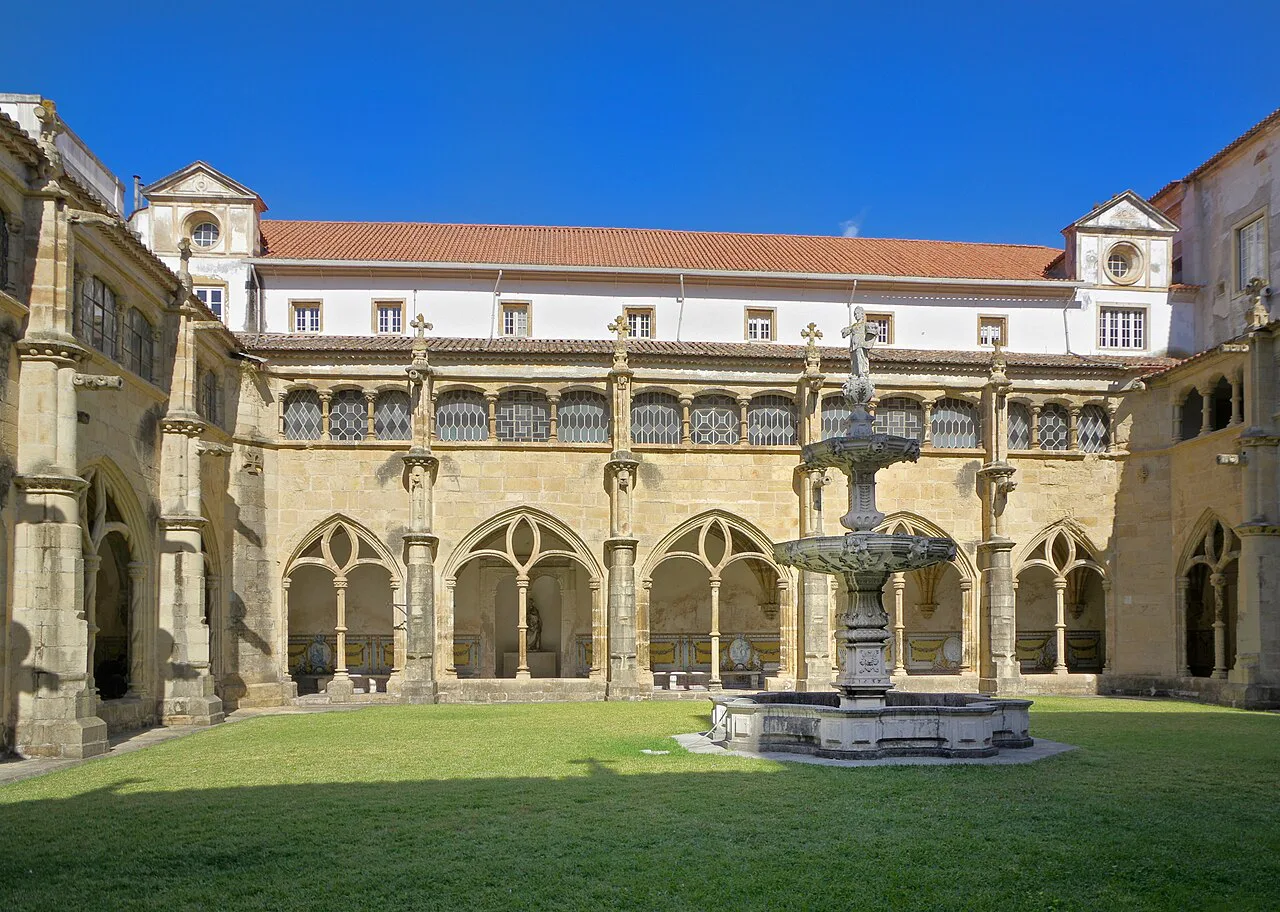
The monastic complex also includes the Claustro do Silêncio, a Manueline cloister built between 1517 and 1522, and the Renaissance Claustro da Manga behind it. Visitor access to the cloisters is not set out in the published church schedule, so ask at the entrance whether they are open on the day rather than planning around them. If they are closed, the church alone still justifies the stop.
How long to allow and how to slot it into a day
Budget about 40 minutes for the church, then add time for the square outside. The building sits low in the Baixa, so the sensible sequence is Santa Cruz first, then the Sé Velha Coimbra a few minutes uphill, and finally the climb to the university quarter. Doing it in that order means you are always walking uphill once, not descending and re-climbing between sights.
If the university is your priority, note that reaching the Paço das Escolas involves a long staircase, and the Biblioteca Joanina next to it is a separate ticketed visit that needs its own slot. Santa Cruz works well as the warm-up before that hill, precisely because it is small and central. The university of Coimbra guide sets out what the upper town involves so you can judge the order.
Nearby: what is within a few minutes' walk
Café Santa Cruz sits in a former chapel of the monastic complex on the same square, with Gothic vaulting overhead, which makes it the obvious place for a coffee before or after the visit. Fado ao Centro, a short show of Coimbra fado sung by students in capes, is about 0.2 km away, and the Sé Velha is roughly 0.3 km uphill. All three are close enough to combine with Santa Cruz without any transport.
For a quiet pause, the Parque Verde do Mondego runs along both banks of the river about a kilometre from the square, a sensible end point after the hill. The Torre da Universidade de Coimbra is another landmark on the same climb, useful for orientation once you reach the upper town. Plan the Baixa cluster on foot and keep the river for the afternoon.
Is Santa Cruz worth fitting into your Coimbra days?
Yes, if you have 40 minutes to spare in the Baixa and an interest in the founding figures of Portugal. It is not a half-day monument, so pair it with the Sé Velha and the university hill rather than treating it as a destination in itself. The royal tombs and the Manueline choir stalls are what lift it above a routine church stop.
Choose a weekday if your schedule allows, since the Saturday split shift and the short Sunday afternoon window leave little room for error. Confirm any charges and cloister access at the door, then build the rest of the day around the climb to the university. That is the version of Santa Cruz that fits a short break without eating the afternoon.
Explore more Coimbra guides
Frequently Asked Questions
Who is buried in the Mosteiro de Santa Cruz?
D. Afonso Henriques and his son and successor D. Sancho I, the first two kings of Portugal, lie in carved tombs facing each other in the chancel. Their recumbent figures were made by Nicolau de Chanterenne during the 16th-century rebuilding, and their presence is why the church was designated a national pantheon in 2003.
Can you visit the cloisters at Santa Cruz?
The monastery has two notable cloisters, the Manueline Claustro do Silêncio and the Renaissance Claustro da Manga, but the published church schedule does not set out visitor access to them. Ask at the entrance when you arrive, and do not plan your day around walking through them.
What is the difference between the Igreja and the Mosteiro de Santa Cruz?
They refer to the same complex. The Igreja de Santa Cruz is the church you enter from Praça 8 de Maio, while the Mosteiro was the wider monastic house founded in 1131. Visitor attention centres on the church, its royal tombs and its Manueline interior.