Coimbra Walking Tour: The Old Town on Foot in One Day
A self-guided Coimbra walking tour linking the university, Joanina Library, both cathedrals and the Mondego riverside, with stops in order.
On this page
A self-guided Coimbra walking tour takes one full day to cover the old town properly, from the Mondego riverside up to the university and back down through Santa Cruz. Allow two to three hours inside the Universidade de Coimbra alone, then add both cathedrals, the museum quarter and a viewpoint or two.
The city splits cleanly into a lower town along the river and an upper town on the hill, so the route only works in one direction: climb first, wander second, descend last. This guide gives the stops in order, explains what each one is worth, and marks the places that need a timed ticket.
What the walk covers and who it suits
This route suits travellers with one to two days who want the historic core on foot rather than a checklist of suburbs. It strings together the riverside, the pedestrian shopping street, the old cathedral, the university quarter, the new cathedral, the Machado de Castro museum and the Santa Cruz monastery, all within a compact area.
Skip it if you have only a couple of hours: pick the university and one cathedral instead. The climb between the lower and upper town is the part that eats time, and rushing it means seeing the Joanina Library and nothing else.
How long the route takes and how much ground it covers
Budget a full day of walking with stops, not a march. The university buildings alone take two to three hours, and the two cathedrals, the museum and Santa Cruz each add a worthwhile pause of twenty to forty minutes.
On a half-day, cut the museum and the Botanical Garden extension and keep the university, the Sé Velha and the riverside. The walk is short in distance but steep in places, so wear shoes that grip the calçada rather than the flat soles you would take to a shopping centre.
Where to start: Largo da Portagem and the Mondego riverside
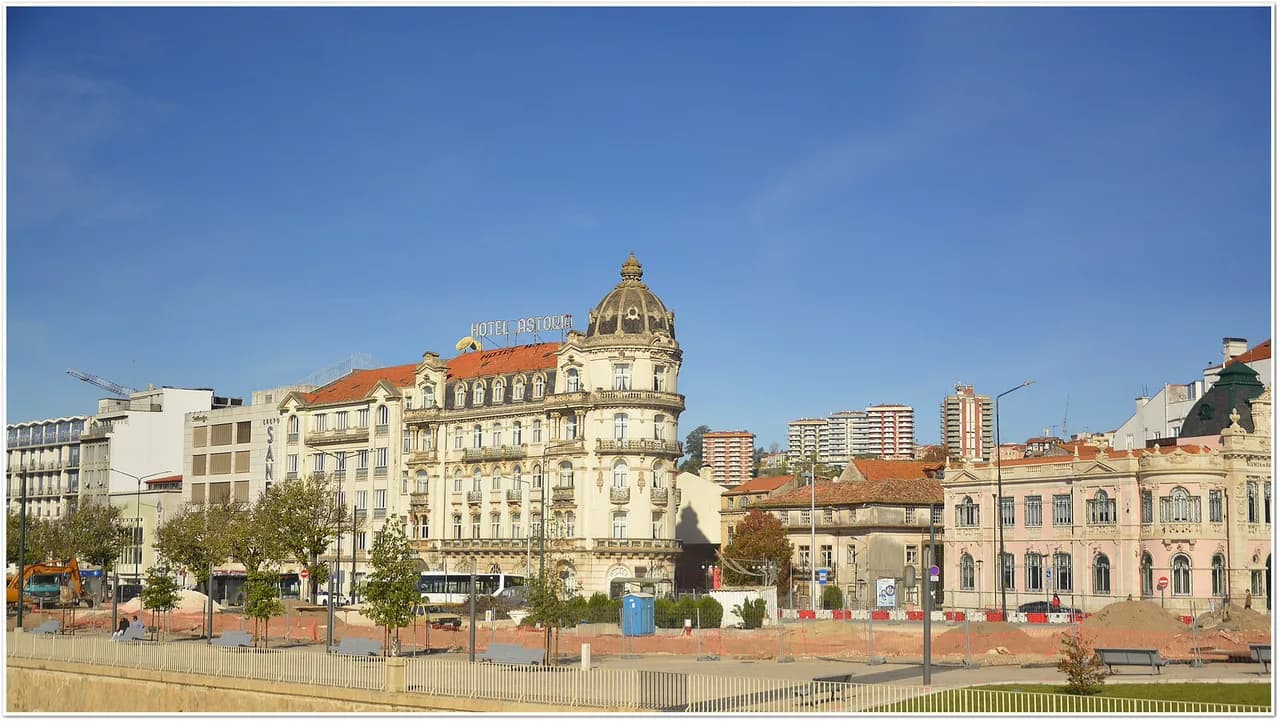
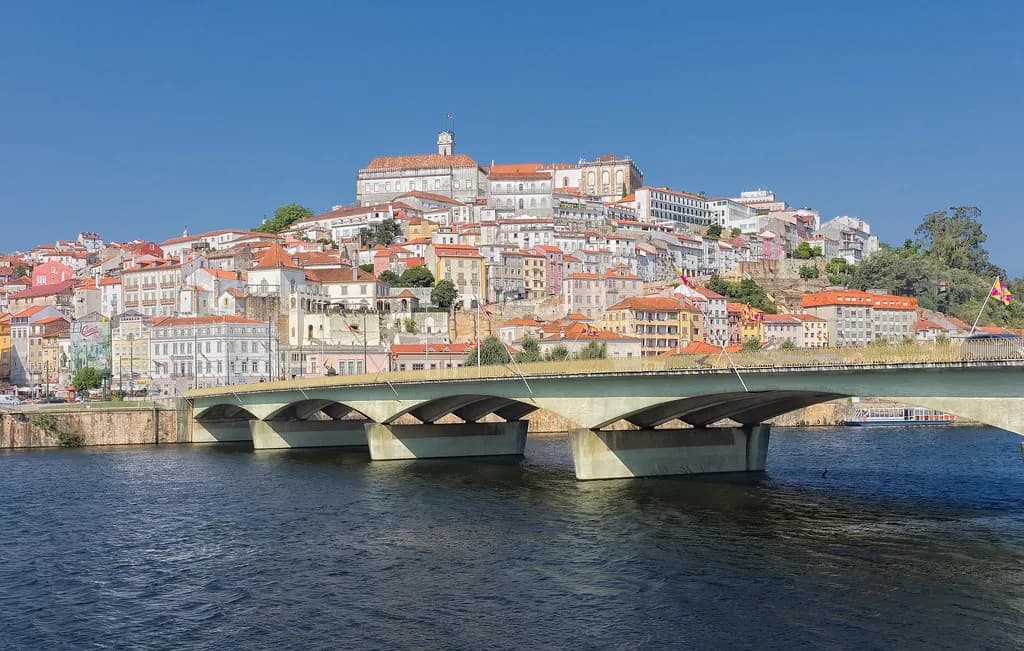
Begin at Largo da Portagem, the square facing the Mondego, where the old bridge and the riverbank give you the city's silhouette before you climb into it. Walk a stretch of the riverside for the view back up at the tiled facades and the university terraces above.
This is the right place to orientate yourself: the historic heart sits directly above the river, and the shopping street leads inland from here towards Santa Cruz. Leave the Santa Clara monasteries on the far bank for another time unless you have a second day.
Rua Ferreira Borges and the pedestrian shopping street
From the riverside, follow Rua Ferreira Borges and the adjoining pedestrian streets inland and uphill towards the old town. The stretch is lined with shops, pastelarias and the everyday bustle of a working city rather than a museum set, which makes it a good spot for coffee before the climb.
Take the side lanes off the main drag if you want quiet: the steep alleys towards the Sé Velha are where the old town's tiled fronts and worn stone steps show up best. This is also the moment to decide whether you are buying anything heavy, because you will be carrying it uphill for the rest of the day.
Sé Velha and its Romanesque exterior
The Sé Velha, Coimbra's old cathedral, is a fortress-like Romanesque building with a crenellated exterior and a carved portal that repays a slow look from the square. Its position part-way up the hill makes it a natural first major stop, and the surrounding lanes are among the prettiest in the city.
Treat the cathedral as a short stop rather than a long one, then carry on upwards; the university is the main event of the day. If church interiors are a priority for your trip, this is the place to linger instead of spreading the time thinly across every religious building on the route.
Universidade de Coimbra: the Iron Gate, the courtyard and the Royal Palace
Climb to the Paço das Escolas, the university courtyard entered through the Iron Gate, where students' capes still hang on the railings for luck. Around the square, the Royal Palace buildings hold the Great Hall of Acts, the old throne room now used for ceremonies, and the balconies give you a first proper view over the rooftops.
The Universidade de Coimbra was founded in 1290 and moved to the city in 1537, and the whole complex is a UNESCO World Heritage Site. That history is why the university quarter deserves more time than any other stop on this walk, so plan the rest of the route around it.
Biblioteca Joanina: timed entry, tours and why you book ahead
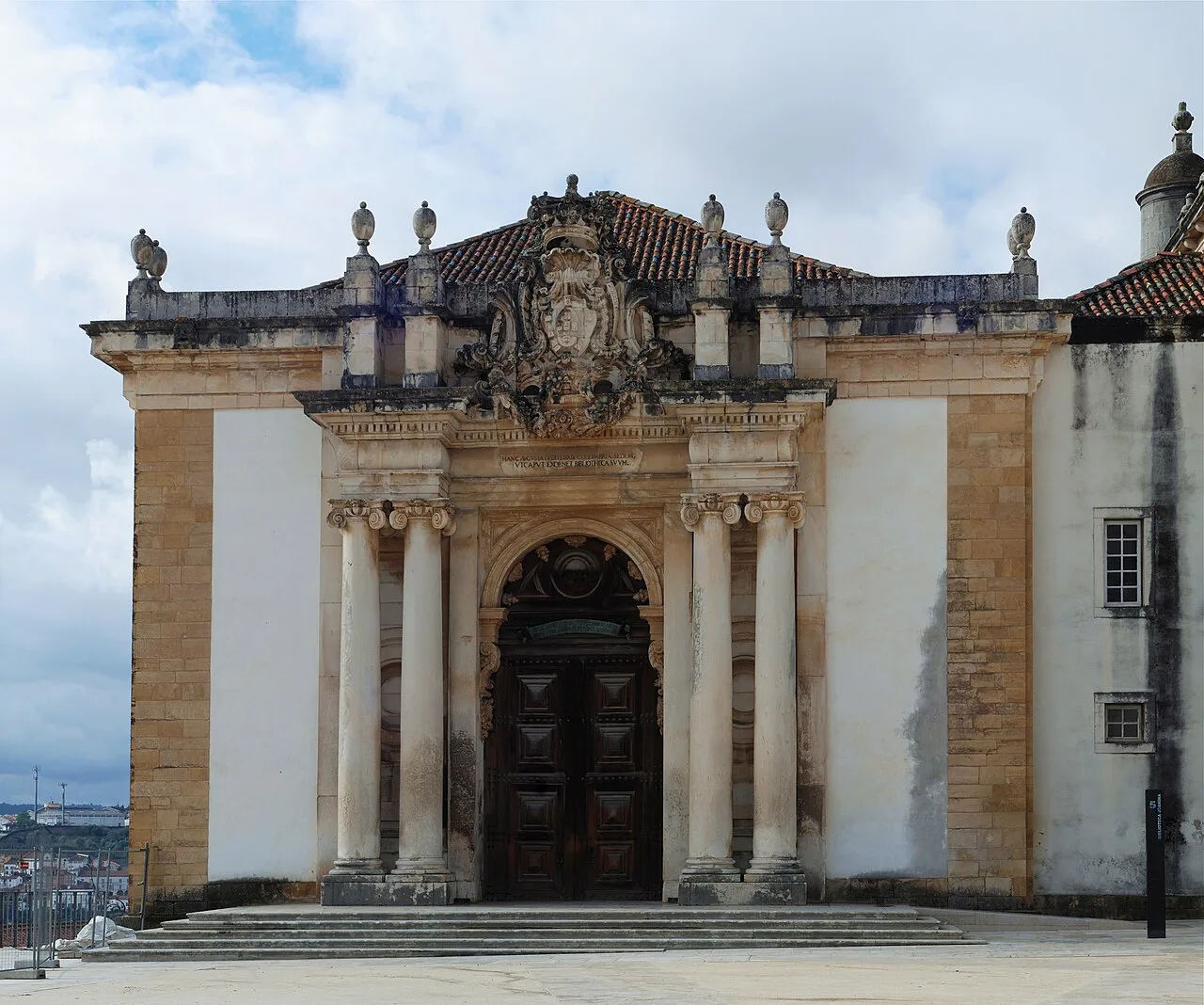
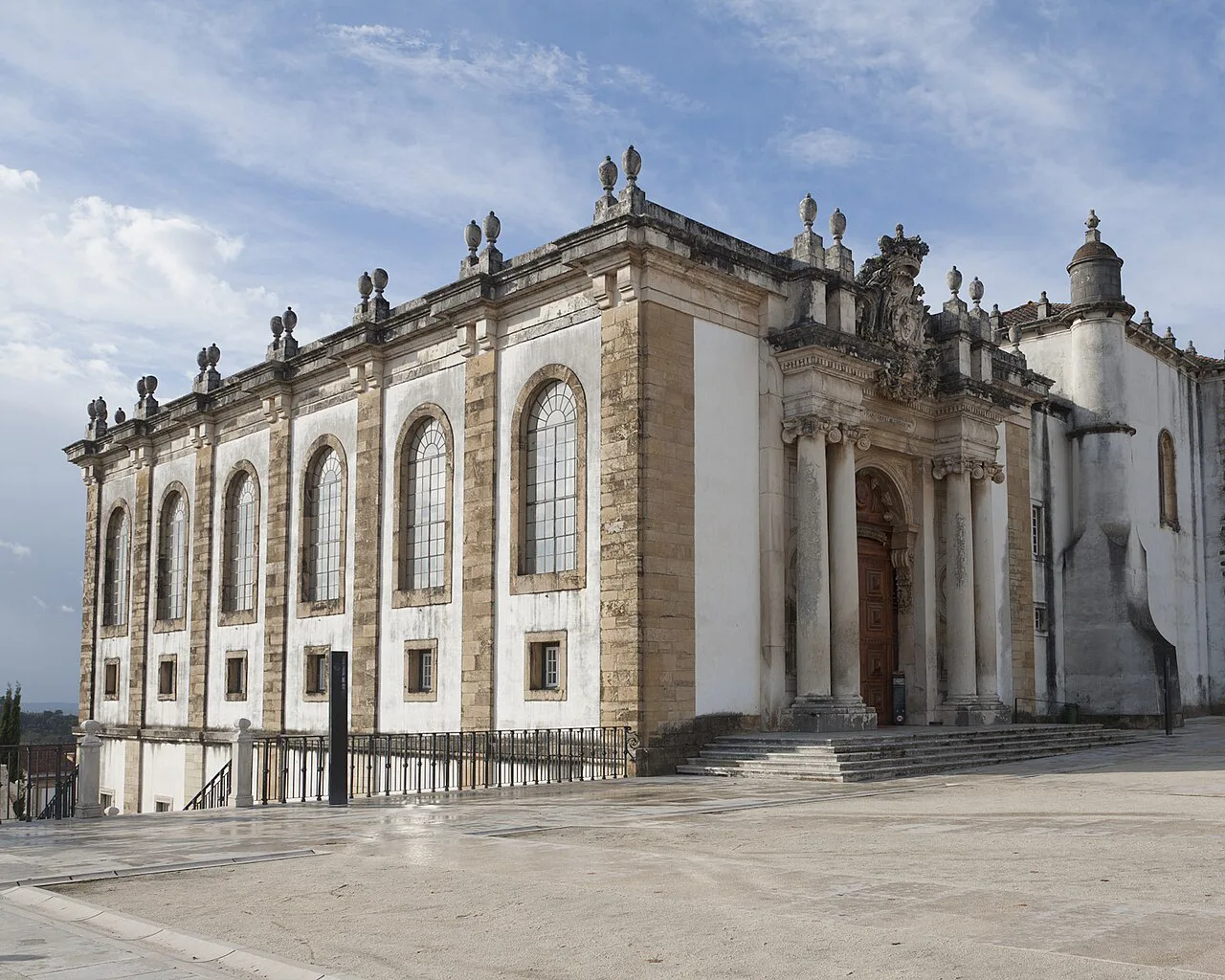
The Biblioteca Joanina can only be seen on a timed-entry visit, and the library slot lasts about thirty minutes, with photography not permitted inside. Book online in advance for the library alone or for a combination ticket covering the other university buildings, and expect to choose a specific time when you do.
Founded in 1717 under King John V and holding some 60,000 books, the library is the single most popular thing to see in the city, so book a timed slot in advance rather than turning up and hoping one fits your day. The trade-off is that a fixed time pins the rest of your day, so build the climb and the cathedral stop around it rather than after it.
Capela de São Miguel and its azulejos
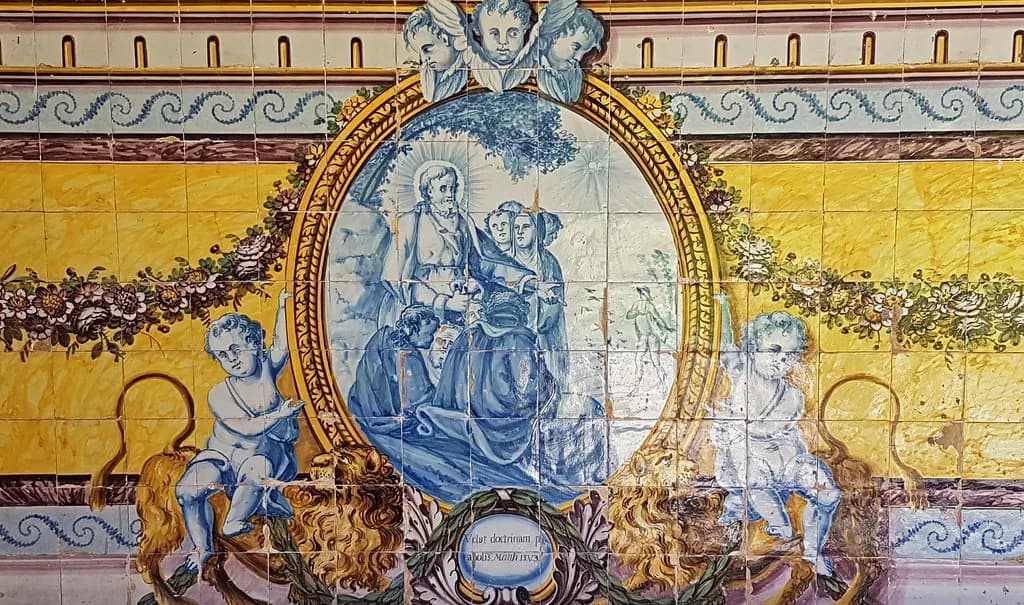
Neighbouring the library, the Capela de São Miguel is a small chapel whose walls are covered in blue-and-white tiles, with a painted ceiling and an ornate organ above. It takes only minutes to see but is one of the most photogenic interiors on the route, so do not walk past it on the way to the library entrance.
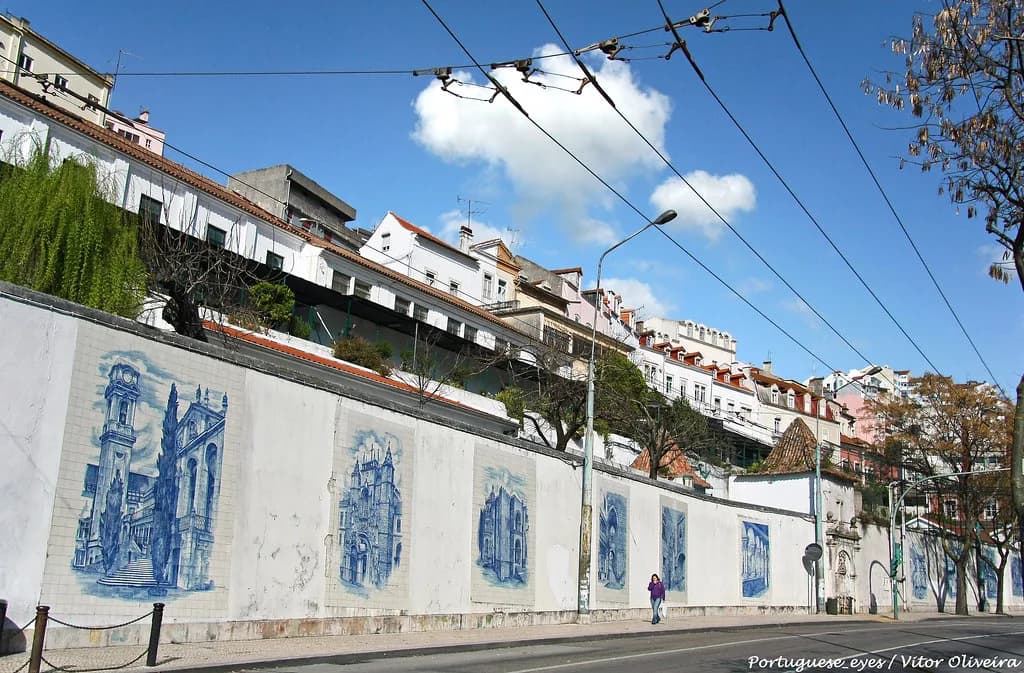
For travellers interested in tilework, Coimbra rewards attention beyond this chapel, and the university quarter is only one of several places where patterned panels cover entire walls. Keep a mental note of what you see here, because you will meet very different tile schemes elsewhere in the city.
Cabinet of Curiosities and the science collections
The Cabinet of Curiosities inside the university's science museum is a room of oddities reached along a corridor lined with rocks and crystals, and it is the kind of stop that surprises people who came only for the baroque library. The old chemistry laboratory nearby adds a small collection of artefacts plus a physics room with displays such as the Newton Disk, which works well if you are walking with older children.
If time is tight, choose between this and the library rather than trying to squeeze in both plus the cathedrals. The combination ticket structure means you can decide on the day once you see how long the upper town is taking.
Sé Nova and Largo da Sé Nova
Coming down from the university, the Sé Nova, Coimbra's new cathedral, faces a broad square at the top of the old town's grid. Its facade and interior are a different register from the Romanesque Sé Velha, and the square outside is a convenient place to sit and reset before the museum.
Pair the two cathedrals deliberately: the old one for Romanesque weight, the new one for scale and light. If you have already spent your church budget for the day, the square itself still gives you a useful orientation point between the upper town and the streets leading down to Santa Cruz.
Machado de Castro National Museum and its Roman remains
The Museu Nacional Machado de Castro is named after the Portuguese sculptor Joaquim Machado de Castro and holds a collection strong enough to justify a stop, with Roman remains preserved beneath the building. It is the most substantial museum stop on this route and a sensible choice for a wet afternoon.
Cut it on a half-day, because a serious museum visit competes directly with the university for your best hours. If you are in Coimbra for two days, save the museum for the second morning and keep the first day for the walk itself.
Santa Cruz Monastery and Church on Praça 8 de Maio
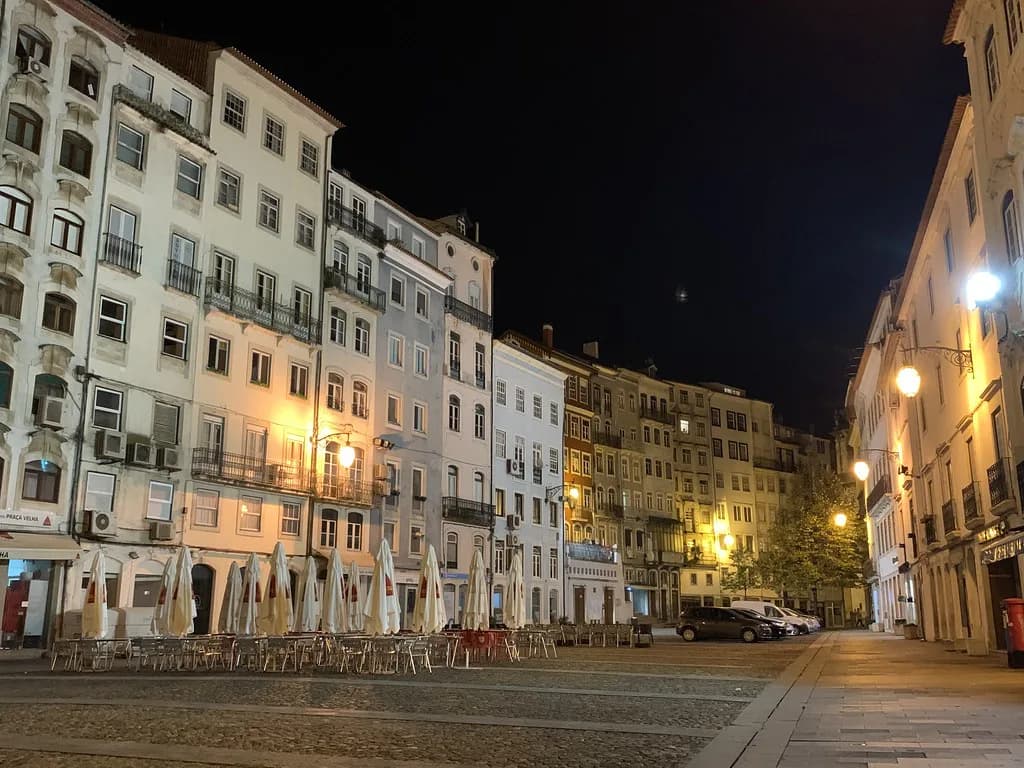
Finish the main circuit at the Mosteiro de Santa Cruz on Praça 8 de Maio, a monastery and church whose facade faces one of the city's main squares. It is the anchor of the lower town, close to the shopping streets and within easy reach of the riverside where you started.
The square is the natural place to end, with coffee or a late lunch on hand, and it saves you a second climb if you want to revisit anything in the upper town. From here the walk back to Largo da Portagem is short and flat.
Parque de Santa Cruz and Praça da República for a breather
If your legs need a break before the final stretch, the Parque de Santa Cruz and Praça da República give you shade, benches and a look at everyday Coimbra away from the monuments. They sit between the lower town and the museum quarter, so they slot in naturally rather than as a detour.
This is a good spot for a picnic or a pastry stop rather than a full meal, keeping the afternoon free for the last stops. It also gives children somewhere to run after a morning of interiors.
Miradouro views over the rooftops and the river
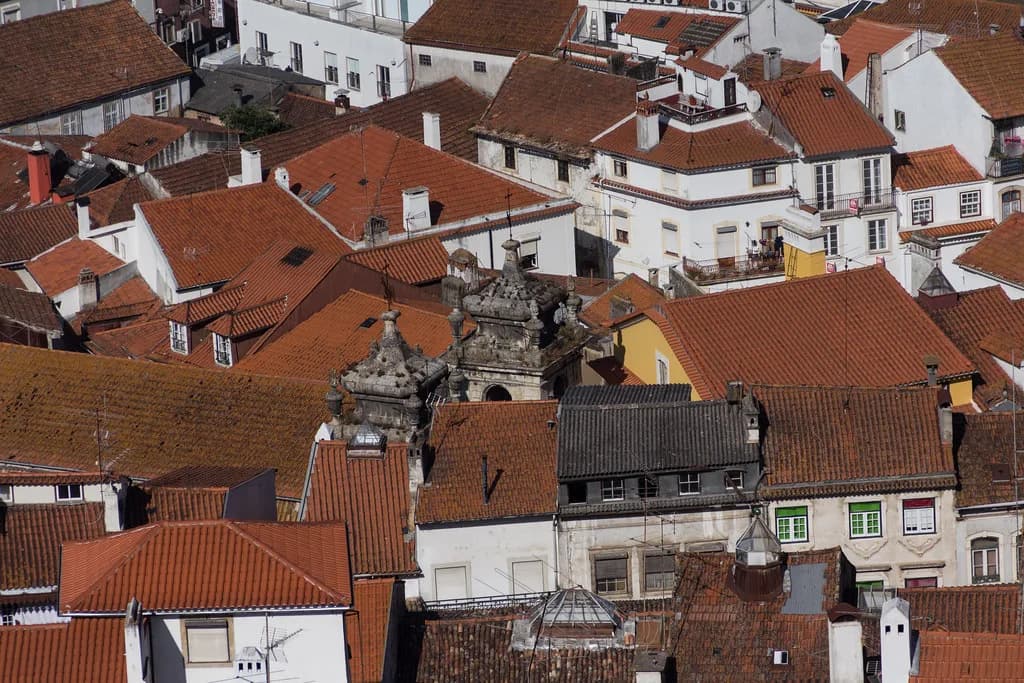
The upper town throws up viewpoints over the terracotta roofs towards the Mondego, and the university balconies are among the easiest to reach without a detour. Take at least one of them slowly: the river, the bridges and the far bank make sense of the city's shape in a way the streets below do not.
Late afternoon light is the reason to leave a viewpoint for the end of the day rather than the start, so order your stops with the climb first and the descent last. If it is raining, swap the viewpoint for the museum and come back on a clearer day.
The aqueduct and the Botanical Garden as an optional extension
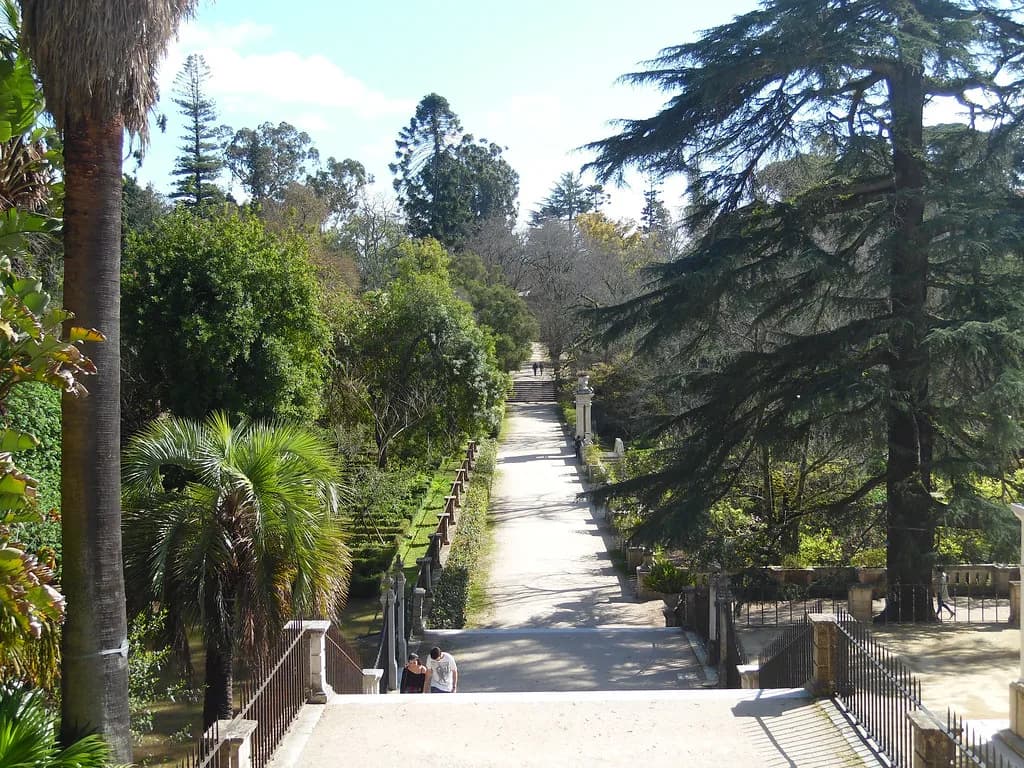
For a second day or a long afternoon, add the Aqueduto de São Sebastião and the Jardim Botânico. The aqueduct is a surviving stretch of the old water supply, and the garden gives you a quiet, green counterpoint to the stone of the upper town.
These are not part of the core circuit, so treat them as a bonus rather than an obligation. Doing them on the same day as the university usually means rushing both.
Where to eat and drink along the route
The pedestrian streets between the riverside and Santa Cruz are where you will find pastelarias for a mid-morning coffee and tascas for a sit-down lunch. The square by Santa Cruz is convenient for the end of the walk, while the lanes near the Sé Velha are better for a quick stop than a long meal.
Eat before the climb rather than after it: the upper town has fewer places to sit down, and a timed library slot does not wait while you queue for a table. Keep lunch simple and save the longer meal for the evening, when the lower town is busier.
Doing it in a day trip versus staying the night
Coimbra works as a day trip from Lisbon or Porto, but the university alone takes two to three hours, so a day-tripper should pick the library, the courtyard, the Sé Velha and Santa Cruz and accept missing the museum. Staying one night lets you spread the upper town over a morning and the lower town over an afternoon without watching the clock.
If you stay, use the second day for the museum, the Botanical Garden and the aqueduct, and keep the first day free for the walk in order. That split is the difference between seeing Coimbra and merely passing through it.
Guided walking tours in Coimbra if you would rather follow someone else
Several operators run guided walks in Coimbra, including themed options such as a scavenger hunt, an evening walk, a food tour, a riverside storytelling route and a Fado of Coimbra tour with a live show. One free-tour operator also lists Coimbra among its destinations, mentioning the university, the medieval streets and the Sé Velha.
A guide is worth it if you want the library and university explained rather than just seen, since the standard library entry is unguided and the visit lasts about half an hour. Otherwise, this route covers the same ground for free, at your own pace.
Which stops to book and which to cut
Book the Biblioteca Joanina slot first and arrange the day around it, then decide whether the museum makes the cut. With one day, take the riverside, the Sé Velha, the university and Santa Cruz; with two, add the museum, the garden and the aqueduct.
Confirm current opening days and ticket options on the university's own site and at each venue before you set out, as times and admissions vary by season.
Explore more Coimbra guides
Sources
Notes for your next Portuguese break
Optional updates to our town guides.
You might also like
Continue reading
More guides you'll find useful