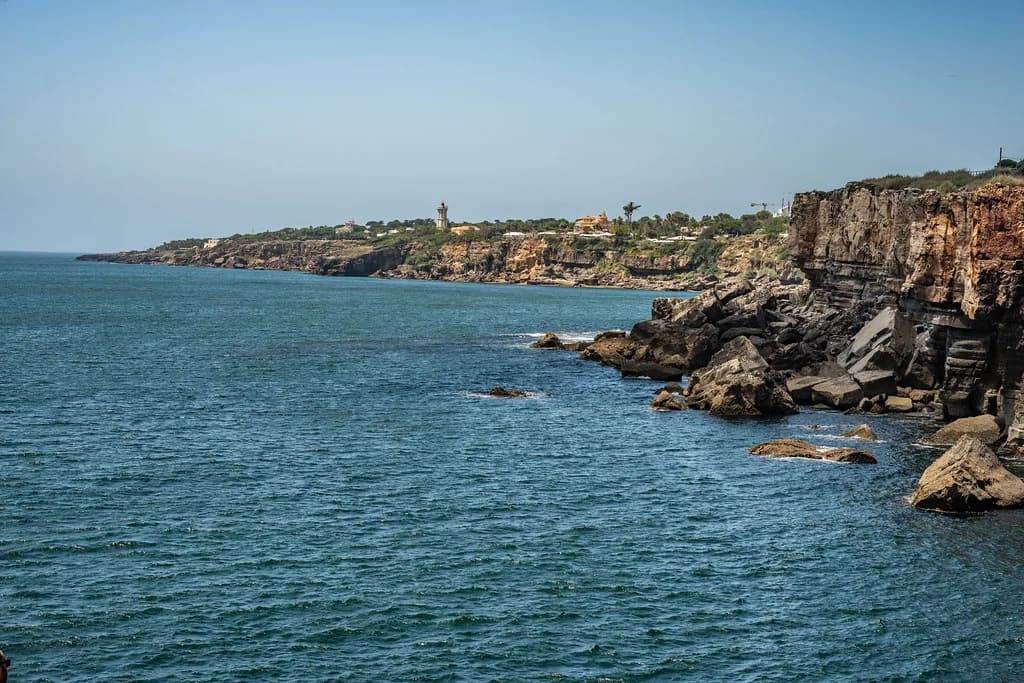
Cascais vs Estoril: Which Coastal Town Suits Your Short Break?
Cascais and Estoril sit minutes apart on the same train line but feel quite different. Compare beaches, promenade walks and character.
On this page
Pick Cascais if you want a proper town with more to do on a short break; pick Estoril if you want a quieter seafront within an easy walk of a smaller, calmer base. The two are neighbours on the Linha de Cascais, the coastal train line from Lisbon, and are linked by the Paredão, the seafront promenade that runs between them. This comparison sets out how the coastline fits together, what each beach stretch offers, and how to split a one-day or four-day visit.
Cascais vs Estoril at a glance: the short answer
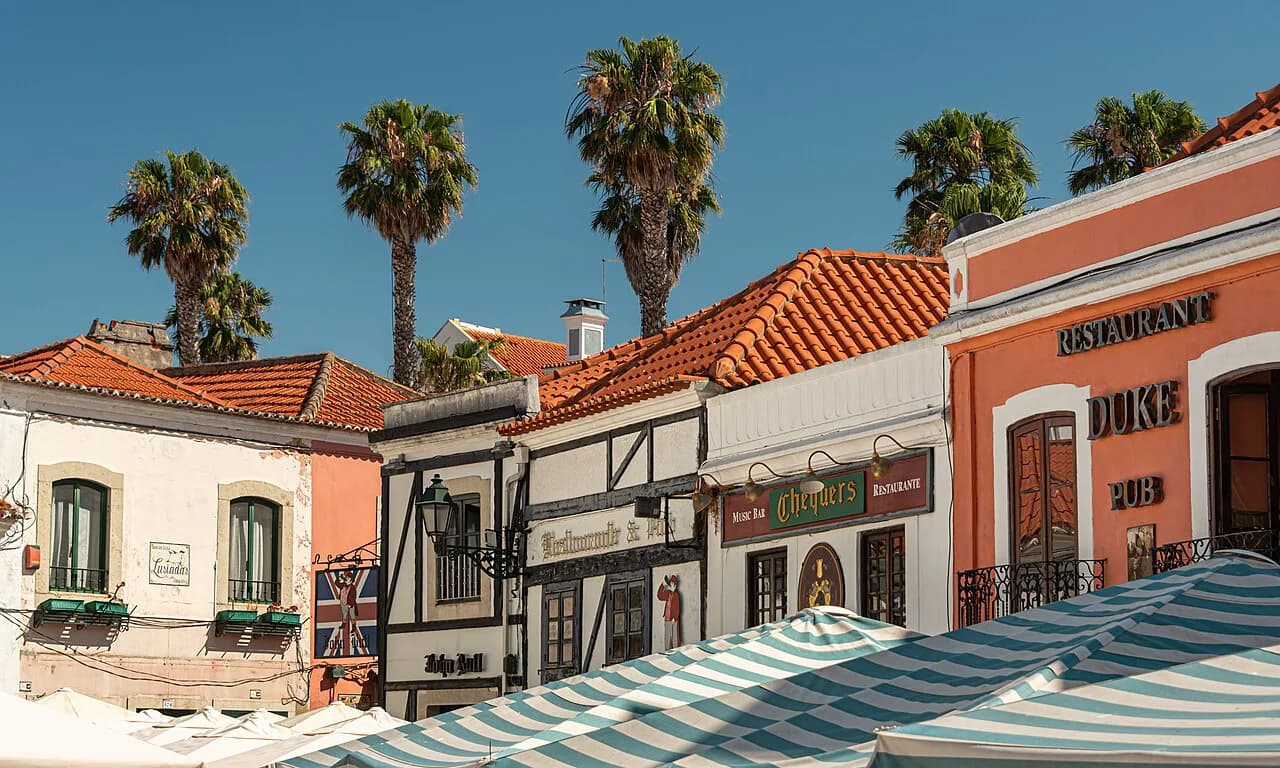
Cascais is the larger of the two, with a working centre, a wider spread of streets to wander and the train station a few minutes from the main beach. Estoril is the quieter neighbour, where the seafront and its casino sit behind the sand and the pace is gentler. For a first short break, base in Cascais and treat Estoril as a walk or a short train hop along the coast, because Cascais has more of everything within walking distance.
If a calm seafront and easy beach access matter more than choice, Estoril works just as well as a base, since the two towns are close enough to use either as a springboard for the other. Neither needs a car if you stay on the train line.
Where each town sits on the Cascais line
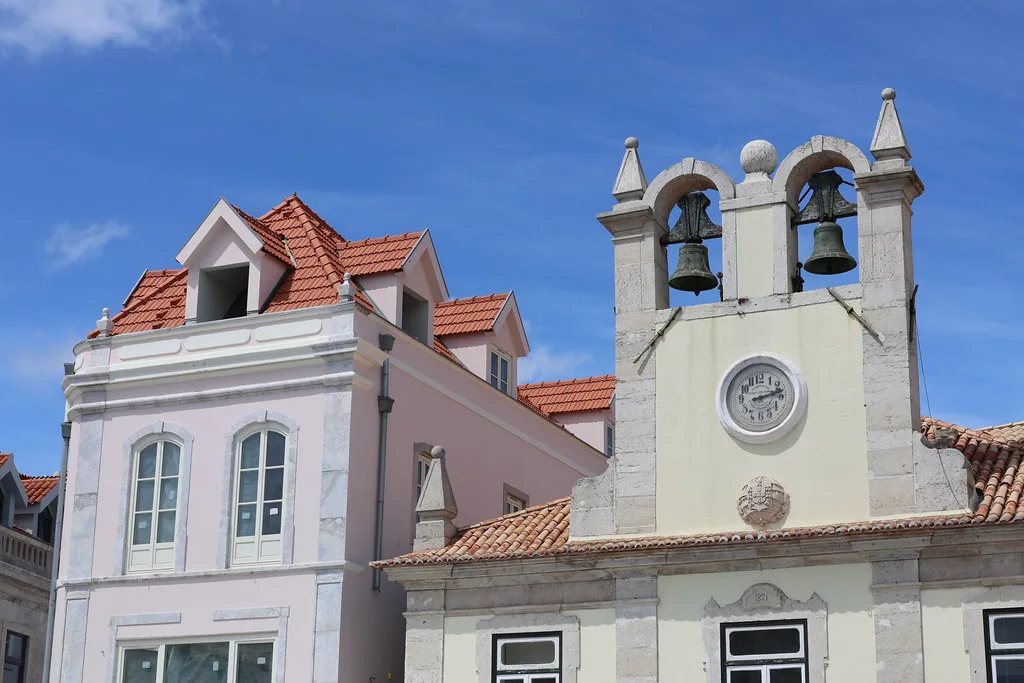
The Linha de Cascais runs from Cais do Sodré in Lisbon along the coast to Cascais, and the stretch between São João do Estoril and Cascais has four stations: São João do Estoril, Estoril, Monte Estoril and Cascais. That means you can begin or end a walk at whichever station suits you, rather than retracing the whole promenade. If you arrive from Lisbon by train, São João do Estoril is a possible starting point, but the access involves stairs, which is awkward with small children, a buggy or a lot of beach kit.
The coast between Lisbon and Cascais is often called the Portuguese Riviera, a stretch long favoured by wealthy families and, more recently, by expats and retirees. That history explains the character of both towns: polished seafronts and a resort feel rather than a rugged fishing-village one.
Praia do Tamariz and the Estoril seafront
Praia do Tamariz is the main beach at Estoril, close to the casino, and the Epoca Estoril café bar sits behind the sand so you can eat without heading into town. It is the easiest of the beaches to reach by train, which makes it a sensible choice if you are arriving by rail with bags.
Estoril's identity goes beyond the sand. Ian Fleming, creator of James Bond, spent time in Portugal during the Second World War and was a regular at the Palácio Estoril Hotel, and the nearby Casino Estoril features in the story of how the character took shape. The casino and the hotel give Estoril a distinct, slightly old-fashioned elegance that Cascais does not quite match.
Cascais beaches close to the station
Praia da Conceição, also known as Emma Beach, is a three-minute walk from Cascais train station and has toilets, showers and changing rooms. Sunbeds there were reported at €45 for two beds and an umbrella, rented as a pair rather than singly, with towels charged separately.
Praia da Duquesa, a little further along the Paredão, had sunbeds at €35 for two beds and an umbrella, or €15 for an umbrella alone, again with no single-bed option. Praia da Rainha, a small cove tucked below the town, is one of the free alternatives if you would rather not pay for a sunbed set-up.
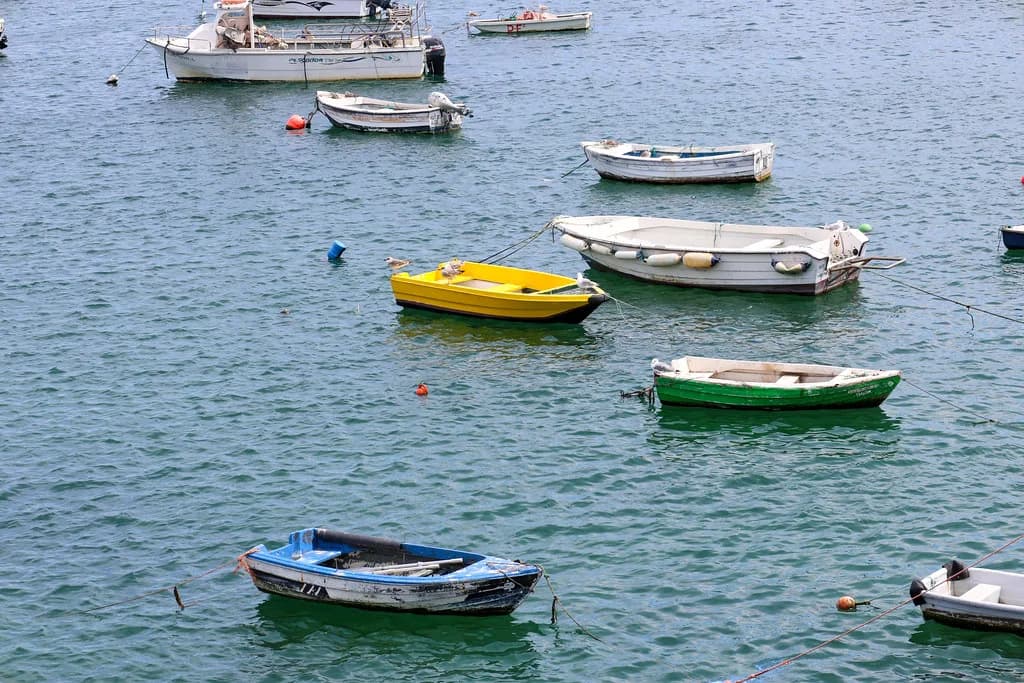
Praia da Ribeira sits closest to the old centre and is the most urban of the Cascais beaches, with boats and a busy quayside rather than open sand. If you want a longer wander through the old streets behind it, the Centro Histórico repays an hour or two.
Walking the Paredão between the towns
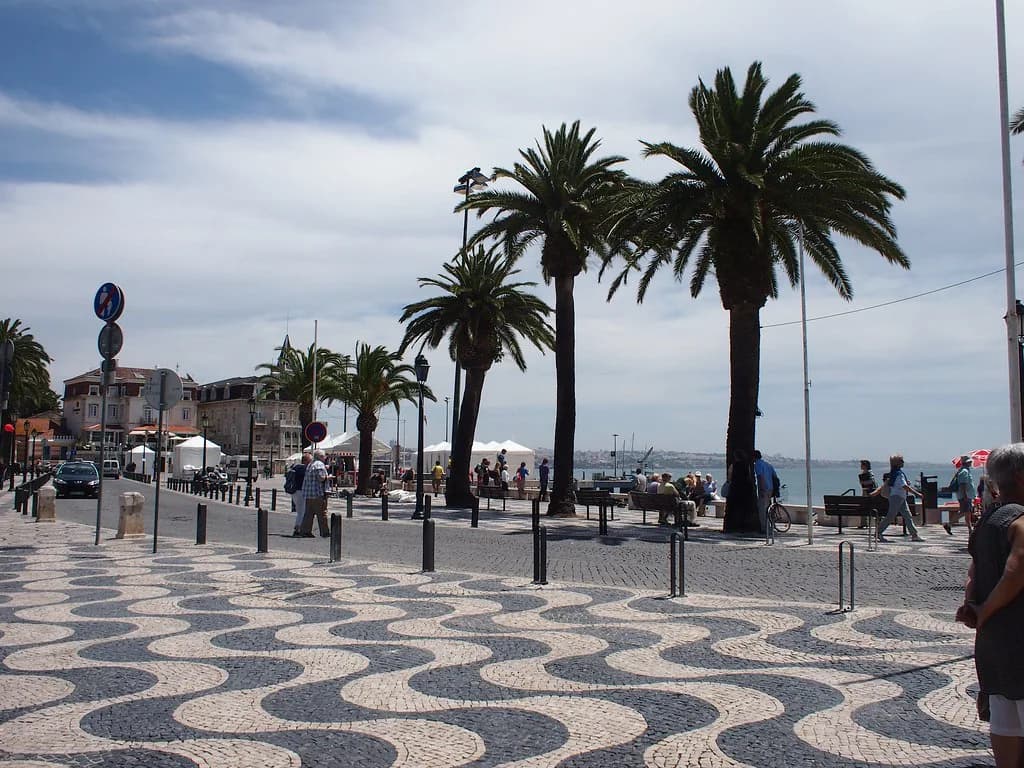
The Paredão is the seafront promenade connecting Cascais and Estoril, lined with beach after beach, each with its own sunbeds, restaurants and atmosphere. Walking it end to end is the best way to understand how the two towns relate: they are not separate destinations so much as two ends of one continuous coastal strip. You can start at Cascais station, a few minutes from the seafront, or at Praia da Azarujinha on the Estoril side.
Because four stations sit along this stretch, you can walk one way and take the train back, which saves time on a short break. The trade-off is that the beaches along the promenade are busier than those further out, precisely because they are so easy to reach.
Paid sunbeds versus free sand
The paid beaches along the Paredão work on a similar model: you rent a pair of sunbeds with an umbrella, and single beds are generally not available, which matters if you are travelling alone. Prices reported for the Cascais end varied for a two-bed set-up, with towels and umbrellas sometimes charged separately. If you are solo, the free beaches are the better value, and Praia da Poça was rated the best value of the paid options.
For free sand, Praia da Azarujinha near the Estoril end and Praia da Rainha in Cascais are the most appealing small coves, while Praia da Ribeira is the more urban, quayside option. Further out, Praia do Guincho is the wilder alternative for a different kind of beach day, though it is not on the promenade and needs a bus or car.
Eating along the coast
Each beach along the Paredão has its own restaurant or bar, so you can eat with your feet practically in the sand rather than walking back into town. Praia das Moitas, with its Gloria's restaurant, was singled out for the best restaurant and vibe on the stretch, while Praia do Tamariz has the Epoca Estoril café bar behind the beach.
Expect beach-bar prices rather than bargain ones: a hamburger at the Duche Bar gives you a sense of the mark-up on the sand. If you want better value, eat in Cascais town, where the choice is wider and prices less captive.
Cascais as a base: busier, with more choice
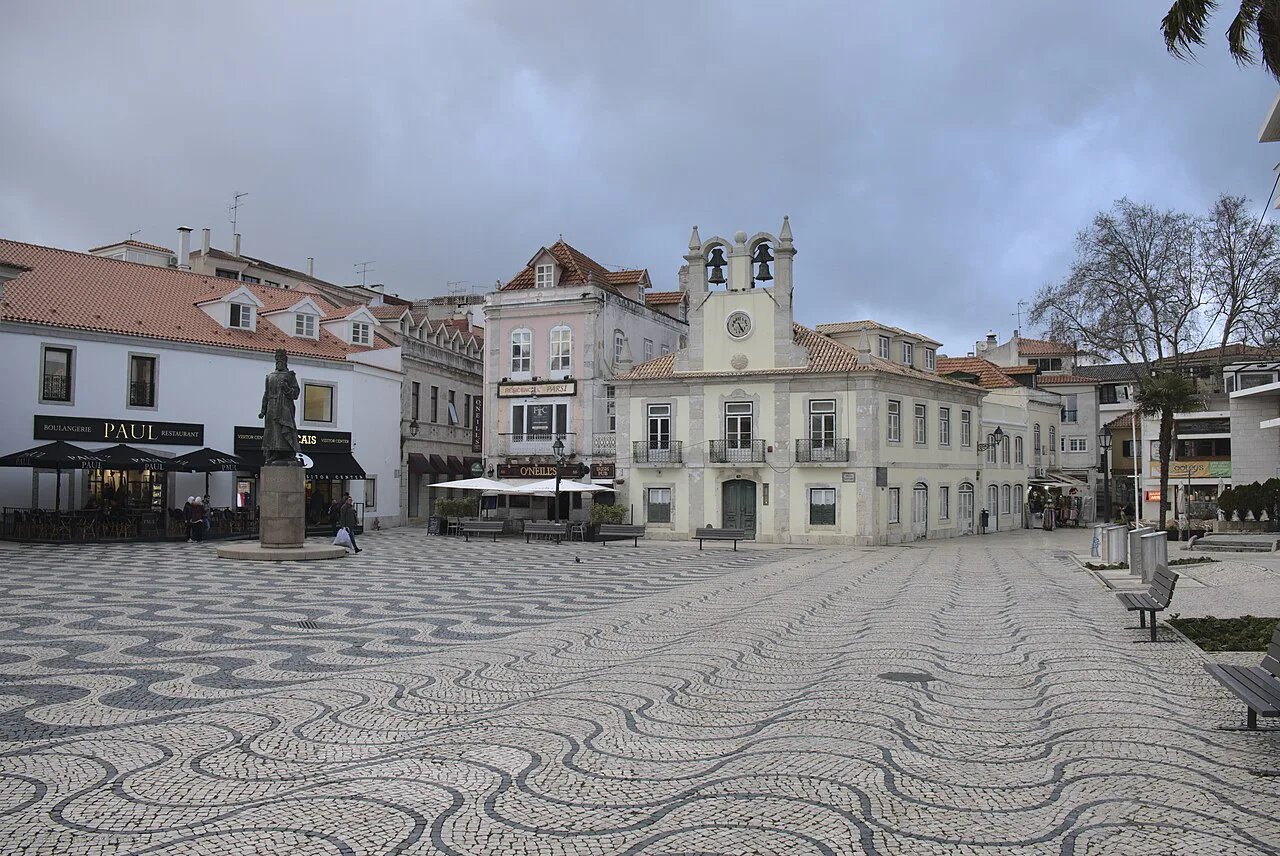
Cascais works as a real town as well as a resort: shops, restaurants, a market and a historic centre all sit within a short walk of the station and the main beaches. That density makes it easier to fill a wet morning or an evening without planning ahead, though the streets and main beaches get busy in summer, particularly around Praia da Conceição. For a first visit of one to four days, Cascais is the simpler base, and the guide to how many days in Cascais helps you decide whether you need two nights or three.
Estoril as a base: quieter, calmer, close to the sand
Estoril is smaller and quieter, with the seafront, the beach and the casino within a short walk of each other, and Praia do Tamariz is the closest sand to the station. The free coves around Praia da Azarujinha are a short walk away. The drawback is that there is less to do in the town itself, so a longer stay leans heavily on Cascais and Lisbon; that combination of calm, easy beach access and a quick train into Cascais makes Estoril a reasonable base for couples who value quiet over choice.
Which suits families, couples and solo travellers
Families will find Cascais easier: the station is minutes from Praia da Conceição, which has toilets, showers and changing rooms, and the town has more places to eat and retreat to when the day goes wrong. Couples who want quiet and a sea view are better served by Estoril, where the seafront is calmer and the hotel and casino give the town a grown-up feel.
Solo travellers should know that several paid beaches only rent sunbeds in pairs, so a single visitor pays for two. Praia da Poça was rated the best value for solo visitors, while free beaches such as Praia da Rainha and Praia da Azarujinha avoid the issue altogether.
One day, or three to four days across both towns
With one day, start in Cascais: walk from the station to Praia da Conceição, wander the old centre and have lunch, then take the Paredão towards Estoril in the afternoon and finish at Praia do Tamariz before catching the train back. That gives you both towns, the promenade and a swim without backtracking, and our One Day in Cascais guide has a fuller version of the same shape.
With three or four days, give Cascais two full days for the town, the Cidadela de Cascais and the beaches close to the station, then spend a day walking the Paredão to Estoril with a stop at Praia das Moitas for lunch. Keep a spare day for Lisbon or Sintra by train, since both are easy hops from the Cascais line; the Cascais Itinerary covers a fuller multi-day plan.
Which town should you book?
For most short breaks, base in Cascais and use Estoril as a walk or a train hop. Choose Estoril only if a quiet seafront matters more to you than choice, and you are happy to travel for dinner and evening life. Either way, the train line and the Paredão mean you never really have to choose between the two.
Explore more Cascais guides
Frequently Asked Questions
Is there a direct train from Lisbon to Cascais?
Yes. The Linha de Cascais runs from Cais do Sodré in Lisbon to Cascais, with stops including São João do Estoril, Estoril and Monte Estoril along the coast. That makes both towns easy to reach without a car, and lets you start or end a promenade walk at whichever station suits you.
Why is Estoril famous?
Estoril is known for its casino and its association with James Bond: Ian Fleming, the character's creator, spent time in Portugal during the Second World War and was a regular at the Palácio Estoril Hotel. The casino and the hotel give the town its polished, slightly old-fashioned resort character.
Which is nicer, Sintra or Cascais?
They offer different things rather than one being better. Cascais is a coastal town with beaches and a promenade, while Sintra is inland and known for its palaces and wooded hills. On a short break you can visit both by train, using Cascais as a base and Sintra as a day out.
Sources
Notes for your next Portuguese break
Optional updates to our town guides.
You might also like
Continue reading
More guides you'll find useful