
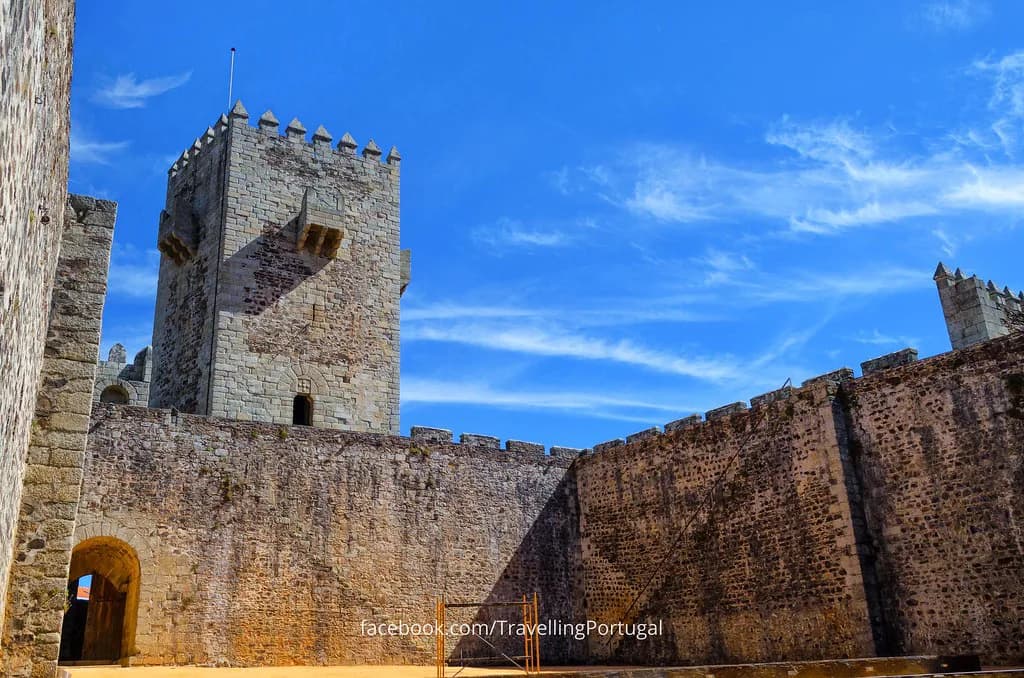
Best Castles in Portugal: 6 Worth the Detour
The best castles in Portugal for a short break, judged by walls, keeps and views, with how long each one takes and which towns make the detour worthwhile.
On this page
The best castles in Portugal for a short break are Almourol, Óbidos, Leiria, Montemor-o-Velho, Castelo de Vide and Guimarães, because each gives you something to walk through rather than just photograph. This guide judges them by walls, keeps, courtyards and the view from the top, then pairs each one with the town that makes the journey worthwhile. It also says plainly which are thirty-minute stops and which deserve a night nearby.
The castle you choose depends on how you are travelling. Almourol needs a boat crossing from Tancos, Óbidos sits inside a walled town you can walk end to end, and Leiria and Montemor-o-Velho put a keep above a working town centre. Use this as a shortlist within our wider collection of castles in Portugal, which covers the same ground in more depth.
Which castles in Portugal are worth a short break
A castle earns a place on a one-to-four-day trip if it offers something to walk through rather than just a viewpoint: an island, a ring of walls, a courtyard or a climbable keep. Almourol gives you an island in the middle of the Tagus; Óbidos gives you the walled town itself; Leiria puts a castle above a working town centre. Montemor-o-Velho trades drama for breadth, and its appeal is the wide prospect across the surrounding country.
The border castles of the Alentejo and the northern strongholds work differently again: Castelo de Vide is a hill town whose castle anchors a web of lanes, and Guimarães Castle sits in the town usually described as the country's birthplace. None of these is a lone ruin in a field, which is why they suit short breaks rather than tick-box tours. If you want the fuller picture across the country, the Castles in Portugal Worth Visiting guide is the place to start.
Castle of Almourol: the Templar keep on its Tagus island
Almourol sits on a small rocky island in the middle of the Tagus, and it is the memory of the Knights Templar in Portugal that the castle best evokes. The main door carries the date 1171, the Templars rebuilt the structure, and after the order was extinguished the castle was abandoned before being reinvented in the nineteenth century along Romantic medieval lines. It can be visited every day by boat from Tancos: from 1 November to 28 February the sailings run 10:00 to 13:00 and 14:30 to 17:00, and from 1 March to 31 October they run 10:00 to 13:00 and 14:30 to 19:00, so check the current timetable before you travel.
Treat the boat and the visit as one movement and arrive at Tancos inside a published sailing window rather than assuming you can wander down at any hour. The setting is likely to be more impressive than the interior, so plan it as a half-day including the drive. Our Almourol Castle page goes further into the crossing and what waits on the island.
Castle of Óbidos: walking the complete ring of walls
Óbidos is the castle visit that needs no separate planning, because the walls enclose the town you have come to see. The wall walk is the main event and it is exposed: go early or late, and keep both hands free on the narrower stretches. Drop into the lanes below afterwards for the churches, small squares and the town's shops.
Because the castle and town are one experience, Óbidos fits neatly into a day that also takes in the monastic country inland. It pairs best with Alcobaça, where the Royal Monastery of Santa Maria is a UNESCO World Heritage Site and the royal pantheon of Pedro I and Inês de Castro. The monastery publishes seasonal opening hours, running 09:00 to 18:00 from October to March with the last entrance at 17:30, so check the times before you build the day around it.
Castle of Leiria: the keep, the courtyards and the centre below
Leiria gives you a full castle visit: a fortified enclosure, courtyards to cross, and a keep at the top with the town spread out beneath it. Expect a proper walk rather than a single room, so allow an hour or more. The reward is one of the clearest before-and-after views in central Portugal, with the modern town pressed against the old walls.
The castle sits above a centre with enough cafés and shops to fill an afternoon, which makes Leiria a natural stop between Coimbra and the coast. It also works when the weather turns, since you can spend time indoors in the town between climbs. Come up from the town on foot and you get the sense of the slope the walls were built to command.
Montemor-o-Velho Castle: the wide Mondego view
Montemor-o-Velho is the castle for travellers who care more about landscape than interiors. The fortress stands above a wide valley, and the view from the walls stretches across the surrounding country in a way that explains why the site was fortified in the first place. The ruins are extensive enough for a slow wander, with stretches of wall, gateways and courtyards rather than furnished halls.
Treat it as a two-hour stop on a drive between Coimbra and the coast, and bring water because shade is limited on the open ground. It suits travellers with a car far better than those relying on trains, and it is at its best in clear weather when the country opens up below. If your short break is built around towns rather than viewpoints, this one can wait.
Castelo de Vide and the Alentejo border castles
Castelo de Vide is a hill town in the Alentejo border country where the castle crowns a knot of steep lanes and white houses. The pleasure is the combination of castle and historic town. The wider border region is dotted with fortifications, and the historical villages of Portugal, from Almeida to Marialva, are the best way to string several together in one slow loop.
This is the least rushed of the castles on this list and the one that most rewards a night nearby, because the border country is a landscape of walls, keeps and stone villages rather than a single sight. A car is close to essential, and the driving between villages takes longer than the distances suggest. If you want mountain scenery between castles, the schist village of Piódão, built ledge by ledge on Serra do Açor, makes a memorable detour.
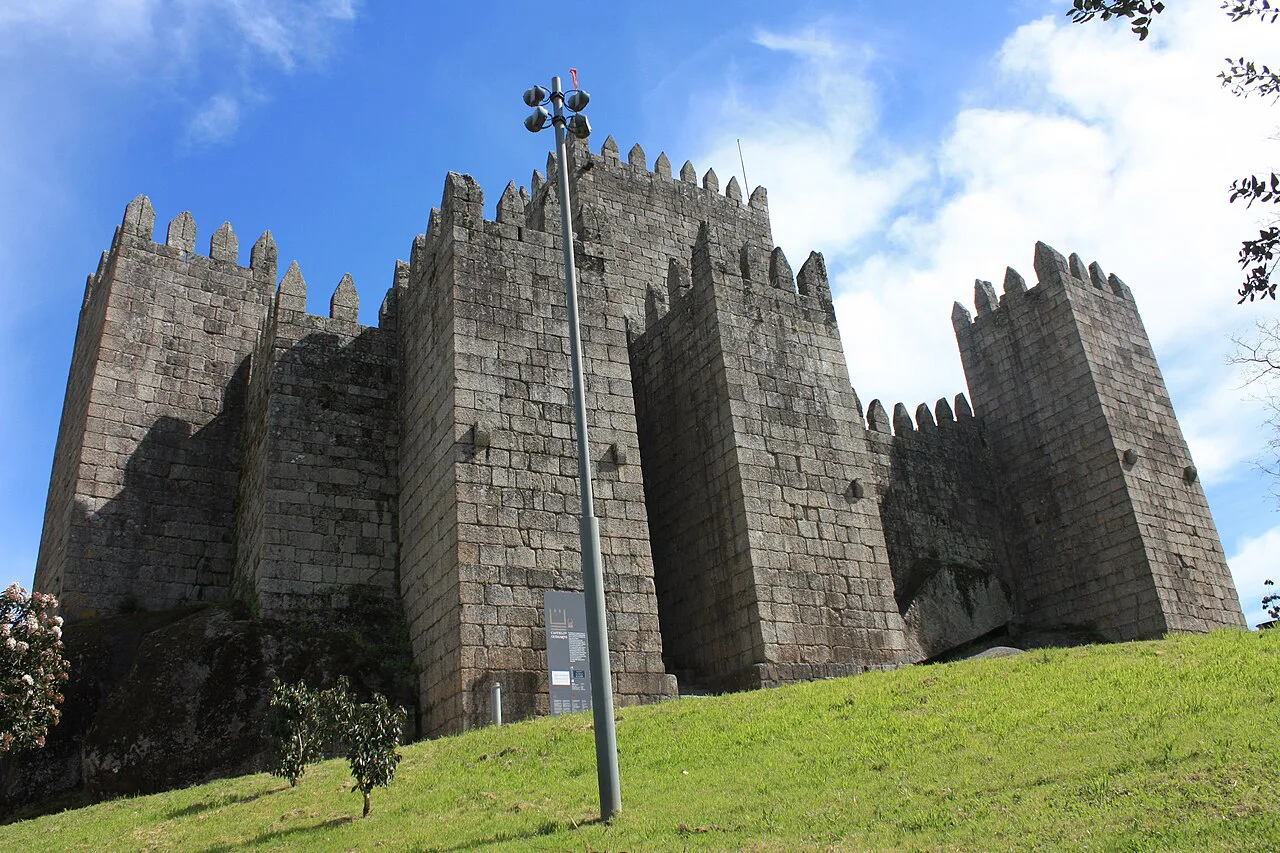
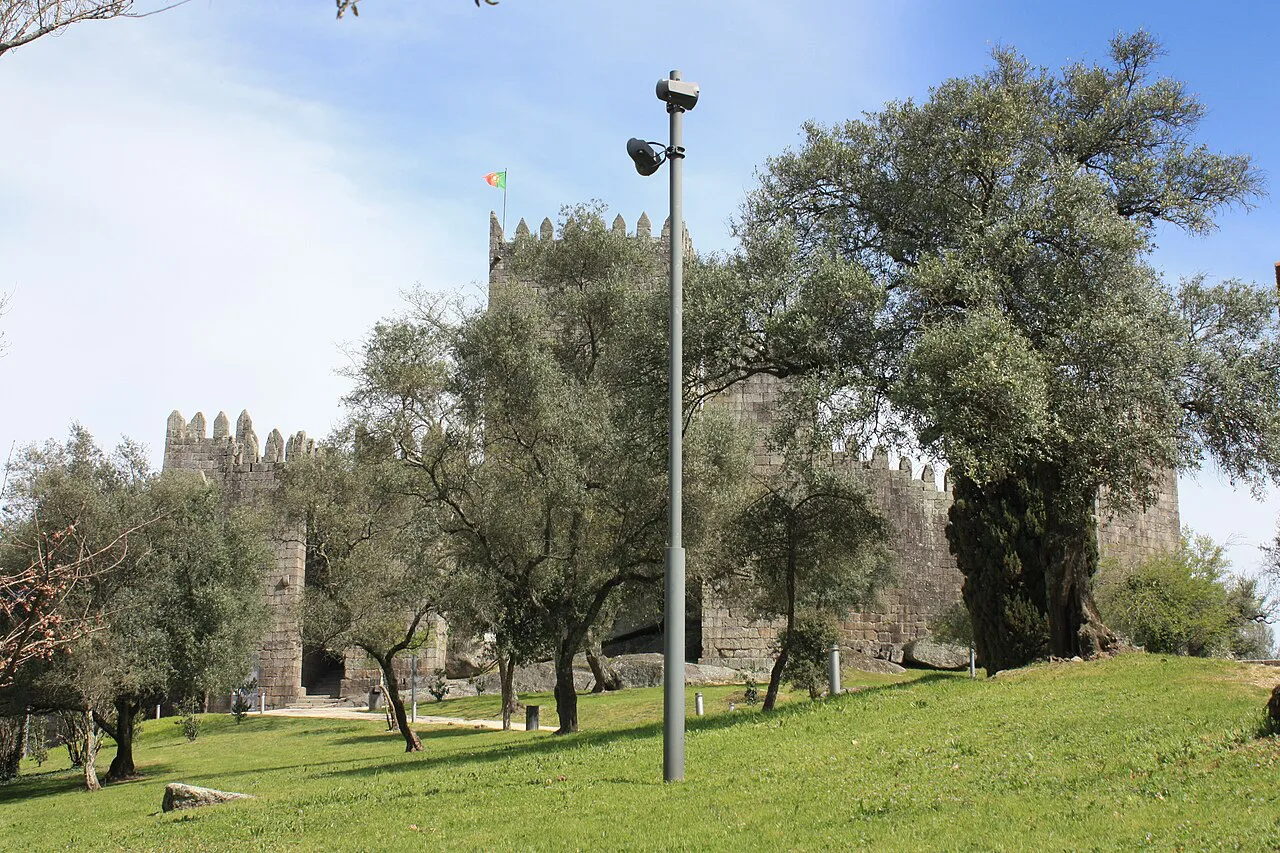
Guimarães Castle: the founding castle in the north
Guimarães Castle is the northern stronghold that carries the heaviest symbolic weight, standing beside the town known as the birthplace of Portugal. The castle is a compact granite block with a walkable wall and a keep, and it pairs naturally with the ducal palace and the old centre a few minutes away on foot. The scale is modest compared with Óbidos or Leiria, so judge it as part of a town visit rather than a destination on its own.
The advantage here is walkability: you can leave a train, cross the centre and reach the castle without a car, which is not true of Almourol or Montemor-o-Velho. Allow a morning for the castle and the centre, then use the afternoon for the churches and squares. Guimarães works well as a stop between Porto and the Douro, though the town deserves more than a passing hour.
How many days each castle needs and how they pair up
Almourol and Óbidos can share a day if you drive, with the boat crossing at Tancos in the morning and the walled town in the afternoon, though that leaves little time for Alcobaça. Leiria and Montemor-o-Velho suit a day together for travellers heading between Coimbra and the coast. Guimarães wants half a day to a full day on its own, and Castelo de Vide plus the border villages needs at least two days to be worth the drive.
A sensible four-day pattern starts in Óbidos, moves inland to Alcobaça and Leiria, then uses Coimbra as a base for Montemor-o-Velho before heading north to Guimarães. If your interests run to grand houses as well as fortresses, our guide to palaces in Portugal covers the other half of the story, including the National Palace of Mafra, the huge royal palace complex north of Lisbon. The Mafra palace page explains what waits inside.
Which ones to skip on a one- or two-day trip
With one or two days, cut Montemor-o-Velho and the Alentejo border castles first: both need a car and reward time you will not have. Almourol is worth the detour only if the boat timetable fits your day, because the crossing sets the pace and a missed sailing costs you time. If you are based in Lisbon, Óbidos is the simplest full castle day, with the walls and town in one visit.
Guimarães is best left for a northern trip rather than squeezed into a Lisbon-based break, since the journey eats the day. Leiria sits between the two and makes a good compromise if you are moving by train and want a castle you can climb from the station. For a single castle with the most variety inside the walls, choose Óbidos; for the most dramatic setting, choose Almourol.
Which castle should you build your short break around?
Build a two- or three-day break around Óbidos and Leiria if you want walls and a keep without long drives, and add Alcobaça for the monastery and the tombs. Choose Almourol if the island crossing appeals and you can be at Tancos inside a published sailing window, and choose Guimarães if you are heading north anyway. The border castles are for a longer trip with a car.
Frequently Asked Questions
Are Portugal's castles free to enter?
Entry conditions vary from one monument to the next, and many charge a ticket or are run as part of a museum. Check the ticket desk or the town's own tourism page for the castle you plan to visit before you set out.
Which castle is closest to Lisbon?
Óbidos is the most straightforward castle day from Lisbon, because the walls enclose the town itself and the visit needs no further transport once you arrive. Almourol is further north-east along the Tagus and requires a boat crossing from Tancos.
How many castles are there in Portugal?
There is no reliable published count in the sources here. This guide covers six that repay a short break, judged by what a visitor can walk through and see.
Sources
Notes for your next Portuguese break
Optional updates to our town guides.
You might also like



Continue reading
More guides you'll find useful




