
Roman Ruins in Portugal: Where to See Them and How to Visit
Roman Portugal means mosaic floors at Conímbriga, Évora's temple, Milreu's villa and Alentejo bridges. See what survives and how to plan a short break.
On this page
Plan a Roman-themed short break around one region rather than the whole country: Conímbriga and Évora sit within an easy day of each other in central Portugal, while Milreu and Tróia belong to a southern loop around Estoi and Setúbal. This guide covers what actually survives at each site, how much time each needs, and how the ruins pair with the towns you would visit anyway. It also separates the sites you can walk to inside a historic centre from the rural ones that need a car and half a day.
The through-line is that Portugal's Roman past sits underneath everything that came after. Every later layer, from the Moors to the Age of Discovery, arrived in towns the Romans had already laid out, which is worth keeping in mind as you read our broader Portugal history. Sites repay different levels of interest: Conímbriga suits anyone curious about mosaics, while a single column in a town square is best treated as a bonus on the way to the cathedral.
Which Roman sites in Portugal are worth a detour
Four clusters do most of the work. Conímbriga, in central Portugal near Coimbra, is described by Portugal Travel Guide as the most extensive Roman site so far discovered in Portugal, a full abandoned town with substantial mosaic floors. Évora gives you a Roman temple standing intact in the middle of a medieval-old town. Milreu, near Estoi in the Algarve, is a villa complex with mosaics and later building layered on top. Tróia, on the peninsula across the water from Setúbal, and Mértola, up the Guadiana, add river-town Roman layers to a southern itinerary.
The honest trade-off is specialisation. A general traveller with one to four days gets the most from Conímbriga plus Évora, or from Milreu plus the Setúbal peninsula, because those pair ruins with real towns, food and somewhere to stay. Chasing every scattered stone across three regions in a short break means hours in the car for isolated fragments. Pick one cluster, see it properly, and leave the rest for another trip.
Conímbriga: mosaic floors and an abandoned town
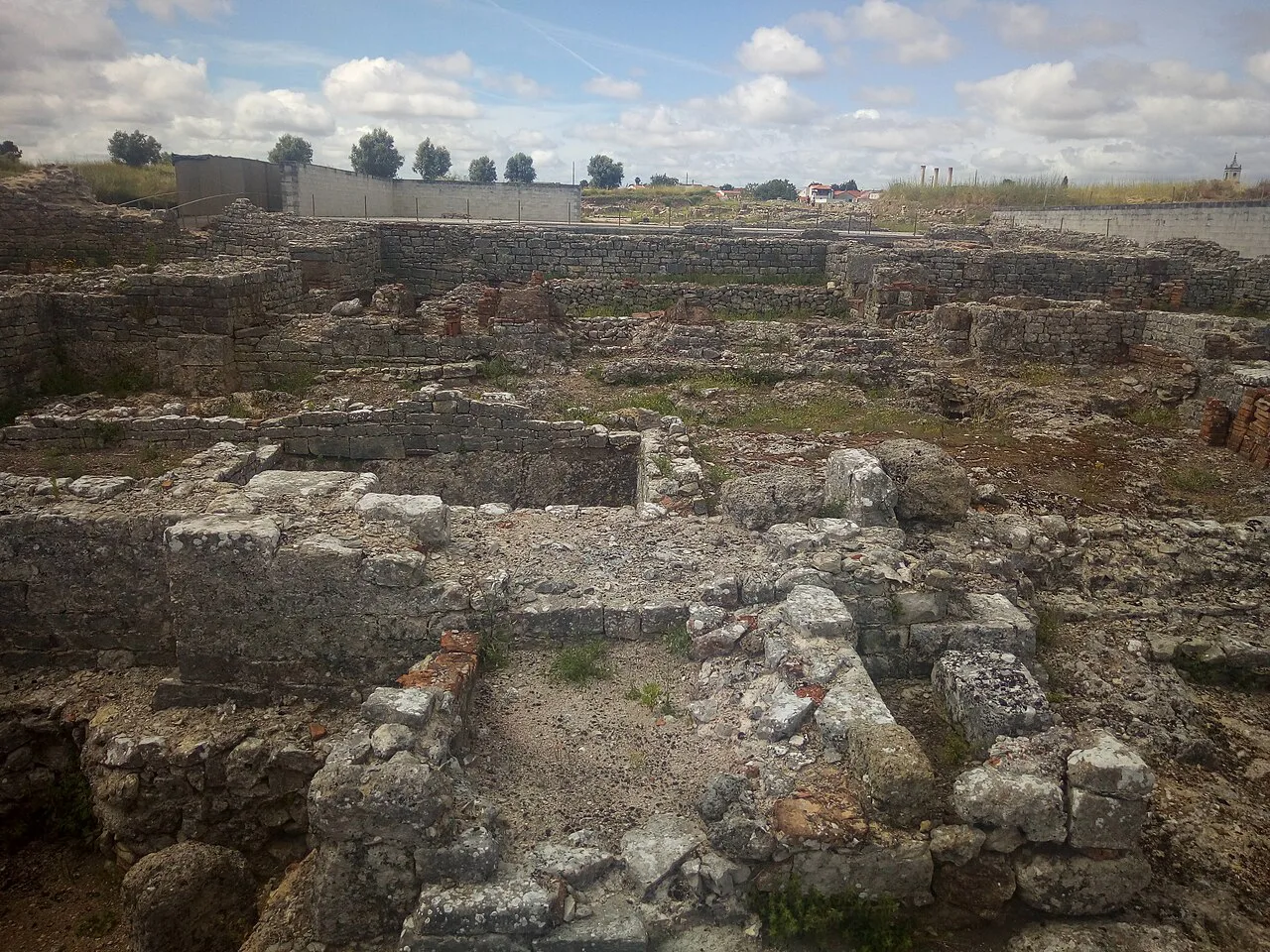
Conímbriga is the site that justifies the detour. Excavation has revealed a Roman town with houses, baths and some of the finest mosaic pavements in Iberia, and the setting is rural rather than buried under a modern city. The Portugal Travel Guide profile describes it as the most extensive Roman site found in Portugal so far. Allow a half-day including travel, and treat the on-site museum as part of the visit rather than an optional extra, since it holds material removed from the houses.
For context, this is where Portugal's deeper past connects to the later story told in our megaliths in Portugal guide: the same central-Portugal countryside holds tombs and dolmens from millennia before the Romans arrived. Seeing both in one trip makes the timeline concrete. Conímbriga's opening days and ticket prices are published by the museum service that runs it, so confirm them before you set out, particularly around public holidays.
Évora's Roman temple and what else survives
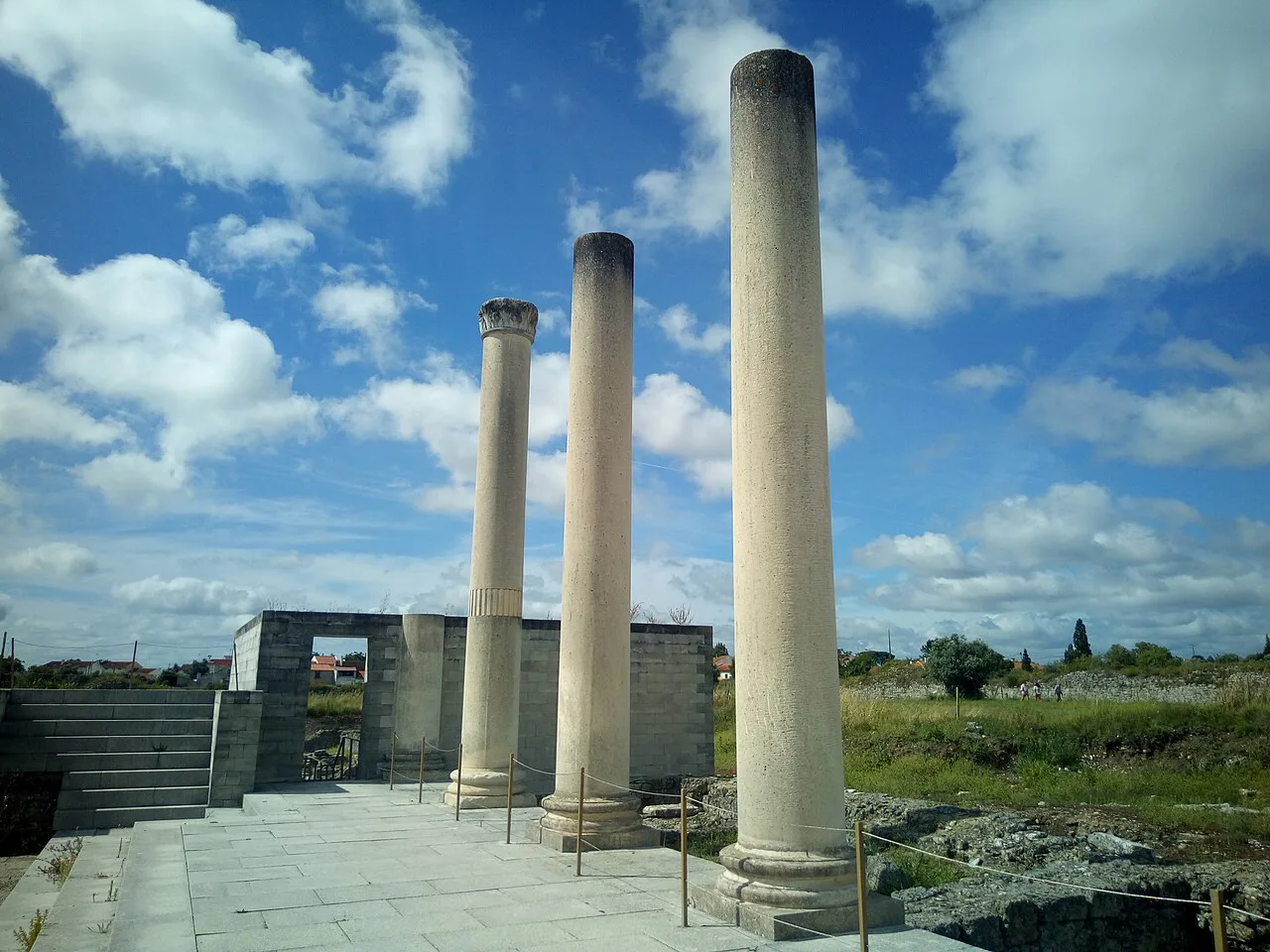
The Templo Romano de Évora stands by the Largo do Conde de Vila Flor, next to the Évora Museum, its columns complete enough to read as a temple rather than a ruin. It is the single most photogenic Roman survival in any Portuguese old town, and because it sits inside the historic centre you see it on the same town walk as the Sé (cathedral) and the Capela dos Ossos. That makes Évora the best Roman site for anyone who does not want to drive to a rural excavation: the temple costs nothing extra in time if you are already in town.
What else of Roman Évora survives is fragmentary: stretches of wall, traces of baths and street lines that later buildings absorbed. Read the temple first, then look for reused stone in the medieval fabric as you walk. The city's later layers are just as compelling, and the Moorish centuries that followed the Romans left their own marks across the Alentejo, as our Moorish Portugal guide sets out.
Milreu, near Estoi: villa, mosaics and a later church
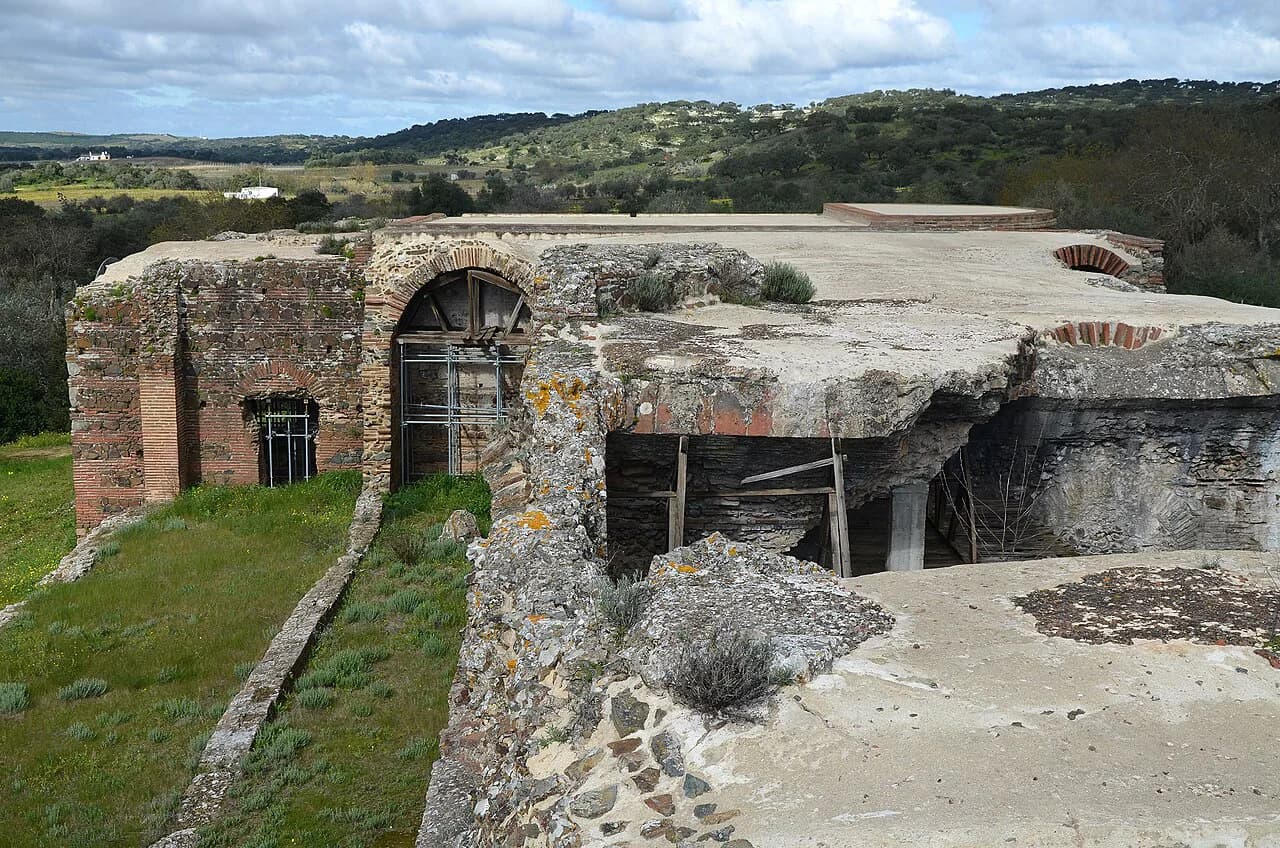
Milreu, just outside the village of Estoi in the Algarve, preserves the remains of a substantial Roman villa, with mosaic floors, a bath complex and structural traces that show how wealthy rural life worked in the province. What makes it unusual is the layering: a later church was built into the villa remains, so you read Roman domestic architecture and early Christian reuse in one visit. It rewards an hour or two and suits anyone based in Faro or the eastern Algarve.
This part of the Algarve was the Roman and later Moorish Al Gharb, and the region's place names and river valleys carry that inheritance. Pairing Milreu with a hill town such as Estoi itself gives a half-day rather than a single stop. Check the site's opening days with the heritage service that manages it before travelling, since rural monuments keep shorter hours than town museums.
Tróia, across the water from Setúbal
Tróia lies on the peninsula opposite Setúbal, reached by ferry across the Sado estuary, and holds Roman remains that include workshops for processing fish and garum, the fermented fish sauce that drove a good part of the province's export economy. The combination of a short boat crossing and ruins on a sand peninsula makes it the most scenic of the southern sites. It works as a half-day from Setúbal, which is itself a good base for the peninsula.
Treat Tróia as a Roman-industrial story rather than a temple-and-mosaic one: what survives is functional architecture, which some travellers find more interesting than columns and others find dry. Ferry times and site access change with the season, so check the crossing operator's timetable before committing to the trip.
Mértola and the Guadiana
Mértola sits on a bluff above the Guadiana river in the Alentejo, and its layers run from Roman occupation through a substantial Moorish period to the Christian reconquest. The Roman contribution is part of the town's archaeology rather than a standalone attraction, so come for the whole ensemble: the castle, the river views and the whitewashed streets. It suits travellers who want atmosphere and depth over a single ticketed ruin.
Mértola is remote, which is both the point and the cost. It fits a southern Alentejo loop rather than a day trip from Évora, and the drive itself is part of the experience. The town's later history, including its role in the centuries after the Roman withdrawal, belongs to the same story our Portugal history section tells.
Roman bridges and roads in a short break
Roman bridges survive in several Portuguese towns and on country roads, often still carrying traffic, which is the best possible proof of engineering. They are free to walk across and need no planning, so treat them as bonuses: a bridge in the middle of a town you are already visiting is worth ten minutes, while a detour to a rural bridge alone rarely justifies the fuel. Look for broad, low arches and stonework that does not match the medieval repairs around it.
Roads are harder to see. Roman routes underlie many later highways and country lanes, and the straight alignments are the giveaway. If you are following the Roman thread across several regions, the surviving stretches of pavement and milestone stones are the places to look for, and the heritage panels at the major sites usually point you to nearby fragments.
Tickets and opening times: which days to avoid
Opening days and ticket prices vary by site and by managing body, and they change with the season. Rather than guess, check each site's own listing before you travel: the museum service responsible for Conímbriga and the regional heritage services for Milreu and Tróia publish their own details, including holiday closures. Portuguese national monuments commonly close one day a week, and public holidays disrupt normal hours, so build a backup into any day that depends on a single site.
Practical routine: confirm the opening day of your main site first, then build the rest of the day around it. If your only full day falls on a Monday, plan a town walk, a market or a landscape instead, and move the ticketed ruin to another day. This is the single biggest scheduling error on Roman-themed short breaks.
Getting between the sites
With a car, central Portugal is straightforward: Conímbriga and Évora can be linked in a day's driving, and the Algarve sites around Estoi are close together. Without a car, Évora is the easiest Roman site to reach, since the temple is inside the walkable centre, while Conímbriga and Milreu need a bus or taxi from their nearest town. Decide which site matters most and build transport around it rather than trying to collect them all.
In the south, Setúbal plus the Tróia ferry makes a car-free Roman day genuinely possible, with the boat as the highlight. Mértola is the exception: without a car it is a long journey, so save it for a trip when you have wheels and time.
Which Roman cluster should you pick?
Pick Conímbriga plus Évora if you have two or three days in central Portugal and want mosaics, a standing temple and a real town to eat and sleep in. Pick Milreu plus Setúbal and Tróia if you are in the south and want a boat crossing and villa mosaics without long drives. Save Mértola for a longer Alentejo trip.
Whatever you choose, confirm the opening day of your main site before booking anything else, and keep one flexible day for the town you did not plan for. The ruins are the hook, but the towns around them are what make a short break work.
Explore more Portugal guides
Frequently Asked Questions
Are there Roman ruins in Portugal?
Yes. Conímbriga is the most extensive Roman site discovered in Portugal so far, with substantial mosaics, and Roman remains survive in Évora, Milreu near Estoi, Tróia opposite Setúbal and Mértola on the Guadiana.
Which Roman ruins are closest to Lisbon?
Setúbal and the Tróia peninsula, reached by ferry across the Sado estuary, are the most practical Roman outing from Lisbon, pairing a short crossing with the remains of Roman fish-processing workshops. Évora, with its temple, is a longer but more rewarding day.
Can you visit Conímbriga by public transport?
Conímbriga sits in the countryside near Coimbra and is easiest with a car. Without one, take a bus or taxi from Coimbra and confirm the return journey before you go, since services are limited.
How long do the Roman sites take?
Allow a half-day for Conímbriga including travel, an hour or two for Milreu, and a half-day for Tróia including the ferry. Évora's temple takes minutes because it sits on the town walk you would do anyway.
Sources
Notes for your next Portuguese break
Optional updates to our town guides.
You might also like



Continue reading
More guides you'll find useful





