
Portugal Road Trip: Routes, Driving Times and Where to Stop
Plan a Portugal road trip around realistic driving times and a route that suits your days. Compare coastal, Alentejo and northern options before you book.
On this page
A Portugal road trip for three to four days should stay within one region, while ten days to two weeks is the realistic window for a coast-to-north run. The country rewards less driving per day over a longer list of stops, because each move costs you a morning of packing and a chunk of daylight. This guide sets out the main legs, what the road-trip planners actually clock up, and how to shape a route around the days you have.
Start by fixing the number of nights, not the list of places. One long-distance route covering Lisbon, the Algarve, the Alentejo and the north is a fair first-timer's shape, but the same source admits it means changing bases constantly and moving at pace. If that sounds tiring, cut the map in half and spend the saved days on foot.
How long a Portugal road trip takes: from a taster to two weeks
Drive time, not distance, is what decides whether a route works. One published route across the country totals roughly 15 hours and 1,500km behind the wheel, spread over a two- to three-week trip with three nights at most stops. Scale that down and a week of self-drive gives you two or three bases, not six.
For a short break of one to four days, pick a single region and treat the car as a way to reach one or two outlying sights rather than a touring machine. A 7 day Portugal itinerary is a better ceiling for a first attempt at long-distance driving here, because it leaves room for an unplanned afternoon. Anything tighter becomes a relay of car parks and check-ins.
A full two weeks lets you link the south coast, the Alentejo interior and the north without rushing, and still keep a couple of slow days. Build the plan around your two longest transfers and fill the gaps afterwards, so a delayed pick-up never cascades through the whole trip.
Route options compared: coastal Algarve, Alentejo and north
The coastal route trades depth for variety: Lisbon, the Setúbal peninsula, the Algarve and then north via Óbidos. It suits travellers who want sea air and short hops between stops, and it is the easiest shape to trim if you lose a day. The Algarve itinerary page covers how to spend your time once you are down there.
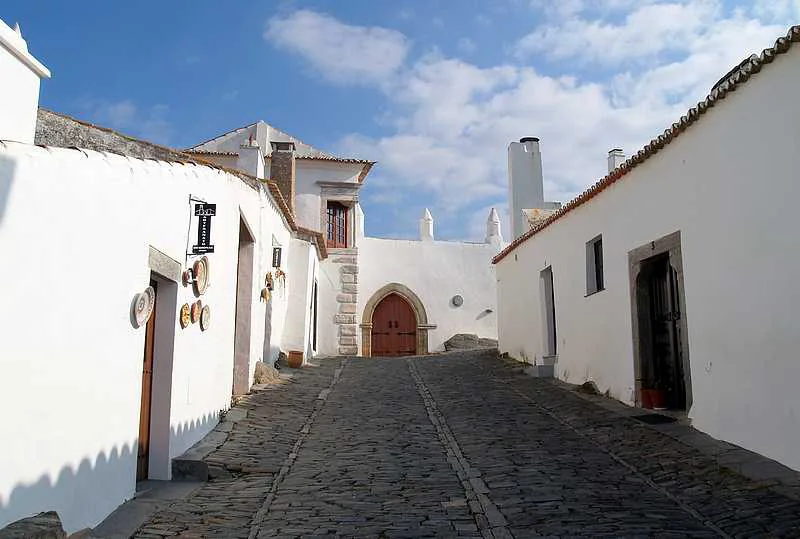
An inland route through the Alentejo gives you walled towns, cork country and long, empty roads, with Évora as the natural anchor. Lonely Planet lists the Alentejo as a road-trip region in its own right, alongside the central coast, the Minho and the highlands. The drives between stops are longer than on the coast, so plan your bases accordingly.
The northern half runs from Óbidos up to Porto and inland along the Douro. It gives you historic city centres, river gorge scenery and the university town of Coimbra on the way, at the cost of more motorway miles. A central Portugal itinerary is the sensible middle option if you want Coimbra and the coast without committing to the far north.
A northern Portugal itinerary works well as a standalone trip from Porto, taking in the Minho and the Douro without the long haul south. Lonely Planet treats the Minho and the Douro Valley as separate road-trip regions, which is a useful signal that each deserves its own days rather than a single blur.
The Lisbon–Portinho da Arrábida–Algarve leg
One well-known coastal route begins at Lisbon airport, drops down to Setúbal and stops at Portinho da Arrábida before continuing south. The appeal is a quick transition from city to sheltered coves within a short drive, so it makes a gentle first day when you land early. Treat it as a scenic start rather than a destination in its own right.
From there the route turns down the Algarve coast, with Alvor, Lagos, Armação de Pêra and Tavira named as stops. Spacing these over several nights is what keeps the driving sane; trying to tick all four in two days means you see the Algarve mostly through a windscreen. If you only have a short break, pick one base and explore from there.
A more inland variant covers Lisbon, then the Costa Vicentina coast and Portimão, before turning east to Silves and Évora. It swaps motorway speed for wilder coastal roads and gives you a medieval town and an Alentejo capital in the same run. Allow more time per leg than the map suggests, because the smaller roads are slower.
The Algarve to Óbidos leg, and how to use Óbidos as a break in the drive
The return north from the Algarve to Óbidos is a long northward transfer, so treat it as a travel day. Óbidos then works well as a single overnight: the old town is small, walled and walkable, so one evening and a morning covers it without repetition. That makes it a natural break in the drive rather than a base for several days.
Arriving late afternoon gives you the streets after the day-trippers have gone and a full morning before you move on. If you want more than that, the honest answer is to add a second night and use it for the surrounding area rather than for the town itself.
Óbidos to Porto and inland to the Douro Valley
North of Óbidos the route runs up to Porto, then turns inland towards the Douro. Porto is best used as a transport hub and a place to drop the car for a day, since its centre is dense and parking is a liability. The river valley beyond is the scenic payoff, with terraced vineyards and winding roads.
A Douro Valley leg is short in distance but slow in practice, so give it a dedicated day rather than bolting it onto a Porto morning. Lonely Planet lists the Douro as a road-trip region in its own right, which is a fair warning that it deserves more than a detour. Our Portugal itinerary sets out how the valley fits with the rest of a national route.
If your time is tight, choose either the coast or the valley rather than both. The valley roads make for slow, beautiful progress, and squeezing them into a day trip from Porto leaves you with more driving than looking.
Driving times and distances: what the planners clock up
The published figures are useful as a sanity check. One route spanning the country came in at about 15 hours and 1,500km of driving, which is a lot of wheel time for a fortnight and a warning against over-planning a shorter trip. Use those totals to decide how many bases you can afford, not to timetable each day.
Some legs are quoted directly: Évora to Coimbra is given as a drive of about three hours, and the Algarve to Évora as roughly two and a half. Those are realistic planning numbers for motorway and main-road driving without long stops. Add time for tolls, fuel and a proper lunch.
Other legs are better judged qualitatively. The Algarve to Óbidos is a long northward haul, while the Setúbal to Algarve stretch is a steady coastal run. Plan no more than one long transfer per day and keep the following day local.
Car hire, toll roads and the practical side of self-drive
A road trip of this kind needs a hire car, picked up in Lisbon or Porto and returned where it suits your route. Book before you travel and check what the excess and toll transponder arrangement actually cover, because the answers change the real cost of the trip. One route guide treats tolls as a section in its own right, which tells you they matter.
Historic centres are the hard part. Walled towns and old quarters have tight gates and limited parking, so choose a car park outside the walls and walk in rather than hunting for a space on the cobbles. That is a route decision as much as a driving one, and it is why single overnights work best in small walled towns.
Driving times rise sharply on summer weekends and around popular coastal towns, so build slack into any day with a fixed arrival. Nobody can promise an exact queue, but a morning start is almost always cheaper in time than an afternoon one.
How many nights each stop needs
Three nights per stop is the rhythm one long route settles into, and it is a decent rule of thumb for towns with a walled centre or a cluster of sights. Two nights works for a compact town such as Óbidos or Silves, where a single full day covers the highlights. One night is for a stop that exists mainly to break a drive.
The 10-Day Portugal Itinerary makes the trade-off plain: a fast country-wide route means frequent hotel changes, repeated packing and little downtime. If you value slow mornings, spend the same days on fewer stops and trade breadth for depth.
A useful test is to ask what you would skip if you lost a day. If the answer is a whole town, the route is too tight and you should cut it now rather than on the road. Less is more holds for almost every driving trip in Portugal.
Best time of year to drive Portugal, by region
Summer makes the south hot and dry, with low scrub and little shade, while the north stays a few degrees cooler and greener. That contrast is one of the reasons a coastal-first route makes sense in high summer: the ocean breeze does some of the work. It is also a reason to avoid long inland drives in the middle of the day.
Spring and autumn are the most comfortable seasons for a driving trip, with milder temperatures and lighter traffic on the main routes. Winter shortens daylight, which matters if you are stringing together several hours of driving with sightseeing. Choose your season by region: the coast and the Alentejo reward the shoulder months.
Weather varies enough between the coast and the interior that you should check typical climate figures rather than pack for one national average. The mountain roads in the north and the open plains of the Alentejo behave quite differently on the same day.
Which route should you actually book?
For a first short break, take one region and drive it slowly: the Algarve from a single base, or the Alentejo around Évora. With a week, link the coast and one inland town; with two, run the full coast-to-north route and accept that some days are mostly driving. The 7-Day Portugal Itinerary is the best template to test whether a longer drive suits you.
Book the car early, plan no more than one long transfer per day and treat walled towns as places to park outside and walk in. Then check the current toll and hire terms with your operator before you set off, as these change.
Explore more Portugal guides
Sources
Notes for your next Portuguese break
Optional updates to our town guides.
You might also like



Continue reading
More guides you'll find useful




