
7-Day Portugal Itinerary: Where to Go and How to Plan the Week
A seven-day Portugal itinerary built around one region, with the towns to pick, how the days fit together and the trade-offs of moving between them.
On this page
Seven days is enough for one region of Portugal done properly, and not enough for Lisbon, Porto and the Algarve in the same week. Pick a base and spend the week within roughly an hour or two of it; the centre of Portugal rewards that discipline because the monastery at Alcobaça, the island castle at Almourol and the schist village of Piódão sit within a workable driving arc. This plan gives you the day-by-day shape of that week, the trade-offs between driving and trains, and an honest cut list for when the days start to squeeze.
The logic is simple: one full-day anchor sight, a second stop on the way home where the map allows it, and a slower day for a village where the pleasure is walking the streets rather than ticking off a monument. Where a monument's ticket desk, seasonal hours or boat timetable decides the shape of a day, that timing is set out below and the rest is left for you to confirm directly.
Is seven days enough for Portugal? What one week realistically covers
A week gives you two or three bases at most, or one base with six or seven day trips. The three-hop version most first-timers sketch — a few days in Lisbon, a Sintra side trip, then Porto — spends a large share of the week on trains and checking in and out, and leaves no room for the inland towns that make Portugal distinctive. Treat Lisbon and Porto as arrival and departure hubs and put the week's content between them.
If you want the whole country in one trip rather than one region, a 10 day Portugal itinerary gives the extra days that a Lisbon-to-Porto line genuinely needs, while a 2 weeks in Portugal plan is the version that can add the Alentejo or the north without everything feeling rushed. Seven days is the awkward middle: long enough to want variety, short enough that variety becomes transit.

Choose one region: Lisbon and the centre, the north around Porto, or the Alentejo
Three regions make sense for a week. The centre of Portugal, inland from Lisbon, clusters UNESCO monuments with schist and border villages and is the plan this guide develops. The north around Porto, which a northern Portugal itinerary covers in detail, suits travellers who want cities, river valleys and the Bom Jesus do Monte sanctuary near Braga. The Alentejo, set out in our Alentejo itinerary, is the choice for open plains, walled hill towns and slow driving between them.
Make the choice on two criteria: how much driving you are willing to do, and whether you want cities or landscape. The centre and the Alentejo both reward a car; the north can be strung together with trains between Porto, Braga and Guimarães but loses the smaller places. Our Portugal itinerary hub sets out the regional options side by side if you are still deciding.
A sample seven-day plan using the centre of Portugal as the base
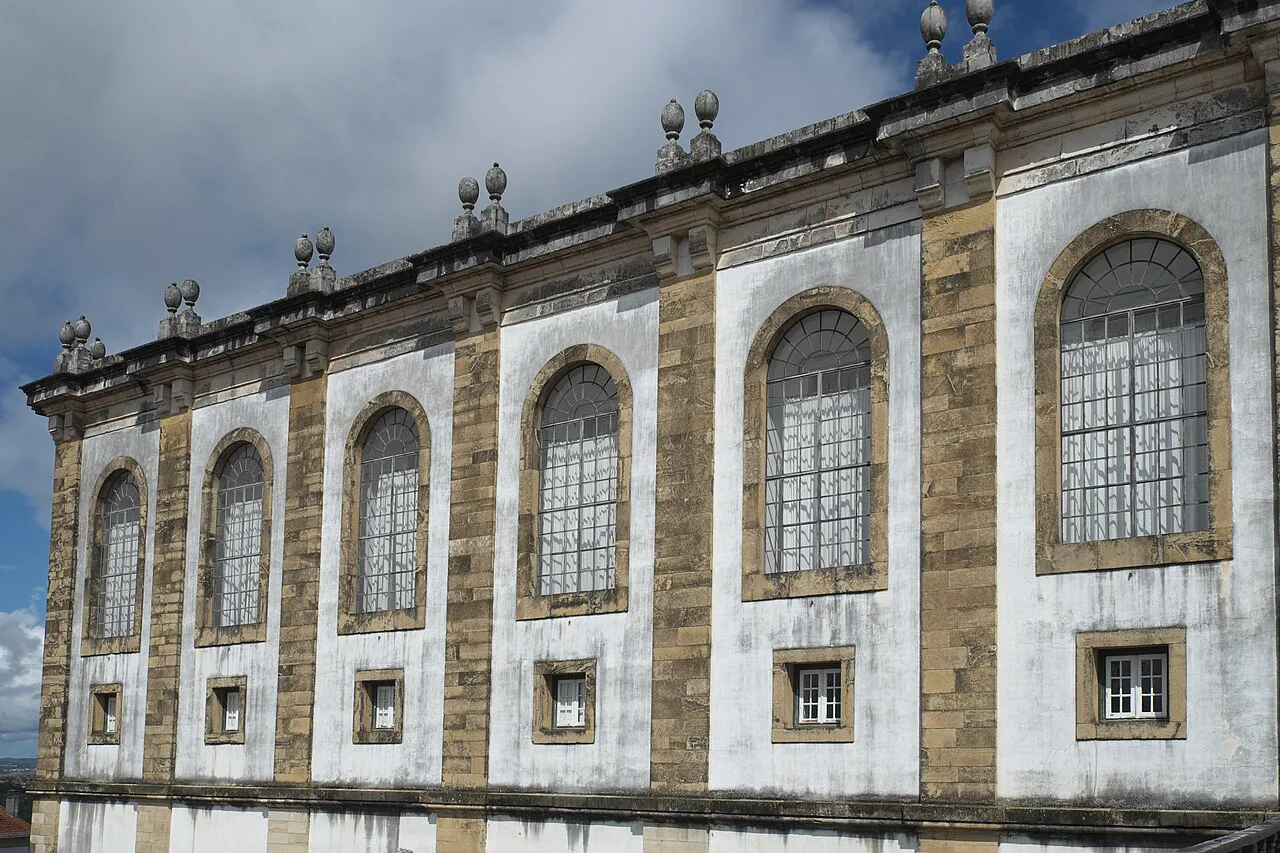
Base yourself in or near Alcobaça or Leiria and drive out each day, keeping the longest transfer to the middle of the week. Day one: arrive, settle in, and walk the town you are staying in. Day two: the Monastery of Alcobaça in the morning. Day three: Almourol Castle, timed around the boat crossing from Tancos. Day four: a slower day at Piódão. Days five and six: the walled historical villages, two or three of them rather than all of them. Day seven: a short local morning and the drive back to Lisbon or Porto.
The order matters less than the pattern: one anchor monument per day, and anything else on the way there or back. That keeps you off the road in the middle of the afternoon, when a monument you have already paid to enter is the last thing you want to rush.
If the week is anchored on Lisbon rather than Porto, this same skeleton works — Alcobaça, Almourol and the villages sit north and east of the capital and are reachable by car without crossing the whole country. A road trip format gives you the flexibility the villages need, since several of them are not on a rail line.
Day-by-day structure: which towns take a full day and which take half
Full-day stops in this plan are Alcobaça, Almourol with its crossing, and Piódão. Half-day stops are the individual historical villages: each is a walled town or a schist hamlet you can walk in an hour or two, and pairing two in a day is realistic if you drive between them. Tomar, Óbidos and Leiria are the natural connectors on the map, so use them as lunch stops rather than destinations in their own right.
Build each day backwards from the fixed point: a boat departure at Almourol or a last entry at the monastery, not a hoped-for arrival time. Allow more than the map suggests for inland roads, and leave the final afternoon of the week free so a delayed morning does not cost you a monument.
Alcobaça: the Cistercian monastery, the royal tombs and the kitchen
The Mosteiro de Santa Maria de Alcobaça is the week's strongest single sight: a Cistercian foundation begun in 1178, a UNESCO World Heritage Site, and the royal pantheon of the Portuguese monarchy, where the 14th-century tombs of King Pedro I and Inês de Castro face each other across the transept. The church's three naves rise to the same height, which is unusual in European Gothic and makes the interior feel unusually open. Give it two to three hours, not forty minutes.
Do not skip the monastic parts beyond the church. The cloister, sacristy, chapter house, dormitory and refectory survive, and the 18th-century kitchen carries a 26-metre chimney and walls of blue-and-white tiles; a channel of running water from the Chiqueda spring still runs along its length. From October to March the monastery is open 09:00–18:00 with last entry at 17:30, and it keeps longer summer hours from April; fix your day around the last-entry cut-off rather than the posted closing time.
Set the monastery in the morning and use the afternoon to explore Alcobaça itself or push on towards the coast. The monastery's own page is the place to check the current ticket price and the exact April-to-September hours before you commit a day.
Almourol Castle: the island fortress in the Tagus and the boat crossing from Tancos
Almourol sits on a rocky islet in the middle of the Tagus, a Templar castle rebuilt in the 12th century and reinvented in Romantic style in the 19th, and it is reached by boat from Tancos rather than on foot. The visit is run on departures from Tancos that leave hourly, with seasonal operating windows: 10:00 to 13:00 and 14:30 to 17:00 from 1 November to 28 February, and 10:00 to 13:00 and 14:30 to 19:00 from 1 March to 31 October. Treat those windows as the constraint on the day — miss the last boat and the castle is a view from the bank.
Half a day covers the crossing, the island and the return, which leaves the afternoon free for Tomar or the drive back. Check the departure pattern the day before rather than assuming a summer timetable runs in winter.
Piódão and the schist villages of Serra do Açor
Piódão is built ledge by ledge up the southern slope of Serra do Açor, a tight stack of schist houses with slate roofs, stairways instead of streets, and a white parish church in the middle of the dark stone. It is a slow place rather than a sight: you walk the steep lanes, climb the steps, and look back down the valley. The village's isolation kept its medieval street pattern intact, which is exactly why the drive in is long and winding.
Give Piódão a full day including the drive from the Alcobaça area, or move accommodation to shorten the transfer. Beyond the village itself there is the matriz church, the São Pedro chapel and the Piódão museum, and the local specialities are chestnut liqueur and honey spirits — small, portable souvenirs that survive a flight home.
The walled historical villages: Almeida, Belmonte, Castelo Rodrigo, Linhares da Beira, Marialva
Portugal's historical villages are a defined set of a dozen fortified or stone-built places, and the ones that fit this week are Almeida, a star-shaped fortress town on a high plain above the Côa; Belmonte, associated with its Jewish community and the Cabrais family; Castelo Rodrigo, still inside its medieval walls on the border; Linhares da Beira on the northwest slope of Serra da Estrela; and Marialva, whose castle and keep rise out of the rock. Each is a walk, a wall and a view rather than a ticketed attraction.
Pick two or three, not five. They are far apart, and the pleasure of each is in the wandering: the narrow streets circling the slope up to the keep at Castelo Novo, or the walls at Castelo Rodrigo that still trace the medieval outline. Driving between them is the only practical way to link them in a week.
How long to give each stop, and what to cut when the week is tight
Rough allocation: Alcobaça two to three hours, Almourol half a day with the crossing, Piódão a full day with the drive, and each historical village one to two hours. That already fills six days before you have allowed for meals, so the seventh should be a light local day near your base rather than a new destination. If you want a written comparison of this pace against a longer one, our 10-Day Portugal Itinerary shows what the extra days buy.
The cut list, in order: drop the furthest historical village first, then combine two villages into one afternoon rather than cutting Almourol, and keep Alcobaça. If the week shrinks to five days, cut Piódão and the border villages and run Alcobaça, Almourol, Tomar and a local day — the centre's core is worth more than a scattered map.
Getting between the stops: drive versus train, and where a car earns its place
A car earns its place in this plan. Piódão, the border villages and the Tancos boat crossing are easiest to link by road, and waiting on sparse public transport will cost you a monument. Drive, and use the towns for parking and lunch rather than as bases to move between by rail. A road trip organised around one region is the more honest format than a rail-based itinerary with long gaps.
If you would rather not drive, the alternative is a two-base week with a car for the remoter days: Alcobaça and Leiria as the fixed points, then a single organised day for Almourol. It is a thinner week, but it removes the risk of an inland road at dusk on a strange car. Leave the car in Tancos for Almourol; the crossing is the point, so there is no reason to drive to the water's edge.
Opening days and timing: what to check before you fix a day
Portugal's monuments do not run on a single national timetable, so check each place individually rather than assuming a Monday closure. The two fixed constraints in this plan are Alcobaça's last entry at 17:30 from October to March and the seasonal boat windows at Almourol. Everything else — village churches, small museums, the Piódão museum — should be confirmed against the venue's own listing before you build a day around it.
Two sentences of advice, then stop worrying: confirm the monastery's hours and ticket price on its official page the week you travel, and check the Almourol departure times the day before. The rest of the week is about lanes, walls and views, and those do not close.
Where seven days stops working, and the 10-day or 5-day alternatives
Seven days stops working when you try to combine Porto and the centre, or the Algarve and the Alentejo, in the same week. An Algarve itinerary belongs in a different trip, as does a Madeira itinerary; neither fits a one-week centre-based plan without eating the week in transfers. The Algarve in particular is a separate holiday, best booked as the Algarve rather than as a day or two bolted on.
If you have ten days, add the north or push into the Alentejo. If you have five, keep the centre and cut to Alcobaça, Almourol and one village. The centre of Portugal rewards the shorter week because its monuments are close together, and a week that goes deep into one region will always beat a week that samples three.
Choosing your one region for the week
Build the week around Alcobaça and Almourol, add Piódão and two historical villages, and resist the urge to add a second region. The monastery's hours and the Almourol boat windows decide your day shapes; everything else can bend around weather and slow breakfasts. Pick the centre if you want monuments and stone villages without a city break in the middle, and pick the north or the Alentejo instead if cities or open plains are what you are actually after.
Explore more Portugal guides
Frequently Asked Questions
Is 7 days enough for Portugal?
Yes, for one region. Seven days covers a centre-based week comfortably — Alcobaça, Almourol, Piódão and two historical villages — but it is too short to combine Lisbon, Porto and the Algarve without spending much of the week in transit. Choose a region, keep transfers under a couple of hours and put the furthest stop in the middle of the week.
What is the prettiest town in Portugal?
That depends on what you want from a town. If it is a fortress and a view, the walled historical villages such as Marialva and Castelo Rodrigo are hard to beat; if it is a whole medieval street pattern intact in dark schist, Piódão is the one people remember. Visit two or three rather than ranking them from a list — each is small enough to walk in a morning.
Should I base myself in one place for the week?
Yes. A single base in or near Alcobaça or Leiria gives you short drives to the monastery, the Tagus crossing at Tancos and the villages, and avoids unpacking more than once. Two bases also work if you want to shorten the drive to Piódão, but three bases in seven days costs more time in transit than it saves.
Sources
Notes for your next Portuguese break
Optional updates to our town guides.
You might also like



Continue reading
More guides you'll find useful




