
Central Portugal Itinerary: Coimbra, Tomar, Óbidos and Aveiro
Plan a short Central Portugal itinerary linking Coimbra, Tomar, Óbidos, Nazaré and Aveiro, with how long each place needs and the trade-offs between them.
On this page
A four-day Central Portugal itinerary works best as a loop from one base, linking Coimbra with Tomar, Óbidos, Nazaré and Aveiro rather than chasing every name on a regional list. The region is large and its highlights are spread across several districts, so the practical approach is to pick three or four places close together and explore them without rushing. This guide gives a day-by-day route, explains which legs hold up on public transport, and is candid about what to drop.
Why base the trip on Coimbra and pick three or four stops, not ten
Coimbra sits towards the northern end of the region you are touring, with Tomar inland to the south-east and Óbidos, Nazaré and Aveiro strung out towards the coast. That position makes it a sensible first base for a short break, because you are not doubling back across the region each morning. Treat the city as the anchor and let the other towns form a line rather than a web.
The temptation with Central Portugal is to compile a long list of cities, waterfalls, river beaches and viewpoints and then try to tick them off. Splitting the region into three or four neighbouring destinations, with time to spare in each, produces a far better trip than a ten-stop sprint. The famous names in the region include Tomar, Coimbra, Alcobaça, Aveiro, Batalha and Óbidos, and those are the ones that reward a proper visit.
Think of the trip as a spine: Coimbra for the university and old town, Tomar for the convent, then west to the walled town at Óbidos and the coast at Nazaré, ending in Aveiro. If you want a longer version of the same shape, the wider Portugal itinerary scales this up with more towns and more driving; for four days, resist it.
How to move between the towns: car versus train
Some of the places in this plan are straightforward by public transport and some are not. The guide to the region's highlights is blunt about it: the viewpoints, river beaches, waterfalls and remote villages are far easier with a car, while several of the main towns can be reached by public transport. That split is the single biggest decision in planning this trip.
Without a car, build the route around Coimbra, Aveiro, Óbidos and Tomar, which sit on the regional network, and leave out anything that depends on a rural road. A Portugal road trip style of route only makes sense if you actually have the car, because hiring one for four days often costs more in parking and pick-up time than it saves on this short a loop.
Check train times for your exact dates rather than assuming a frequency, especially on the Tomar line and the coastal stretches. The Rough Guides route through this part of the country uses a rental car to keep the pace manageable between Lisbon, Óbidos, Batalha, Coimbra and Évora, which tells you something about how the region is stitched together.
Day 1: Coimbra in a day
Give Coimbra the whole first day. The Universidade de Coimbra, on the hill above the old town, is the reason most people stop here, and the historic university buildings, courtyards and views over the Mondego take a couple of hours before you have seen anything else. Treat the Biblioteca Joanina, the baroque library, as a timed visit and book it in advance rather than arriving and hoping.
Below the university, the old town is a knot of steep streets, the Sé Velha and the riverside. Walk down rather than up wherever you can, because the cobbles are unforgiving, and use the lower town around the Mondego for a late lunch. A tasca lunch of bacalhau or a francesinha will cost far less than a sit-down menu in the main square.
Coimbra pairs naturally with a longer tour of the country: if you have room for two weeks in Portugal, the city earns a full day rather than a half, and the university quarter alone justifies it. On a four-day Central Portugal trip, one day is the right allowance and no more.
Day 2: Tomar and the Convento de Cristo
Tomar is the day that defines the trip. The Convento de Cristo, the fortified former headquarters of the Order of Christ, sits above the town and is the reason to come. Allow three hours for the convent itself, plus the walk up and back, and build the rest of the day around it.
The town below is smaller than the convent suggests and takes an hour or so: the squares and church-lined streets running down to the Rio Nabão are the core of it. Tomar is easy to bolt onto Coimbra by train, which makes it the best day trip from the city on this route.
If you are building a longer loop that takes in the north as well, the northern Portugal itinerary covers the Bom Jesus do Monte staircase at Braga and the Douro Valley, both of which are a different trip from this one. Keep Tomar and the convent as the inland anchor of the Central Portugal plan.
Day 3: Óbidos inside the walls, then Nazaré
Óbidos is a small walled town that you can walk from end to end in under an hour, so the point is not to hurry through it but to walk the battlements and stop. The main street climbs from the town gate up towards the castle, lined with shops and pastelarias, and a ginjinha in a chocolate cup is the local ritual and costs little.
Nazaré, half an hour or so further west, is a different proposition: a working fishing town with a long promenade and the clifftop at the Sitio above it. The cliff viewpoint is where you get the scale of the place, and the working seafront is the detail most day-trippers miss.
Do both on the same day, Óbidos in the morning and Nazaré after lunch, and sleep in Óbidos, Nazaré or back in Coimbra depending on your base. If you are travelling without a car, treat Óbidos as the sure thing and check the bus connection to Nazaré before you commit.
Day 4: Aveiro, the canals and Costa Nova
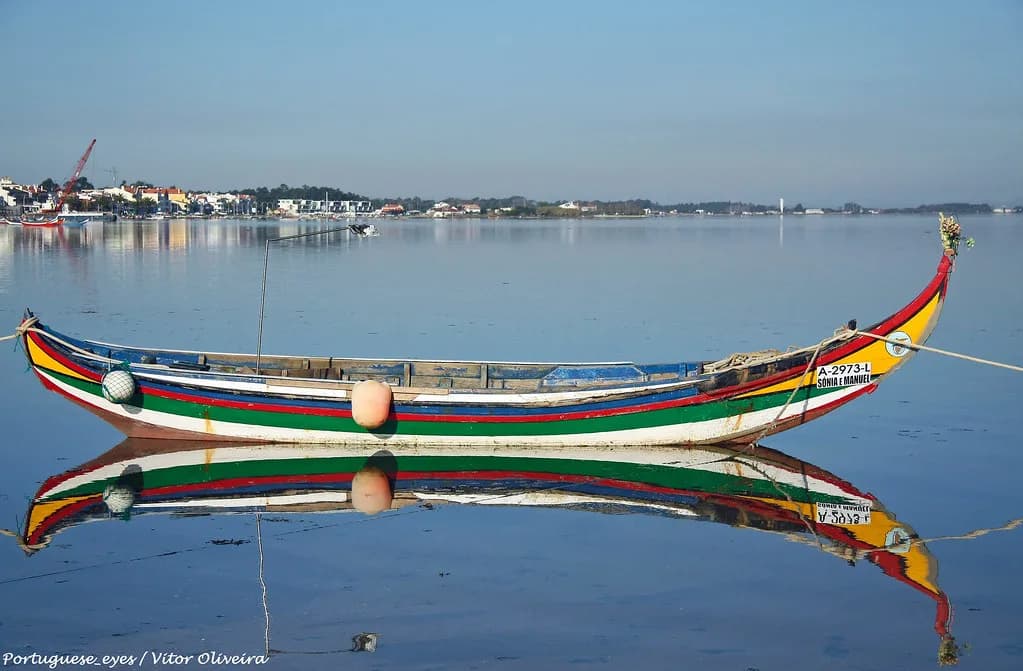
Aveiro sits on the Ria de Aveiro, a lagoon of salt flats and canals that gives the city its nickname of the Venice of Portugal. The Central Canal runs through the centre, and the moliceiro boats, the painted seaweed-gathering craft, run short trips along it from the canal banks.
The best of Aveiro is out at Costa Nova, the strip of striped timber houses on the Atlantic side of the lagoon. Take the local bus or drive out and walk the beachfront, then come back into town for lunch and a wander along the main streets. The salt flats between the city and the coast are the landscape that makes the place distinct.
Aveiro is the natural end point of the four days because it also gives you a clean rail connection onwards towards Porto or back south. If you are continuing to Lisbon or Porto, this is the point where the Central Portugal loop hands over to the standard national route.
Where to cut if you only have two or three days
With three days, drop Aveiro and end at Nazaré or Óbidos. Coimbra, Tomar and Óbidos give you the university, the convent and the walled town, which is the strongest three-stop combination in the region and the easiest to do without a car.
With two days, pick one city and one town: Coimbra plus Tomar if you want architecture, or Coimbra plus Óbidos if you want the coast. A 7-Day Portugal Itinerary covering more of the country is a better fit if you can stretch the time, because two days here barely gets past the first stop.
Do not try to add Batalha and Alcobaça to a two-day plan. Both are magnificent monasteries and both need real time; the Mosteiro da Batalha in particular is not a ten-minute photo stop. Save them for a trip that gives this stretch of the country four days or more.
Which base suits which pair of towns
Coimbra is the right base for Tomar and for the inland sights, and it also works for Óbidos if you accept a longer day out. Aveiro is the better base for the coast, the Ria and Costa Nova, and it puts you on the fast line north to Porto.
If you want one base for the whole four days and no repacking, choose Coimbra: it is central, it has the most to do in the evenings, and it is the easiest place to reach from Lisbon or Porto. Accept that Aveiro becomes a day trip rather than a final stop.
If you would rather sleep on the coast, split the trip in two: two nights in Coimbra for Tomar, then two nights in Aveiro or Nazaré for Óbidos and the sea. That split costs you an hour or so of packing but gives you evenings by the water instead of in a university city.
Museums and monuments: order your days, Don't memorise hours
Opening days matter more than opening hours for planning. Many Portuguese museums and national monuments close one day a week, most often Monday, and some close on public holidays. Rather than pin your trip to a list of times, put the one sight you would most regret missing at the start of a day rather than the end, and keep a second option for the afternoon.
Check the official website for the Universidade de Coimbra and the Convento de Cristo for the dates you are travelling before you book transport around them. The regional guide to Central Portugal makes the same point: check the opening hours of any monument or attraction in advance, particularly in the off-season or around public holidays.
Churches are their own case. Many close for a long lunchtime break and reopen in the late afternoon, so a midday visit to a parish church in Tomar or Óbidos can easily find the door shut. Plan church interiors for the morning or the late afternoon.
Costs in euros: tickets, trains and daily budget shape
The two big ticketed sights on this route are the Universidade de Coimbra with the Biblioteca Joanina and the Convento de Cristo at Tomar. Check each one's own website for current prices and whether timed entry applies before you travel, and you know the number before you leave the UK.
Spend the money on those two and save it elsewhere. A tasca lunch, a pastel de nata and a coffee, a ginjinha in Óbidos and a moliceiro ride in Aveiro are all small individual outlays; the cost that creeps up is transport, particularly if you hire a car for four days.
Rail fares on the Coimbra to Aveiro and Coimbra to Lisbon lines vary by train type and by how far ahead you book; the operator publishes prices, and booking early is the only reliable way to bring the number down. Check the fare for your dates on the operator's site rather than budgeting from memory.
Trade-offs: what you miss by adding Aveiro or Batalha
Every extra stop on a four-day trip costs you time somewhere else. Adding Aveiro means Óbidos and Nazaré share a single day with a drive in between; adding the Mosteiro da Batalha means giving up the coast entirely, or cutting Tomar short.
The bigger trade-off is depth. A 10 day Portugal itinerary can carry Coimbra, Tomar, Óbidos, Nazaré, Aveiro and Batalha without short-changing any of them; four days cannot. Decide before you go whether you want to see the Convento de Cristo properly or to have three towns on your camera roll.
Likewise, the Alentejo south of here — Évora, Vila Nova de Milfontes, the Alentejo coast — is a separate trip, not an add-on to this one. An Alentejo itinerary is the page to read if that is where you would rather spend the time.
Which four-day shape should you book?
Book Coimbra, Tomar, Óbidos and Nazaré if you want architecture and a walled town, and add Aveiro only if you have a car or do not mind a long final day on the train. For most short-break travellers, that is the right four-day Central Portugal route.
If the choice is between Aveiro and Batalha, take Aveiro on this trip: the canals, the moliceiro boats and Costa Nova give you a third distinct landscape, whereas Batalha deepens the architecture without changing the scenery. Save the monastery for a longer tour of the country.
Whichever shape you choose, order your days around the two timed visits, the Biblioteca Joanina and the Convento de Cristo, and build everything else around them. That way a closed door or a slow morning does not cost you the sight you came for.
Explore more Portugal guides
Frequently Asked Questions
Is 4 days enough for Central Portugal?
Four days is enough for Coimbra, Tomar, Óbidos and either Nazaré or Aveiro, but not for all five plus Batalha. The region is spread out and the Convento de Cristo alone takes half a day, so treat four days as a three- or four-stop trip rather than a tour of the region.
Can you do this route without a car?
Yes, if you keep to Coimbra, Tomar, Aveiro and Óbidos, which are served by rail and regional buses. Nazaré and Costa Nova are harder without a car, so check connections for your dates before making them the anchor of a day.
Is Coimbra or Aveiro a better base?
Coimbra suits Tomar and the inland sights and has more to do in the evening. Aveiro suits the coast, the Ria de Aveiro and Costa Nova, and puts you on the fast line towards Porto. Two nights in each covers the whole route without a long daily drive.
What is Central Portugal known for?
The region is known for the Universidade de Coimbra and its baroque library, the Convento de Cristo at Tomar, the walled town of Óbidos, the fishing town of Nazaré, and the canals and salt flats of Aveiro.
Sources
Notes for your next Portuguese break
Optional updates to our town guides.
You might also like



Continue reading
More guides you'll find useful




