
Portugal Itinerary: How to Plan 3 to 14 Days Beyond Lisbon and Porto
Build a Portugal itinerary of three to fourteen days, with honest days per stop, rail and road trade-offs, and where to slow down.
On this page
Three days buys you one region and one base; seven days buys two regions with a clean transfer between them; fourteen days is the first length at which the north, centre, Alentejo and Algarve can all appear without a scramble. This guide works backwards from your available days to the regions that fit, rather than listing every highlight and leaving you to cut.
The shape is the same throughout: pair regions that sit close together, decide once whether you are driving or taking trains, then give each stop enough nights to be worth unpacking. Lisbon and Porto appear here only as rail hubs and comparison points, because the towns worth your short break sit beyond them.
Start with days, not places
A useful rule for a short break is that every move between bases costs you roughly half a day once you count packing, checking out and finding the next place. That arithmetic, not a list of sights, should decide how many towns you name. Three to four days means one base and one region; five to seven days means two regions joined by a single transfer; ten days allows a third; fourteen days lets the map breathe.
Travellers who try to squeeze Porto, Lisbon and the Algarve into seven days end up spending much of the holiday commuting, and the honest advice is to drop one rather than rush all three. That logic applies with equal force outside the big cities: two nights is the practical minimum for any town you actually want to see, and one night is only sensible for a staging post.
Write your days down as nights rather than days, because flight times eat the first and last. A four-day break from the UK typically yields two full sightseeing days and two half days, which is one town, not two.
Which regions pair, and which fight each other
Portugal divides neatly for planning purposes into the north around Porto, the centre around Coimbra and the Atlantic coast, the Alentejo inland, and the Algarve in the south. The north and centre share a rail spine and pair easily; the centre and Alentejo connect through the interior; the Alentejo and Algarve sit end to end. What does not work is the north plus the Algarve in under a week, because the distance between them consumes the trip.
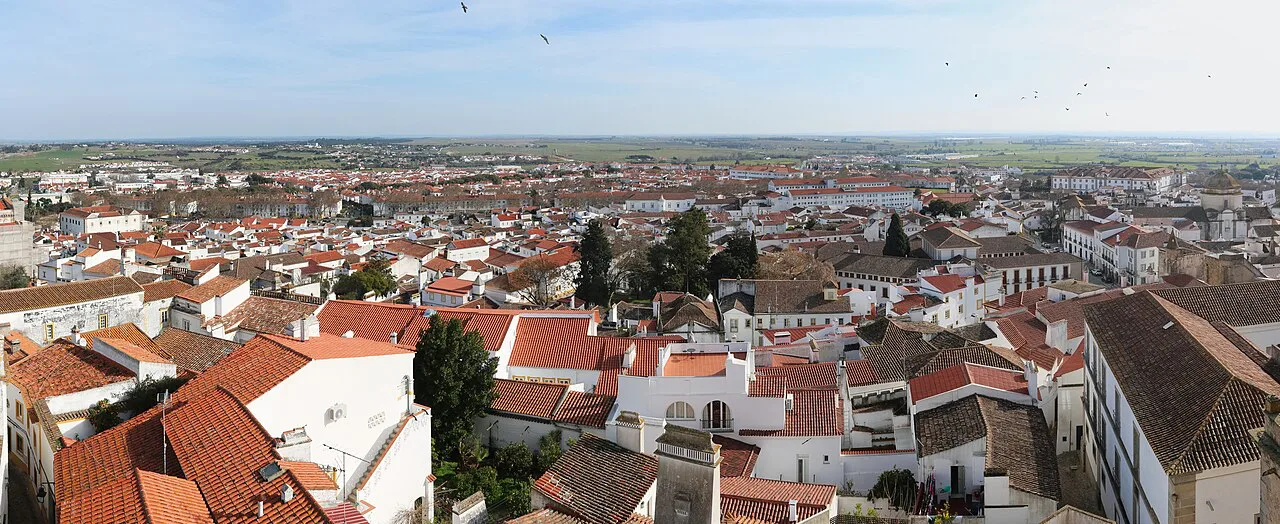
The Alentejo is often described as a vast region of olive groves, cork production and rustic cooking, with Évora as its walled, UNESCO-listed centre and plenty of free time built into itineraries there. Treat that as your cue to plan fewer, longer stops: one Alentejo base with a car beats three one-night stands.
In the north, Braga and Guimarães cluster around Porto, and Porto's historic centre is the region's best-known UNESCO-listed quarter. Viana do Castelo and Peneda-Gerês push the same loop further out, and northern itineraries pair the cities with walks in Gerês, so a northern week suits travellers who want both town and country rather than a single rail pass.
Car or train: the decision that fixes everything else
Trains in Portugal are well priced and reliable, and a Porto to Lisbon journey by rail is a comfortable way to move between the two hubs before picking up a car for the slower stretches. Public transport can carry a whole itinerary if you stick to towns on the lines; what it rules out is the hill village, the olive estate and the beach cove that no timetable reaches.
Hiring a car buys flexibility and costs you the ability to linger over lunch, plus parking in the tight, walled centres of towns such as Óbidos or Évora. A sensible compromise for a week is rail between bases and a car hired only for the rural middle section.
Whichever you choose, check timetables before you fix the order of stops, because a thin Sunday service can turn a two-hour hop into a lost day. Booking trains in advance through the operator's own site is the cheapest route; hire cars are best reserved before you fly.
Three to four days: one base, one region
With three or four days, pick a single town with enough around it that you never need to move. Coimbra works because its old town, university and riverside fill a day and a half comfortably, with the Mondego for the evening walk.
Alternatively, base in Évora and use the surrounding Alentejo for a half-day loop of walled towns and olive country. The trade-off is real: fewer places seen, but a trip that feels like a holiday rather than a logistics exercise. If you want the day-by-day version of this shape, the 7-Day Portugal Itinerary shows how one base stretches into a week without a second hotel.
Avoid the temptation to add a second base on a four-day trip. The transfer will cost you half a day and the arrival day is already spoken for.
Five to seven days in the north, with Porto as the hub
Use Porto as the rail hub for the north, then spend your days on day trips rather than changing hotels. Braga and Guimarães can each take a day, so two of your days pass there without luggage. Keep Porto itself for an evening and a morning, since the city is a transport convenience here rather than the point of the trip.
The Douro Valley is the one part of the north where a car or a river cruise earns its keep, because the riverside quintas and viewpoints are strung out along the valley rather than concentrated in one town. If you have a week, give the valley a full day and the coast another, leaving two days for Braga and Guimarães combined.
A five-day version drops either the valley or the coast. With a week, you can add Viana do Castelo or a day in Peneda-Gerês, which some northern itineraries treat as a walking highlight; travellers who want towns rather than trails should skip it.
Five to seven days in the centre: Coimbra, Óbidos and the Atlantic
The centre is the easiest region to do without a car. Coimbra anchors the inland half, Óbidos the walled half, and the Atlantic coast around Nazaré adds a surf stop. A week lets you sleep in Coimbra for three nights and Óbidos or the coast for two, with a single transfer between them.
Óbidos is a small walled town that rewards a slow half-day rather than a full day of sights, so pair it with something else rather than making it your only stop. Nazaré, a well-known big-wave surf spot, is often added as an optional run up the coast and is worth an hour or two even if you are not chasing surf.
If you are driving, the same week stretches to include the coast road and a stop at Aveiro, where the Ria de Aveiro and its moliceiro boats make a natural half-day. If you decide to stay the night, this Aveiro itinerary shows how to plan one to three days in the canal city.
A seven-day Alentejo loop
Seven days is generous for the Alentejo and that is the point: this is the region where you drive slowly between walled towns and stop for lunch. Base in Évora for three nights and add a second base further out, using the free time most Alentejo itineraries build in to actually enjoy the countryside.
A car is close to essential here, because the olive groves, cork country and small fortified towns are not arranged along a rail line. Returning the car before your last night saves an early-morning dash.
This is also the region where a single night is most clearly a mistake. Arriving at four and leaving at ten gives you an evening and a coffee, not a town.
Ten days without doubling back
A ten-day trip can hold three regions if you fly into one end of the country and out of the other. The north-to-centre-to-Alentejo line, or the reverse, avoids the return leg that eats a day at the end of a loop. Book an open-jaw flight rather than retracing your steps.
Self-drive itineraries that link Lisbon, Porto and Évora work at a relaxed pace precisely because they accept three bases rather than six. Copy that restraint: three bases over ten days gives you two or three nights each and one lazy morning per stop.
If you would rather not drive, the same ten days can be stitched along the rail spine with a car hired only for the Alentejo middle. That hybrid keeps the freedom where it matters and the comfort everywhere else, and A 10-Day Portugal Itinerary sets out a sequence you can follow stop by stop.
Fourteen days: stitching north, centre, Alentejo and Algarve
Two weeks is the first length at which all four regions can appear without a rushed transfer every other day. The natural order runs north to south: Porto and its day trips, the centre around Coimbra and Óbidos, the Alentejo around Évora, then the Algarve to finish. Ending at the coast means your last nights are the least mobile, which is what you want before flying home.
Grand tours of this length typically open in Porto with a city walk and a river cruise, move inland to Gerês, then take the train to Lisbon before heading into the Alentejo and finishing on the southern coast. Take the structure and drop the wine tastings and hikes if they are not your thing.
Fourteen days also lets you spend four nights in one place for the first time. Use that on whichever region you most want to see slowly, whether that is the Alentejo interior or the Atlantic coast north of Lisbon.
Days needed per town, and when one night is a mistake
As a working rule: two nights for a small walled town, three for a mid-sized city with a major monument, and four if you plan day trips from it. Coimbra, Évora and Braga all reward three nights; Óbidos is a two-night stop at most; Porto is a hub you can pass through rather than a base to linger in.
One night is a mistake wherever arriving and leaving bracket the only evening you have. It is acceptable only when the stop is a staging post between two longer stays, such as a night near an airport before an early flight.
What closes when, and how to plan around it
The practical hazard of a short trip is a closing day you did not check. Portuguese museums and national monuments commonly close one day a week and often on public holidays, and many churches shut over lunch. Confirm the day for each specific venue on its own website before you build the day around it.
Restaurants add a second layer, since many close one day a week, so a town with two promising tascas can look empty on the wrong evening. If a particular meal matters, book or check ahead rather than assuming.
The safest structure is to put your indoor, ticketed sight on a day you have confirmed it is open, and keep the walking day flexible. Prices and hours change, so treat any figure you read as needing a check at source before you budget.
Costs in euros and the small extras
Budget in euros and separate the fixed costs, tickets and transport from the flexible ones, meals and coffees. Rail travel between the main cities is reasonably priced, which is why doing a week without a car is realistic; a hire car adds fuel, tolls and parking on top of the rental.
The extras that quietly add up are parking in walled centres, entry to individual monuments rather than combined tickets, and taxi rides when a timetable fails. Keep a small daily cash buffer for the last of these.
Where to slow down and where to keep moving
Slow down in the Alentejo and in any walled town, where the pleasure is the evening walk and the second coffee. Keep moving through transport hubs, which are places to change trains rather than to sightsee. Porto and Lisbon fall into that second category on this kind of trip.
A good test is whether you can name something you want to do at nine in the evening. If you cannot, one night is enough.
Making it work in four days or fewer from the UK
With a four-day break, fly into one city and stay in one region. From the UK, Porto gives you the north and Coimbra or Évora give you the centre or the Alentejo without a long transfer. Book an early outbound and a late return to squeeze the most from the two full days in between.
Do not attempt to combine two regions on a four-day trip. The transfer will cost you half a day and you will see both places badly.
Which itinerary fits your days?
Three or four days is one base and one region. Five to seven days is two regions joined by a single transfer, with Porto and Coimbra as the most forgiving hubs. Ten days allows three bases and an open-jaw flight; fourteen days is the first point at which the north, centre, Alentejo and Algarve all make sense together.
Fix the days first, then the region, then the transport. That order is what keeps a Portuguese short break feeling like a holiday rather than an itinerary exercise.
Explore more Portugal guides
Sources
Notes for your next Portuguese break
Optional updates to our town guides.
You might also like



Continue reading
More guides you'll find useful




