
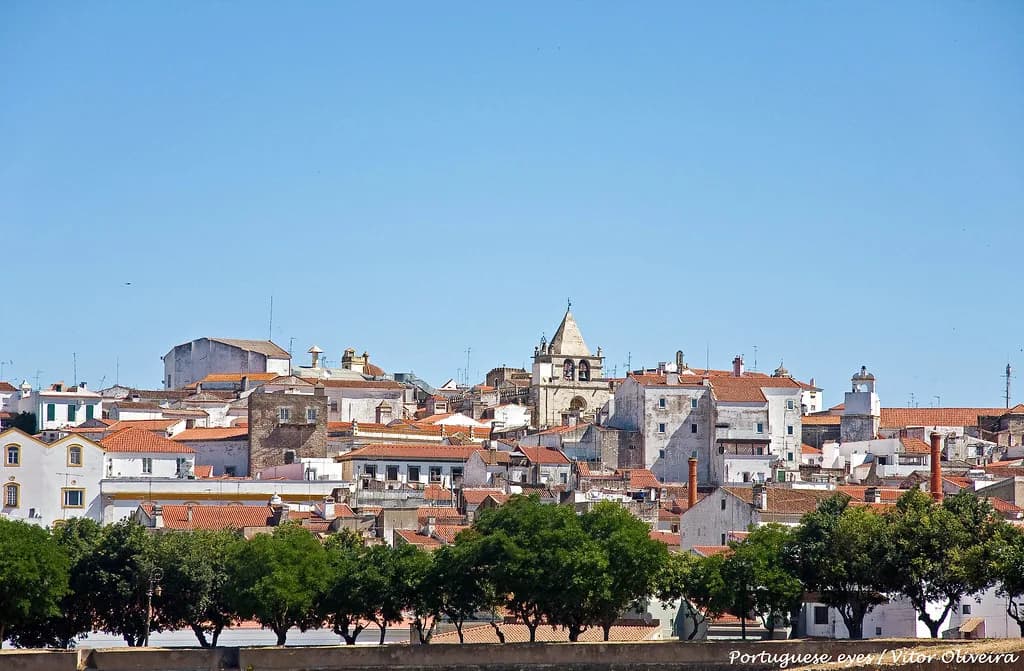
Alentejo Itinerary: A Short Break from Évora to the Coast
Plan a one to four day Alentejo itinerary linking Évora, Marvão, Elvas and the Atlantic coast, with a sensible driving order and honest trade-offs.
On this page
Give the Alentejo three or four days and pick one side of it: the inland circuit through Évora, Monsaraz, Marvão and Elvas, or the Atlantic coast from Vila Nova de Milfontes down to Odeceixe. Trying to hold both in a short break means most of your daylight goes to the car, because the region runs from the Tagus River down to the Algarve and inland to the Spanish border.
This Alentejo itinerary starts in Évora, adds Monsaraz and the Alqueva reservoir as a southern loop, offers Marvão and Elvas as a border alternative, and finishes on the coast only if you have a fourth day. Opening days and ticket prices for the monuments are not fixed here; each sight below says where to confirm them.
Alentejo itineraries at a glance: one, two, three or four days
One day is Évora on foot: the Roman temple, the Sé and the Capela dos Ossos sit close enough together in the walled centre to fill a day without a car. Two days add Monsaraz and the Alqueva reservoir to the south-east, or Marvão and Elvas to the north-east, but never both.
Three days give you the inland circuit with a night in Évora and a night near the border or the lake. Four days are the first point at which the Atlantic coast becomes realistic, and even then the coast works better as its own trip than as a coda to an inland loop.
The distinction matters because the Alentejo is one of the largest regions in Portugal, stretching from the Tagus to the Algarve and from the Atlantic to Spain. A short break that ignores this ends up as a list of sights rather than a holiday, so treat the outline as a menu rather than a checklist.
If the Alentejo is one leg of a wider trip, this sits inside a Portugal itinerary built around Lisbon, Porto and Coimbra rather than replacing them.
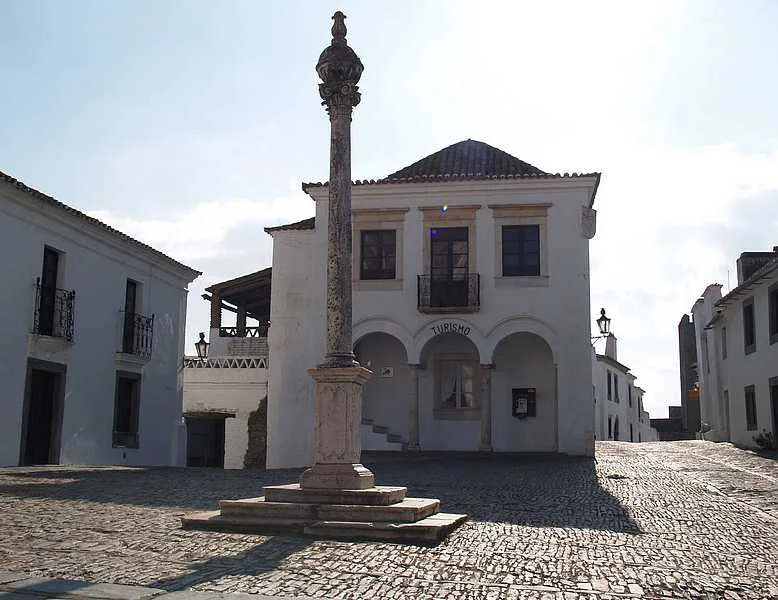
Where to base yourself: Évora inland versus the Atlantic coast
Évora is the sensible inland base: it is a walled city with enough monuments, churches and restaurants to occupy an evening as well as a day, and it puts Monsaraz and the Alqueva reservoir within a morning's drive. Sleep inside or just outside the walls and you can walk to dinner rather than drive; where to eat in Évora deserves its own planning, so check our guide to restaurants in Évora before you go.
The coast is a different trip. Vila Nova de Milfontes and Odeceixe anchor the stretch of Alentejo shoreline that travellers reach from Lisbon, and the villages between them are small enough that a single base serves several days of slow movement.
Santiago de Cacém, on the road between the coast and the interior, rewards a stop rather than a night: cobbled streets lined with tiled houses, a castle with ten towers arranged in a rectangular formation with views over the town and countryside, and a 13th-century parish church beside it.
Splitting the break between an inland base and a coastal one is the honest compromise if you have three nights, but accept that the transfer day is largely a driving day and plan nothing ambitious for it.
Day 1 in Évora: the Roman temple, the Sé and the Capela dos Ossos
Start at the Roman temple, known locally as the Templo de Diana, whose columns stand on the highest point of the old town beside the cathedral. From there the Sé, Évora's cathedral, is a few steps away, and the walk between the two takes minutes rather than a morning.
The Capela dos Ossos, the chapel of bones attached to the Igreja de São Francisco, is the sight most visitors come for and the one that benefits from timing: it is small, popular and best seen early or late in the day. Check the current opening days and ticket price with the venue before you build the day around it, since Portuguese monuments often close one day a week.
Beyond the headline three, Évora rewards wandering: the Praça do Giraldo for coffee, the aqueduct and the tiled facades along the back streets fill the hours between monuments. The city's azulejos and cobbles are the reason to leave the main square at all.
Book the Évora night rather than pressing on: an evening in the walled centre, when the day-trippers have gone and the squares are quiet, is worth more than an extra stop on the road.
Day 2 south-east: Monsaraz and the Alqueva reservoir
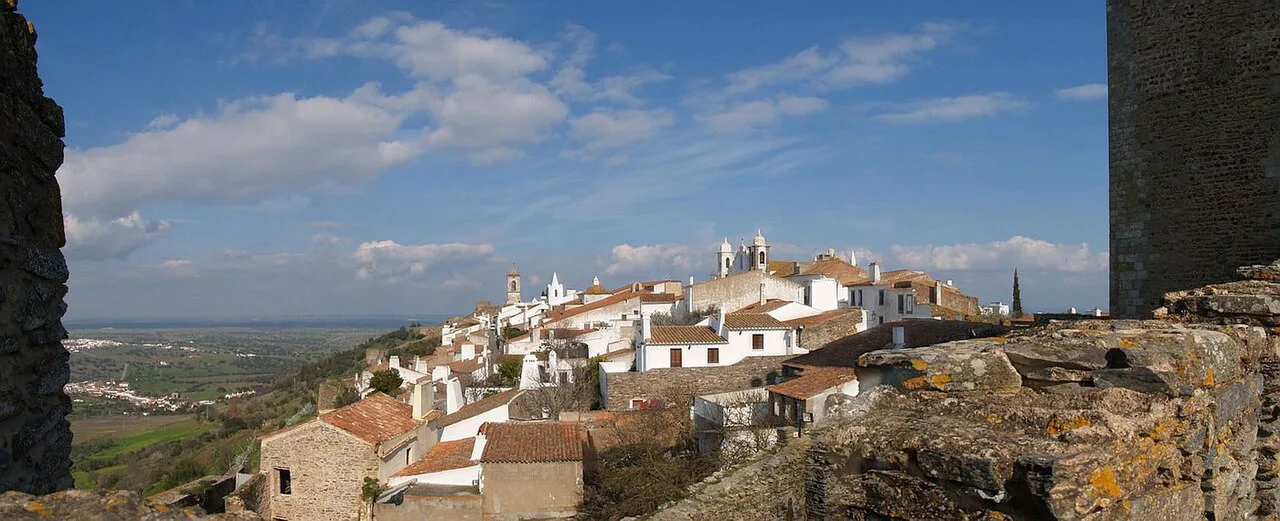
Monsaraz is a hilltop village of whitewashed houses inside a circuit of walls, with views across the Alqueva reservoir and the olive groves and cork oaks around it. It is small enough to walk in an hour or two, and the pleasure is in the lanes and the views rather than in a single monument.
The Alqueva reservoir, the large artificial lake on the Guadiana, is the other half of the day: the drive around its edges and the villages on its shore take longer than the map suggests, so pick one side of the water rather than trying to circle it.
Allow a full day for Évora to Monsaraz and back, with the reservoir as a scenic detour rather than a separate destination. Driving times vary with the roads you choose, so build in slack rather than scheduling a tight return.
Day 2 alternative north-east: Marvão and Elvas and the border fortifications
Marvão sits on a rocky spur close to the Spanish border, its castle and white houses stacked inside walls that look out over both countries. It is one of the most dramatic settings in the region and a natural counterweight to Monsaraz if you prefer the northern side of the Alentejo.
Elvas adds the engineering: the city's fortifications and aqueduct are on a scale that rewards a walk around the outside of the old town as much as a look inside. Pair the two for a border day and expect a lot of the time to go on the road between them.
Choose either this loop or the Monsaraz one, not both, on a two-night break. Each is a full day from Évora, and doing both leaves no time for Évora itself.
Day 3 and 4: the Alentejo coast, from Vila Nova de Milfontes to Odeceixe
Vila Nova de Milfontes sits where the Mira meets the Atlantic, a small town with a beach and a river mouth that makes an easy first stop on the coast. Odeceixe, further south, marks the boundary with the Algarve and the start of the Rota Vicentina's Fisherman's Trail, which runs along this stretch of cliffs.
Between them, Azenha do Mar is a fishing village tucked behind the cliffs, still working rather than staged, with a small natural harbour and coastal bluffs to sit on. It is a place to stop for an hour and a seafood lunch rather than a base.
Give the coast two nights if you can, because the driving between the villages is slow and the point is to stop often. A single night on the coast is usually a mistake: you arrive late and leave early and see the road rather than the water.
If your wider plan continues south, this coast feeds naturally into an Algarve itinerary rather than doubling back to Lisbon.
Driving order and time in the car between the main stops
The efficient inland order is Évora first, then either Monsaraz and the Alqueva to the south-east or Marvão and Elvas to the north-east, returning to Évora between loops. From the border country you can drop south to the coast, but that transfer eats most of a day.
Do not treat the Alentejo as a series of short hops. Distances between towns are long, roads are often single-carriageway and the temptation to add one more stop is what turns a pleasant drive into a forced march. Fewer bases, longer stays.
If you are linking the Alentejo to the rest of the country by car, plan the wider route first and slot the region in as one block; a Portugal road trip planned around Lisbon and the Algarve will otherwise leave the Alentejo as a rushed pass-through.
What to eat in the Alentejo and when restaurants tend to close
The Alentejo is pork and olive country as much as it is seafood country: the interior gives you black pork, migas and robust red wines, while the coast turns to fish, clams and the seafood rice and stews of the Atlantic. Order the local wine with either.
Restaurants in small Alentejo towns commonly close one day a week, often a weekday rather than a weekend, and village kitchens keep shorter hours than city ones. Rather than guessing, check with your accommodation on arrival and book the evening meal in the morning.
In Évora and the larger towns you will find something open every day, so save the riskier small-town dinners for the places you know are trading. On the coast, expect seasonal rhythms: a village restaurant that is busy in August may be shut in January.
How much a short Alentejo break costs in euros
Monument and museum entry in Portugal is generally modest, and the Alentejo's sights are cheaper than Lisbon's headline attractions, but prices change and are published by each venue rather than region-wide. Check the ticket price at the door or on the monument's own page before you budget.
The larger cost is the car: fuel, tolls on the motorways and parking in Évora add up over three or four days, and driving further to squeeze in another town costs more than it saves. There are no reliable published figures for a standard short break, so build your own estimate around fuel and accommodation.
Eating and drinking are where the Alentejo is kind to a budget: simple tascas, market produce and local wine cost far less than equivalent meals in Lisbon or the Algarve. Spend the savings on an extra night rather than an extra sight.
What to cut when you only have two days
Cut the coast first. Two days cannot hold Évora and the Atlantic without turning both into a blur, and the inland circuit is the more distinctive Alentejo experience for a first visit.
Then cut one of the day loops: choose Monsaraz and the Alqueva or Marvão and Elvas, whichever suits the direction you are travelling. Keep Évora itself intact, with a full day and a night there.
If you have a week rather than a long weekend, this region works well inside a 7 day Portugal itinerary that gives Lisbon and the Alentejo proper time each.
With only a day, stay in Évora and walk. Adding a second town means spending more time parking than looking.
Weather through the year and the best months for walking the towns
The Alentejo is hot and dry in summer, with inland temperatures that make midday walking in Évora or Monsaraz unpleasant, and cool to mild in winter with rain more likely on the coast than inland. Spring and autumn are the comfortable months for city walking, when the light is good and the heat is manageable.
Coastal weather differs from the interior: the Atlantic brings wind and cloud even in summer, so a July day in Vila Nova de Milfontes can be cooler than the same day in Évora. Pack for both if you are doing the inland-to-coast route.
Treat any figures you see as climate averages rather than a forecast, and check a forecast for the specific days before committing to a long drive.
Inland circuit or Atlantic coast: which should you book?
Book the inland circuit if this is your first Alentejo trip: Évora for two nights, with one day out to Monsaraz and the Alqueva or to Marvão and Elvas, gives you the region's history, food and landscapes without spending the break in the car.
Choose the coast only if you have four days and are willing to make it the whole trip, or if you are continuing south anyway. The Alentejo rewards depth over coverage, and a short break that accepts that will be better than one that tries to see it all.
Explore more Portugal guides
Sources
Notes for your next Portuguese break
Optional updates to our town guides.
You might also like



Continue reading
More guides you'll find useful




