
10-Day Portugal Itinerary: Lisbon, Porto, Óbidos and the Algarve
A practical 10-day Portugal itinerary linking Lisbon, Óbidos, Porto and the Algarve, with honest trade-offs on pace, transport and where to cut days.
On this page
Ten days in Portugal works best as a one-way route: arrive in Lisbon, finish in Porto or Faro, and never loop back to the same airport. That single decision saves a wasted travel day and lets you add a fourth base — usually Óbidos or Tomar — without losing a sight. This guide sets out the day-by-day shape, the transport choices behind it, and where to cut if the pace is too much.
Travel bloggers who cover the country at length tend to agree on the arithmetic: a first trip that tries to include Lisbon, Porto, the Douro and the Algarve realistically wants closer to ten to twelve days, so ten days means choosing. One published 11-day plan runs Algarve, Lisbon, Douro Valley and Porto in that order, which tells you what a comfortable pace looks like when every region gets a share.
Three bases or four? The shape of the trip
The cleanest ten-day structure is three bases — Lisbon for three nights, Porto for three, the Algarve for two — with the remaining nights spent travelling or on a single stop between Lisbon and Porto. Adding Óbidos or Tomar turns it into four bases and adds one hotel change for one rewarding half-day, which is a fair trade only if you dislike long station-to-hotel transfers. Keep the sequence one-way; doubling back to Lisbon at the end eats most of a day.
If you want the trip to feel unhurried, treat the ten days as a Lisbon-and-centre route or a Porto-and-north route rather than a full north-to-south sweep. A slower Portugal itinerary that spends its time in fewer places usually beats a checklist version, and the transport legs below show exactly where the time goes.
Days 1–3: Lisbon and Belém
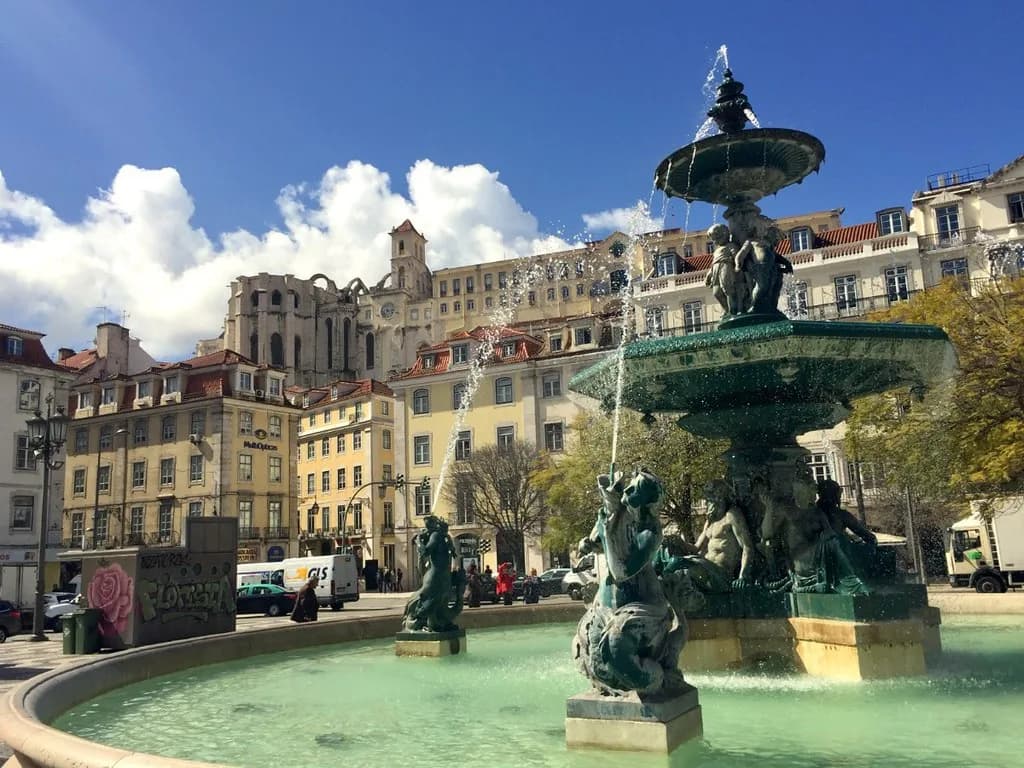
Give Lisbon the first two full days and use the third for Sintra. In the city, the obvious anchors are Castelo de São Jorge for the viewpoints over Alfama, the Sé cathedral, and the riverside at Cais do Sodré; the walk from Chiado down through Alfama is the best free sight in the city, and the tile-covered façades are the reason to do it on foot rather than by crowded tram.
Belém deserves its own half-day rather than a rushed add-on, with Pastéis de Belém as the obvious pastry stop. Sintra is the day trip that needs planning: the Palácio da Pena and the Castelo dos Mouros are the two sites most travellers prioritise, and buying tickets ahead is the standard advice because the queues and the small-town traffic are the real constraint.
The trade-off is simple: three Lisbon nights with a Sintra day leaves no room for Cascais or the beaches west of the city, and that is the right cut. Sintra alone fills a day once you count the train from Rossio and the bus up to the palaces.
Day 4: the stop between Lisbon and Porto
The Lisbon–Porto leg is long enough that breaking it makes sense, and the choice comes down to what you want from a single night. Óbidos is the walled-town option: a compact medieval centre you can walk in an afternoon, with a local ginjinha in a chocolate cup as the ritual, and it slots neatly into a Lisbon-to-Porto journey.
Tomar is the alternative, and it is the pick if religious architecture interests you more than ramparts. The Convento de Cristo is the reason to come, and the town is quieter and less touristed than Óbidos in the evenings. Whichever you choose, book the onward train or bus before you leave Lisbon so the stop does not become a scramble.
If you would rather skip the intermediate stop altogether, a central Portugal itinerary built around Coimbra and the Universidade de Coimbra covers the same corridor at a slower pace and suits travellers who prefer one region done properly.
Days 5–7: Porto
Porto rewards walking: the São Bento station vestibule, the Lello bookshop, the Torre dos Clérigos and the riverside Ribeira all sit within a comfortable half-day loop, with the Dom Luís I bridge giving you the postcard view across to Gaia. Give the bridge its own hour rather than treating it as a crossing, because the upper and lower decks give completely different views of the river.
A port-cellar visit in Gaia fits an afternoon: cross the bridge, tour a lodge and come back along the river.
One honest trade-off: Porto is hillier than Lisbon, so plan the climbs in the morning and keep the afternoon for the flatter riverside.
Days 8–9: the Algarve
Two nights in Lagos gives you the Ponta da Piedade coastline, the cliff paths above the beaches and a boat trip along the rock formations, which is what most people picture when they think of the Algarve. The town itself is walkable and the old centre is compact enough to cover in an evening.
An alternative ten-day road trip plan for the Algarve spreads the region over more nights, taking in Albufeira, Silves and Ferragudo, and that structure suits anyone who wants the Algarve as the main event rather than a two-night finish. If you only have two nights, pick Lagos and stay put.
The eastern Algarve around Tavira is the quieter option if crowds are the thing you most want to avoid, at the cost of the boat trips and cliff scenery that draw people to Lagos.
Day 10: the return leg
Where you fly out determines the whole shape of the trip. Flying home from Faro at the end of the Algarve leg keeps the route linear and saves the backtrack, while returning to Lisbon means budgeting most of a day for the journey north. If you finish in Porto instead, the Algarve drops off the plan entirely and the Douro Valley fills those two nights instead.
Book the return leg before you book anything else. An open-jaw ticket — in to Lisbon, out of Faro or Porto — is the practical fix, and it removes the final-day dash.
The without-a-car version
Trains and buses handle the Lisbon–Óbidos–Porto spine well, but the connections get slower the further you go, and a published rail-and-bus version of a twelve-day trip needed four changes to reach Porto. The lesson is to treat long legs as travel days and not to schedule a museum for the arrival afternoon.
Renting a car only pays off if you are heading into the Algarve interior or the Alentejo, where the buses thin out. A Portugal road trip with a car opens up quieter stretches of the Alentejo, but parking in Lisbon and Porto is a burden you can skip entirely.
The with-kids version
With children, cut the number of bases rather than the number of sights. Two nights each in Lisbon, Porto and the Algarve is better than a move every two nights, and the castles — São Jorge, the Castelo dos Mouros — do more work than any museum.
Shorten the Sintra day, which is long on queues, and keep the Óbidos stop, which is short and walkable. If ten days with children feels rushed, a 7 day Portugal itinerary with fewer bases is the more realistic frame.
What 10 days in Portugal costs
Published figures for Portuguese travel vary wildly with style. One 11-day itinerary covering the Algarve, Lisbon, the Douro and Porto reports a budget of around $15,000 USD for two people on a self-drive version with hand-picked hotels and private guides — a high-end marker, not a typical figure. Treat that as a ceiling rather than a starting point.
Portugal is generally reported as one of the more affordable countries in western Europe for food, drink and accommodation, which is why a ten-day trip is realistic on a mid-range budget. For transport and lodging you should check fares and rates yourself when you book, since they move with the season and how far ahead you reserve.
Where to cut and where to add
If you have seven days instead of ten, drop one of the far ends: either the Algarve or Porto. The 7-Day Portugal Itinerary sets out the same decisions at a tighter scale.
If you can stretch to fourteen days, the 2 weeks in Portugal shape lets you add Coimbra and the Douro without cutting the Algarve to two rushed nights. Madeira needs a separate trip and its own Madeira itinerary, not two days bolted onto a mainland route.
If the north is what draws you, a northern Portugal itinerary built around Braga and Bom Jesus do Monte makes a better ten days than a rushed coast-to-coast sweep.
Which route should you book?
Book a one-way Lisbon-to-Porto or Lisbon-to-Faro route with a single night in Óbidos or Tomar. Three bases over ten days is the sweet spot; four works only if you accept that one of them is a half-day.
Fix the return flight first, then lock the two long legs, then fill the days around them. Everything else — which port cellar, which Algarve beach, which Lisbon miradouro — is negotiable at short notice.
Explore more Portugal guides
Frequently Asked Questions
Is 10 days too much in Portugal?
Not for a one-way route covering Lisbon, Porto and the Algarve, which is what most of the ten days get spent on. It is too much for a single region, and too little for anyone wanting Lisbon, Porto, the Douro, the Algarve and Madeira in one go.
Are credit cards widely accepted in Portugal?
Cards are normal in hotels, restaurants and larger shops, but carry some cash for small tascas, market stalls and village cafés. Check with your bank about foreign-transaction fees before you travel.
What is the most beautiful part of Portugal?
That depends on what you want: the Douro Valley for terraced river scenery, the Ponta da Piedade cliffs near Lagos for coastline, and Óbidos for a walled town you can walk end to end in an afternoon. Ten days lets you see two of those properly.
Sources
Notes for your next Portuguese break
Optional updates to our town guides.
You might also like



Continue reading
More guides you'll find useful




