
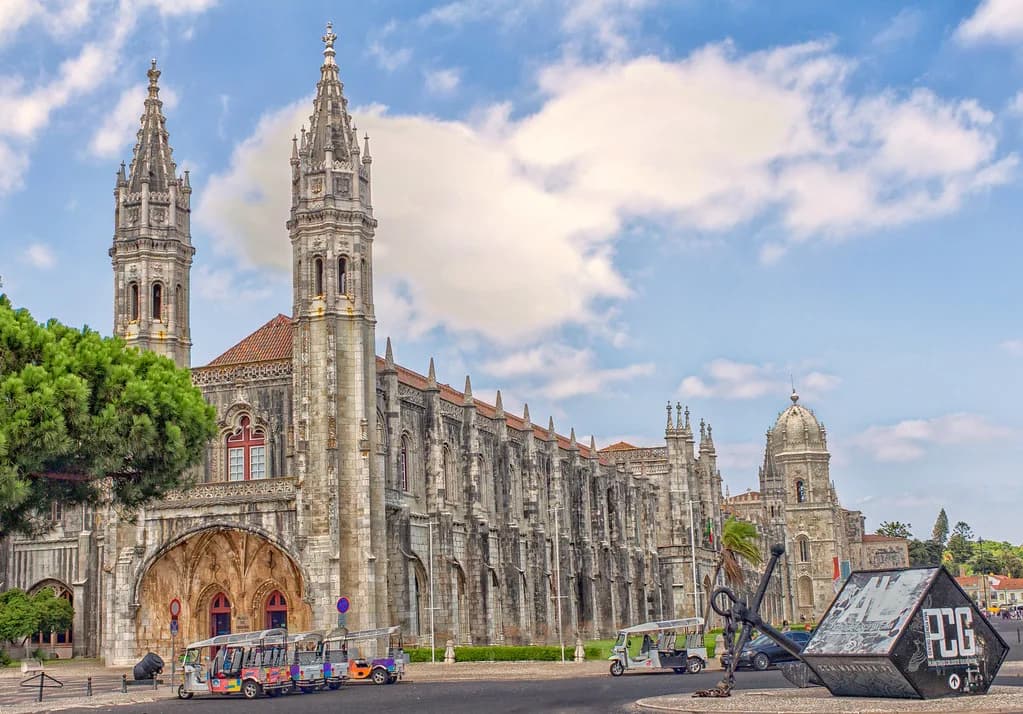
Monasteries in Portugal: Which to Visit and What Each Is Like
Alcobaça, Batalha and Tomar are Portugal's three great monasteries. What each is like inside, how much time to allow and how to group them on a short break.
On this page
Three monasteries in central Portugal repay the trip: Alcobaça, Batalha and Tomar. All three are UNESCO World Heritage Sites, and each has a distinct interior that a cathedral or parish church cannot match. This guide covers what you see inside each, what makes each one distinctive, and how to group them around a base town.
They sit in a rough line north of Lisbon, which is why so many travellers try to see all three at once. The honest trade-off is time: three interiors in one day leaves little room to absorb the decoration, and the towns themselves get skipped. The sections below explain what you gain and lose by combining them.
What Portugal's monasteries are and which ones justify the journey
Portuguese monastic architecture spans Romanesque gravity, Cistercian austerity, Gothic ambition and the Manueline ornament that followed. The three that most reward a dedicated visit are the Royal Monastery of Santa Maria de Alcobaça, the Monastery of Santa Maria da Vitória at Batalha, and the Convent of Christ at Tomar, each recognised by UNESCO.
They are not interchangeable. Alcobaça is about the monastic life and royal burial, Batalha about dynastic victory and Gothic showmanship, Tomar about a military order that became a religious one. If you have one day, pick the interior that matches your interest rather than trying to tick all three.
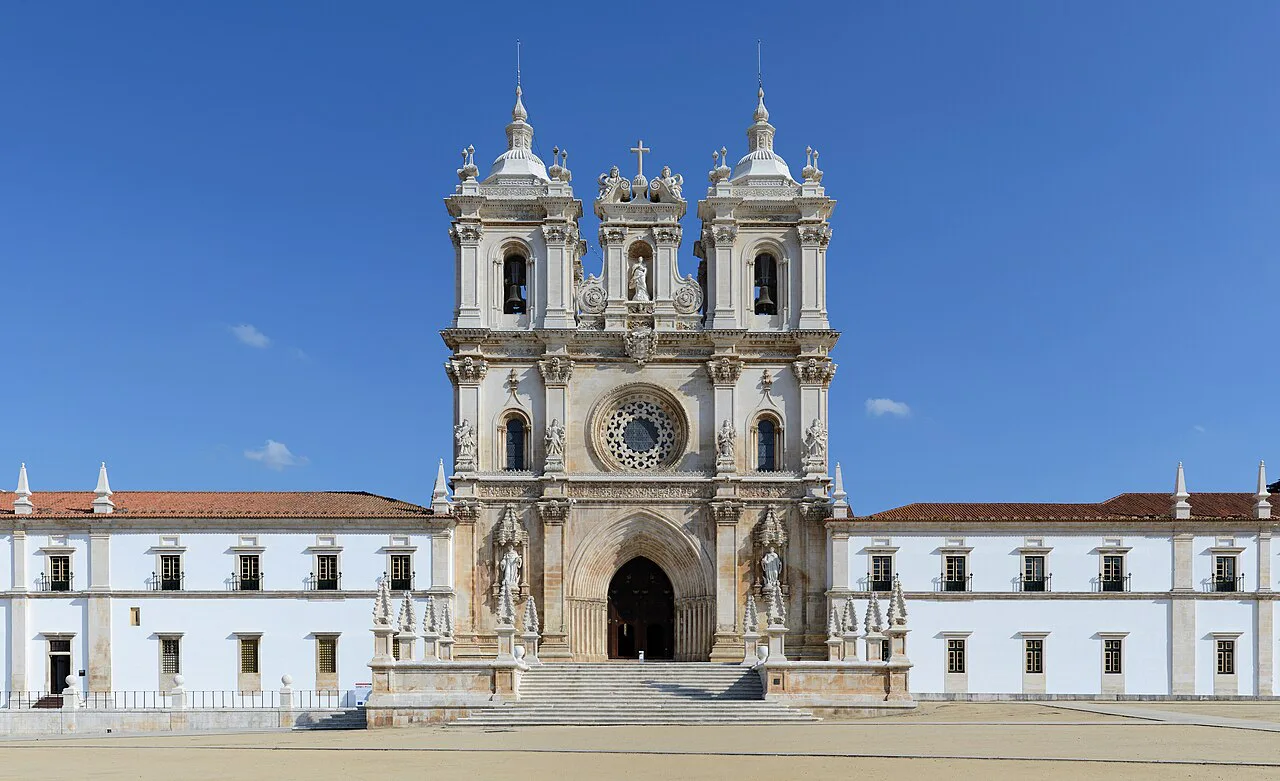
Alcobaça: the Cistercian abbey of Santa Maria, its tombs and kitchen
Alcobaça was founded on a vast donation by King Afonso Henriques in 1153 and belonged to the Cistercian Order for seven centuries. The church is unusual in European Gothic for having three naves of the same height, and it introduced the Gothic style to Portugal. Building began in 1178 and finished about a century later.
The interior to prioritise is the royal pantheon: the 14th-century tombs of King Pedro I and Inês de Castro, carved with the Last Judgement and the Wheel of Life. Beyond the church, the visit runs through the cloister, sacristy, chapter house, dormitory and refectory, then the later Baroque halls.
Do not leave without the 18th-century kitchen, built between 1720 and 1752 with a 26-metre chimney on cast-iron columns. Its walls carry thousands of tiles in white and blue, and the water channel from the Chiqueda spring still runs the length of the room.
The complex also preserves 169 terracotta sculptures made by the monks between 1670 and 1765, a remarkable set of gilded sacred art. Allow two to three hours to see the church, tombs, kitchen and cloisters without hurrying.
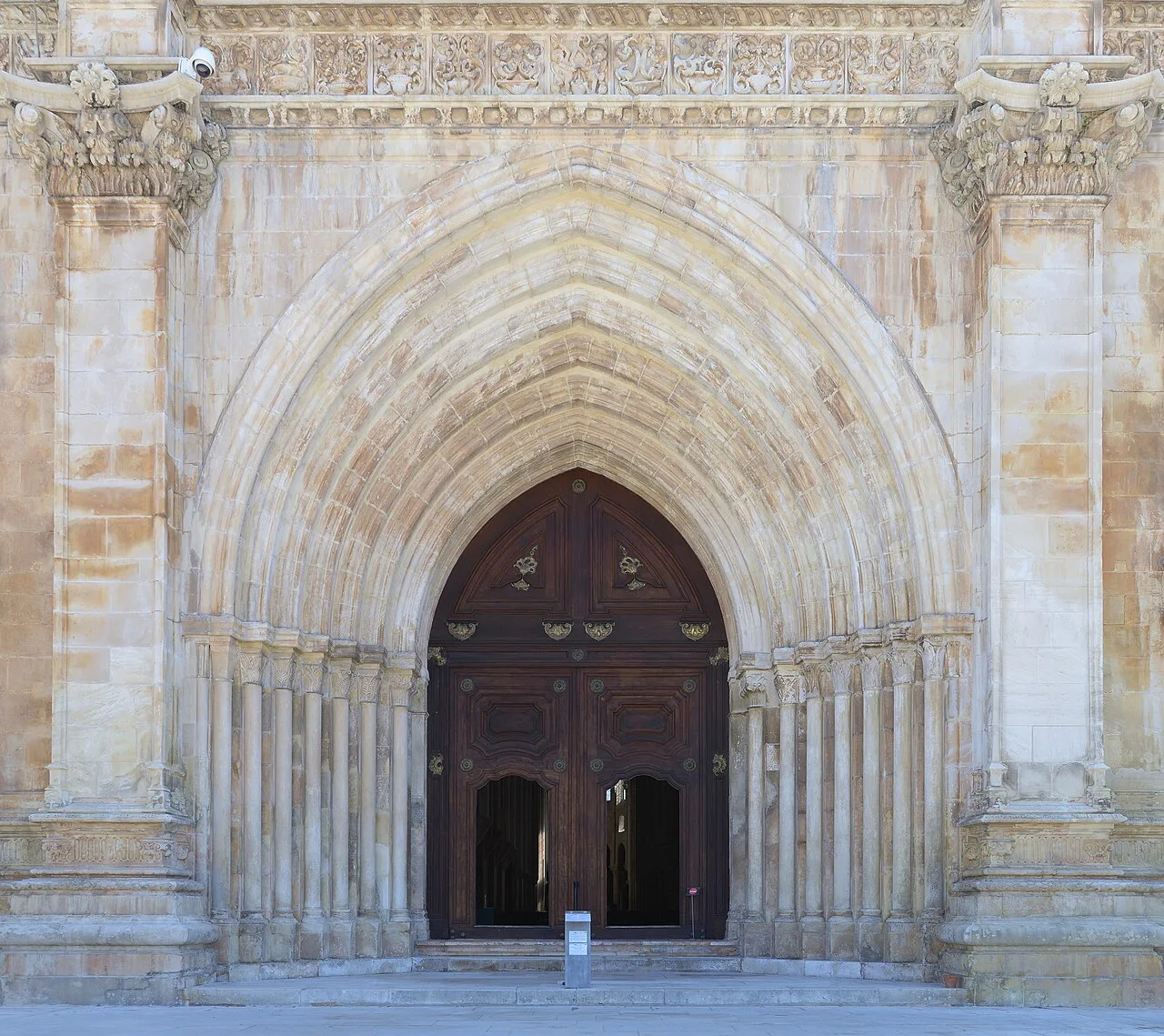
How long to give Alcobaça and its opening hours
Opening times change with the season. From October to March the monastery opens 09:00 to 18:00 with the last entrance at 17:30, so arriving by mid-afternoon in winter leaves too little time for the full route and a morning start is safer.
Confirm current opening days, seasonal hours and any holiday closures on the official Alcobaça page before you travel, since these shift through the year and change with the season.
Batalha: the monastery of Santa Maria da Vitória, Royal Cloister and Unfinished Chapels
Batalha was built as a victory monument, and its scale is the point. The church, the Royal Cloister and the Unfinished Chapels are three separate experiences under one roof, and the cloister is a Gothic composition worth a slow circuit rather than a corridor you pass through.
The Unfinished Chapels are the emotional highlight, a separate structure within the complex where the stonework stops mid-idea. Photograph as you go: this is a large complex and the route keeps opening new views, as it does at Tomar, where the exit is at a different side from the entrance.
Tomar: the Convent of Christ, the round Templar church and its cloisters
The Convent of Christ began as a Templar stronghold, with the fortified wall and castle dating to the mid-12th century. The round church, sixteen-sided outside and octagonal within, is the oldest part; its painted and sculpted interior dates from the early 16th century, after the Templars lost power and the complex passed to the Order of Christ.
The complex is huge, with eight cloisters added in the 15th and 16th centuries. Start with the Cloister of the Cemetery, recognised by its blue tiles and the tiled tomb of Diogo da Gama, then work round to the round church before continuing through the dormitories and later cloisters.
Look for the Manueline window in the Chapter House, the ornamental high point for many visitors. The route exits at a different side from the entrance, so take your photographs as you walk through rather than planning to return.
Combining Alcobaça, Batalha and Tomar: the trade-offs of a single day
All three can be driven in one long day from Lisbon, but you will not have much time in the towns themselves. There is also little time to linger over the carving that makes each interior distinctive, and a single day means a lot of road for relatively short visits.
A better plan for a short break is to base yourself in one town and take two of the three properly. Alcobaça and Batalha sit close enough to share a day, and Tomar rewards a separate visit because of its size. Booking each site's ticket on arrival keeps the plan flexible.
Which monasteries suit a short break in central Portugal
If your break has two days, give day one to Alcobaça and Batalha and day two to Tomar. If you only have a single day, choose Alcobaça for the tombs and kitchen or Tomar for the Templar history, and save the third for another trip. Each is a settlement you pass through rather than a city to explore at length.
Practical points: tickets, services and seasonal closures
Monastic complexes are working heritage sites, so church interiors can be closed for services and individual rooms may be roped off. A morning start gives you slack if part of the route is shut when you arrive.
Before you go, confirm current opening days, the seasonal hours and any holiday closures on the official page, since these change through the year.
Where to go next: other convents and monasteries to consider
Once you have seen the big three, Portugal's smaller convents are where the crowds thin. The Mosteiro de Arouca is a Cistercian house with a quiet cloister that suits a half-day.
The Lorvão Monastery near Coimbra is another rewarding stop, with a Romanesque church and a later Baroque interior. Coimbra's Santa Clara-a-Velha, meanwhile, is a convent now excavated and open to visitors.
Northern Portugal has its own monastic stops, and the best towns in northern Portugal make a sensible base for them. The Bom Jesus do Monte sanctuary above Braga is a pilgrimage complex rather than a monastery, but it rounds out a route through the region.
Which monastery should you choose first?
Choose Alcobaça first if you want royal tombs, Cistercian austerity and a kitchen unlike anything else in Europe. Choose Batalha if Gothic architecture is your reason for travelling, and Tomar if the Templar story and a large, layered complex appeal.
Whichever you pick, give it at least half a day and build the rest of your break around one or two sites rather than three. Confirm the opening hours for your dates on the official page, and the rest of the trip is simply a matter of timing your arrival for the morning.
Explore more Portugal guides
Frequently Asked Questions
Can you stay at a monastery in Portugal?
Some former monastic buildings now operate as hotels, and there is a historic hotel in Alcobaça itself, but the monasteries in this guide are visited as heritage sites rather than as accommodation. If sleeping in a converted convent is part of the plan, book directly with the property and confirm what parts of the building are open to guests.
What is the best-known monastery in Portugal?
Alcobaça is the one most travellers name first, largely because of the tombs of Pedro I and Inês de Castro and the tiled kitchen. Batalha and the Convent of Christ at Tomar are its closest rivals, and all three are UNESCO World Heritage Sites, so the choice comes down to which interior interests you most.
How much time do I need for Alcobaça, Batalha and Tomar?
Allow two to three hours at Alcobaça to see the church, tombs, kitchen and cloisters, and give Batalha and Tomar comparable time rather than a quick look. Trying to cover all three in one day from Lisbon leaves only a short visit at each, so pick two if your break is short.
Sources
Notes for your next Portuguese break
Optional updates to our town guides.
You might also like



Continue reading
More guides you'll find useful




