
Santa Clara-a-Velha, Coimbra: The Convent the Mondego Drowned
Santa Clara-a-Velha is Coimbra's Gothic convent, abandoned to the Mondego's floods and now a restored ruin with a museum. Here is what you see and how long it takes.
On this page
Santa Clara-a-Velha is worth about an hour of a Coimbra short break, and only if you want the quieter half of the city's monastic story. The convent stands on the left bank of the Mondego, across the river from the old town, and you visit it as a ruin with a modern museum beside it rather than as a furnished religious house.
The building is a Gothic convent of the Poor Clares, and its interest lies in why it emptied out: the Mondego flooded it repeatedly until the community moved uphill. This guide covers what survives, the two Santa Claras, the walking route from the historic centre, and where it sits against heavier sights such as the Universidade de Coimbra and the Biblioteca Joanina.
What Santa Clara-a-Velha actually is
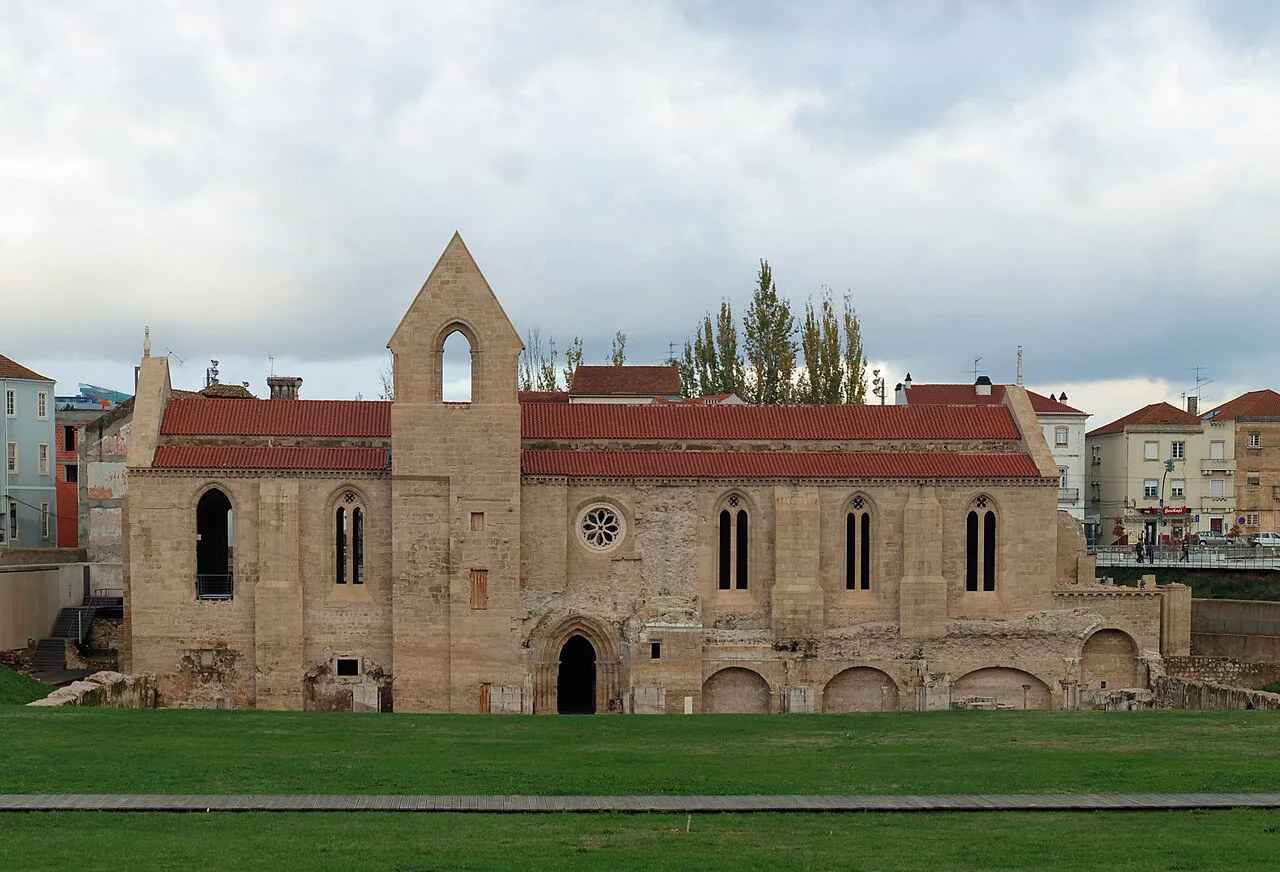
This is a 14th-century Gothic convent founded for the Poor Clares on low ground by the Mondego, south of Coimbra's historic centre. The surviving church walls and fragments of the monastic ranges are the real thing, not a reconstruction, which is what gives the site its weight.
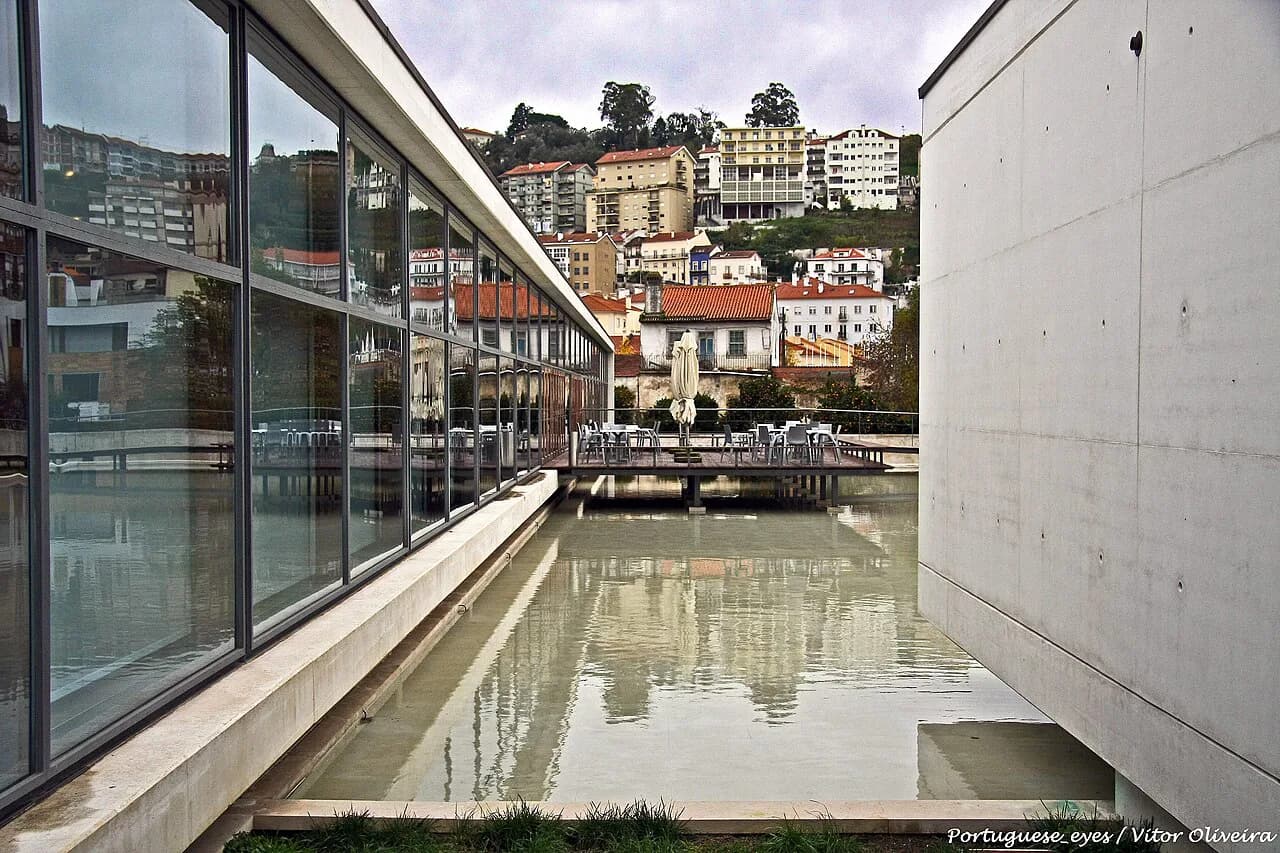
Set your expectations before you cross the river: this is an excavated and consolidated ruin with a sleek modern museum attached, not a roofed complex of cloisters and chapels you wander at will. If you want the full monastic experience with the church interior intact, put your time elsewhere in Coimbra and treat this as an archaeological visit.
Read it as one entry in a much larger story. Cistercian houses such as the royal abbey at Alcobaça, with its church, cloister, sacristy, chapter house and refectory all standing, show what a complete Portuguese monastic complex looks like; Santa Clara-a-Velha shows the opposite outcome. Our guide to monasteries in Portugal sets the two side by side if you are building a monastic itinerary across the centre of the country.
Why the nuns left: the Mondego's floods
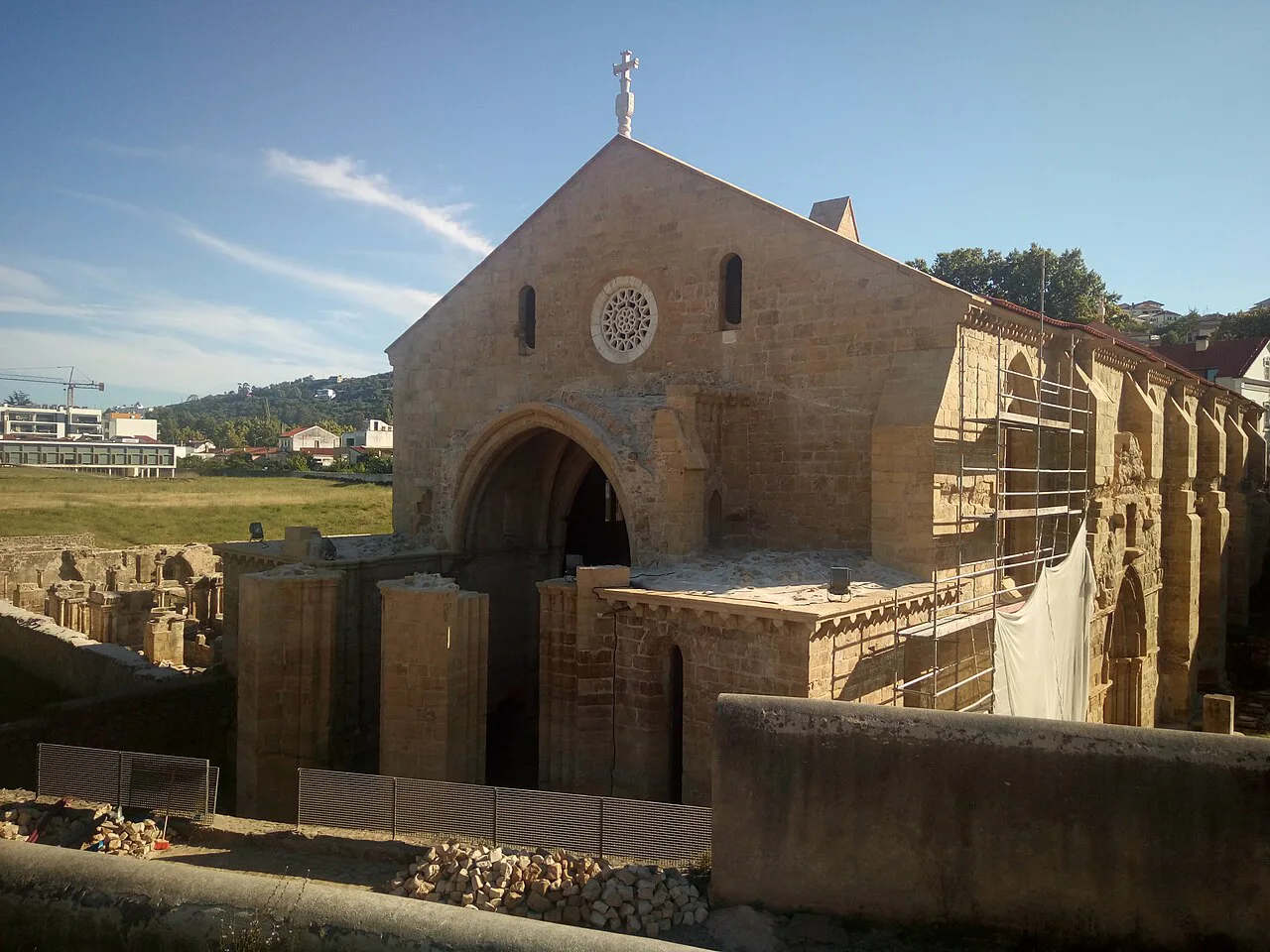
The convent's problem was its position. Built on the flood plain of the Mondego, it took the river's water again and again over the centuries, until the community abandoned it and moved to higher ground above the old town. That move is the whole reason you now see walls open to the sky rather than a working convent.
In Coimbra, the two Santa Claras are often muddled. Santa Clara-a-Velha is the riverside ruin described here; Santa Clara-a-Nova is the later convent uphill, where the community re-established itself. Check which one your map pin, ticket or taxi is pointing at before you set off, because the names differ by a single word and the two are on opposite sides of the hill.
What survives today
You come for the shell of the Gothic church, the exposed footings of the monastic buildings, and the evidence of the water itself. Flood levels recorded on the masonry are the detail that makes the site legible: they turn an abstract story about a river into marks you can stand next to.
There is no roof over the nave and no furnished interior, so a bright day suits the visit far better than a wet one, when there is little shelter among the ruins. The museum building supplies the covered part of the visit.
The museum and visitor centre
A modern visitor centre and museum sit alongside the ruin, carrying the interpretation and the finds from the excavations, so the visit is not simply a walk around broken walls in the open. Allow time for both parts rather than treating the museum as an optional extra on the way out.
How the displays are arranged, and which rooms are open on the day you come, change with curatorial work and staffing, so confirm the current state of the museum with the site or Coimbra's municipal tourism office rather than relying on a description written months earlier.
Walking there from the historic centre
The convent sits on the left bank of the Mondego, within walking distance of Coimbra's old town over the river bridges. The walk down from the Universidade quarter and across is the simplest approach and gives you the city's topography in one go: the high old town, the river, and the low ground the nuns could not hold.
Give the visit an hour or so in total, ruin and museum together, plus the walk each way. That makes it an afternoon's counterweight to a morning spent at the Universidade de Coimbra and the Biblioteca Joanina, which soak up time and attention in a very different way.
Tickets and opening days
The Monastery of Santa Clara-a-Velha is a monument with a visitor centre and museum, and it is open to visitors; ticket prices, opening hours and any seasonal changes are best confirmed through the official channel for the day you plan to come.
Portuguese museums and national monuments often close one day a week, frequently Monday, and many shut on public holidays, so a Monday is a poor day to build an itinerary around any single indoor sight. Check the calendar for the days you have and keep a second option in reserve.
Combining it with the rest of Coimbra
An efficient afternoon pairs Santa Clara-a-Velha with the riverbank and the old town rather than adding another museum. Walk over, see the ruin and the museum, then come back up through the lower town for a late lunch or a coffee before the climb to the university quarter.
If Coimbra is one stop on a longer trip through the centre, this is the kind of site that rewards a second monastic visit elsewhere. The Mosteiro de Arouca, further north, is a complete working complex with its own long story, and reading the two together makes clear how much of Portugal's religious architecture survives only as excavated ground plans.
Honest limits: what it is not
Do not expect Alcobaça. There is no kitchen with a 26-metre chimney, no royal tombs, no tiled refectory, and none of the crowds that a UNESCO World Heritage abbey attracts; the abbey's kitchen chimney and the tombs of Pedro I and Inês de Castro are the benchmark for that comparison. What Santa Clara-a-Velha offers instead is a stripped, quiet site where the river's history does the talking.
There is also no dress code to worry about, and no timed spectacle to plan around. If your short break is tight and Coimbra's headline sights are unvisited, see those first and treat this as the second visit.
Is Santa Clara-a-Velha worth the walk across the river?
Yes, if you have already seen the university and the old town and want a quiet hour that explains why Coimbra's religious map looks the way it does. Skip it on a tight first visit or on a Monday, when the city's indoor sights are least reliable.
Cross the river, see the ruin and the museum together, and come back up for the afternoon. Book through the official channel so the day, the price and the entry time are settled before you set out.
Explore more Portugal guides
Sources
Notes for your next Portuguese break
Optional updates to our town guides.
You might also like



Continue reading
More guides you'll find useful





