
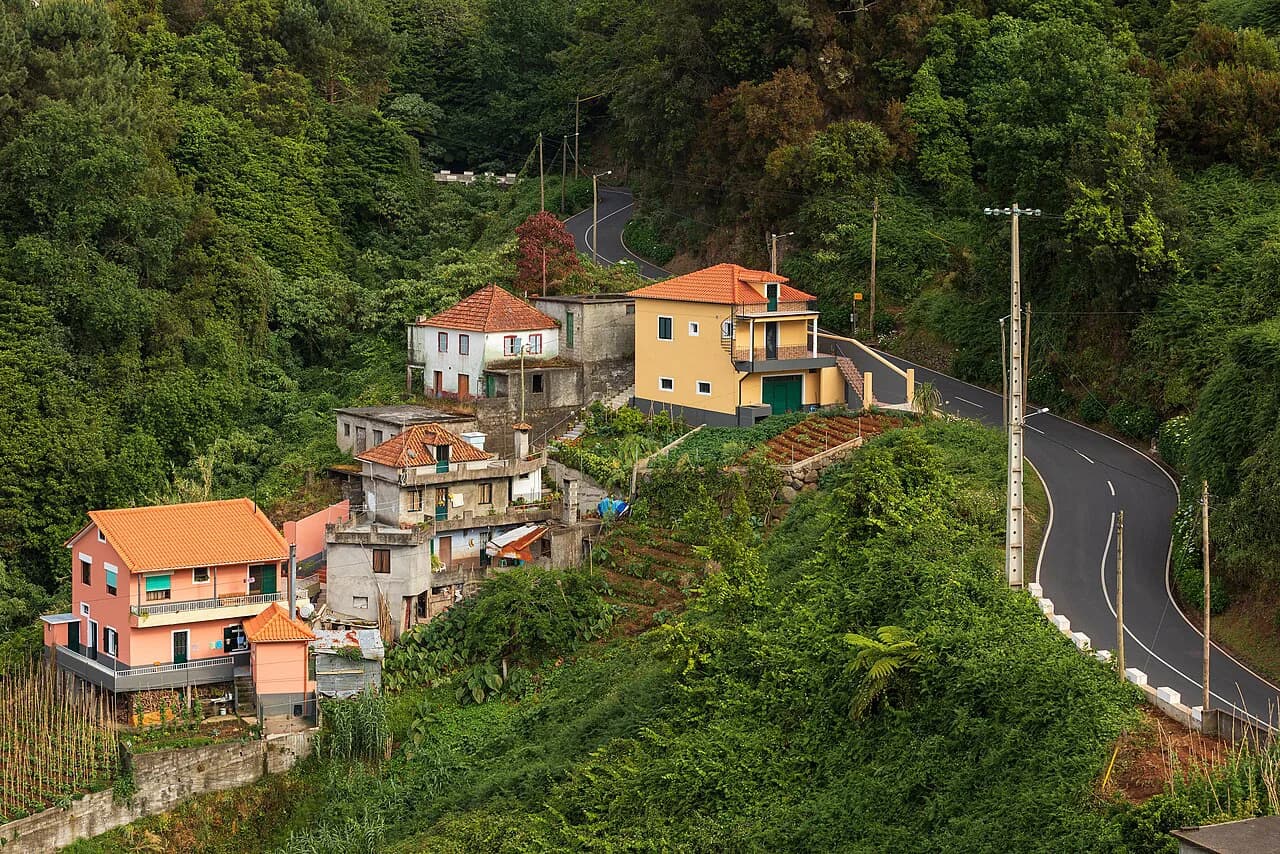
Santana, Madeira: the thatched houses and north coast
Santana on Madeira's north coast is known for its triangular thatched houses and cliffside views. Here is what to see and how to shape a short visit.
On this page
Santana is worth roughly two to three hours on Madeira's north coast: enough to see the triangular thatched houses, take in the green valley setting and move on. It is a village stop rather than a full day out, and the honest trade-off is between lingering over the houses and spending the rest of the day in the laurel forest inland. This guide covers what you actually see, where Santana sits in a one- to four-day island plan, how long to allow, and how it fits with the towns in Madeira you may already be routing through.
The village sits on the island's wetter northern side, where steep green slopes drop toward the sea and cloud often sits low on the ridges. That setting, more than any single monument, is the reason to come. Plan Santana as a stop on a north-coast drive rather than a destination in its own right, and you will enjoy it far more than if you expect a town with a full sightseeing programme.
What Santana is known for
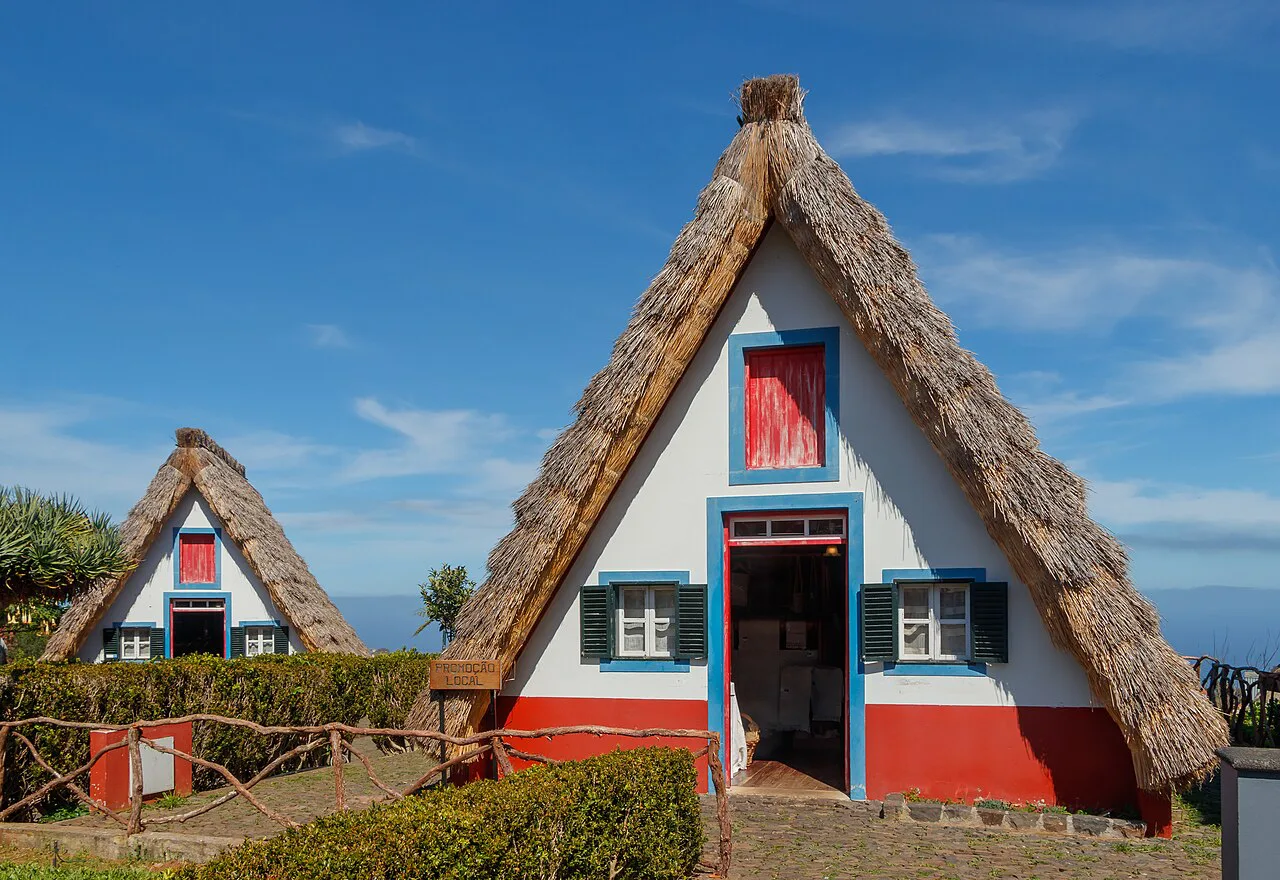
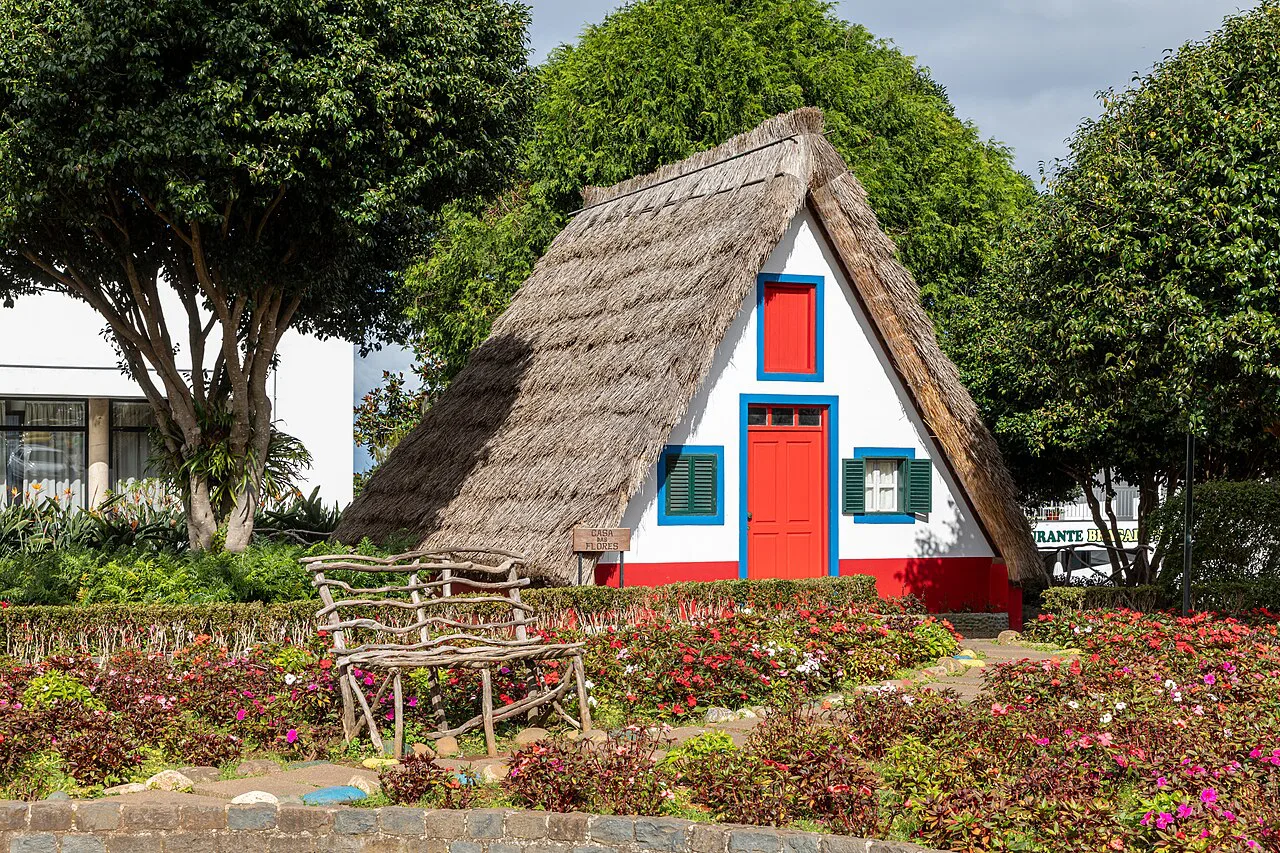
Santana is known above all for its traditional triangular thatched houses, the A-frame cottages with steeply pitched straw roofs that appear on countless Madeira postcards. The examples visitors see are small, photogenic and clustered in the village, surrounded by gardens and cobbled paths rather than set out as a large museum. Come expecting a compact, camera-friendly sight rather than an extensive heritage complex.
The second thing Santana is known for is its position: a north-coast village backed by lush greenery and close to the laurel forest that cloaks the island's interior. Travel guides describe Santana in exactly these terms, as a place of thatched houses, cobbled paths and green surroundings on the north coast. That pairing of built heritage and wet, forested landscape is what separates it from the sunnier south.
Where Santana sits on Madeira and how it fits a short trip
Santana lies on Madeira's northern coast, east of São Vicente and a straightforward drive from Funchal via the fast cross-island roads. In a one- to four-day visit based in or near Funchal, it works best as a half-day loop combined with the north coast rather than a base in itself. If you are working through the island's towns, set it alongside Santa Cruz and Machico on the eastern side and Câmara de Lobos and Cabo Girão on the south, rather than trying to reach everything in one day.
A sensible shape for a short break is to give the south coast and Funchal one day, the north coast including Santana another, and the laurel forest or the east coast a third. Santana slots into the north-coast day without strain because the village itself asks for so little time. The mistake is to bolt it onto a packed east-coast itinerary that already includes Machico and the Ponta de São Lourenço end of the island.
The traditional thatched houses: what you actually see
The thatched houses are the reason most people stop, and they are best approached as a short walk rather than an attraction with a turnstile. You see the steep triangular roofs, white walls and coloured shutters at close range, with gardens and paths between them, and the whole cluster takes perhaps half an hour to walk slowly. Bring a camera, because this is a visual sight rather than an interpretive one.
Allow longer if you want to sit with a coffee or look at the gardens, but do not build the day around the houses alone. Opening arrangements for individual houses can vary, so check locally when you arrive rather than scheduling your day to the minute. Treat any single house as a bonus rather than the centrepiece of the visit.
Cliffside views and green surroundings
Santana's setting gives you the second half of the visit: steep green slopes, terraced ground and sea views along the northern coast. The village is small enough that you can walk out of the centre and be among fields and hedges within minutes. If you have come from the south of the island, the contrast in colour and climate is immediate and worth savouring rather than rushing past.
Viewpoints along Madeira's coast reward a slower pace, and the same applies here: stop at a miradouro, look at the terraces and the sea, and let the drive take longer than the map suggests. Roads on the north side climb and twist, so distances that look short on paper take longer in practice. If you want a south-coast viewpoint to compare with, the Miradouro do Cabo Girão above Câmara de Lobos is the obvious counterpart.
Laurel forest and levada walking near Santana
The laurel forest around Santana is UNESCO-listed and genuinely worth a separate outing rather than an add-on to the village. Walks follow the levadas, the island's water channels, through damp, mossy woodland that feels quite different from the coast. Treat this as a taster: book a guided walk or follow a short, well-marked route rather than improvising a long one, since conditions and route access change.
The trade-off is real. If you spend the morning on a forest walk, Santana's houses become a twenty-minute stop on the way home; if you spend the morning in the village, the forest needs another day. Decide which matters more to you before you set out, and resist trying to do both properly in a single half-day.
How much time Santana needs
Two to three hours covers the houses, a short wander and a stop for lunch or coffee. A half-day gives you the village plus a viewpoint or two along the north coast without rushing. A full day only makes sense if you pair Santana with a forest walk or continue east toward Machico and the coast beyond.
An overnight stay changes the calculation: staying nearby lets you see the village early or late, when the light on the thatched roofs is at its best and the coach traffic has thinned. That said, Santana's accommodation is small in scale, and the broader question of where to base yourself on Madeira is a separate decision. If you want a quieter south-coast alternative for a night, Ribeira Brava and Ponta do Sol are worth a look.
Getting there and onward from Santana
Santana is reached by road, generally by car or on an organised tour from Funchal, and the drive from the capital is the usual approach. Allow more time than the distance suggests, because the northern roads climb and bend through the hills. If you are not driving, guided day tours from Funchal that include Santana and the north coast are widely available, and their prices vary by operator and season.
Onward from Santana, the natural pairing is westward to São Vicente or eastward toward Machico and the eastern end of the island. São Vicente, Madeira sits on the north coast and works as a continuation of the same drive rather than a separate trip. Build the route so that Santana is one stop among three, not the sole objective of a long day in the car.
Practical points for Madeira's sights
Madeira's museums and monuments often run on reduced hours outside the main season, and some close one day a week; churches commonly shut at lunchtime. None of this can be forecast from a distance with confidence, so check the official page for any specific sight on the morning you plan to go. Prices for houses and attractions are set locally and vary, so confirm at the entrance rather than relying on older figures.
Distances on Madeira are deceptive and parking in small villages is limited, so start early if you plan more than one stop. Allow buffer time on the north coast in particular, where cloud and rain can slow the drive. A short break of one to four days is enough to see Santana and the laurel forest properly, provided you resist the temptation to add a fourth stop.
Is Santana worth the detour?
Yes, as a short stop. The thatched houses and the green northern setting earn two to three hours, and the village fits neatly into a north-coast day without dominating it. If your time on Madeira is tight, treat Santana as one good stop on a loop rather than a destination in its own right.
The alternative is to skip the village and spend the day in the laurel forest or on the east coast at Machico. Both are stronger single-purpose days, and both deserve their own slot. Decide which you want more, and leave Santana for the drive home.
Explore more Portugal guides
Frequently Asked Questions
Which country do the Madeira Islands belong to?
Madeira is an autonomous region of Portugal, lying in the Atlantic off the coast of North Africa. Santana is one of its northern municipalities, reached by road from Funchal and best visited as part of a north-coast drive rather than as a standalone destination.
Do I need a car to visit Santana?
A car gives you the most flexibility, because Santana sits on a northern road network that rewards stopping at viewpoints along the way. Organised day tours from Funchal are the practical alternative if you would rather not drive, and the village itself is small enough to walk once you arrive.
Sources
Notes for your next Portuguese break
Optional updates to our town guides.
You might also like



Continue reading
More guides you'll find useful





