
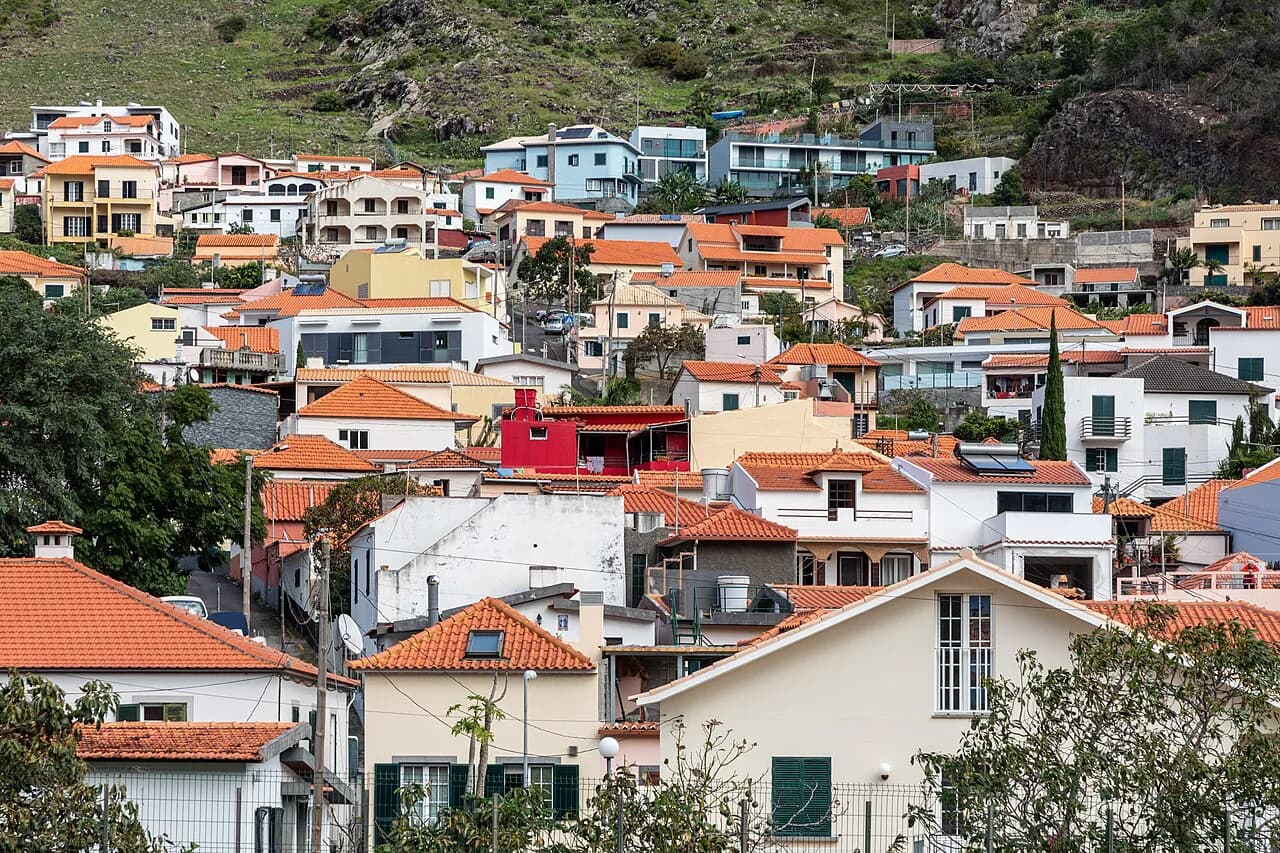
Machico, Madeira: Beach, Old Town and the Airport Base
Machico is Madeira's 1419 landing bay, with an imported-sand beach, a small old town and the closest base to Funchal airport.
On this page
Machico is worth three to four hours: a swim or a seafront walk at the sandy bay, a loop through the small old town around the Igreja Matriz, and a look at the bay where João Gonçalves Zarco landed in 1419. It is Madeira's first Portuguese settlement and the seat of its first captaincy, and it behaves like a working town rather than a resort. This guide covers the layout of bay, river mouth and old town, the two beaches, the history that gives the place its weight, how to reach it from Funchal and the airport, where to eat, and the Ponta de São Lourenço half-day that pairs naturally with a visit.
The trade-off is simple. Machico sits about 5 km and roughly five minutes' drive from Funchal airport on the VR1, but around 22 km and 25 minutes from Funchal itself, which makes it the obvious first or last night rather than a base for the whole island. Visitors who want the capital's restaurants and marina on the doorstep should stay in Funchal and come out for a morning; those with a dawn flight or a late arrival get far more from Machico. Everything within the town is walkable, with the seafront promenade linking the beaches in about ten minutes.
What Machico is and why it's worth a few hours
Machico is an eastern bay town set around a wide bay and a river mouth, with the sandy beach tucked into its western corner and a black-pebble beach on the far side. The old town behind the seafront is tiny: a triangular main square, the parish church, a chapel and a handful of pastelarias.
Its significance is historical rather than architectural. Zarco's expedition came ashore here in 1419, and in 1440 Machico became the seat of its own captaincy under Tristão Vaz Teixeira, with Funchal's captaincy formalised later, in 1450. Machico was never the island's capital, so arrive expecting a modest, lived-in town with one strong story rather than a monument-heavy centre. That is also why a few hours is enough for the town itself, with the landscape east of it doing the rest of the work.
If you are touring the island's towns rather than staying put, Machico slots in neatly alongside the west-coast settlements, and Câmara de Lobos makes a sensible pairing for a second short outing from Funchal.
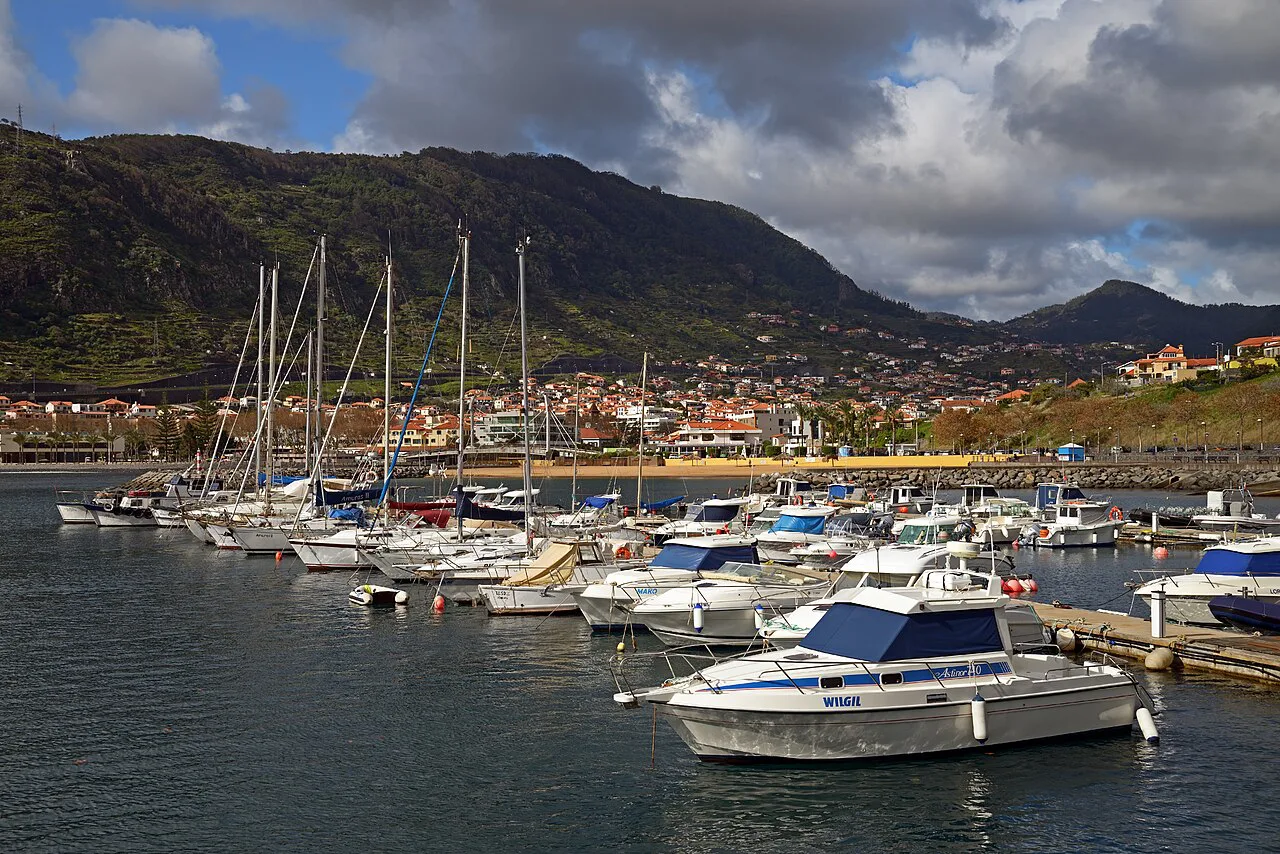
How Machico is laid out: bay, beach, river mouth and old town
Think of Machico in three bands. The seafront road and promenade run along the bay; the river mouth divides the sandy beach from the pebble beach; and the old town sits immediately inland, a couple of minutes' walk up from the water. Walking between the two beaches along the promenade takes about ten minutes, which makes a simple circuit of beach, river mouth and square easy to manage on foot.
Orientation is straightforward because everything faces the water. Park near the seafront or arrive on foot and work west to east: sandy bay first, then the river mouth, then the pebble beach and the Forte do Amparo headland beyond it. The old town's church and square are a short climb behind the promenade, so save them for after the beach rather than zigzagging.
Machico's two beaches: imported sand in the western corner, black pebbles at Banda d'Além and the Forte do Amparo headland
The headline beach is the imported golden sand in the sheltered western corner of the bay, about 120 m long, with shallow water and lifeguards in summer. It is the family-friendly option and the reason many visitors bother with Machico at all. Treat the sand as the draw and the facilities as conveniences rather than a resort package.
Across the river mouth, Banda d'Além is the quieter, naturally formed black-pebble beach, with the Forte do Amparo on the headland above it. Pebbles mean beach shoes matter more than a towel, and the reward is space and a rougher, more Atlantic setting. Combining both in one visit is realistic: the western sand for a swim, Banda d'Além for the walk and the fort's viewpoint.
If you are comparing Madeira's beaches across the island, Calheta on the sunny west coast is the other obvious imported-sand option, and Calheta works well as a contrasting day out.
The old town: Igreja Matriz, the triangular square and the Capela dos Milagres
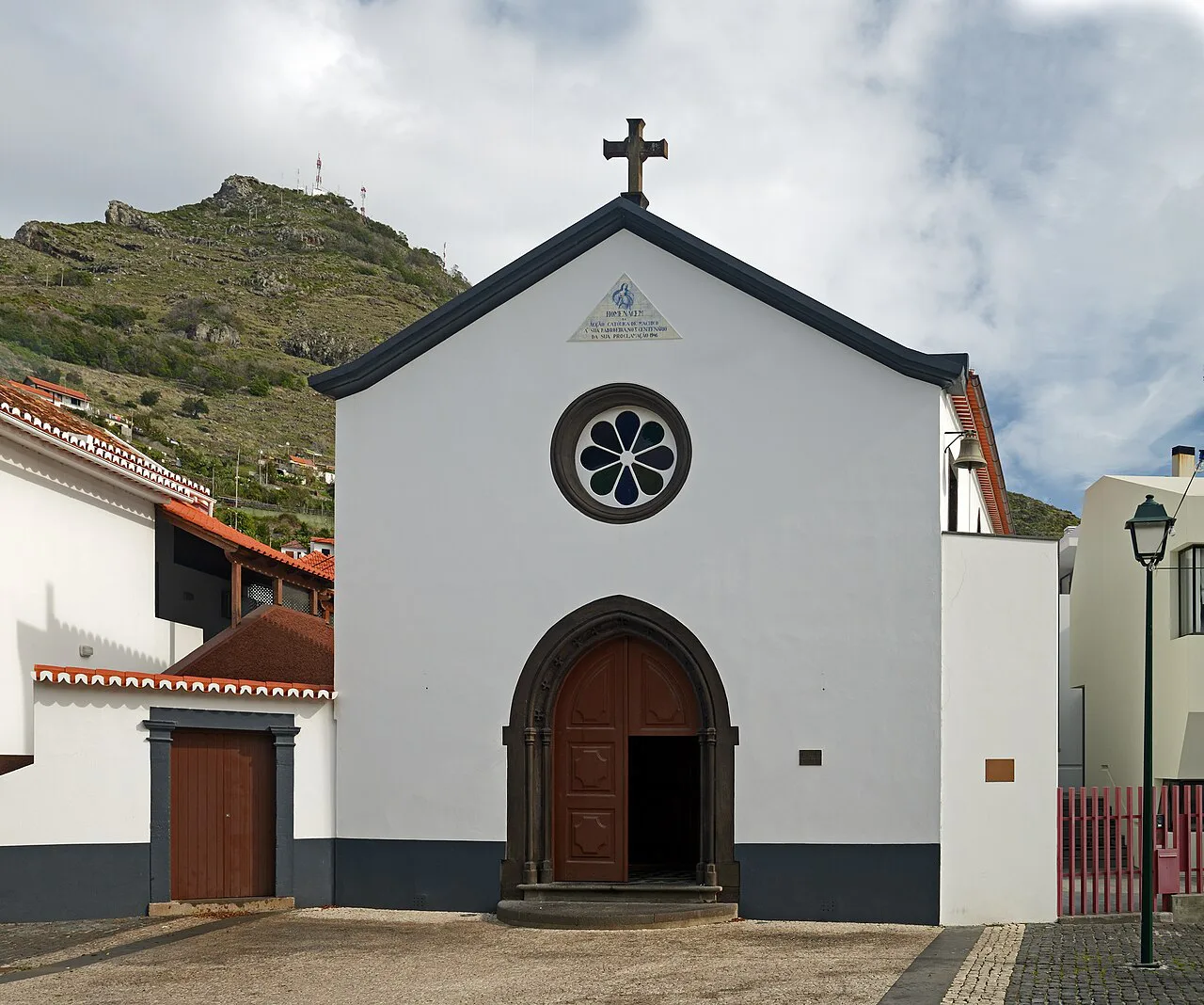
The old town's centrepiece is the 15th-century Igreja Matriz, the parish church, set close to a triangular main square lined with pastelarias. This is where you see Machico as a town rather than a beach: bolo do caco straight from the stone, a coffee, a look at the church interior if it is open. Opening times for the church and the chapels are not something to guess at, so plan the old town around the square and the streets and treat any interior visit as a bonus.
Nearby, the Capela dos Milagres carries the town's best story. An 1803 flood swept the crucifix out to sea, an American ship recovered it nearly intact, and the chapel was rededicated to the Senhor dos Milagres. The chapel and the fort are small stops that give the seafront its context and cost nothing to look at from outside.
Elsewhere on the island the historic core is the main event rather than a complement, and Santana is the counterpoint, known for its thatched houses rather than churches.
Machico's history in brief: Zarco's 1419 landing, the 1440 captaincy and the Machim legend
João Gonçalves Zarco came ashore in Machico's bay in 1419, founding the first Portuguese settlement on Madeira. In 1440 the town became the seat of its own captaincy under Tristão Vaz Teixeira, and in 1452 he was pardoned and allowed back to govern it. Funchal's captaincy was formalised in 1450, so Machico's claim to precedence rests on those early dates rather than on ever holding the island's capital.
The name is often tied to the legend of Machim, two English lovers shipwrecked in the bay, but it remains a legend and should be told as one. The verifiable story is the settlement, the captaincy and the Senhor dos Milagres devotion, which is enough for a short visit and explains why the town matters out of proportion to its size.
Getting to Machico from Funchal and the airport
By road, Machico is about five minutes and 5 km from Funchal airport via the VR1, and about 25 minutes and 22 km from Funchal. Rental-car desks at the airport take around ten minutes, after which you can be parked on the seafront within another five. That proximity is the whole argument for sleeping here before an early flight or after a late landing.
Public transport is less convenient than the map suggests: the Aerobus does not stop in Machico, so a local taxi, quoted indicatively at around ten to twelve euros, or a ride-hailing app covers the last leg from the airport. For the Funchal connection, check the current bus operator's timetable before you commit, since services and journeys vary and this guide does not quote them. One sentence of advice: confirm the day's times at the bus station or on the operator's site.
If your trip is built around short hops between towns rather than a single base, Santa Cruz and the other settlements near the airport sit on the same stretch of coast and are covered in the wider towns in Madeira guide.
Where to eat and drink in Machico
Lunch on the seafront is the pattern here. Mercado Velho occupies the restored 19th-century covered market and does lapas and prego no bolo do caco well; O Galã is the pick for grilled fish; and the small tascas behind the church serve daily menus. For coffee, Padaria O Forno on the river side is the local favourite.
Expect plain, fish-led cooking rather than destination dining, and check each venue's closing day locally, as restaurants in towns this size commonly shut one day a week. Menus and prices change, so read them at the door rather than relying on older figures.
Is Machico worth visiting, and how long does it need?
Yes, for half a day, and it earns its place on a first or last night. The combination of a sheltered sandy beach, a compact old town with a genuine founding story and a five-minute run to the airport is not something Funchal offers. What it lacks is polish and choice: this is a working town, and anyone expecting a resort strip with bars along the front will be disappointed.
A sensible shape is a morning on the sand, a walk across the river mouth to the pebble beach and the fort, then an hour in the old town and lunch. That fills three to four hours comfortably. Add the peninsula east of town and you have a full day; add Funchal and you have a long one, which is why most visitors treat Machico as an arrival or departure anchor rather than a multi-night base.
Ponta de São Lourenço and Caniçal: the half-day add-on east of town
The obvious extension is PR8 Vereda da Ponta de São Lourenço, the eastern peninsula trail about 15 minutes' drive east through Caniçal. It runs roughly 7.5 km return and takes around three hours, over bare red and ochre cliffs dropping straight into the Atlantic with no shade at all. Start before 09:00 to beat both the heat and the tour buses.
On the way back, the Whale Museum in Caniçal is a worthwhile 30-minute stop. Carry water and sun protection for the trail, since the exposure is the main hazard and the walking figure is an approximation rather than a schedule. Pair the walk with a night in Machico and you have a coherent two-day stop on the east coast.
If you would rather spend the half-day inland, the Miradouro do Cabo Girão on the south coast is the island's other big-view outing, and Cabo Girão is an easy add-on from Funchal.
When to go: sun, beach season and typical conditions
Machico sits in the lee of the eastern peninsula and often sees more sun than Funchal, with less of the south coast's cloud. The beach is comfortable from roughly May to October, and summer brings the lifeguards. Outside that window the town still works for a walk and a meal, but swimming is for the hardy.
Because the east is drier and brighter than the south coast, a cloudy morning in Funchal does not necessarily mean a cloudy Machico. Check a current forecast before setting out rather than relying on averages, and remember that the peninsula trail is exposed whatever the town is doing.
Should Machico be your first or last night?
Book Machico for the night before an early flight or after a late arrival, and give it a half-day on either side. The five-minute airport run and 25-minute Funchal drive set the trade-off, and the beach, old town and chapels fill the time without strain.
If you have a full day to spare, walk the Ponta de São Lourenço peninsula from Caniçal and eat fish on the Machico seafront afterwards. If you want a base for several nights with restaurants and marina on the doorstep, stay in Funchal and visit Machico as a morning out instead.
Explore more Portugal guides
Sources
Notes for your next Portuguese break
Optional updates to our town guides.
You might also like



Continue reading
More guides you'll find useful





